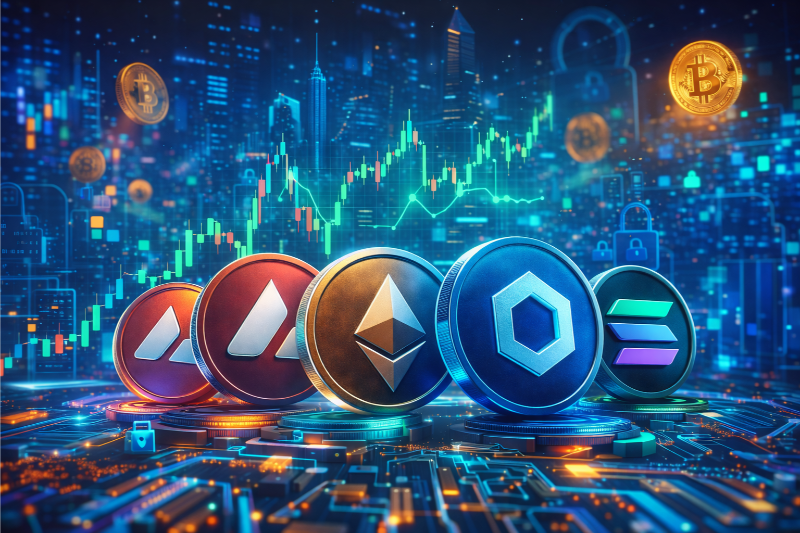
The cryptocurrency market is once again entering a phase where altcoins are reclaiming the spotlight, and many analysts believe Altcoins Q2 2026 could mark a decisive turning point. After periods of consolidation dominated by Bitcoin and Ethereum, capital historically begins rotating into higher-risk, higher-reward digital assets. This familiar market cycle, combined with maturing infrastructure, is setting the stage for renewed altcoin momentum.
Moreover, institutional inflows, expanding crypto ETFs, and increasing regulatory clarity across major economies are reshaping investor sentiment. Hedge funds, venture capital firms, and family offices are no longer just experimenting—they are strategically allocating into next-wave blockchain projects with real-world utility. Consequently, emerging crypto assets with strong fundamentals are gaining attention well ahead of Q2 2026.
At the same time, blockchain upgrades, Layer-2 scalability improvements, AI integrations, and real-world asset tokenization are transforming how value is created in the crypto ecosystem. As macroeconomic shifts such as easing monetary policy and declining inflation take hold, risk appetite is expected to rise. Therefore, Altcoins Q2 2026 are increasingly viewed as one of the most compelling speculative crypto opportunities of the coming cycle.
Understanding the Altcoin Market Cycle Heading Into Q2 2026
Historically, altcoin rallies tend to follow several predictable phases. First, Bitcoin establishes dominance and price stability. Next, Ethereum and large-cap altcoins begin outperforming. Finally, liquidity flows into mid-cap and emerging digital tokens, triggering broad-based altcoin surges.
As we approach Q2 2026, several indicators suggest this rotation is underway:
-
Bitcoin dominance is expected to peak before gradually declining
-
Ethereum network upgrades continue to improve scalability and fee efficiency
-
Capital is flowing into Layer-2, AI, and real-world asset projects
-
Retail participation is rising alongside institutional exposure
However, not all altcoins benefit equally. Selection based on use-case strength, developer activity, tokenomics, and liquidity is critical. The following sections examine the sectors and projects best positioned to benefit from Altcoins Q2 2026 momentum.
Key Sectors Driving Altcoins Q2 2026 Performance
1. DeFi 2.0 and Modular Finance Protocols
Decentralized Finance has evolved significantly since its early boom. DeFi 2.0 focuses on sustainability, protocol-owned liquidity, and real yield. Consequently, projects emphasizing capital efficiency and institutional-grade compliance are attracting renewed interest.
Key trends include:
-
Decentralized lending with real-world collateral
-
Cross-chain liquidity aggregation
-
On-chain derivatives and structured products
DeFi remains a core pillar of high-growth digital tokens, especially as traditional finance continues to merge with blockchain rails.
2. AI-Integrated Blockchain Projects
Artificial intelligence is no longer a narrative—it is a utility. Blockchain networks integrating AI for data processing, automation, and predictive analytics are becoming critical infrastructure. Therefore, AI-focused altcoins are expected to be among the strongest performers in Altcoins Q2 2026.
Use cases include:
-
Decentralized AI marketplaces
-
On-chain machine learning models
-
Autonomous smart contract execution
These next-wave blockchain projects sit at the intersection of two exponential technologies.
3. Layer-2 Scaling Solutions
Ethereum Layer-2 solutions remain essential for mass adoption. Lower fees, faster settlement, and improved user experience continue driving ecosystem growth. Moreover, Layer-2 tokens benefit from network effects as developers migrate applications.
Key advantages:
-
Strong developer ecosystems
-
High transaction throughput
-
Direct exposure to Ethereum growth
Layer-2 scaling tokens remain a cornerstone of long-term altcoin portfolios.
4. Gaming, Metaverse, and Digital Ownership
Blockchain gaming has shifted from hype-driven models to sustainable economies. Play-and-earn, asset ownership, and interoperable digital identities are becoming mainstream concepts.
Gaming tokens benefit from:
-
Strong community engagement
-
Consumer-focused adoption
-
Cross-platform monetization models
However, volatility remains higher in this segment, requiring disciplined risk management.
5. Real-World Asset (RWA) Tokenization
Tokenizing real-world assets—such as bonds, real estate, commodities, and carbon credits—is one of the fastest-growing crypto sectors. Consequently, RWA-focused altcoins are attracting institutional capital.
Key drivers:
-
Regulatory alignment
-
Yield-bearing on-chain assets
-
Bridges between TradFi and DeFi
This sector may define the most stable segment of Altcoins Q2 2026.
Selected Altcoins Positioned for Q2 2026 Growth
Below is a comparative overview of selected altcoins across major sectors. These projects are analyzed based on market cap trends, ecosystem expansion, and risk-adjusted potential.
Selected Altcoins Comparison
| Project Name | Sector | Market Cap Range | Primary Use Case | Recent Performance Trend | Risk Level |
|---|---|---|---|---|---|
| Arbitrum (ARB) | Layer-2 Scaling | Large-Cap | Ethereum scalability | Gradual uptrend | Medium |
| Optimism (OP) | Layer-2 Scaling | Large-Cap | Rollup infrastructure | Stable accumulation | Medium |
| Chainlink (LINK) | Oracle / RWA | Large-Cap | Data & RWA integration | Strong recovery | Medium |
| Render (RNDR) | AI / Compute | Mid-Cap | Decentralized GPU power | High momentum | High |
| Fetch.ai (FET) | AI Blockchain | Mid-Cap | Autonomous AI agents | Volatile growth | High |
| Immutable (IMX) | Gaming | Mid-Cap | Blockchain gaming infra | Cyclical rebound | High |
| Ondo (ONDO) | RWA Tokenization | Mid-Cap | Tokenized securities | Consistent growth | Medium |
How to Evaluate Altcoins Q2 2026 Effectively?
Selecting the right altcoins requires more than narrative alignment. Investors must analyze quantitative and qualitative metrics to avoid overexposure to hype-driven assets.
Key Evaluation Metrics for Altcoins
| Metric | Description |
|---|---|
| Tokenomics Structure | Emission rate, vesting schedules, inflation |
| Circulating Supply | % of total supply in circulation |
| Staking Yield | Passive income opportunities |
| Ecosystem Growth | Developers, dApps, partnerships |
| Institutional Interest | VC backing, ETF exposure, custody support |
| Volatility Index | Historical price fluctuations |
Moreover, projects with transparent governance, active GitHub repositories, and real user adoption tend to outperform during sustained altcoin cycles.
Risk Factors to Consider Before Investing
While Altcoins Q2 2026 present significant upside potential, risks remain unavoidable:
-
High volatility and sharp drawdowns
-
Regulatory uncertainty in certain jurisdictions
-
Liquidity risk in smaller market-cap assets
-
Narrative-driven overvaluation
Therefore, position sizing, diversification, and disciplined exit strategies are essential.
Portfolio Allocation Strategies for Altcoins Q2 2026
A balanced approach often includes:
-
40–50% large-cap altcoins (Layer-2, infrastructure)
-
30–40% mid-cap growth tokens (AI, RWA)
-
10–20% speculative crypto opportunities
This structure allows exposure to upside while managing downside risk.
Conclusion: What Could Shape Altcoins Q2 2026 Performance
Looking ahead, Altcoins Q2 2026 will likely be influenced by several macro and industry-wide forces. Bitcoin cycle dynamics remain a primary driver, as capital rotation historically fuels altcoin rallies. Moreover, the expansion of crypto ETFs could unlock new institutional liquidity, particularly for infrastructure and RWA-focused projects.
Regulatory clarity across the US, EU, and Asia is expected to further legitimize emerging crypto assets. At the same time, technological innovation from AI automation to Layer-2 interoperability—will continue separating fundamentally strong projects from speculative excess.
Therefore, investors who combine disciplined research with strategic timing may find Altcoins Q2 2026 to be one of the most compelling opportunities in the evolving digital asset landscape.
FAQ: Altcoins Q2 2026
Are Altcoins Q2 2026 too volatile for conservative investors?
Altcoins are inherently volatile. Conservative investors should limit exposure and focus on large-cap, utility-driven projects.
How do regulations impact altcoin performance?
Regulatory clarity often benefits compliant projects while reducing risk premiums. However, uncertainty can increase short-term volatility.
What is the best portfolio allocation strategy?
Diversification across sectors and market caps helps reduce risk while maintaining upside potential.
When is the best time to enter altcoins?
Staggered entries during consolidation phases are generally safer than chasing parabolic moves.
Are altcoins suitable for long-term holding?
Yes—but only projects with strong fundamentals, sustainable tokenomics, and real-world adoption.