Many drivers assume that passing a driving test is enough to stay safe on the road. However, there are Safe Driving Secrets that go beyond basic driver education and can dramatically reduce accident risk, improve reaction times, and prevent costly mistakes. These overlooked strategies give drivers the ability to anticipate hazards, manage difficult situations, and maintain control in emergencies.
New motorists, parents, and defensive driving learners often encounter scenarios that formal training doesn’t prepare them for such as complex traffic patterns, aggressive drivers, and adverse weather. Mastering these Safe Driving Secrets ensures that drivers can respond proactively, minimizing the likelihood of collisions and injuries.
Moreover, understanding these advanced driving techniques builds confidence, reduces stress, and instills habits that can last a lifetime. By incorporating these intelligent driving habits, everyday drivers can significantly enhance their personal safety and the safety of others on the road.
Understanding Safe Driving Secrets
Safe Driving Secrets are advanced techniques that help drivers see beyond the immediate road environment. Core methods include:
-
Advanced Hazard Anticipation: Recognizing potential dangers before they materialize
-
Proactive Blind Zone Management: Checking and predicting movement in areas not visible in mirrors
-
Traffic Flow Psychology: Understanding patterns in driver behavior and adjusting accordingly
-
Emergency Braking Control: Practicing smooth and effective braking under stress
-
Defensive Lane Positioning: Choosing the safest lane spots for visibility and reaction time
-
Weather Adaptation Strategies: Modifying driving style for rain, fog, snow, and ice
-
Reading Driver Behavior Patterns: Predicting aggressive, distracted, or inattentive drivers
These techniques allow drivers to maintain control in challenging situations, avoid preventable accidents, and develop long-term road awareness.
Hidden Risks
| Risk Scenario | Common Driver Response | Safer Alternative Strategy | Risk Reduction Impact |
|---|---|---|---|
| Merging into fast traffic | Hesitation or abrupt acceleration | Scan traffic 12–15 seconds ahead, adjust speed early | High |
| Blind zone during lane change | Quick glance only | Use shoulder check and predict vehicle movement | High |
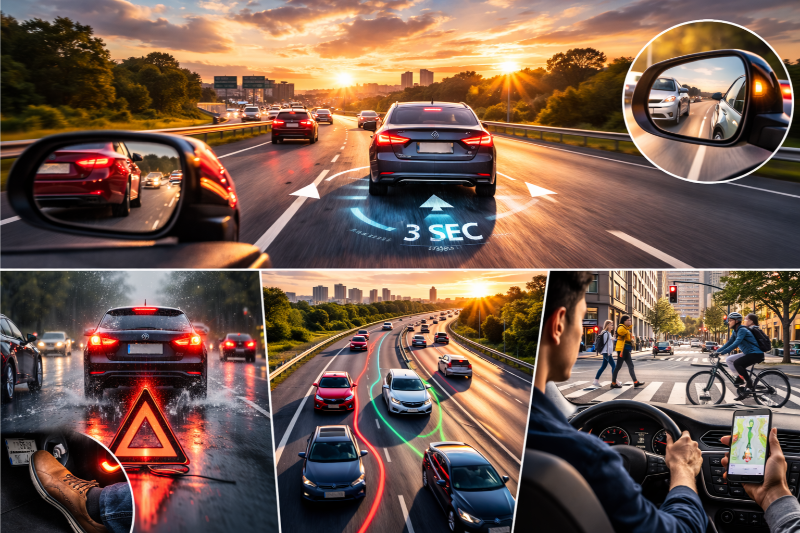
| Sudden braking of lead car | Panic braking | Maintain 3-second following distance, controlled braking | High |
| Wet or icy roads | Overconfidence | Reduce speed, increase following distance, gentle maneuvers | High |
| Aggressive driver tailgating | Speed up to escape | Maintain calm, signal intentions, safely change lane | Medium-High |
Advanced Safe Driving Techniques
1. Hazard Anticipation
Anticipating potential hazards—like sudden lane changes or a pedestrian stepping into the road—reduces reaction time. Drivers who regularly practice this can avoid collisions even in dense traffic.
2. Managing Blind Zones
Proactive management of blind spots is essential for lane changes and highway driving. By combining mirror checks, shoulder glances, and speed awareness, drivers mitigate unseen risks.
3. Understanding Traffic Flow Psychology
Experienced drivers notice patterns in traffic behavior. Predicting acceleration, braking, and merging tendencies helps navigate safely through congestion.
Advanced Defensive Techniques
| Technique | Skill Level Required | Effectiveness Rating | Urban vs Highway Use | Long-Term Safety Benefit |
|---|---|---|---|---|
| Advanced hazard anticipation | High | 9/10 | Both | Very High |
| Proactive blind zone management | Moderate | 8/10 | Both | High |
| Defensive lane positioning | Moderate | 8/10 | Both | High |
| Weather adaptation strategies | Moderate | 7/10 | Both | Medium-High |
| Emergency braking control | High | 9/10 | Both | Very High |
| Reading driver behavior patterns | High | 9/10 | Both | Very High |
Real-World Applications
-
Urban Driving: Safe lane positioning and hazard anticipation help navigate busy intersections and unexpected pedestrian movements.
-
Highway Driving: Proper blind zone management and controlled emergency braking reduce highway collision risks.
-
Adverse Weather: Adjusting speed and maintaining safe distances prevents loss of control in rain, snow, or fog.
Beyond individual drivers, these techniques have a broader impact. Parents can teach these principles to young drivers early on, while fleet operators can integrate them into training programs to build a culture of safety. By embedding these habits from the start, we promote safer roads not just today but for generations to come.
The Future of Safe Driving
The future of safe driving is being reshaped by the seamless integration of AI-assisted systems, advanced ADAS technologies, and intelligent road infrastructure. Modern vehicles equipped with real-time hazard detection, predictive braking, lane assistance, and traffic flow analytics act as proactive partners—supporting drivers and reducing the likelihood of accidents before they occur.
At the same time, smarter roads and connected systems enhance communication between vehicles and infrastructure, creating a more coordinated and responsive driving environment. These technologies strengthen not replace the driver’s judgment and defensive instincts.
Furthermore, training programs that incorporate intelligent driving habits and technology awareness will prepare safer, more responsible drivers for generations to come. By combining time-tested defensive driving skills with cutting-edge innovation, we can create roads that are safer, smarter, and far more predictable for everyone.
FAQ: Safe Driving Secrets
1. How long does it take to develop these safe driving instincts?
Consistent practice over several weeks, combined with conscious awareness, helps engrain these techniques into daily driving.
2. Do these techniques work in emergency situations?
Yes. Drivers trained in these Safe Driving Secrets respond faster, avoid panic, and minimize accident severity.
3. How does insurance benefit from these practices?
Insurers may offer lower premiums or rewards for drivers who adopt defensive and proactive driving methods.
4. Can new drivers learn these safely?
Absolutely. Defensive driving courses and supervised practice allow beginners to master these techniques gradually.
5. What technology supports these secrets?
AI-assisted driving systems, ADAS, lane-keeping assist, forward-collision warning, and adaptive cruise control all complement human awareness, enhancing road safety.