Photos by Charles Barnes
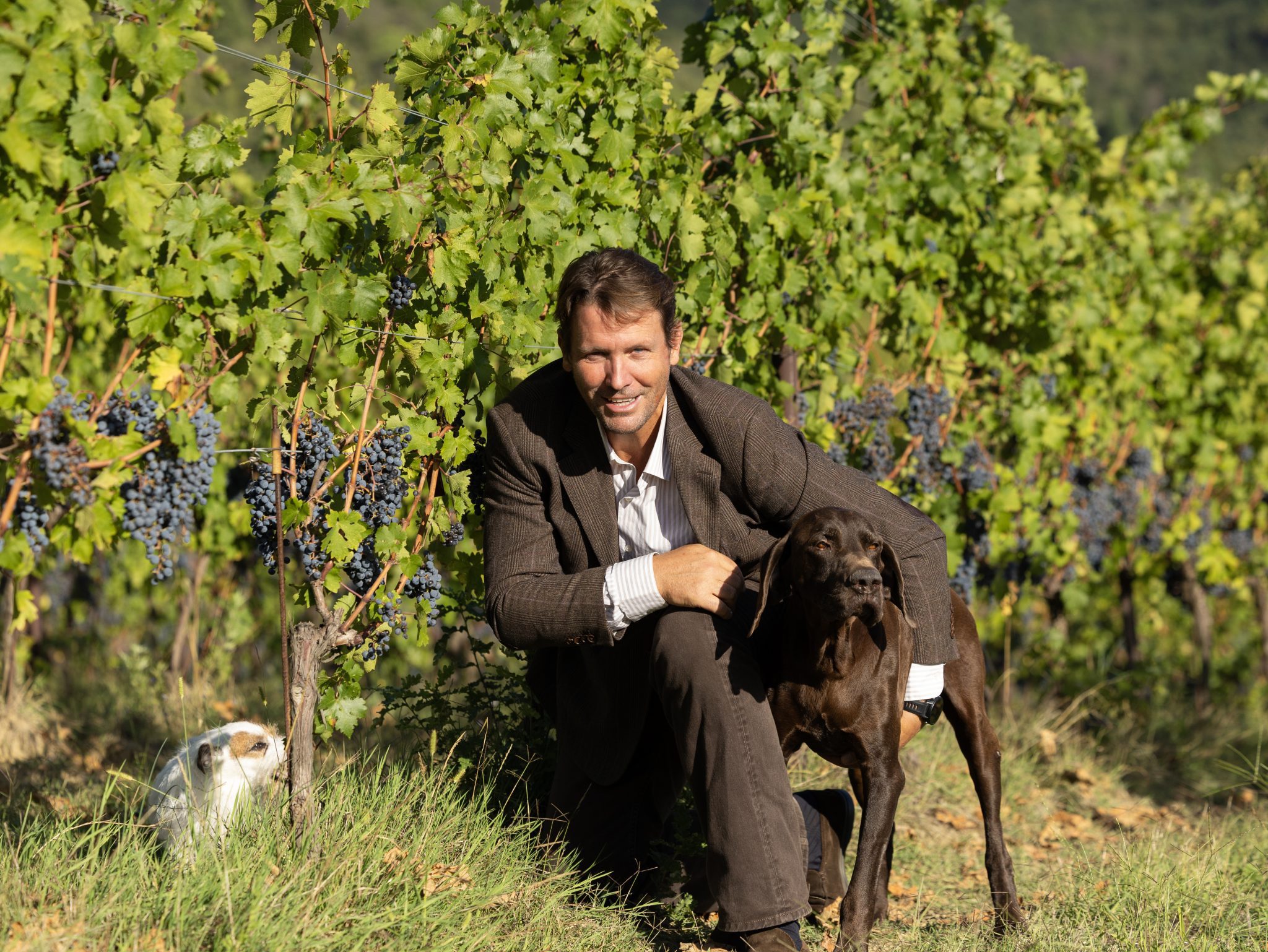
When Salvatore Ferragamo Jr. talks about Il Borro, the thousand-year-old Tuscan estate his family acquired three decades ago, he doesn’t describe it as a business first. “Il Borro is sometimes what we call an act of faith that repeats over time,” he says. “In the course of history, you find properties that people occupy, improve, and eventually restore. That’s what happened to us back in 1993.”
That was the year Ferragamo’s father, Ferruccio Ferragamo, purchased the medieval village from Duke Amedeo of Savoy-Aosta, a member of Italy’s royal family. The younger Ferragamo, grandson of the fashion house founder whose name he shares, was studying business in New York when the project began. “My father loved the countryside and saw incredible potential in the property,” he recalls. “He gathered the family together and said, ‘This will diversify our investments—but it must also stand on its own merit.’”
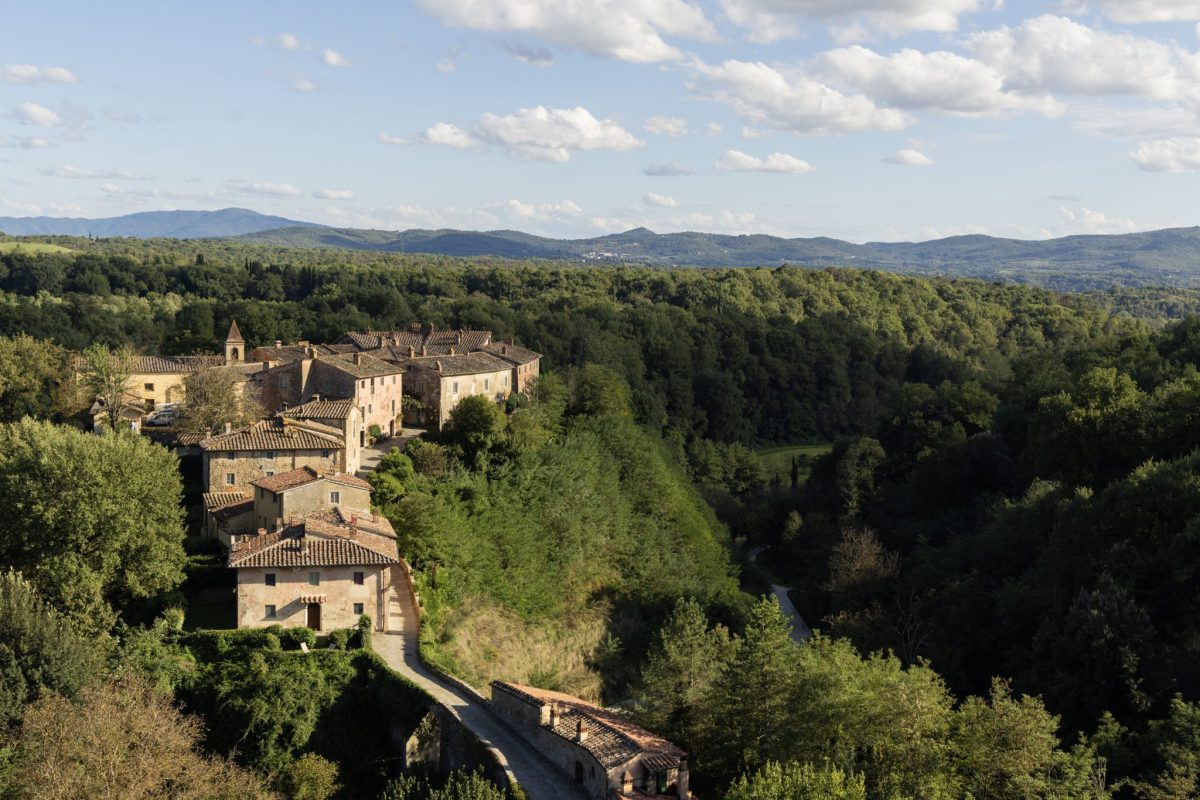
Today, Il Borro spans roughly 1,100 hectares of organic farmland in the Valdarno di Sopra region, framed by olive groves and vines that trace the foothills of Pratomagno. What began as a rural retreat is now a fully operational wine estate and hospitality destination under the Relais & Châteaux banner, combining sustainable agriculture, fine dining, and restored architecture.
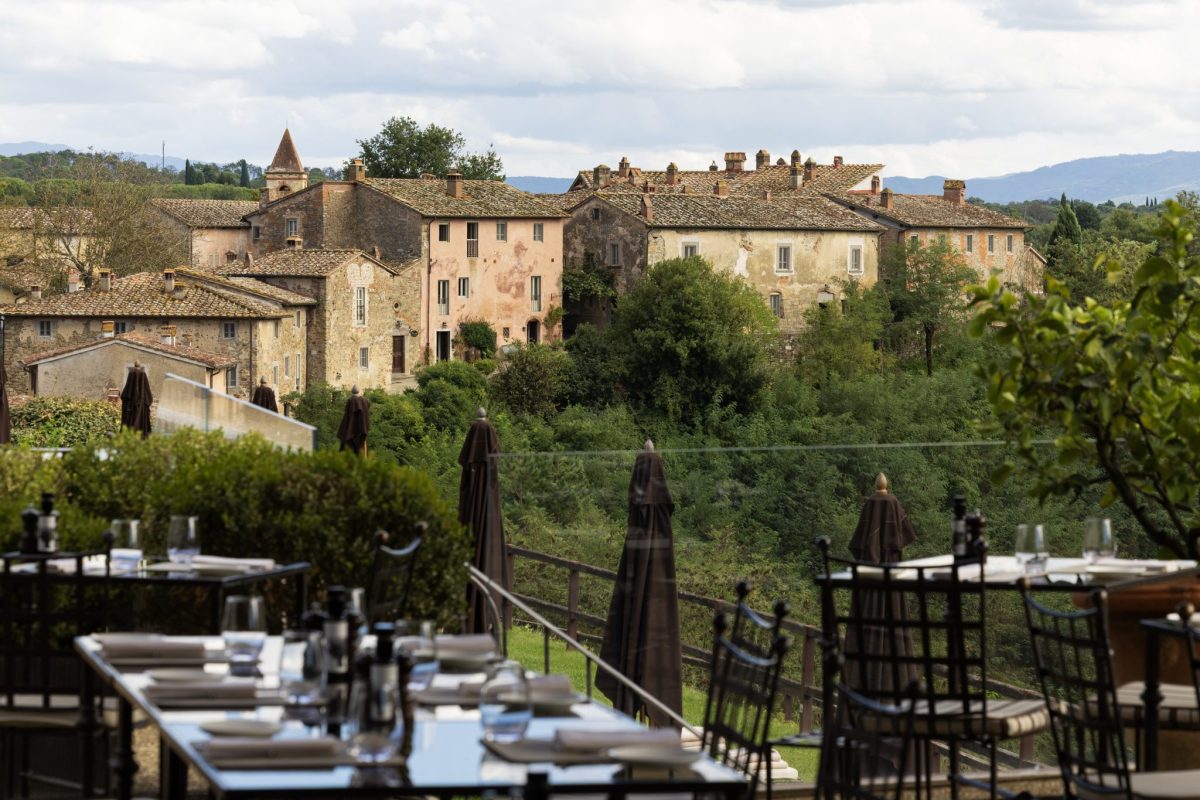
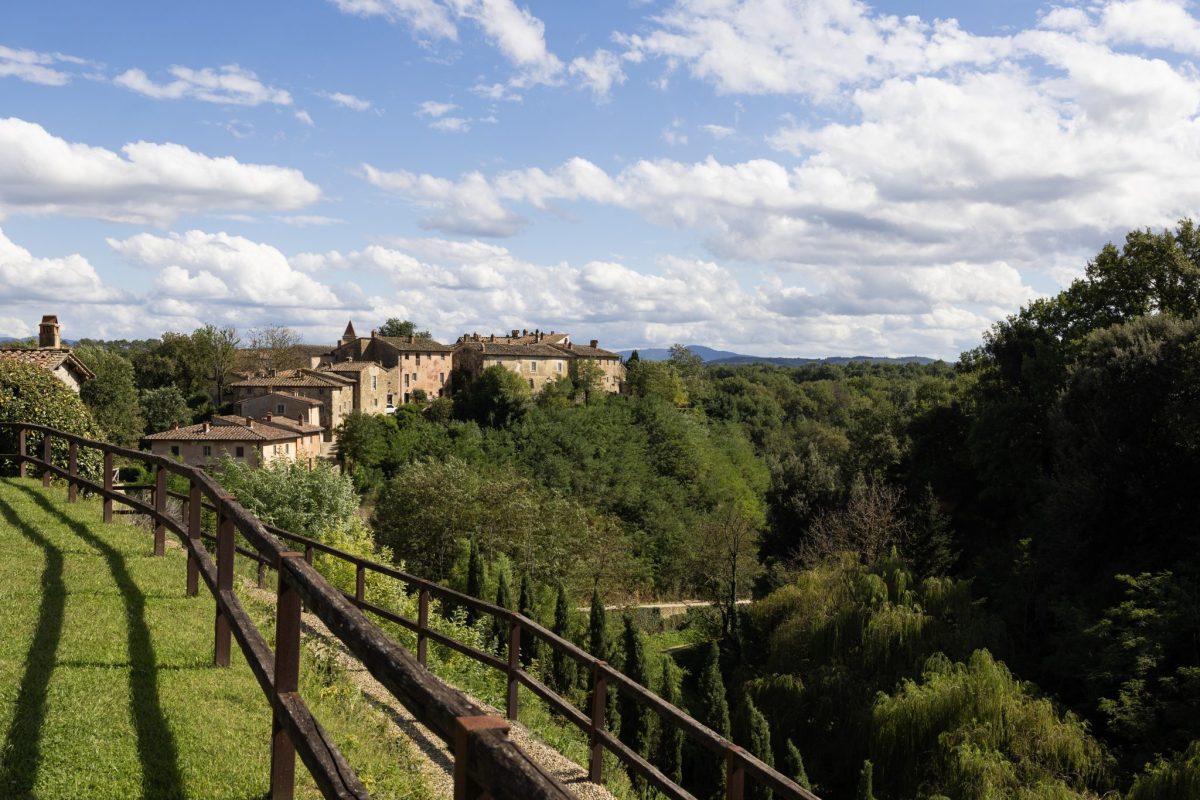
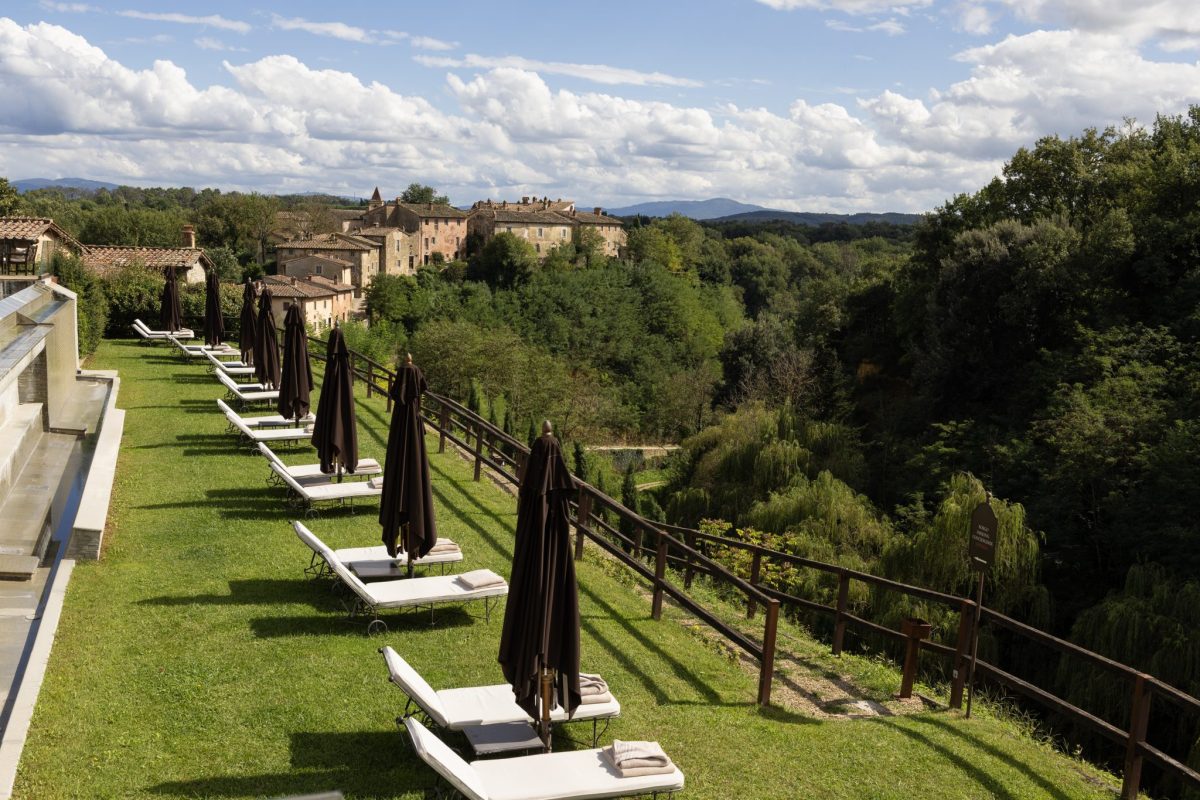
“The best way to describe Il Borro is really as a farm,” Ferragamo says. “We are certified organic farmers, we produce our own cheese, extra virgin olive oil, wine, honey, vegetables, eggs—you name it.”
The property’s scale and self-sufficiency are striking. Solar panels generate three times the energy the estate consumes. Water is drawn from natural wells. Even the restaurants follow a closed-loop philosophy, serving dishes sourced almost entirely from the estate’s land. “Every year we publish a sustainability statement,” Ferragamo adds. “It’s not just about organic farming, it’s about running responsibly and creating energy independence.”
Il Borro’s transformation has been gradual and deliberate, guided by a belief that Italian craftsmanship and rural heritage can coexist with modern luxury. Within the medieval village, artisans have returned to work—shoemakers, goldsmiths, and restorers—reviving trades that once defined the region. The accommodations include restored villas, vineyard-view suites, and family residences such as Villa Mulino and Villa Casetta, each offering a blend of traditional architecture and understated modern design. “We wanted a Tuscan feel but more modern,” Ferragamo says. “Just like in fashion, attention to detail, materials, and design all matter.”
The parallel to the family’s legacy in fashion isn’t accidental. “If you think of Ferragamo and the apparel business, every six months we presented a new collection with incredible attention to quality and fit,” he explains. “That’s not far from what we do at Il Borro – selecting grapes, adjusting production to the vintage, and maintaining consistency without losing creativity.”
Ferragamo’s own path diverged from that of his twin brother, James Ferragamo, who remained in the core fashion business managing the brand’s leather goods division. Salvatore, instead, focused on hospitality and wine. “The wine growing came naturally,” he says. “We started by planting vineyards and olive trees, and slowly built the experience around them.”
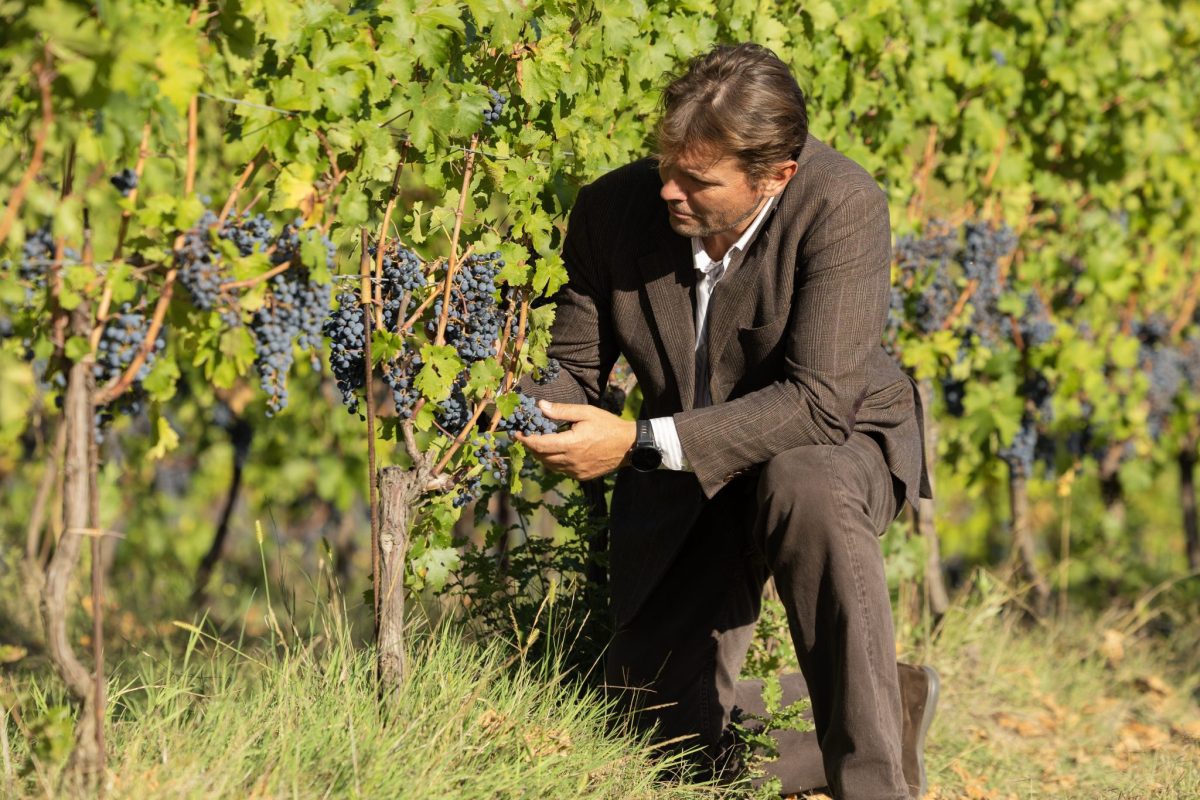
The flagship Il Borro Toscana—a Merlot, Cabernet, and Syrah blend—is his favorite. “It would qualify as a Super Tuscan,” he says. “It’s quite well distributed in the U.S.” Other wines, including Petruna Anfora, are produced using traditional clay vessels, part of a wider move toward minimal-intervention winemaking. “There’s an incredible element of creativity, but also of technology,” he notes. “We use a gravity-fed winery and fiber-optic sorters to select individual berries. You never know what the season will bring, so patience and tenacity are essential.”
While Ferragamo speaks with precision about technology and production, the philosophy that underpins Il Borro’s wines runs much deeper. At Il Borro, winemaking is treated as both craft and calling. The estate’s philosophy holds that the uniqueness of wine comes from the absolute harmonization between the land and man, between nature and its being. Each bottle captures not only the flavor of the vineyard but also the quiet devotion of those who nurture it. The flagship Il Borro Toscana, a blend of Merlot, Cabernet Sauvignon, and Syrah, perfectly encapsulates this harmony, its structure and elegance balanced by notes of ripe raspberry and red cherry that speak to the richness of the Valdarno soil and the meticulous care behind every harvest.
The Valdarno di Sopra region, where Il Borro’s vineyards take root, has long been regarded as one of Tuscany’s most treasured wine territories. Bordered by forests and olive groves, the area’s mineral-rich soils and temperate climate have supported vines since Renaissance times. Here, Ferragamo’s team pursues quality through harmony with the environment, eschewing excess intervention in favor of a deep respect for biodiversity and sustainability. The result is a portfolio of wines that embody the authenticity of their terroir: balanced, expressive, and unmistakably Tuscan.
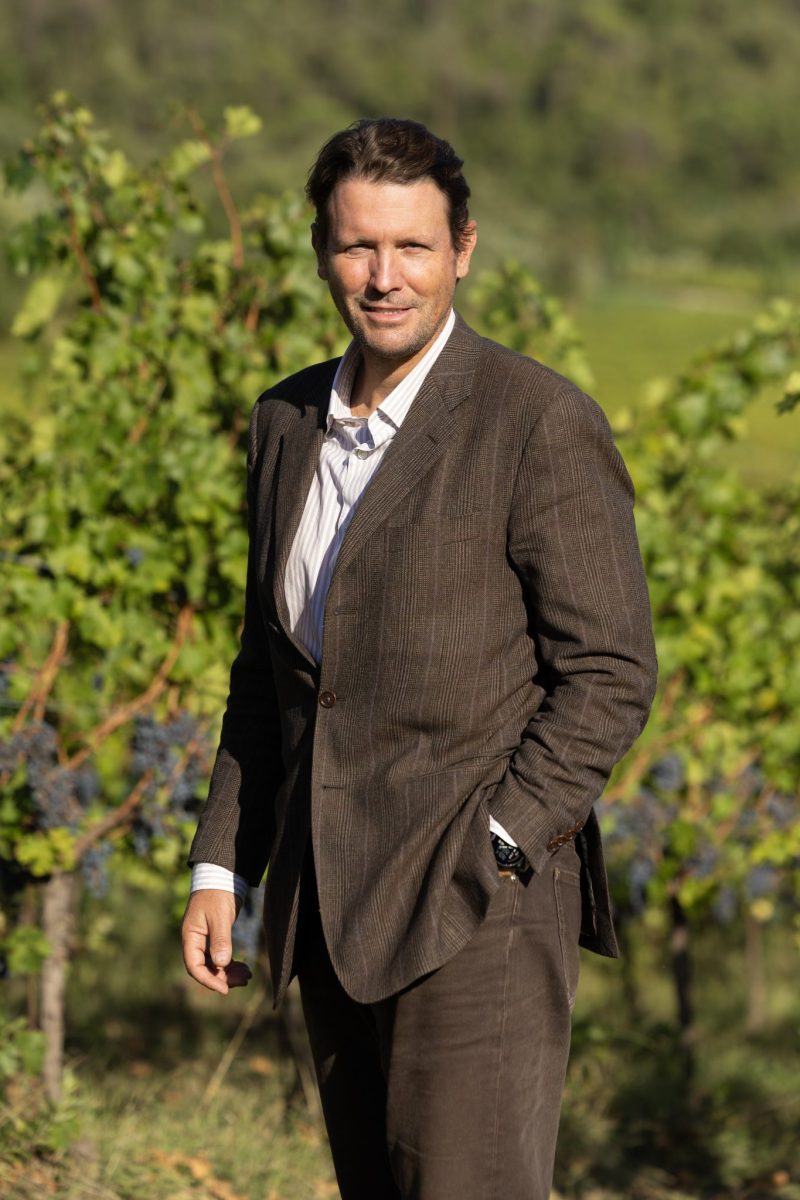
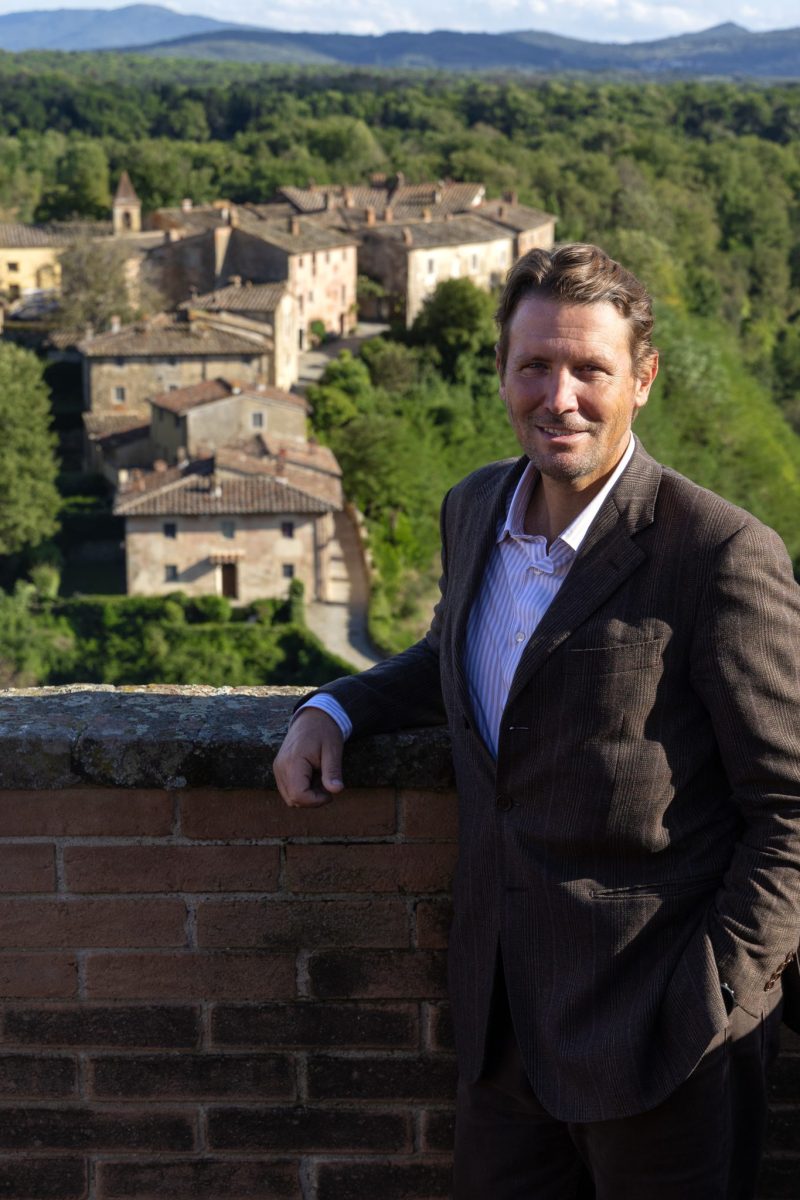
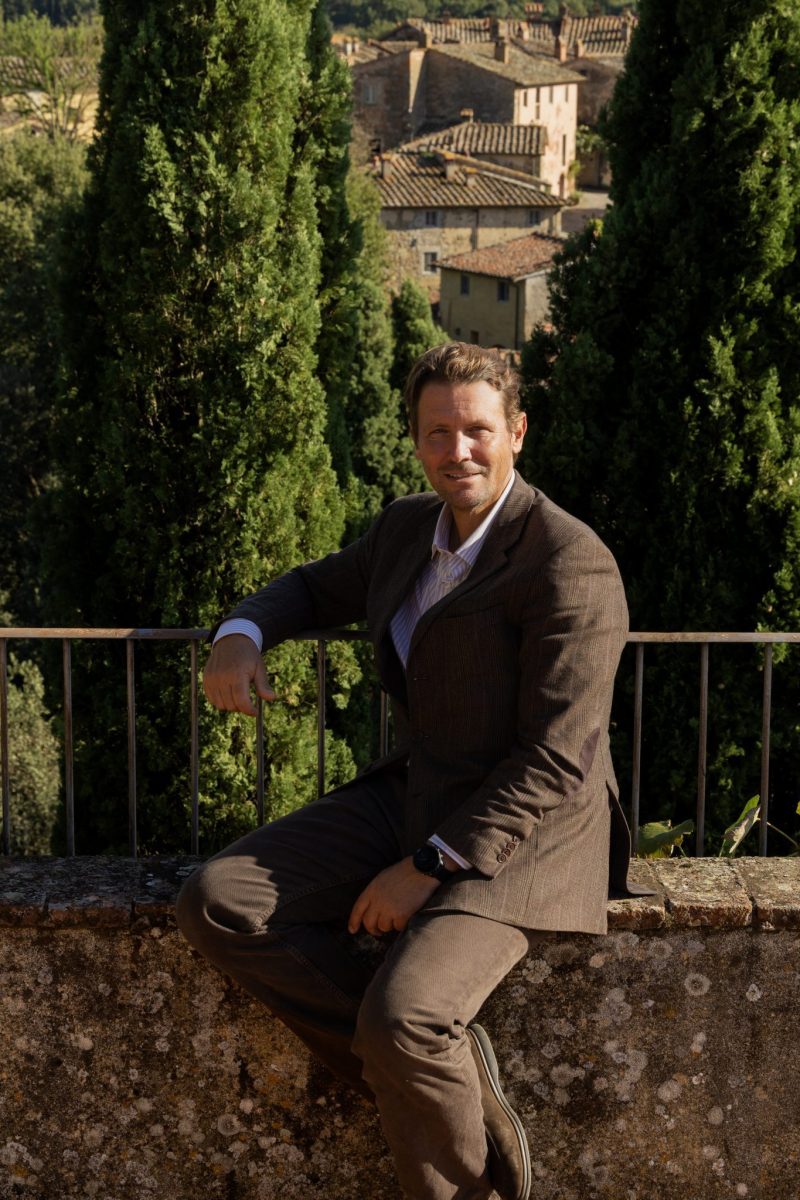
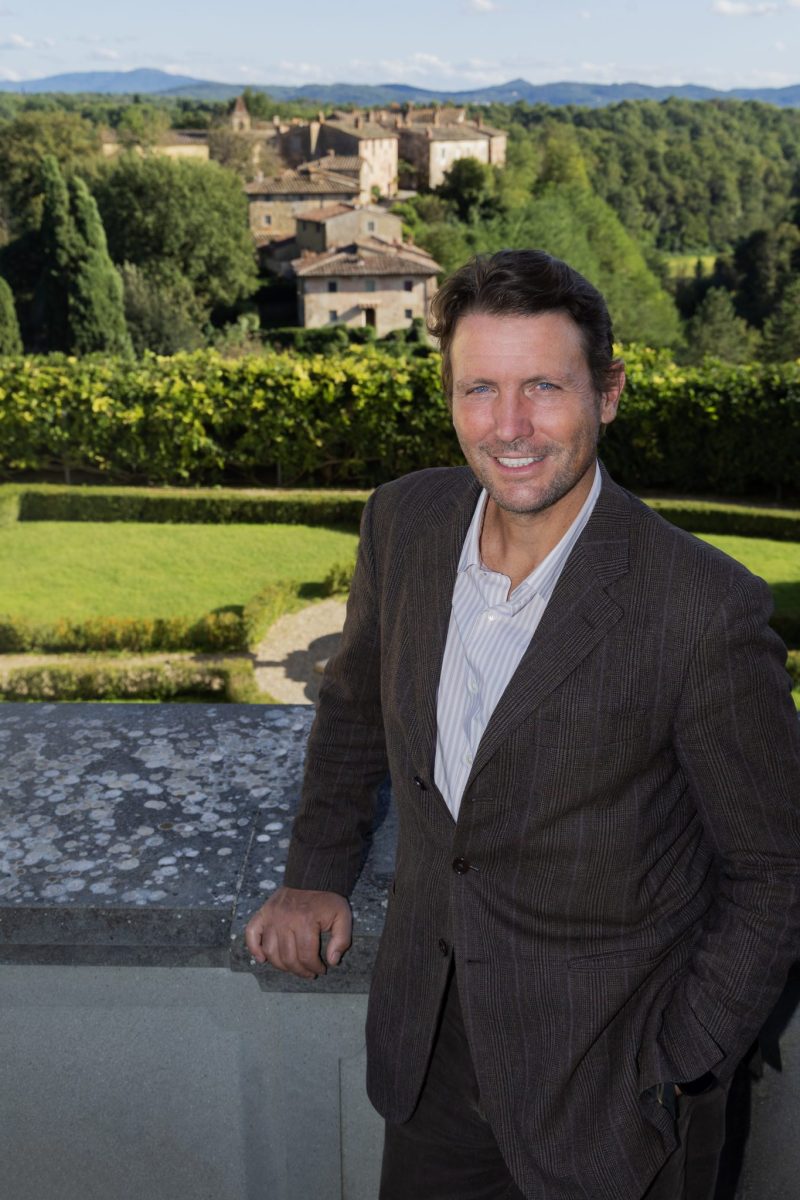
Despite its polish, Il Borro remains a working estate, one that Ferragamo calls both his home and his workplace. His three children, all studying in the United States, have spent summers working on the property. “One was a bar attendant making cocktails, another a waitress, and my son worked as a pool boy,” he says. “It’s a good way for them to make a little money, but it also teaches social skills and respect for hospitality.”
The family’s connection to the land extends beyond Il Borro. About twenty minutes away sits Viesca, another Ferragamo estate once owned by his grandmother, Wanda Ferragamo. Purchased by Salvatore and Wanda Ferragamo in 1950, Viesca served for decades as the family’s countryside residence. Ferruccio Ferragamo spent his youth there, harvesting grapes and collecting eggs, before leading the family’s next generation into the restoration of Il Borro.
“Viesca is maybe the more historic property,” Ferragamo says. “It was my grandparents’ house and my father grew up there. There’s a serenity there you rarely find in other places, it’s peaceful.”
Among the gardens stands Rosa Wanda, a rose bred in his grandmother’s honor. “There’s an area of the estate with beautiful steps and this big rose dedicated to her. It reminds me of her very much,” he says.
Viesca’s charm is more private than Il Borro’s bustle. Guests can stay in its original Villa Viesca or in standalone villas scattered through the Florentine countryside. A dedicated minibus shuttles guests between the two estates. “It works really well,” Ferragamo says. “Il Borro guests can stop at Viesca for lunch, do a little shopping, and then come back.”
The success of both properties has given Ferragamo room to look outward. “The unique character of Il Borro and its exceptional art of hospitality have given Ferragamo the confidence to look outward. ‘In 2012, we joined Relais & Châteaux, that was a defining moment for the estate,’ he says. ‘From there, we began expanding internationally.’”
” The brand now includes Il Borro Tuscan Bistro restaurants in Dubai, Crete, and other cities under development, all centered on the estate’s farm-to-table philosophy. “We want people to experience what a real extra virgin olive oil tastes like,” he adds. “That’s something we do pretty well here.”
Sustainability continues to shape Il Borro’s future. “In 2010 we started fitting the property with solar panels, and in 2015 we completed our conversion to organic farming,” he says. The estate now produces more renewable energy than it uses and aims to achieve Scope 3 carbon neutrality by offsetting emissions from third-party vendors. “We’re looking to expand our solar fields into an old quarry nearby which will help us complete the cycle,” he explains.
Ferragamo approaches progress with pragmatism rather than flourish. “You’re working with nature, so you have to accept imperfection. You make mistakes and learn from them. If you have grit and consistency, the results come.”
Next, he’s focused on a newly acquired property: Pinino, in Montalcino, home of Brunello wines. “The estate was established in 1874,” he says. “We’re expanding our portfolio and paying attention to everything Pinino stands for.”
It’s a steady evolution that mirrors the Ferragamo way – continuous refinement rather than reinvention. “We’re also expanding the restaurant and hospitality side of the business, maybe through more license agreements around the world,” he says.
Asked to define la dolce vita, Ferragamo pauses. “La dolce vita is not easy to describe because it’s a way of living,” he says. “I was schooled in America, and I love the energy there. But Italy is different, it’s about enjoying life, the culture of food and wine, the beauty of the landscape. In Tuscany you can go from the coast to the mountains in a day. It’s that slow pace of life that we offer here.”
For those considering a visit, he recommends autumn. “I love this time of year because we’re just finishing the wine harvest and starting the olive harvest,” he says. It’s a season that distills Il Borro’s spirit: the intersection of work, nature, and family life.
When asked to describe Il Borro in one word, Ferragamo doesn’t hesitate. “Authentic,” he says. Then, with a small smile, adds, “and real.”