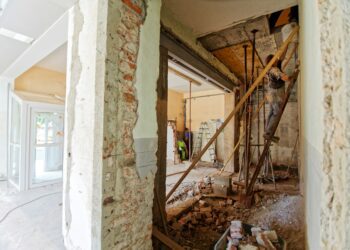
Image by nino3 on Freepik
In conversations about property investment, the focus tends to gravitate toward visible factors. Location, design, amenities, and market timing dominate the narrative, shaping how buyers and investors evaluate opportunities. Yet beneath every well-presented home or high-performing asset lies a quieter layer of value, its infrastructure.
This underlying system, often overlooked, plays a far more significant role in long-term financial performance than most realize. Plumbing, drainage, electrical systems, and structural integrity do not command attention in listing photos, but they directly influence maintenance costs, tenant satisfaction, and ultimately, asset longevity.
For investors focused on sustainable returns rather than short-term gains, this hidden layer deserves closer consideration.
Why Infrastructure Quietly Defines Asset Performance
A property’s performance is not only determined by how it looks or where it sits, but by how reliably it functions over time. When core systems are maintained properly, they reduce friction, financial, operational, and experiential.
Tenants are more likely to stay in homes that function seamlessly. Owners experience fewer emergency repairs. Insurance risks decrease. These factors may seem incremental, but over time, they compound into meaningful financial differences.
On the other hand, neglected infrastructure introduces unpredictability. What begins as a minor issue, a slow drain, inconsistent water pressure, or aging pipework, can escalate into costly repairs that disrupt both cash flow and property usability.
This is where the distinction between reactive and proactive ownership becomes clear. The former responds to problems as they arise; the latter anticipates them before they develop into liabilities.
The Financial Weight of Small Problems
It is often the smallest issues that carry the most disproportionate impact. A blocked drainage system, for example, rarely appears urgent at first glance. Yet left unresolved, it can lead to water damage, structural deterioration, and even health concerns due to mould or contamination.
From a financial perspective, these outcomes extend far beyond repair costs. They can affect rental income, reduce property valuation, and create reputational challenges for landlords managing multiple properties.
Investors who understand this dynamic tend to adopt a preventative mindset. Rather than waiting for visible signs of failure, they integrate routine checks and targeted interventions into their maintenance strategy.
In markets like Australia, where climate, soil conditions, and urban density can all influence plumbing systems, this approach becomes even more relevant. Property owners often find that addressing issues early through reliable solutions for blocked drains in Brisbane is not just a maintenance task, but a strategic decision that protects long-term asset value.
Maintenance as a Strategic Investment

Image by zinkevych on Freepik
There is a tendency to view maintenance as a cost center, an unavoidable expense that reduces profit margins. But in reality, well-executed maintenance functions more like an investment.
It preserves the original condition of the asset. It prevents value erosion. And perhaps most importantly, it creates predictability.
Predictability is a critical, yet underappreciated, component of wealth-building through property. When expenses are controlled and unexpected disruptions minimized, investors can plan more effectively, allocate capital with greater confidence, and focus on growth rather than recovery.
This shift in perspective, from maintenance as cost to maintenance as strategy, marks a more mature approach to property ownership.
The Tenant Experience and Long-Term Stability
While financial metrics often dominate investment discussions, the human element remains equally important. A property is not just an asset; it is a living environment.
Tenants notice when things work as they should, and when they do not.
Persistent plumbing issues, even minor ones, can influence tenant satisfaction more than cosmetic imperfections. A well-maintained system creates a sense of reliability and comfort, encouraging longer tenancies and reducing turnover-related costs.
From an operational standpoint, stable tenancies contribute to consistent income streams, fewer vacancy periods, and lower marketing expenses. These are subtle advantages, but they accumulate over time, reinforcing the overall performance of the investment.
Regulatory Expectations and Evolving Standards
Modern property ownership also exists within a framework of evolving standards and regulations. Governments and regulatory bodies increasingly emphasize safety, habitability, and environmental responsibility.
According to the Australian Government Department of Climate Change, Energy, the Environment and Water, maintaining essential home systems, including water and drainage infrastructure, is a key part of ensuring sustainable and safe living environments.
While regulations vary by region, the broader trend is clear: properties are expected to meet higher standards of functionality and efficiency. Investors who stay ahead of these expectations are better positioned to avoid compliance issues and protect their assets from future regulatory shifts.
Infrastructure as a Long-Term Wealth Driver
In many ways, infrastructure represents the foundation of real estate value, both literally and financially. It determines how a property performs under daily use, how it withstands environmental pressures, and how much ongoing investment it requires to remain viable.
Unlike market trends, which fluctuate, or design preferences, which evolve, functional systems operate on a more consistent timeline. They demand attention, but they also reward it.
Investors who recognize this tend to approach property ownership with a broader lens. They look beyond surface-level appeal and consider how each component contributes to the asset’s durability and resilience.
This mindset aligns closely with the principles of long-term wealth building. It prioritizes stability over speculation, foresight over reaction, and sustainability over short-term gains.
A More Complete View of Property Value
Ultimately, the value of a property cannot be fully understood through visible features alone. True value lies in how well the asset performs over time, and that performance is deeply tied to what lies beneath the surface.
It is a quieter approach to wealth building, one that does not rely on dramatic market shifts or rapid appreciation. Instead, it is grounded in consistency, attention to detail, and a clear understanding of what makes a property truly work. And in the long run, those fundamentals often prove to be the most valuable assets of all.