Today’s children face unprecedented academic pressure in their learning journey. Schools demand excellence while parents struggle to provide adequate support. English mastery has become more critical than ever before.
Primary English Tuition offers personalised attention that traditional classrooms cannot provide. Your child receives targeted instruction tailored to their unique needs. This individualised approach addresses weaknesses while building on existing strengths.
Many parents wonder if extra support truly makes a difference. Research shows that students receiving quality tuition perform significantly better academically. The confidence gained extends far beyond the classroom environment.
What Is Primary English Tuition and Who Is It For?
Primary English Tuition caters specifically to children aged seven to twelve. These foundational years shape language abilities that last a lifetime. Expert tutors focus on vocabulary, grammar, comprehension, and creative writing skills.
Traditional classrooms contain thirty or more students competing for attention. Individual learning needs often get overlooked in such crowded environments. Dedicated tutors identify gaps early and provide immediate intervention support.
Young learners benefit most when instruction matches their developmental stage. Some children need remedial help while others seek advanced enrichment. Primary English Tuition adapts to each student’s current ability level.
| Aspect | Traditional Classroom | Primary English Tuition |
| Class Size | 25-35 students | 1-6 students |
| Attention Level | Divided among many | Focused on the individual |
| Learning Pace | Fixed curriculum timeline | Adjusted to student needs |
| Feedback Frequency | Weekly or monthly | Immediate and continuous |
| Curriculum Flexibility | Standardized syllabus | Customised to weaknesses |
| Parent Communication | Quarterly reports | Regular progress updates |
Key Benefits of Primary English Tuition
Quality tuition transforms struggling students into confident English language users. Children develop genuine enthusiasm when learning becomes enjoyable and rewarding. Tutors employ interactive methods that make grammar and vocabulary exciting.
Research indicates engaged learners perform up to twenty-five percent better. Countries prioritising English education see remarkable improvements in student outcomes. Primary English Tuition creates competitive advantages during critical examination periods.
Core Advantages That Transform Learning:
- Personalised instruction addresses individual strengths and weaknesses effectively
- Interactive teaching methods increase engagement and long-term information retention
- Regular practice builds fluency in speaking, reading, and writing skills
- Immediate feedback prevents bad habits from becoming permanent learning obstacles
- Flexible scheduling accommodates busy family routines and extracurricular commitments
- Examination preparation reduces stress and improves performance during assessments
Building Confidence and Soft Skills
Academic excellence represents just one dimension of educational development today. Primary English Tuition cultivates the essential communication abilities children need throughout life. Regular speaking practice eliminates the fear of public presentations and debates.
Creative writing exercises teach students to articulate thoughts with clarity. These skills prove invaluable during interviews, group projects, and leadership. Strong English abilities enable children to connect across cultural boundaries.
Parents frequently notice improved self-assurance in everyday social interactions, too. Children who communicate effectively develop better relationships with peers and adults. Confidence gained through language mastery transfers to all academic subjects.
Common Challenges Primary Students Face in English
Young learners often struggle transitioning from simple books to complex ones. Vocabulary gaps widen rapidly when foundational knowledge remains incomplete today. Comprehension difficulties create frustration that discourages further reading attempts altogether.
Spelling and grammar mistakes become ingrained habits without proper correction. Digital distractions significantly reduce attention spans required for language learning. Many students lack strategies for organising thoughts into coherent paragraphs.
Composition writing presents the most daunting challenge for primary students. Facing blank pages triggers anxiety about word choice and structure. Primary English Tuition provides step-by-step frameworks that eliminate overwhelm.
How to Choose the Right Primary English Tuition
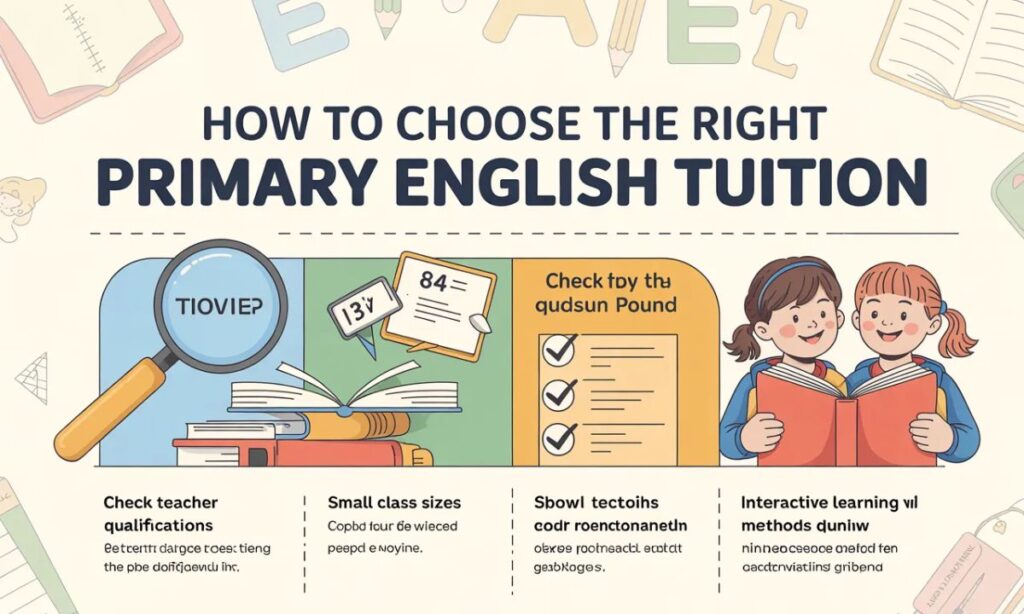
Selecting appropriate tuition requires careful evaluation of several critical factors. Qualified instructors possess teaching credentials and a proven track records of. Parents should verify tutor backgrounds before committing to long-term programs.
Group classes encourage peer interaction while private sessions target specific issues. Review testimonials from other families to gauge program effectiveness accurately. Curriculum alignment with school syllabi ensures consistent reinforcement of concepts.
Budget considerations matter, but quality instruction represents a worthwhile investment. Online platforms now offer flexibility that accommodates demanding family schedules. Trial sessions help determine if the teaching style matches your learning.
| Selection Criteria | What to Look For | Red Flags to Avoid |
| Tutor Qualifications | Teaching certification, relevant experience | No credentials, unverified background |
| Teaching Methodology | Interactive, student-centered approach | Purely lecture-based, rigid methods |
| Class Structure | Small groups or one-on-one attention | Overcrowded sessions, minimal interaction |
| Progress Tracking | Regular assessments and feedback reports | No measurement of improvement |
| Curriculum Relevance | Aligned with the school syllabus | Generic, outdated materials |
| Cost Transparency | Clear pricing, no hidden fees | Vague pricing, pressure tactics |
Tips for Parents to Maximise the Benefits
Parental involvement significantly amplifies the impact of quality tuition programs. Discuss weekly lessons with your child to reinforce key concepts. Simple home activities complement professional instruction and accelerate progress rates.
Reading together every evening strengthens vocabulary and comprehension skills naturally. Word games during dinner make learning fun while building language. These small efforts create powerful synergies with formal tuition sessions.
Effective Strategies to Support Your Child’s Learning:
- Establish consistent reading routines that make books part of daily life
- Play vocabulary-building games during car rides or family meal times
- Discuss movies and shows to practice verbal expression and critical thinking
- Create a quiet study space free from digital distractions and interruptions
- Celebrate small victories to maintain motivation and positive learning attitudes
- Communicate regularly with tutors to align home support with lessons
Does Tuition Create Dependency? Addressing Common Concerns
Some parents worry that extra help might prevent children from developing. Properly structured Primary English Tuition actually teaches independent thinking strategies. Students learn how to approach comprehension questions and plan essays.
These problem-solving techniques become automatic habits through consistent guided practice. Children gradually require less support as foundational skills solidify completely. Strong language abilities transfer naturally to mathematics, science, and other subjects.
Quality tutors aim to make themselves eventually unnecessary for students. The goal remains building self-sufficient learners who tackle challenges confidently. Early intervention prevents struggles from becoming permanent academic obstacles later.
The Long-Term Impact of Strong Primary English Skills
Foundational language abilities established during primary years shape lifelong trajectories. Students confident in English excel throughout secondary education and beyond. These communication skills top employer requirements across virtually all industries.
Professional success increasingly depends on articulating ideas clearly and persuasively. Primary English Tuition prepares children for competitive global workplaces tomorrow. Investment today yields dividends throughout your child’s entire career path.
Perhaps most rewarding remains watching children discover joy in stories. Literature opens worlds of imagination, empathy, and cultural understanding gradually. Language mastery enriches life in ways transcending mere academic achievement.
Final Thoughts
Primary English Tuition offers transformative benefits for countless families seeking improvement. Whether your child needs remedial support or advanced enrichment opportunities. Personalised guidance unlocks the potential that crowded classrooms cannot fully develop.
Consider researching local options or consulting other parents about their experiences. That initial step could spark years of academic confidence. Equipping your child with strong language skills remains a priceless investment.
Frequently Asked Questions
What age should children start Primary English Tuition?
Most children benefit starting between ages of seven and eight when foundational literacy develops. Earlier intervention helps struggling readers, while advanced students gain enrichment opportunities.
How much does Primary English Tuition typically cost?
Pricing varies from fifteen to sixty dollars per session, depending on location and format. Group classes cost less while private tutoring commands premium rates for personalised attention.
Can Primary English Tuition help with school examinations?
Yes, targeted exam preparation significantly improves performance during standardized assessments and school tests. Tutors familiarize students with question formats and effective answering strategies.
How long before seeing improvement in my child?
Most parents notice positive changes within six to eight weeks of consistent sessions. Measurable academic improvements typically appear after three to four months of regular tuition.
Is online Primary English Tuition as effective as in-person?
Quality online programs deliver comparable results using interactive technology and engagement tools. Success depends more on instructor quality than delivery format chosen.
What qualifications should I look for in tutors?
Seek certified teachers with classroom experience or specialized language teaching credentials. Verify references and request trial sessions before committing long-term.
Will tuition make my child too dependent?
Proper instruction teaches independent learning strategies rather than creating dependency on tutors. Students develop self-sufficiency as foundational skills strengthen over time.
How many sessions per week are recommended?
Two to three weekly sessions typically provide optimal balance between instruction and practice. Frequency should match your child’s specific needs and learning pace.
Can Primary English Tuition help bilingual children?
Absolutely, specialised instruction helps bilingual students navigate language complexities more effectively. Tutors address unique challenges faced by multilingual learners specifically.
What happens if my child dislikes tuition?
Communication with tutors about teaching approach adjustments usually resolves initial resistance. Finding the right match between student and instructor remains crucial for success.