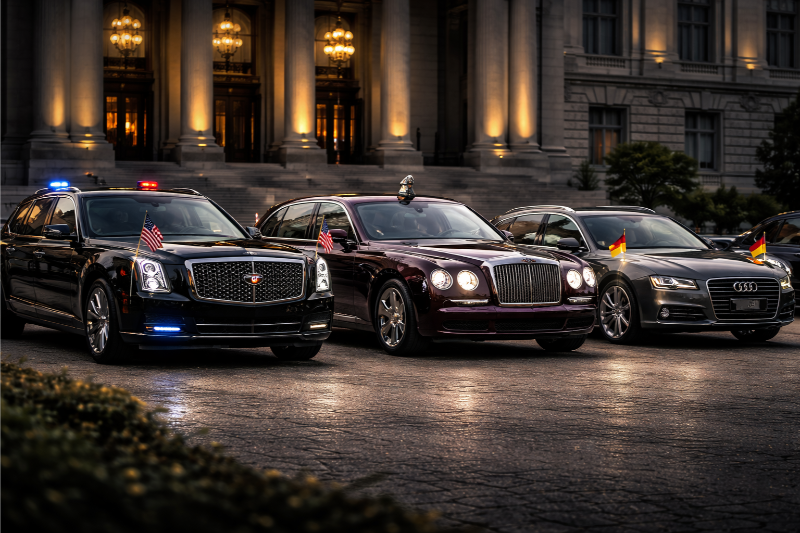
From the moment a royal motorcade rolls down a ceremonial avenue, the presence of a Royal Luxury Car conveys far more than mere transportation it symbolizes prestige, authority, and state power. Moreover, these vehicles are meticulously crafted, combining exquisite workmanship with advanced engineering to protect the lives of monarchs, presidents, and dignitaries. In addition, every curve, interior detail, and technological feature reflects bespoke attention tailored to the individual or office they serve.
Royal Luxury Cars represent the pinnacle of automotive artistry. Beyond opulence, they integrate advanced security features, including reinforced armor, bulletproof glass, and blast-resistant chassis components. Furthermore, ceremonial embellishments such as custom insignias, flag mounts, and hand-finished upholstery emphasize national pride and political symbolism. As a result, these vehicles reinforce both prestige and authority for their occupants.
For luxury automotive enthusiasts, collectors, historians, and high-net-worth individuals, these cars provide a rare glimpse into the intersection of automotive technology, artistry, and political history. They are not just vehicles—they are rolling statements of identity, power, and exclusivity. Consequently, understanding the evolution and engineering of Royal Luxury Cars offers insights into global automotive innovation as well as the traditions of leadership.
Historic and Iconic Royal Luxury Cars
Throughout history, several vehicles have been commissioned exclusively for heads of state or royalty. In particular, these cars serve ceremonial, functional, and security purposes, often blending high performance with ultimate protection.
1. Rolls-Royce Phantom IV
Commissioned for European monarchs in the 1950s, the Phantom IV was an ultra-exclusive limousine. Only 18 units were ever produced, reserved solely for royalty and select state officials.
Key highlights:
-
Hand-built chassis and bodywork
-
Bespoke interior with silk and wood trims
-
Armored modifications added for select clients
2. Mercedes-Benz 600 Pullman
Introduced in 1963, the 600 Pullman became a symbol of presidential power. Leaders from Germany, France, and several African nations commissioned versions with enhanced security and ceremonial features.
Notable features:
-
Hydraulic-assisted windows and roof panels
-
Custom communication systems for diplomatic use
-
Optional armor plating for bullet resistance
Notable Royal/State Vehicles
| Model | Country | Year Introduced | Security Level | Unique Features |
|---|---|---|---|---|
| Rolls-Royce Phantom IV | UK/Europe | 1950s | Moderate | Ultra-limited production, bespoke interior |
| Mercedes-Benz 600 Pullman | Germany | 1963 | High | Hydraulic-assisted panels, optional armor |
| Cadillac One (“The Beast”) | USA | 2009 | Very High | Bulletproof, advanced communications, EMP protection |
| Bentley State Limousine | UK | 2002 | High | Custom bodywork, royal insignia, reinforced chassis |
| Audi A8 L Security | Germany | 2010s | Very High | Armored executive sedan, adaptive suspension |
Ceremonial Significance and National Identity
In addition to security and comfort, Royal Luxury Cars often carry deep ceremonial and symbolic importance. For example, flag mounts, national emblems, and custom paint schemes reflect the status of the nation and its leaders. Furthermore, these symbolic features enhance public recognition while remaining integrated discreetly within the vehicle’s design. Consequently, they serve both functional and diplomatic purposes, reinforcing authority without compromising safety.
Engineering Behind Royal Luxury Cars
The engineering of these vehicles often pushes the boundaries of automotive technology. Designers and engineers must balance opulence, speed, and survivability without compromising comfort or maneuverability.
Armor and Protection
Armored plating ranges from lightweight composites to high-grade ballistic steel. Glass components are multi-layered for bullet resistance. Blast protection in the floor panels and fuel system prevents catastrophic damage.
Advanced Communication Systems
Presidential and royal vehicles often integrate secure satellite and radio communications. This allows occupants to remain connected to government networks even during crises.
Bespoke Interiors
Every interior is custom-made to client specifications. Luxury materials like rare woods, hand-stitched leather, and silk fabrics coexist with concealed security features. Adjustable seating, climate control, and automated window mechanisms ensure maximum comfort and utility.
Key Engineering Features
| Feature | Rolls-Royce Phantom IV | Mercedes 600 Pullman | Cadillac One | Bentley State Limousine | Audi A8 L Security |
|---|---|---|---|---|---|
| Armor Rating | Moderate | High | Very High | High | Very High |
| Communication Systems | Basic secure radio | Radio & internal lines | Satellite & encrypted comms | Secured comms | Encrypted cellular & radio |
| Drivetrain Type | V8 / Rear-wheel drive | V8 / Rear-wheel drive | V8 / AWD | V8 / AWD | V8 / AWD |
| Customization Level | Ultra-high | High | Very High | Ultra-high | High |
| Production Exclusivity | 18 units | Limited | Custom for each president | 2 units | Produced to order |
Modern Royal Luxury Cars
Today, Royal Luxury Cars continue to evolve as technology and security requirements advance. In particular, electric drivetrains, AI-assisted security systems, and lighter armored materials are gradually entering this specialized segment. For example:
-
Cadillac One (“The Beast”) – America’s presidential limousine, packed with life-saving technology and advanced communications.
-
Bentley State Limousine – A Rolls-Royce derivative, exclusive to the British monarchy, combining prestige with reinforced safety.
-
Audi A8 L Security – A modern armored sedan used by European officials with discreet high-tech protection.
Moreover, these modern vehicles continue to demonstrate a careful balance of prestige, national identity, and protective innovation.
Ceremonial and Symbolic Features
Royal Luxury Cars are more than just protective vehicles—they also embody political and ceremonial symbolism. For instance, many feature:
-
National flags and insignia mounts
-
Customized paint schemes representing dynasties or state colors
-
Interior emblems, embroidery, and silk trims reflecting status
-
Pop-up sunroofs or observation windows for parades
Furthermore, these symbolic elements help maintain public recognition while keeping security discreet. In addition, they reinforce national identity during official events.
Maintenance and Ownership
Owning or operating a Royal Luxury Car requires meticulous attention. For example:
-
Specialist technicians handle armor and electronics
-
Custom parts are often hand-fabricated
-
Communication systems require regular updates
-
Compliance checks ensure roadworthiness and security
Consequently, operating these vehicles is far more demanding than managing standard luxury cars. Moreover, even minor maintenance delays can affect both performance and security.
The Future of Royal Luxury Cars
Looking ahead, Royal Luxury Cars are evolving to meet both sustainability goals and technological advancements. For example:
-
Electrification – Electric drivetrains reduce environmental impact while maintaining smooth, quiet operation.
-
Next-generation armor – Lighter and stronger materials improve fuel efficiency and performance.
-
AI-assisted security – Sensors, autonomous threat detection, and active protection systems enhance occupant safety.
-
Connectivity & cyber-protection – Secure network integration ensures communication integrity in emergencies.
Therefore, future state ceremonial vehicles will blend prestige, environmental responsibility, and advanced protection. Moreover, designers are likely to continue combining traditional craftsmanship with cutting-edge technology.
Conclusion
Royal Luxury Cars represent the ultimate combination of engineering, prestige, and security. From historic Rolls-Royce limousines to modern armored sedans, these vehicles are far more than transportation—they are moving symbols of power and national identity.
Collectors, historians, and automotive enthusiasts recognize them for their exclusivity, craftsmanship, and technological innovation. Furthermore, as electrification and AI-assisted security systems advance, the next generation of Royal Luxury Cars will continue to redefine the boundaries of luxury, protection, and political symbolism.
FAQ: Royal Luxury Cars
1. Can civilians own these vehicles?
Typically no. Most were produced exclusively for state or royal use. However, some decommissioned vehicles occasionally enter collector markets, though they are often heavily modified.
2. How secure are they?
Security varies by model and era. Modern armored executive sedans are bulletproof, blast-resistant, and equipped with emergency countermeasures.
3. Are these vehicles worth collecting?
Absolutely. Their rarity, historical significance, and bespoke features make them highly prized among collectors.
4. Do they have track or performance capabilities?
While some maintain high-performance drivetrains, speed is usually secondary to comfort, stability, and protection.
5. How expensive is maintenance?
Maintenance can cost hundreds of thousands annually, considering armor repair, specialized electronics, and bespoke interior upkeep.