The Australian business environment continues to be attractive to both international and local investors who yearn for stable, long-term investments. With a strong economy and a growing manufacturing sector, the country is witnessing increasing interest in enhancing that maximizes working efficiency. New investors currently prefer to delve beyond traditional assets and into technologies that enhance productivity, safety, and sustainability — particularly in warehousing, logistics, and packaging.
The manufacturing sector in Australia is at a point of crossroads. While the global supply chains become more advanced and domestic production attracts increased attention, firms are investing heavily in infrastructure that provides measurable gains in operations. It is more than capital expenditure; it is a revolution in how Australian companies manage materials, optimize processes, and position themselves for competitiveness in an increasingly demanding market.
To sophisticated investors, these operation breakthroughs are critical to understand. The technologies and platforms being implemented today will determine which companies will succeed in the next decade. This report focuses on two vital areas of industrial upgrading — sophisticated storage solutions and packaging automation — that are transforming Australia’s manufacturing and logistics sectors while making for compelling investment opportunities.
The Strategic Importance of Industrial Efficiency
Australian businesses are being subjected to more and more pressure to do more with less. Labour prices continue to rise, safety regulations get stricter, and demands for speed and dependability from customers grow stronger. Efficiency within operations is not a nice-to-have in such situations; it is a requirement for growth and survival.
Companies that invest in new infrastructure gain a number of competitive advantages. They reduce workplace accidents through more efficient handling systems. They transfer more throughputs without disproportionately increasing labour costs. They reduce product damage during storage and transportation, saving margins and customer relationships. Most importantly, they build scalable operations capable of responding to variations in demand without sacrificing quality or profitability.
Such operating improvements equate directly to investment value. Those firms with smooth working systems present lower operating costs against revenues, stronger cash generation resilience, and superior growth potential. They enjoy operating strength that protects returns during periods of economic weakness. To an investor looking at Australian industrial prospects, management quality and long-term viability are a reliable measure by a firm’s attention to modern systems and automation.
Stillage Systems: The Backbone of Modern Warehouse Operations
Among the most important industrial storage innovations is stillage systems — engineered steel cage units applied for the efficient stacking, storing, and transport of products. Stillage systems have become vital infrastructure in manufacturing, distribution, and retail operations across Australia.
Stillage systems address numerous critical operating problems simultaneously. Their steel construction protects products in case of handling and storage accidents, significantly reducing product damage that erodes profitability. Stackable design maximizes vertical space utilization, allowing companies to increase density without needing to increase facility footprints. Increased density provides immediate cost savings in terms of reduced real estate costs and improved inventory turns.
In terms of safety, stillage systems are a far more significant improvement than the old-fashioned storage practices. The standardized design eliminates the risks of ad-hoc stacking and the resulting instability. Built-in handles and lifting points facilitate safe forklift handling, minimizing the incidence of workplace injury and the costs that attend it. To investors, these safety gains also mean lower insurance rates, reduced exposure to liability, and improved employee retention.
The flexibility of stillage systems renders them worth investment across different sectors. Automotive component makers use them to sort components and protect finished goods. Food and drink manufacturers rely upon them for compliant warehousing that meets the standard regarding health and safety. Retail distribution warehouses count on them to handle high-volume streams of inventory efficiently. Such cross-sector utility provides investors with exposure to different avenues of growth in the Australian economy.
The economic case for stillage systems is compelling. Initial capital is relatively minimal in relation to facility enlargement or high-tech automation projects. Multi-year operation with minimal upkeep ensures long-term service life. Portability of the systems allows firms to change warehouse configurations as business demands evolve, preserving investment value in the years to come. For growing companies, stillage infrastructure develops naturally as the firm enlarges.
Packaging Automation: The Carton Erector Revolution
While storage systems optimize the backend of the warehouse, automation of packaging optimizes front-end preparation for the market of products. Amongst packaging technology, carton erecting machines are arguably the highest-impact investment Australian manufacturers and distributors can make.
Carton erector machines automate the creation, folding, and sealing of shipping cartons, a process that was done manually. Mechanization provides immediate gains in operation. Production rates are significantly enhanced, with new machines capable of producing dozens of cartons per minute compared to the handful an operator can produce. Labour costs are minimized since fewer workers are required to undertake repetitive packaging processes, allowing companies to redirect human capital to more productive activities.
Another major advantage is consistency of quality. Hand assembly introduces variability — differences in folding precision, tape stickiness, and stability. This variation creates shipping failures, product destruction, and customer complaints. Automated erectors eliminate this variation, producing cartons of uniform construction that protect contents with precision and give a professional look.
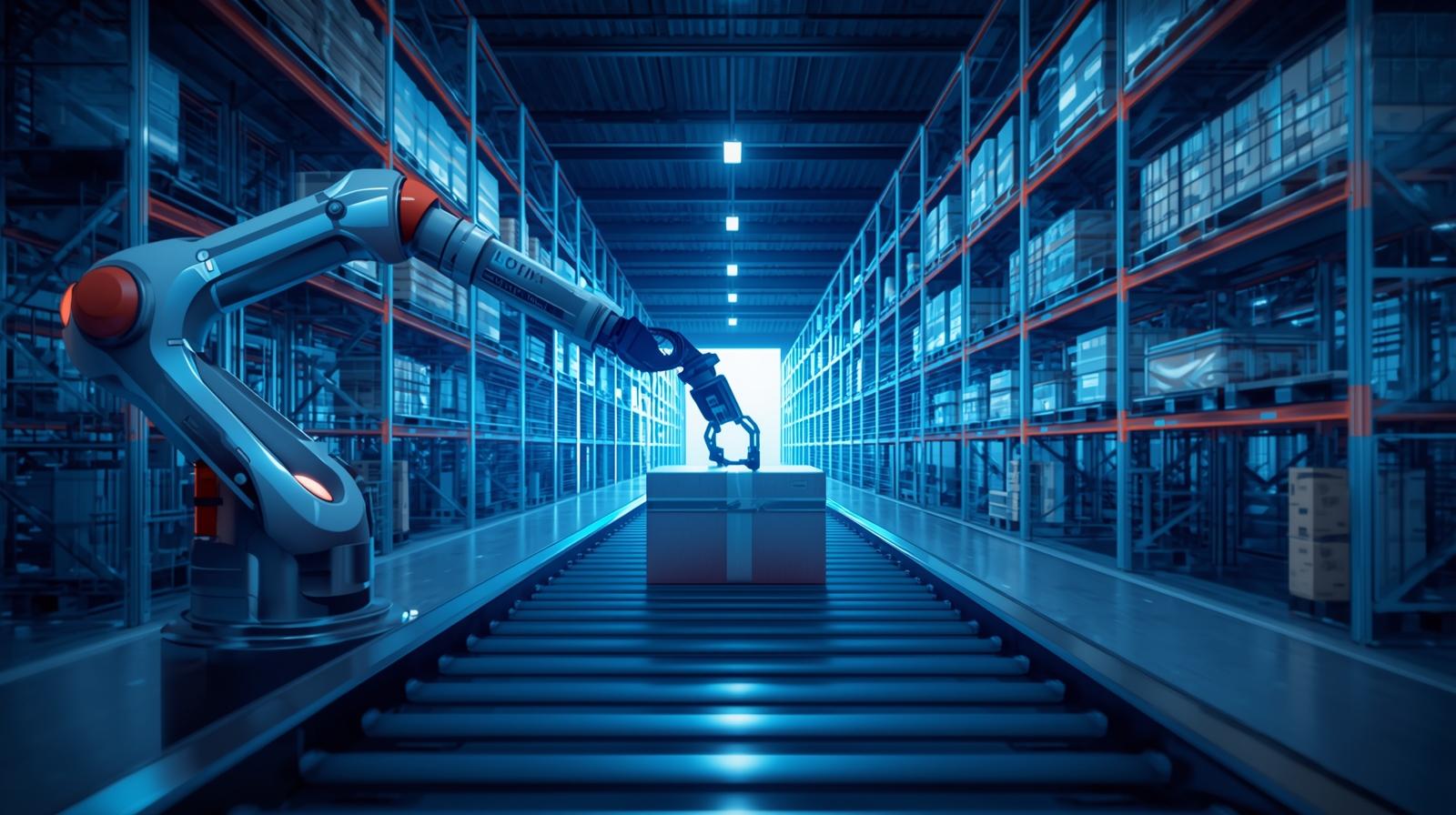
Carton erector machines represent a practical form of automation that delivers measurable returns. By automatically forming and sealing cartons from flat blanks, they reduce reliance on manual labour and improve throughput. Their seamless integration into current packaging lines enhances scalability, while the lower training and maintenance requirements translate directly to cost savings, key factors that make them attractive to investors focused on operational efficiency.
From a cost of capital viewpoint, carton erectors have favorable return patterns. The capital investment is moderate at best, particularly in contrast with full-line automation. Payback would typically be in months rather than years, based upon immediate labour savings and improved throughput. The technology’s reliability provides virtually zero downtime and maintenance costs, with no interruption in operation.
Beyond short-term cash returns, packaging automation addresses several strategic business problems. It helps to improve work safety by eliminating repetitive strain injury hazards in manual carton assembly. It accommodates scalability, with companies being able to increase production without concomitant workforce expansion. It provides flexibility in operations, with firms being able to produce different carton sizes and configurations without time-consuming changeover time.
For international customers of Australian businesses, packaging automation offers a significant advantage: speed to market. Faster packaging speeds mean shorter order-to-shipment cycles, improved customer satisfaction, and the means to operate with reduced inventory levels. This flexibility is particularly useful during bursts in demand or seasons of boom, when labor-intensive operations would mean short-term workforce expansions.
The Integration Advantage
While stillage systems and carton erectors add value individually, their integration adds multiplicative value. Businesses that invest in both technologies achieve end-to-end operational efficiency — from receiving and storage to packaging and shipping.
This consolidation optimizes material flow across the plant. Products are brought in and moved into neat stillage storage, where they are protected and readily accessible. During order filling, products move swiftly from storage to carton erectors in packing stations. The process is streamlined, enhanced in safety, and more dependable.
The output of data by modern systems generates more strategic value. Firms are able to accurately view the usage of storage capacity, packaging quantities, and throughput limitations. This visibility enables continuous improvement, with management being able to change operations according to tangible performance data rather than assumptions. Investors benefit from this transparency of operations to provide confidence to the management to generate optimal returns.
Investment Implications
The adoption of stillage systems and packaging automation reflects broader trends that smart investors should be monitoring. Australian companies are turning in greater numbers to operational efficiency and capacity for technology. It’s spurred by competitive necessities, regulation, and workforce planning. Companies that shift to take advantage of these technologies place themselves in position for sustainable growth; those who delay risk getting passed by more efficient competitors.
There are opportunities for investment at more than one level. Investment directly in companies producing or distributing such systems capitalizes on the growth in demand for industrial infrastructure. Investment in companies that adopt these technologies exposes one to increased operating efficiency and widening of margins. Both means offer means of accessing Australia’s industrial modernization.
The regulatory environment reinforces this trend. Australian workplace health and safety standards increasingly prefer engineered solutions to manual handling practices. Environmental laws promote efficient operations with reduced waste and energy usage. These regulatory tailwinds drive consistent demand for the technologies highlighted in this brief.
Demographic factors also support the investment thesis. Australia’s ageing worker population and relatively high labour costs make automation economically feasible. Younger workers increasingly prefer more technical work over repetitive manual labour, further driving adoption of automation. These secular demographic patterns ensure ongoing demand for efficiency-enhancing technologies.
Risk Considerations
While the opportunities are enticing, investors must consider issues that can arise. Technology adoption has the upfront cost of capital that some firms can delay during uncertain economic times. Complexity of integration can extend implementation timelines and expenses beyond initial estimates. Competitive forces can compress margins for players in technology when the market matures.
These risks are avoidable. The minimal initial investment of stillage and carton erecting systems makes their uptake viable even for medium-sized firms. The established ROI of the technologies provides sound justifications for investing even in risk-averse economic conditions. The essentiality of storage and packaging ensures sustained demand oblivious to economic fluctuations.
Investment in industry in Australia is no longer about funding infrastructure — it’s about supporting smart, technology-driven development. Items like stillage systems and carton erecting machines show how automation and efficiency can deliver measurable returns, from higher yields to cost savings.
The Australian businesses adopting these technologies are building competitive moats through operational excellence. They reduce costs while improving quality. They enhance safety as well as productivity. They build scalable operations that can support long-term growth. For investors, these characteristics describe exactly the qualities that drive sustained value creation.
As the economy of Australia is always evolving, survivors in the businesses will be those that embrace operational excellence through astute uptake of technology. For the investors, taking this step today opens up the possibility of better operational resilience, higher profitability, and long-term sustainable growth in one of the most stable economies of the world. The industrial revolution occurring within Australia is not merely a business prospect, but also an investment in working towards more efficient, competitive, and sustainable businesses in the future.