Custom T-shirts are a popular choice for personal fashion statements, business promotions, team events, and brand marketing. However, selecting the right printing method can be overwhelming, given the various techniques available.
The right method depends on factors like budget, fabric type, design complexity, and order quantity. This guide explores the different printing methods for Custom T-Shirt Printing to help you make an informed decision.
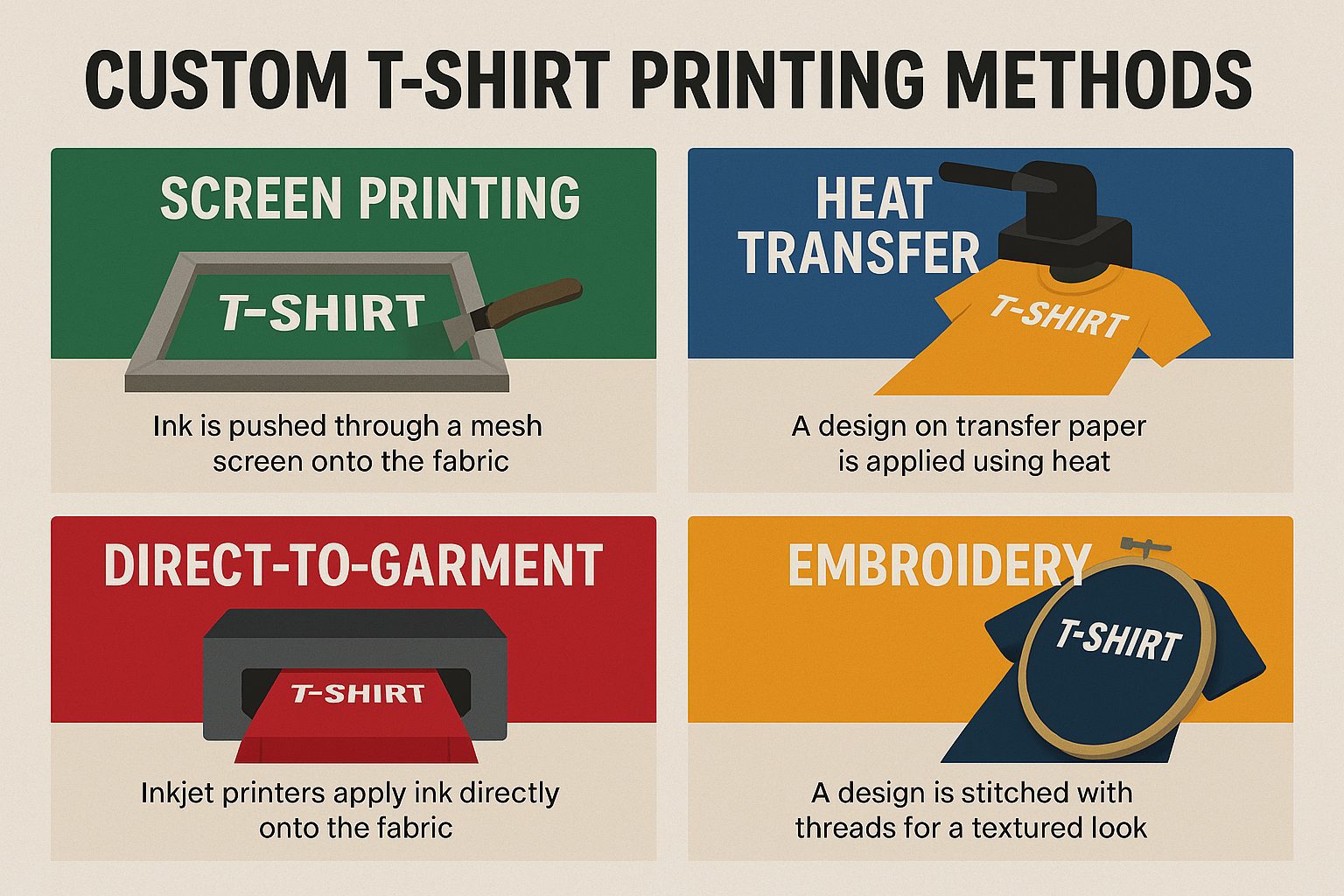
Screen Printing
Pros:
- Produces vibrant and long-lasting prints
- Cost-effective for bulk orders
- Works well on cotton and polyester fabrics
Cons:
- High setup costs for small orders
- Limited to simple designs with few colors
- Not suitable for intricate details or color gradients
Best For:
Screen printing is ideal for large batch orders, corporate uniforms, sports jerseys, and promotional merchandise.
Direct-to-Garment (DTG) Printing
Pros:
- Excellent for complex, full-color designs
- Suitable for small orders or one-off prints
- Works well on 100% cotton fabrics
Cons:
- Not cost-effective for bulk production
- Prints may fade over time with frequent washing
- Slower production compared to screen printing
Best For:
DTG is perfect for small-scale custom orders, detailed artwork, and personalized designs with intricate color variations.
Heat Transfer Printing
Pros:
- Suitable for both small and large orders
- Can print complex and colorful designs
- Works on various fabric types
Cons:
- Prints may crack or peel over time
- Less breathable compared to screen or DTG prints
- Not as durable as other printing methods
Best For:
Heat transfer printing is great for small custom orders, event T-shirts, and multi-colored designs with high detail.
Sublimation Printing
Pros:
- Produces high-quality, durable prints
- Best for all-over printing designs
- Ink becomes part of the fabric, preventing peeling or cracking
Cons:
- Limited to light-colored polyester fabrics
- Not suitable for cotton garments
- Higher costs for small orders
Best For:
Sublimation printing is ideal for athletic wear, polyester-based T-shirts, and designs requiring full-color coverage.
Vinyl Printing
Pros:
- Offers a smooth and professional finish
- Durable and resistant to fading
- Great for lettering and logo designs
Cons:
- Limited to simple designs and single-color prints
- Not suitable for large batch printing
- May feel heavy on the fabric
Best For:
Vinyl printing works best for custom sports jerseys, work uniforms, and minimalist designs with text or logos.
Factors to Consider When Choosing a Printing Method
Order Size
- Bulk orders: Screen printing is the most cost-effective.
- Small orders or one-offs: DTG and heat transfer printing are better options.
Design Complexity
- Simple designs with few colors: Screen printing or vinyl printing is suitable.
- Detailed or full-color designs: DTG, sublimation, or heat transfer printing is a better fit.
Fabric Type
- Cotton: Works well with screen printing, DTG, and vinyl printing.
- Polyester: Best suited for sublimation and heat transfer printing.
Durability Requirements
- For long-lasting wear: Screen printing and sublimation printing provide the best durability.
- For short-term use (e.g., event T-shirts): Heat transfer and vinyl printing offer quick and affordable solutions.
Budget
- Low-cost bulk printing: Screen printing is ideal.
- Affordable small orders: Heat transfer or DTG is a great option.
- Premium, high-quality finish: Sublimation and vinyl printing are best.
Conclusion
Choosing the right T-shirt printing method depends on your specific needs, including budget, order size, fabric type, and design complexity. Screen printing remains the go-to for bulk orders, while DTG and sublimation printing offer excellent quality for intricate designs. Heat transfer and vinyl printing serve as versatile solutions for various applications. By evaluating your requirements, you can select the best method to bring your custom T-shirt designs to life.