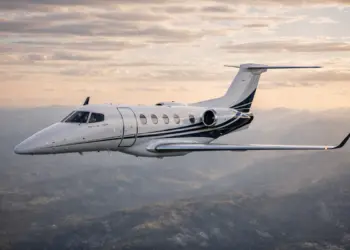
In today’s high-velocity corporate world, Private Jets Business Travel has shifted from being a luxury perk to a strategic advantage. For decades, executives relied on commercial airlines navigating rigid schedules, crowded terminals, and unpredictable delays. However, as global markets expanded and competition intensified, time became the most valuable executive asset. Companies began seeking smarter mobility solutions that aligned with agility, discretion, and productivity.
Private aviation emerged as that solution. Rather than adapting business operations to airline timetables, corporations now align travel around their strategic priorities. This shift has redefined how leaders approach negotiations, site visits, investor relations, and cross-border expansion. Moreover, with technological advancements and broader access models such as charter and fractional ownership, private aviation is no longer limited to Fortune 100 giants.
Consequently, Private Jets Business Travel has become an essential pillar of corporate strategy. From accelerating deal cycles to protecting confidential discussions, private aviation is actively reshaping executive mobility in measurable ways.
The Evolution of Business Travel
Business travel has evolved dramatically over the last century. Initially, railways and ocean liners connected markets. Later, commercial aviation democratized global connectivity. First-class cabins, airport lounges, and priority boarding were designed to accommodate executives who required comfort and speed.
However, commercial travel—even in premium cabins still operates within a mass-transport model. Executives share space, adhere to fixed routes, and accept delays beyond their control. As globalization intensified, this model began to show limitations.
Private aviation, once reserved for heads of state and ultra-high-net-worth individuals, gradually entered mainstream corporate strategy. Advances in aircraft efficiency, booking platforms, and regulatory frameworks made access easier. Consequently, businesses discovered that private aviation was not merely about luxury it was about operational leverage.
Time Efficiency and Productivity Advantages
Time is the currency of leadership. A CEO’s schedule can determine whether a merger closes or an opportunity slips away.
Private Jets Business Travel significantly reduces time loss in multiple ways:
-
No long security queues
-
Access to smaller regional airports
-
Direct routing without layovers
-
Flexible departure times
-
Reduced boarding procedures
Moreover, private terminals (FBOs) streamline arrivals and departures, often allowing passengers to arrive just 15–20 minutes before takeoff.
The productivity benefits are equally compelling. Instead of losing half a day in transit, executives use the cabin as a secure mobile office. Meetings, presentations, and strategy sessions can take place in-flight. Consequently, travel time transforms into decision-making time.
In high-stakes industries finance, energy, technology this efficiency can accelerate deal timelines by days or even weeks.
Privacy, Security, and Executive Flexibility
Privacy remains one of the strongest drivers of private aviation adoption.
On commercial flights, even first-class passengers share space with strangers. Confidential documents, strategic discussions, or merger negotiations risk exposure. However, private aircraft offer a controlled environment. Every passenger is vetted. Every conversation remains contained.
Security also improves. Executives avoid crowded terminals, reducing risks related to personal safety and data exposure. For high-profile leaders or politically sensitive negotiations, discretion becomes invaluable.
Flexibility is another major advantage. If a meeting runs late, departure times can adjust accordingly. If weather impacts one airport, alternative regional options are often available. Therefore, decision-makers remain in control rather than at the mercy of airline operations.
Cost Considerations vs Commercial First-Class Travel
At first glance, private jets appear significantly more expensive. However, a comprehensive cost analysis often reveals a more nuanced picture.
When factoring:
-
Executive hourly value
-
Lost productivity
-
Multi-city travel efficiency
-
Team travel costs
-
Overnight accommodation savings
Private aviation can become strategically cost-competitive—particularly for group executive travel.
Commercial First-Class vs Private Jet Travel
| Factor | Commercial First-Class | Private Jet Travel |
|---|---|---|
| Schedule Flexibility | Fixed airline schedule | Fully customizable |
| Airport Access | Major hubs only | 5,000+ regional airports |
| Privacy | Limited | Complete |
| Security | Standard TSA screening | Private terminal screening |
| Productivity | Moderate | High (meeting-ready cabin) |
| Multi-city Trips | Complex logistics | Efficient same-day routing |
| Time at Airport | 90–120 minutes | 15–30 minutes |
Consequently, for corporations prioritizing agility, the value equation often favors private aviation.
Onboard Technology and Connectivity
Modern business aircraft are technological powerhouses.
High-speed satellite Wi-Fi enables seamless video conferencing. Encrypted communication systems protect sensitive corporate data. Noise-reduction engineering creates optimal working environments. Moreover, customized cabin configurations allow boardroom-style seating or collaborative layouts.
In contrast to older perceptions, today’s private jets are not simply luxurious—they are engineered productivity environments. As hybrid and remote work models expand, airborne connectivity ensures executives remain continuously operational.
Sustainability Challenges and SAF Adoption
However, private aviation faces scrutiny regarding environmental impact. Critics argue that private jets produce higher emissions per passenger compared to commercial flights.
The industry is responding. Sustainable Aviation Fuel (SAF) adoption is increasing across major operators. SAF can reduce lifecycle carbon emissions by up to 80% compared to conventional jet fuel. Additionally, newer aircraft models are designed for greater fuel efficiency and lower noise footprints.
Moreover, many corporations offset emissions through verified carbon programs. While sustainability remains a challenge, innovation and regulatory pressure are driving measurable progress.
Consequently, environmental responsibility is becoming integrated into Private Jets Business Travel decision-making frameworks.
Corporate Jet Programs and Fractional Ownership
Access to private aviation has diversified significantly.
Companies now choose among:
-
Full aircraft ownership
-
Fractional ownership
-
Jet card programs
-
On-demand charter
Each model aligns with different usage patterns and capital strategies.
Ownership vs Charter vs Fractional Model
| Model | Best For | Capital Investment | Flexibility | Control Level |
|---|---|---|---|---|
| Full Ownership | Heavy, consistent travel | Very High | High | Complete |
| Fractional Ownership | Moderate frequent use | Medium | High | Shared |
| Charter | Occasional travel | Low (pay per flight) | Very High | Limited |
| Jet Card Program | Predictable flight hours | Moderate | High | Moderate |
Therefore, private aviation is no longer a binary decision. Companies structure programs aligned with financial strategy, travel frequency, and operational priorities.
Impact on Global Deal-Making and Executive Mobility
In cross-border transactions, speed often determines competitive advantage.
Private Jets Business Travel enables executives to visit multiple cities in a single day—conducting plant inspections, investor meetings, and regulatory consultations without overnight delays. Consequently, decision cycles shorten.
Private aviation also supports emerging market access. Smaller regional airports—often closer to industrial hubs become accessible without routing through congested international gateways.
Moreover, executive mobility directly influences talent acquisition and board engagement. Board members can attend strategic sessions without sacrificing entire travel days. Global subsidiaries receive more frequent leadership oversight. Therefore, private aviation strengthens corporate cohesion across geographies.
The Future of Private Aviation in Corporate Strategy
Looking ahead, private aviation is likely to become more integrated—not less—into corporate mobility strategies.
Several trends support this outlook:
-
Increased globalization of mid-market firms
-
Rising executive security concerns
-
Digital booking transparency
-
Expansion of SAF infrastructure
-
Growth of hybrid work models
However, future growth will depend on balancing environmental accountability with operational necessity. Electric and hybrid propulsion technologies are under development, although widespread commercial deployment remains years away.
Consequently, Private Jets Business Travel will continue evolving—not as a symbol of excess, but as a strategic mobility tool aligned with executive performance metrics.
Forward-thinking companies already evaluate travel ROI in measurable terms. When time-to-decision, deal velocity, and leadership productivity become quantifiable KPIs, private aviation frequently demonstrates tangible value.
Frequently Asked Questions (FAQs)
1. Is Private Jets Business Travel only for large corporations?
No. While large enterprises use it extensively, mid-sized firms increasingly rely on charter or fractional models for strategic travel needs.
2. Is flying private more cost-effective than first-class?
For solo travelers, first-class is typically cheaper. However, for executive teams or multi-city trips, private aviation can be cost-competitive when productivity and time savings are considered.
3. How secure is private jet travel?
Private aviation offers enhanced security due to private terminals, controlled passenger lists, and reduced public exposure.
4. What is Sustainable Aviation Fuel (SAF)?
SAF is a renewable jet fuel alternative that significantly reduces lifecycle carbon emissions compared to traditional jet fuel.
5. What is the difference between charter and fractional ownership?
Charter is pay-per-flight with no long-term commitment. Fractional ownership involves purchasing a share of an aircraft for guaranteed access and predictable costs.