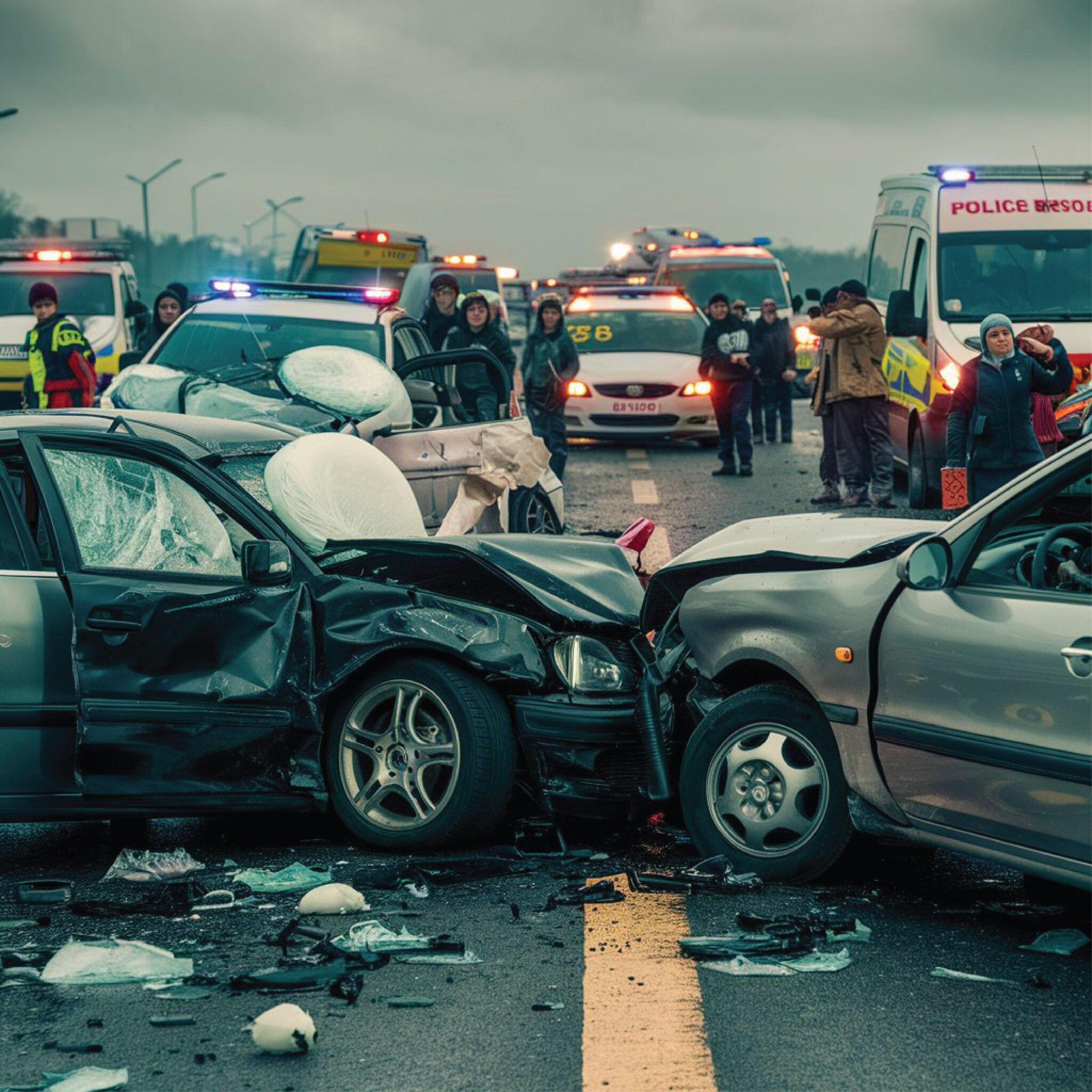
Most people have seen the footage of a highway pileup that seems to go on forever. It starts with one puff of smoke or a single brake light, and suddenly a dozen cars are tangled together in a mess of steel. It is a terrifying example of how quickly control can vanish during a normal morning commute.
The speed of these events is what makes them so difficult to manage for the average driver. You might be focused on the road ahead, but you cannot always see the trouble brewing three cars up the line. Once the first impact happens, the space between vehicles disappears faster than anyone can react or swerve out of the way.
These incidents show how interconnected our safety really is on the public roads. A single lapse in focus or an aggressive lane change can ripple through a line of traffic in a matter of seconds. When one mistake leads to another, the resulting chain reaction accidents become a nightmare of insurance claims and medical bills for everyone involved.
In some cases, these chain reactions are triggered by a driver who should never have been on the road in the first place. Alcohol or drug impairment slows reaction time and impairs judgment, turning an already dangerous situation into a catastrophic one. When a DUI is involved, the consequences often extend far beyond a single vehicle, affecting dozens of innocent people in seconds.
Speed Distance and Timing Errors
Following too closely is perhaps the most common trigger for a multi-car collision. People often overestimate their own reaction time and the stopping power of their brakes when traffic is moving at high speeds. They stay just a few feet behind the car in front, leaving no room for any sudden adjustments or stops.
Speeding amplifies every single mistake because it reduces the time available to make a decision. A car traveling at seventy miles per hour covers a lot of ground in the blink of an eye. If the lead driver slams on their brakes, the person behind them has almost no chance of stopping before the metal hits the bumper.
Timing errors during a lane change can also set off a wave of panic throughout a pack of cars. If someone cuts off a truck, the driver behind them might swerve to avoid a hit, only to strike someone else in the next lane. These small miscalculations create a sequence of events that most drivers simply cannot stop.
Driver Reaction Limitations
Human biology is not built to handle the split-second demands of a high-speed highway crisis. There is a specific delay between the moment your eyes see a brake light and the moment your foot hits the pedal. This perception time is often long enough for the distance between two vehicles to vanish completely.
Panic reactions often make a bad situation much worse for everyone sharing the pavement. A driver might oversteer or slam on their brakes so hard that they lose all traction and start to slide. These erratic movements are difficult for the people following behind to predict or manage during a sudden and violent event.
Most people focus entirely on the car directly in front of them rather than looking further up the road. This tunnel vision prevents them from seeing a pileup until it is already happening right under their nose. By the time they realize there is trouble, their options for escaping the mess are already gone.
Roadway and Traffic Conditions
Environmental factors can act like a giant megaphone for any small driving mistake. Heavy rain or a patch of black ice makes it impossible for tires to grip the asphalt when a sudden stop is required. Once a car starts to skid, it becomes a projectile that can strike multiple other vehicles in its path.
Traffic density also plays a major role in how many cars end up in the final pileup. On a crowded freeway, there is nowhere to go when things go sideways in the middle of the lanes. The sheer volume of vehicles ensures that any impact will involve more than just the two original parties.
Poor lighting or heavy fog reduces visibility to the point where drivers are essentially flying blind at high speeds. They might not even know there is a crash ahead until they feel the impact themselves. These conditions turn a minor fender bender into a massive event that stretches across every single lane.
Why Fault Becomes Complicated
Sorting out who is responsible for a pileup is one of the biggest challenges for any investigator. It is rarely a simple case of one person hitting another and stopping right there. Instead, there are often dozens of separate impacts that must be analyzed to find the true root cause of the chaos.
Each insurance company will try to argue that their client was not the one who started the trouble. They might claim that someone else hit them first, pushing them into the car ahead. This shifting of blame creates a very long and confusing process for everyone who is trying to get their repairs paid.
Witness statements are often contradictory because everyone saw the event from a different angle and a different distance. One person might swear the light was red while another says it was still yellow. Untangling these competing stories requires a level of detail that standard insurance claims simply do not provide.
Conclusion
A single moment of distraction or a reckless choice can change the lives of dozens of people in an instant. The road is a shared space where every action has a consequence that ripples far beyond the original event. It is a reminder of how much responsibility we carry every time we turn the key.
Safety is not just about your own skills but about anticipating the mistakes of others on the highway. Leaving enough space between cars is the only real defense against a sequence of events that is otherwise impossible to control. It provides the buffer needed to react when things go wrong ahead.
While the aftermath of a pileup is always chaotic, there is a logic to how these events unfold and spread. Recognizing the patterns allows for better documentation and a clearer path toward a fair resolution for every victim. Staying alert is the best way to ensure you are not the one who starts the chain.