At the Dubai Business Forum USA at Cipriani in lower Manhattan, Dubai used New York as a stage to outline its next phase of economic growth, with artificial intelligence emerging as a central organizing force. More than 700 U.S. executives, investors, and policymakers gathered alongside the largest overseas delegation Dubai has ever sent to the United States. While panels ranged across capital markets, geopolitics, and global growth, artificial intelligence surfaced repeatedly as a central pillar of Dubai’s next phase of expansion.
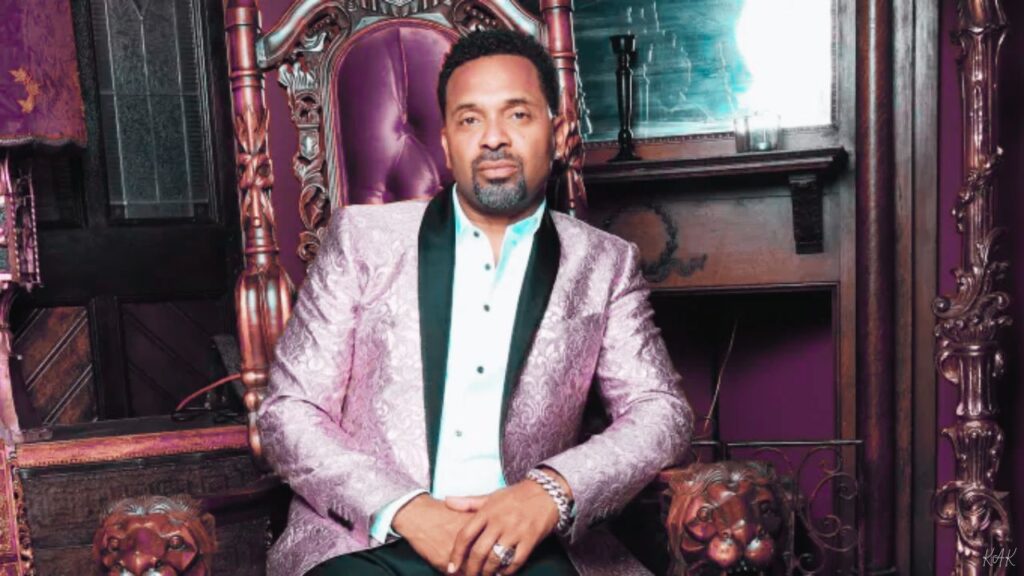
In a conversation at the forum, Saeed AlGergawi, Vice President of the Dubai Chamber of Digital Economy, described how the Emirate views AI within the arc of its broader economic transformation.
“We view AI as the next oil,” he said. “Dubai peaked in oil production in the nineties, and today oil is under one percent of GDP. We see AI as the next enabler, not just economically, but in our ability to test and deploy the latest technologies.”
 That view is shaping where Dubai places capital and how it builds infrastructure. Low energy costs have made the city increasingly attractive for data centers, a trend already reinforced by large-scale investments from global firms. “The cost of energy is quite low,” AlGergawi said. “That makes data centers more feasible in Dubai than in many other parts of the world.”
Still, he emphasized that infrastructure is only one piece of the strategy. Dubai’s leadership frames AI primarily as a tool for improving how the city functions day to day. “A big focus for Dubai is quality of life,” he said. “There’s a mandate for government entities to provide the best services to anyone they interact with. That’s how we view AI, as a service enhancement.”
Every government entity in Dubai now has a chief AI officer responsible for implementation and oversight. According to AlGergawi, accountability is central to that structure. “They’re held responsible for adopting AI,” he said, “and at the same time making sure they’re using the right type of AI in the most ethical way possible.”
Dubai’s approach to testing new technologies is unusually permissive by global standards. AlGergawi pointed to a cultural and regulatory willingness to experiment. “When you look at the inclination to say yes when it comes to testing technologies, that’s where Dubai has an advantage,” he said. “As long as it’s a technology we can test, we would love to test it.”
Much of that experimentation is led by government in partnership with the private sector. “A lot of the testing of these technologies is actually led by government,” he said. “That can sound counterintuitive, but it allows solutions to be deployed quickly and at scale.”
Talent is another recurring theme in Dubai’s AI strategy. The city’s workforce draws from dozens of nationalities, often within the same company, with few geopolitical constraints. “Dubai is one of the few places where geopolitics doesn’t play a big role in hiring talent,” AlGergawi said. “Companies can hire the right people whenever it makes business sense.”
Those hiring decisions are reinforced by long-term residency options, including golden visas for scientists, entrepreneurs, and investors, alongside broader quality-of-life considerations. AlGergawi described it as a comprehensive offering. “Housing, schooling, healthcare, family-friendly options,” he said. “All of that creates an easy decision for people who want to live and work in the city.”
On the question of ethics, Dubai has opted for a deliberately narrow framework. “We keep it very simple,” AlGergawi said. “If an application of AI has a controversial impact or a negative effect on quality of life, we don’t use it. If it improves services and quality of life, we do.”
That philosophy has guided policy since the UAE launched its national AI strategy in 2017. “From day one, we’ve been clear,” he said. “We focus on AI that improves quality of life rather than AI for its own sake.”
Dubai’s policy framework is designed to evolve quickly. The Dubai AI Blueprint is updated annually through consultations between government leaders, investors, and AI entrepreneurs. “Every year, all heads of government and leading AI stakeholders meet to discuss what’s changing,” AlGergawi said. “That becomes the blueprint for that year, and it’s updated annually.”
The UAE has already translated that strategy into tangible outputs. The country has developed some of the largest large language models for the Arabic language, along with newer models such as K2. “All of these models are open sourced,” AlGergawi said. “They’re available for people around the world to use.” Several of them, he noted, rank among the most widely adopted models globally, according to Hugging Face.

For companies considering Dubai as a base, the business case is intentionally straightforward. “From a tax perspective, it’s simple,” AlGergawi said. “There’s a nine percent corporate tax on profits above roughly $100,000.” Beyond taxation, the Dubai Chambers provide companies with access to government stakeholders, investors, and regulatory sandboxes. “We support them free of cost,” he said. “Whether it’s access to government, investors, or influencing policy, we help create the ecosystem they need.”
The Dubai Business Forum USA offered a clear view into how the Emirate is organizing its approach to artificial intelligence. Policy, infrastructure, and talent development are being advanced in parallel, with an emphasis on testing, implementation, and regular reassessment.
For U.S. executives evaluating where to build or expand AI-driven businesses, Dubai is positioning itself as a jurisdiction with defined parameters and a high tolerance for experimentation. Annual policy updates, direct access to regulators, and a growing base of technical infrastructure are central to that approach.
As AlGergawi described it, “If it works for business, it works for Dubai.” In an environment where long-term planning increasingly depends on regulatory clarity and execution speed, that framework is likely to draw continued attention from global investors and operators alike.