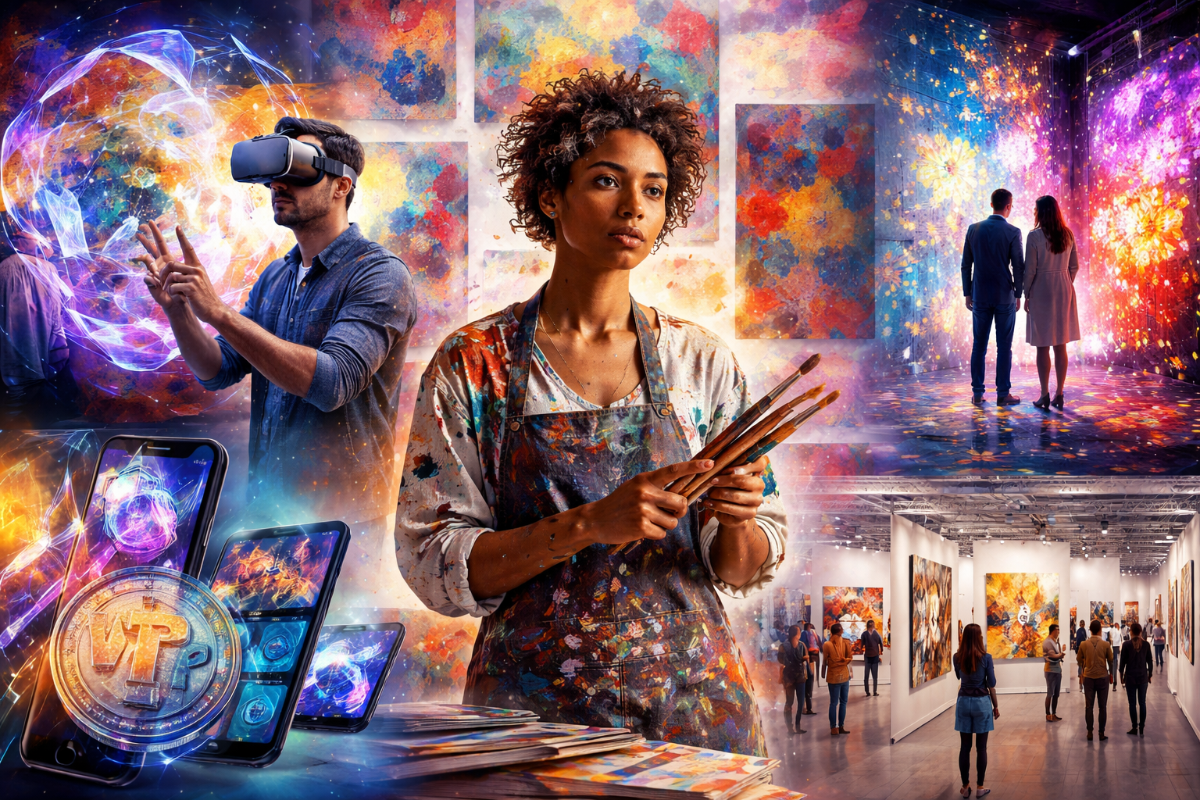
Contemporary artists are redefining what creativity means in the 21st century. Unlike artists of earlier movements who worked within clearly defined styles, contemporary artists operate in a fluid world shaped by globalization, digital technology, social change, and rapid communication. Their work does not simply hang on gallery walls; it lives online, travels through social media, appears in immersive installations, and intersects with artificial intelligence. As a result, contemporary artists influence not only the art world but also fashion, architecture, branding, politics, and everyday culture.
In today’s interconnected environment, contemporary artists respond to real-time global events, identity debates, environmental crises, and technological revolutions. Their creative practices reflect the complexity of modern life. Moreover, their ability to collaborate across disciplines allows them to shape conversations far beyond traditional art institutions.
Understanding how contemporary artists shape today’s creative landscape requires examining their defining characteristics, their relationship with technology, their influence on markets, and the tension between artistic integrity and commercialization. Together, these factors reveal why contemporary art is one of the most dynamic cultural forces of our time.
What Defines Contemporary Artists in Today’s Era?
Contemporary artists are generally defined as creators working from the late 20th century to the present day. However, time period alone does not fully explain them. What truly distinguishes contemporary artists is their approach.
First, they embrace conceptual depth. The idea behind the artwork often matters as much as or more than the object itself. Moreover, contemporary artists frequently challenge social norms, question power structures, and explore identity, race, gender, and globalization.
Second, they work across mediums. Painting and sculpture still exist; however, these artists also use video, digital installations, performance, augmented reality, and interactive experiences. Consequently, the boundaries between art forms continue to blur.
Third, contemporary artists often prioritize dialogue. Their work invites viewers to participate, reflect, and even co-create meaning. This interactive dimension makes their art more accessible yet intellectually layered.
Modern Art vs Contemporary Art
Understanding contemporary artists becomes clearer when compared to modern artists. Although the terms are often confused, they represent distinct periods and philosophies.
| Feature | Modern Art | Contemporary Art |
|---|---|---|
| Time Period | Late 19th century to mid-20th century | Late 20th century to present |
| Focus | Breaking from tradition, formal experimentation | Social issues, identity, globalization |
| Mediums | Painting, sculpture, printmaking | Mixed media, digital, installation, performance |
| Audience Interaction | Mostly observational | Often interactive and immersive |
| Technology Integration | Limited | Deeply integrated, including AI and VR |
Modern art focused on innovation within formal structures. In contrast, contemporary artists operate within a global conversation, often responding directly to current events and emerging technologies.
How Contemporary Artists Influence Culture, Media, and Design?
The influence of contemporary artists extends far beyond museums. Their aesthetic decisions shape branding, fashion trends, interior design, and digital experiences.
For example, minimalist design trends in technology products echo conceptual art movements. Street art aesthetics influence advertising campaigns. Moreover, collaborations between artists and luxury brands have become common, blending cultural commentary with commercial appeal.
In media, contemporary artists contribute to visual storytelling in film, music videos, and virtual reality. Their experimental techniques often inspire directors and digital designers. Consequently, the creative industries increasingly rely on artistic innovation to stay culturally relevant.
Furthermore, contemporary artists shape political discourse. Through installations and public art, they address migration, climate change, and social justice. Their work creates emotional engagement that statistics alone cannot achieve.
The Role of Digital Platforms and Social Media
Digital platforms have transformed how contemporary artists share and monetize their work. In previous decades, artists depended heavily on galleries and curators. However, today’s creators can build audiences directly through Instagram, TikTok, online marketplaces, and NFT platforms.
Social media allows contemporary artists to:
-
Showcase works instantly
-
Engage directly with audiences
-
Sell without intermediaries
-
Build personal brands
Moreover, algorithms influence visibility, creating new challenges and opportunities. Artists must balance authenticity with digital strategy. Consequently, marketing knowledge has become almost as important as creative skill.
Digital platforms also democratize exposure. Artists from regions previously underrepresented in global art markets now gain visibility online. Therefore, global representation has expanded significantly.
Traditional Galleries vs Digital Platforms
The rise of digital art spaces has reshaped the art ecosystem.
| Feature | Traditional Galleries | Digital Platforms |
|---|---|---|
| Accessibility | Limited by location | Global reach |
| Gatekeeping | Curator-driven | Algorithm-driven |
| Sales Model | Physical exhibitions | Online sales, NFTs, direct commissions |
| Audience Engagement | In-person events | Interactive, immediate feedback |
| Cost Barrier | High overhead | Lower entry costs |
Traditional galleries still offer prestige, networking, and institutional validation. However, digital platforms provide speed, flexibility, and independence. Contemporary artists often use both strategically.
The Intersection of Art, Technology, and AI
One of the most defining aspects of contemporary artists is their engagement with technology. Artificial intelligence, augmented reality, blockchain, and immersive media are not separate industries—they are artistic tools.
AI-generated art, for instance, raises questions about authorship and creativity. Is the artist the coder, the machine, or the collaborator? Contemporary artists explore these philosophical tensions rather than avoid them.
Moreover, immersive technologies allow viewers to enter artworks physically or virtually. Interactive installations respond to movement, sound, or biometric data. Consequently, art becomes an experience rather than a static object.
Blockchain technology has also transformed ownership through NFTs. Although controversial, this innovation challenges traditional ideas of scarcity and value.
Diversity, Identity, and Global Representation
Diversity lies at the heart of contemporary art. Unlike earlier art movements dominated by Western perspectives, contemporary artists come from a wide range of cultural, racial, and socioeconomic backgrounds.
Global biennales and art fairs showcase voices from Africa, South Asia, Latin America, and the Middle East. Moreover, diaspora artists explore hybrid identities shaped by migration and globalization.
Themes of gender identity, indigenous heritage, and postcolonial critique are central to many contemporary artists. Their work reflects lived experiences and challenges historical exclusion.
Consequently, audiences encounter narratives that were previously marginalized. This shift not only diversifies artistic production but also reshapes institutional priorities.
The Rise of Experiential and Immersive Art
Experiential art has become a defining feature of contemporary creativity. Large-scale installations, projection mapping, and sensory environments transform viewers into participants.
Immersive exhibitions attract younger audiences seeking shareable experiences. However, beyond social media appeal, these works create emotional intensity. They engage sight, sound, touch, and sometimes even smell.
Moreover, experiential art aligns with the broader experience economy. People increasingly value memorable interactions over material possessions. Contemporary artists respond by designing environments rather than objects.
Consequently, museums and cultural spaces are evolving architecturally to accommodate large-scale installations.
Commercialization vs Artistic Integrity
As contemporary artists gain global attention, commercialization becomes unavoidable. Collaborations with fashion houses, tech brands, and corporations offer financial stability and visibility.
However, tension arises. Does commercial success compromise artistic authenticity?
Some argue that market pressures influence content and style. Others believe financial freedom allows greater experimentation. The reality often lies between these extremes.
Therefore, contemporary artists must navigate strategic partnerships carefully. Maintaining integrity while engaging markets requires clarity of vision and ethical boundaries.
Impact on Collectors, Galleries, and Global Markets
The global art market has expanded dramatically due to contemporary artists. Auction houses report record-breaking sales for living artists, signaling strong demand.
Collectors today are younger and more international. They research artists online, attend global fairs, and invest in emerging talent. Moreover, digital sales platforms have increased transparency in pricing.
Galleries, consequently, adapt by offering hybrid models—physical exhibitions combined with online viewing rooms. Art fairs integrate virtual tours to reach global audiences.
Additionally, emerging markets in Asia and the Middle East contribute significantly to demand. This geographic diversification reshapes power structures within the art world.
Conclusion
Contemporary artists are not simply creators of objects; they are architects of cultural dialogue. Through digital innovation, global representation, immersive environments, and cross-industry collaboration, they redefine how art functions in society.
Moreover, their willingness to confront political, technological, and social complexity positions them at the center of modern discourse. Consequently, their influence extends far beyond galleries into everyday design, media, and digital life.
As technology evolves and global perspectives expand, contemporary artists will continue shaping the creative landscape—challenging assumptions, redefining value, and transforming how we experience art in the world around us.
Frequently Asked Questions (FAQs)
1. What makes contemporary artists different from modern artists?
Contemporary artists focus on current global issues, use diverse mediums including digital technology, and often create interactive experiences. Modern artists primarily concentrated on formal experimentation within traditional media.
2. How do contemporary artists use social media?
They use social media to showcase work, engage audiences, sell art directly, and build personal brands without relying solely on galleries.
3. Is AI art considered contemporary art?
Yes. Many contemporary artists incorporate AI as a creative tool, exploring authorship, technology, and machine-human collaboration.
4. Why is diversity important in contemporary art?
Diversity expands representation, introduces new narratives, and challenges historical exclusions within the art world.
5. Are contemporary artists financially successful?
Some achieve major commercial success, especially in global markets. However, financial outcomes vary widely depending on exposure, networks, and strategy.