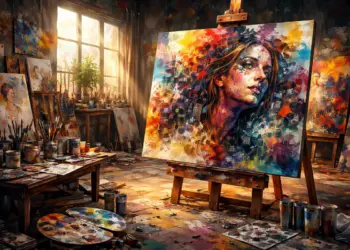
We are drowned in digital images, and permanence has lost its value. We all look at hundreds or even thousands of images each month: birthday celebrations, weddings, anniversaries and even the family meals. And all these images remain digital. Only a few exceptional people worry about the legacy they leave behind, about the beauty of everyday life and about living in the present moment. In their eyes, hand painted portraits are more than just an artwork. It’s a way of life.
The Quiet Return of Heirloom Culture
It’s widely assumed that High Net Worth (HNW) and design-influenced households are the most discerning in terms of the way in which they furnish and decorate their main living spaces. In many cases, such individuals prefer not to simply frame and hang generic photographs on their walls; instead they seek to hang more meaningful pieces – that create an emotional response and are works of art.
For generations the commissioning of formal portraits has traditionally been the domain of the landed families of Britain and the stately homes that they occupied. However in the modern era we have found that with the growing interest in family portraiture as a means of preserving and recording ancestral history, today an equal number of commissions are being received from similarly discerning families, who, like their aristocratic forebears, value not only the aesthetic of a fine portrait but also its intrinsic historical and social worth. A hand painted portrait can be a wonderful way of bridging the generations. Not only does it create a truly lasting focal point in the family home but a work of such longevity and individuality, when compared to the fleeting nature of photography, is far more evocative of the subject in its entirety.
A digital print is a piece of paper, an oil painting is a living entity that evolves with time. The characteristics of an oil painting such as brush strokes, oil colours, their layers and their optical effects cannot be reproduced on paper. An oil painting oxidises with time and generates a patina, which is highly appreciated by art critics, collectors and aficionados.
Why Oil Still Matters in a Digital Age
The distinction between a portrait and a photograph is not simply a matter of semantics. The camera can merely record a face for a photograph. An artist can only take the face and render an interpretation through the process of evolution to bring the person depicted into a more striking light. An artist has to smooth out the harsh shadows of the page and adjust the lighting so as to heighten the emotional state of the subject without losing its inherent beauty. A photograph is a depiction of reality, whereas an art-portrait is a piece of art.
Texture is fundamental to good design. Oil on canvas adds dimension to spaces and works wonderfully with other natural materials such as stone, wood and linen. Artwork isn’t necessarily an after-thought to those of us that spend enormous time curating our interiors to accurately represent ourselves. Rather it’s the element that brings your space to life and truly allows you to be expressed through your environment.
This is just one of the many reasons that custom oil painting commissions have become a growing trend in the United States. Our clients are no longer just looking to have their picture painted, they are looking to have a piece of art that will last for generations to come, and will be a treasured family heirloom.
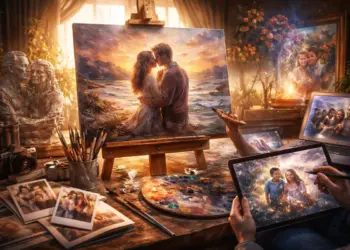
Custom oil painting is an opportunity for families to transform meaningful photographs such as wedding pictures, multi generational pictures and beloved pets into art pieces that can be enjoyed for generations to come, rather than disposable prints.
The Psychology of Gifting Something Permanent
Luxury Gifting Trends Luxury gifting is a significant category within the global luxury goods market. With the rising awareness of the social and environmental responsibility of luxury brands and the increasing concern for sustainability among affluent and high net worth consumers, luxury gifting trends are evolving. High net worth individuals, as well as conscious consumers, are moving away from disposable products and toward unique experiences and meaningful items that hold value beyond a single use.
According to principles of behavioral economics, it’s not necessarily the most luxurious or even the most object-less items that help us bond with people emotionally – it’s the items with the most emotional resonance. A personal artwork can be unique and, therefore, at the intersection of the two most significant criteria.
Consider milestone occasions:
• 50th wedding anniversaries
• Retirement celebrations
• The birth of a first grandchild
• Memorial tributes
• Major career achievements
The moments that change everything. Forever. A hand-painted portrait is an acknowledgement of change and its ripple effect.
All the things we buy as jewelry, as gadgets, they all depreciate in value. Artwork, though, appreciates, both emotionally and financially, and becomes a part of our family legacy.
Art as a Statement of Intentional Living
As many have already noted, there’s also a larger cultural trend at play here. In an era of being constantly on and digitally connected, many are looking for objects that they can actually hold and connect with on a physical level. Vinyl records and fountain pens and beautifully crafted hardcover books and hand-crafted wooden pieces are all ways of rebelling against the world of ones and zeros and returning to something more palpable.
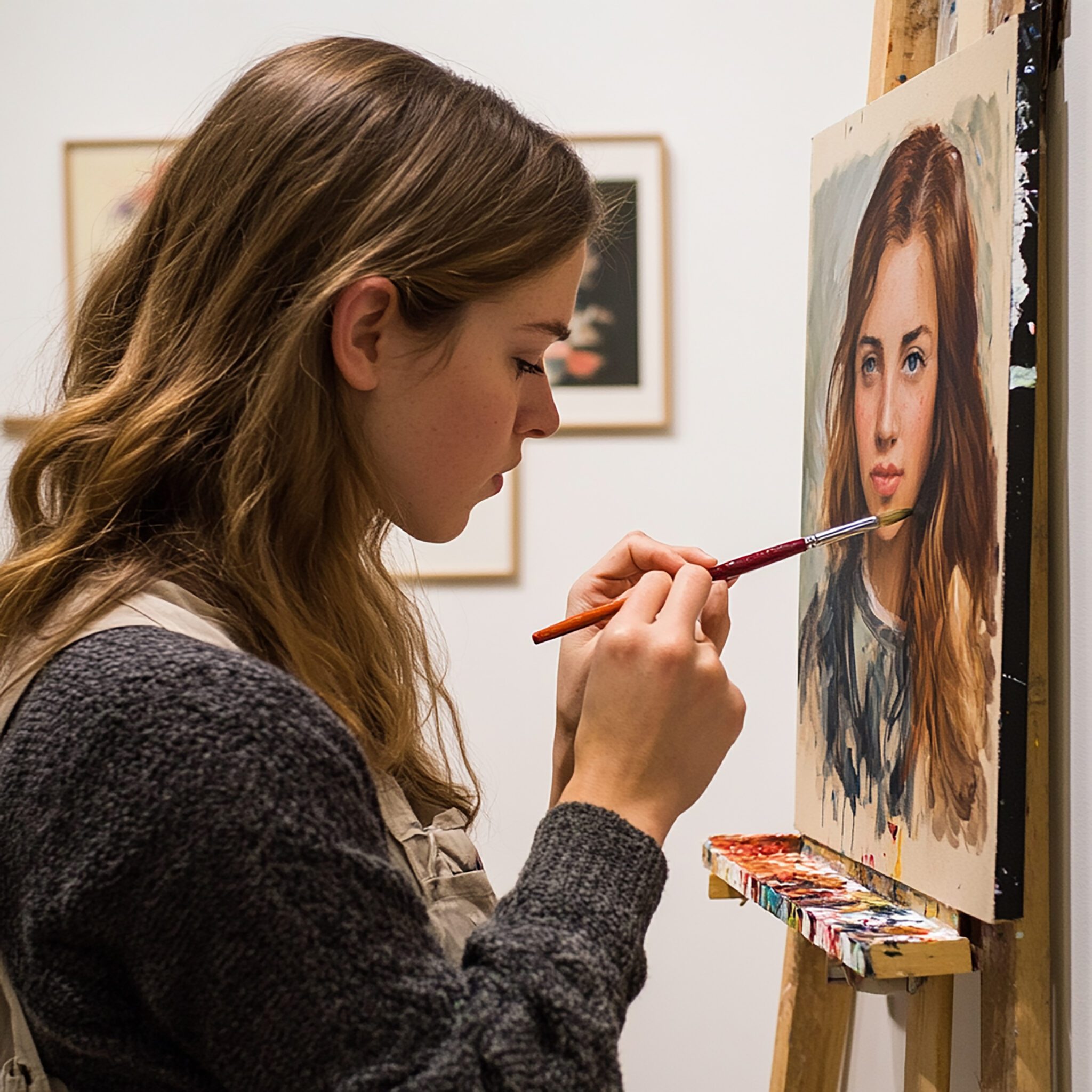
The oil portraiture is a work created in the humanisation style. This art form is a reflection of the time, skill and effort exerted in the creation of such works of art. The numerous brush strokes on the canvas signify the enormous hours of work and above all, the importance of the human hand, which is irreplaceable, more so in this digital age.
Having portraits commissioned is a declaration to oneself and others that one possesses a keen sense of style and considerable discernment. It affirms that working with an artist to produce first rate portraits is seen as a privilege rather than an imposition of time and/or money.
From a design perspective, portraits can be styled in various ways:
• Classic realism for traditional interiors
• Soft, romantic tones for transitional homes
• High-contrast contemporary interpretations for modern spaces
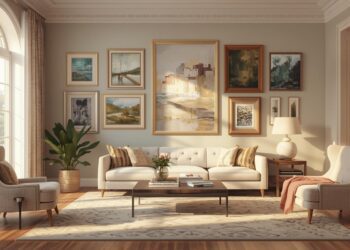
• Gallery-style multi-portrait walls celebrating generational lineage
The versatility makes commissioned artwork adaptable across architectural styles.
The Investment Perspective
Art is a form of investment that cannot be compared with any other commodity in the world of finance. A mass produced piece of wall art that holds no significance or meaning to you or I, loses all value the second it leaves the wall. Compare this to an original piece of custom artwork that is created using talent, time and skill. The value to you the buyer far outweighs any mass produced version. Take a look at the following comparison and let us know your thoughts on the financial value of Art. Please share and subscribe to our channel for more information and news. The Art Investment Channel will post a video shortly explaining further the value of Art. In the meantime if you are interested in commissioning a piece of custom artwork please get in contact.
One tends to think that most families commission portraits because of the emotional attachment they have to the picture, which, of course, is true. But once one starts to think of it as an object that has real artistic value one can’t help but see the value of the uniqueness of the object as it’s something that is inherent to all rarefied luxury goods.
In an age of digital duplication, when you can copy and re-copy a digital file an infinite number of times, a hand-painted work of art can never be duplicated.