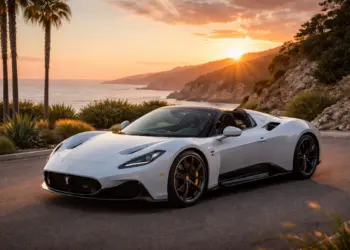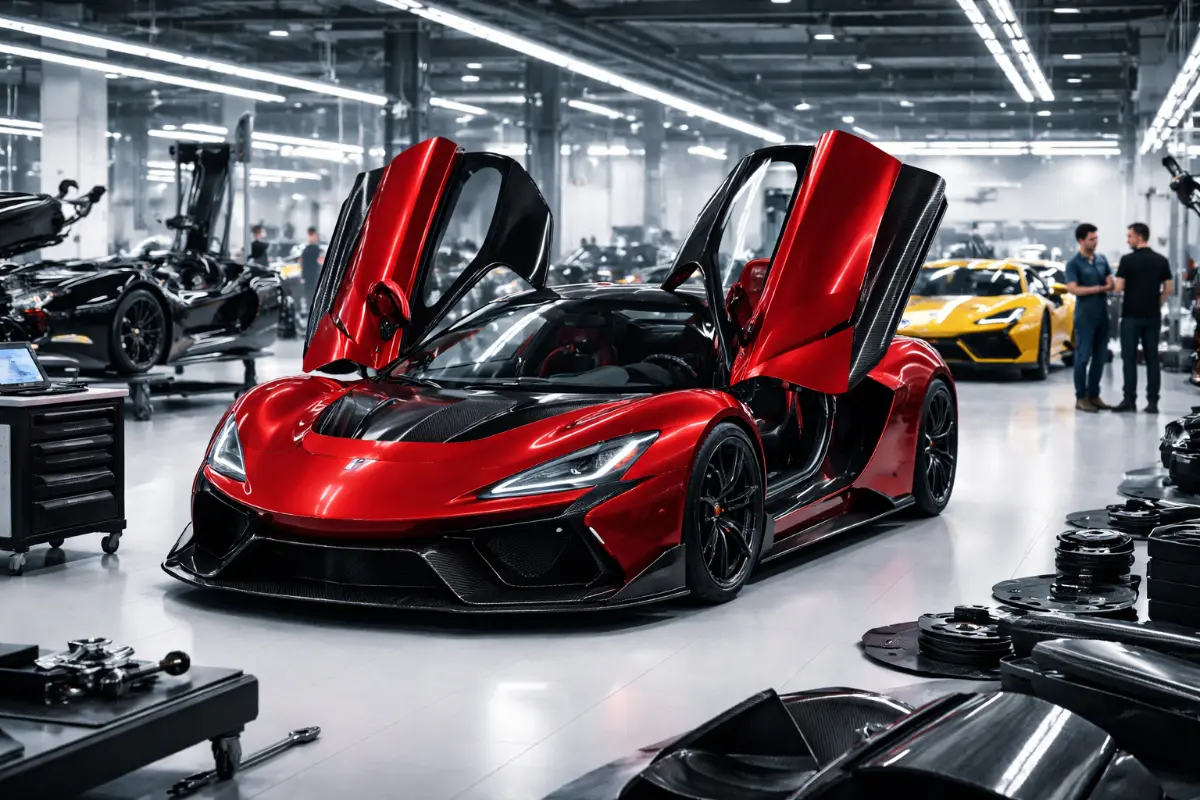
Exotic cars capture the imagination of car enthusiasts around the world. From the sharp lines of a hypercar to the thunderous sound of a high-performance engine, these vehicles represent the peak of automotive design and engineering. However, what most people see is only the finished product. Behind every supercar lies a long and meticulous process known as Exotic Car Manufacturing.
This process transforms a simple idea into a road-ready machine capable of incredible speed, luxury, and performance. Designers sketch concepts, engineers push technical limits, and craftsmen assemble vehicles with remarkable precision. As a result, each exotic car becomes more than transportation it becomes a work of art.
In this article, we will explore how Exotic Car Manufacturing works from concept to driveway. We will examine design, engineering, prototyping, assembly, testing, and final delivery. Moreover, we will explore customization options and emerging trends shaping the future of the exotic car industry.
The Fascination Behind Exotic Cars
Exotic cars represent exclusivity, innovation, and performance. Brands build them in limited numbers, often producing only a few hundred units each year.
Several factors make exotic vehicles unique:
-
Ultra-powerful engines
-
Lightweight materials such as carbon fiber
-
Hand-crafted interiors
-
Advanced aerodynamics
-
Customization tailored to individual buyers
Consequently, the process of Exotic Car Manufacturing is far more complex than traditional car production.
The Overview of Exotic Car Manufacturing
Unlike mass-produced vehicles, exotic cars follow a specialized production cycle. Each stage requires precision, advanced technology, and skilled craftsmanship.
Below is a simplified overview of the key stages.
| Manufacturing Stage | Key Processes |
|---|---|
| Concept & Design | Initial sketches, digital modeling, design reviews |
| Engineering | Powertrain development, chassis design, aerodynamics |
| Prototyping | Test vehicles, performance simulations |
| Assembly | Hand-built components, interior craftsmanship |
| Quality Testing | Road testing, safety checks, performance validation |
| Delivery | Customization completion, final inspection |
Therefore, every stage contributes to creating a machine that meets extreme performance standards.
Stage 1: Concept and Design
The journey of Exotic Car Manufacturing begins long before metal meets machinery. It starts with imagination.
Design Sketches
Designers first create hand sketches that capture the personality of the car. These drawings emphasize:
-
Aggressive body lines
-
Low aerodynamic profiles
-
Signature lighting
-
Distinct brand identity
Moreover, designers collaborate closely with engineers to ensure their ideas remain functional.
Digital Modeling
After sketches receive approval, designers convert them into 3D digital models using advanced CAD software.
These models allow teams to:
-
Adjust aerodynamics
-
Evaluate proportions
-
Simulate airflow
-
Optimize performance
Consequently, engineers can test hundreds of design variations before building a single physical part.
Stage 2: Engineering the Supercar
Engineering represents the backbone of Exotic Car Manufacturing. Here, the focus shifts from appearance to performance.
Powertrain Development
The powertrain determines how powerful and responsive the vehicle will be.
Engineers work on:
-
Engine architecture
-
Turbocharging systems
-
Hybrid integration
-
Transmission technology
As a result, many exotic cars achieve astonishing performance figures, often exceeding 700 horsepower.
Chassis and Structural Design
The chassis supports the vehicle and ensures stability at high speeds.
Manufacturers typically use:
-
Carbon fiber monocoque frames
-
Lightweight aluminum structures
-
Reinforced composite materials
These materials reduce weight while increasing strength.
Aerodynamic Optimization
Aerodynamics plays a crucial role in exotic car performance.
Engineers study airflow using wind tunnels and simulations. They adjust features such as:
-
Front splitters
-
Rear diffusers
-
Active spoilers
-
Air channels
Therefore, the vehicle remains stable even at extremely high speeds.
Stage 3: Building the Prototype
Once engineers finalize the design, manufacturers begin building prototypes.
Prototypes allow teams to test real-world performance before full production begins.
Prototype Testing
Engineers perform extensive testing to evaluate:
-
Acceleration
-
Handling
-
Braking performance
-
Engine durability
-
Thermal management
Moreover, prototypes often undergo thousands of miles of testing under extreme conditions.
Refinement and Adjustments
If engineers detect weaknesses, they refine the design.
Common adjustments include:
-
Suspension tuning
-
Aerodynamic improvements
-
Engine calibration
-
Software updates
Consequently, each iteration improves the vehicle’s reliability and performance.
Stage 4: The Assembly Process
The assembly stage highlights the craftsmanship involved in Exotic Car Manufacturing.
Unlike mass production lines, exotic car assembly relies heavily on skilled technicians.
Hand-Built Components
Technicians carefully assemble:
-
Engines
-
Chassis components
-
Suspension systems
-
Interior panels
Each part undergoes inspection before installation.
Moreover, many exotic cars require dozens of hours of manual assembly.
Carbon Fiber Body Panels
Carbon fiber dominates exotic car body construction.
Advantages include:
-
High strength
-
Extremely low weight
-
Improved performance
Consequently, carbon fiber panels improve both speed and fuel efficiency.
Luxury Interior Craftsmanship
Inside the cabin, craftsmanship becomes even more visible.
Common interior materials include:
-
Hand-stitched leather
-
Alcantara upholstery
-
Carbon fiber trim
-
Aluminum or titanium accents
Therefore, interiors combine comfort with high-performance aesthetics.
Stage 5: Performance Testing and Quality Control
After assembly, vehicles undergo extensive testing.
Quality control ensures the car meets strict performance and safety standards.
Road Testing
Professional drivers test vehicles on closed tracks and real roads.
They evaluate:
-
Acceleration response
-
Handling precision
-
Brake performance
-
Stability at high speeds
Inspection and Validation
Technicians also perform detailed inspections.
These include:
-
Engine diagnostics
-
Electronic system verification
-
Paint finish evaluation
-
Interior quality checks
Consequently, every vehicle meets the manufacturer’s exact standards.
Exotic Car Brands and Their Flagship Models
Different brands specialize in unique aspects of Exotic Car Manufacturing.
| Brand | Flagship Model | Production Focus |
|---|---|---|
| Lamborghini | Aventador | Aggressive design and V12 power |
| Ferrari | SF90 Stradale | Hybrid performance technology |
| McLaren | 750S | Lightweight engineering |
| Bugatti | Chiron | Extreme speed and luxury |
| Pagani | Huayra | Handcrafted exclusivity |
These manufacturers focus on innovation while maintaining distinctive brand identities.
Customization for High-End Buyers
One of the most appealing aspects of Exotic Car Manufacturing is customization.
High-net-worth buyers often personalize nearly every detail.
Custom Paint Finishes
Manufacturers offer unique paint options such as:
-
Metallic finishes
-
Matte colors
-
Color-shift coatings
-
Hand-painted stripes
Moreover, some companies create exclusive colors for individual clients.
Premium Materials
Interior customization includes rare materials such as:
-
Exotic leather
-
Carbon fiber weave patterns
-
Alcantara performance fabrics
-
Polished metals
Consequently, no two vehicles may look exactly the same.
Technology Packages
Modern exotic cars also include advanced technology options.
Examples include:
-
Digital cockpit displays
-
Advanced driver assistance
-
Premium audio systems
-
Performance telemetry
Therefore, buyers receive both luxury and cutting-edge innovation.
Trends Shaping Exotic Car Manufacturing
The future of Exotic Car Manufacturing is evolving rapidly.
Manufacturers now balance performance with sustainability and new technologies.
Electrification and Hybrid Power
Many exotic brands now introduce hybrid systems.
Benefits include:
-
Instant electric torque
-
Reduced emissions
-
Improved efficiency
Consequently, performance increases while environmental impact decreases.
Sustainable Materials
Manufacturers increasingly use eco-friendly materials.
Examples include:
-
Recycled carbon fiber
-
Sustainable leather alternatives
-
Lightweight composites
However, maintaining luxury quality remains essential.
Limited Edition Production
Limited production runs increase exclusivity.
Manufacturers often release:
-
Collector editions
-
Anniversary models
-
Track-focused variants
Therefore, rare vehicles often appreciate in value over time.
Advanced Manufacturing Technology
Modern production uses technologies such as:
-
3D printing
-
AI-assisted design
-
advanced robotics
-
digital simulation
Moreover, these tools help reduce development time while improving precision.
Delivery: From Factory to Driveway
The final step of Exotic Car Manufacturing is delivery.
Luxury manufacturers create memorable experiences for buyers.
Delivery options may include:
-
Private factory handover
-
Personalized unveiling events
-
Exclusive driving experiences
-
Global shipping coordination
Consequently, the journey from concept to driveway becomes a celebration of craftsmanship and engineering.
Frequently Asked Questions
What makes exotic car manufacturing different from regular car production?
Exotic car manufacturing focuses on limited production, high performance, hand-built craftsmanship, and premium materials rather than mass production.
How long does it take to manufacture an exotic car?
The entire process can take several months to years, depending on design complexity, testing, and customization options.
Why are exotic cars produced in limited numbers?
Limited production maintains exclusivity, ensures higher quality control, and allows manufacturers to focus on innovation.
Can buyers fully customize exotic cars?
Yes. Buyers can often customize colors, materials, interior finishes, technology packages, and even unique design elements.
Are exotic cars becoming electric?
Yes. Many manufacturers now develop hybrid and electric supercars to improve efficiency while maintaining performance.