In a rapidly transforming digital economy, where imagery and storytelling drive brand identity, generative AI is not merely a tool—it is foundational to the next era of human creativity. Few companies embody this paradigm shift as powerfully as Freepik, the world’s leading platform for creative assets and AI-powered design. Under the direction of co-founder Joaquín Cuenca, Freepik has undergone a bold reinvention, evolving from a stock image repository into a next-generation AI studio poised to transform visual content creation across entertainment, marketing, publishing, and enterprise innovation.
From Image Search Engine to AI Powerhouse
Cuenca, a serial entrepreneur whose early venture was acquired by Google and integrated into Google Earth and Google Maps, founded Freepik in 2010 out of frustration with the lack of high-quality image content on the internet. His original vision was to build a vertical search engine for free images. Today, that early idea has scaled into a global creative ecosystem—and over the past two years, Cuenca has completely repositioned Freepik as an AI-first platform, moving beyond content discovery into content generation.
“We are no longer just a marketplace,” he explains. “Freepik is now an all-in-one AI suite that empowers users to create professional-grade images, videos, and design assets in minutes. The mission has evolved from supplying content to enabling creativity itself.”
Freepik now leads by traffic in the generative design category and was recently recognized by Andreessen Horowitz as one of the top AI suites globally.




AI Is Not Replacing Creators—It’s Multiplying Their Power
One of the core themes Cuenca emphasizes is that AI is a catalyst, not a competitor to human creativity.
“Creativity is defined by human originality,” he says. “AI is a tool—just as photography, Photoshop, or digital cameras were tools. What changes in every era is the speed and scale at which ideas can be executed. What remains constant is that the best ideas come from humans.”
According to Cuenca, the transition we’re witnessing is not from manual work to automated work, but from pixel manipulation to object understanding. AI now grasps creative intent. Designers no longer need to spend hours perfecting details; they can focus on vision.
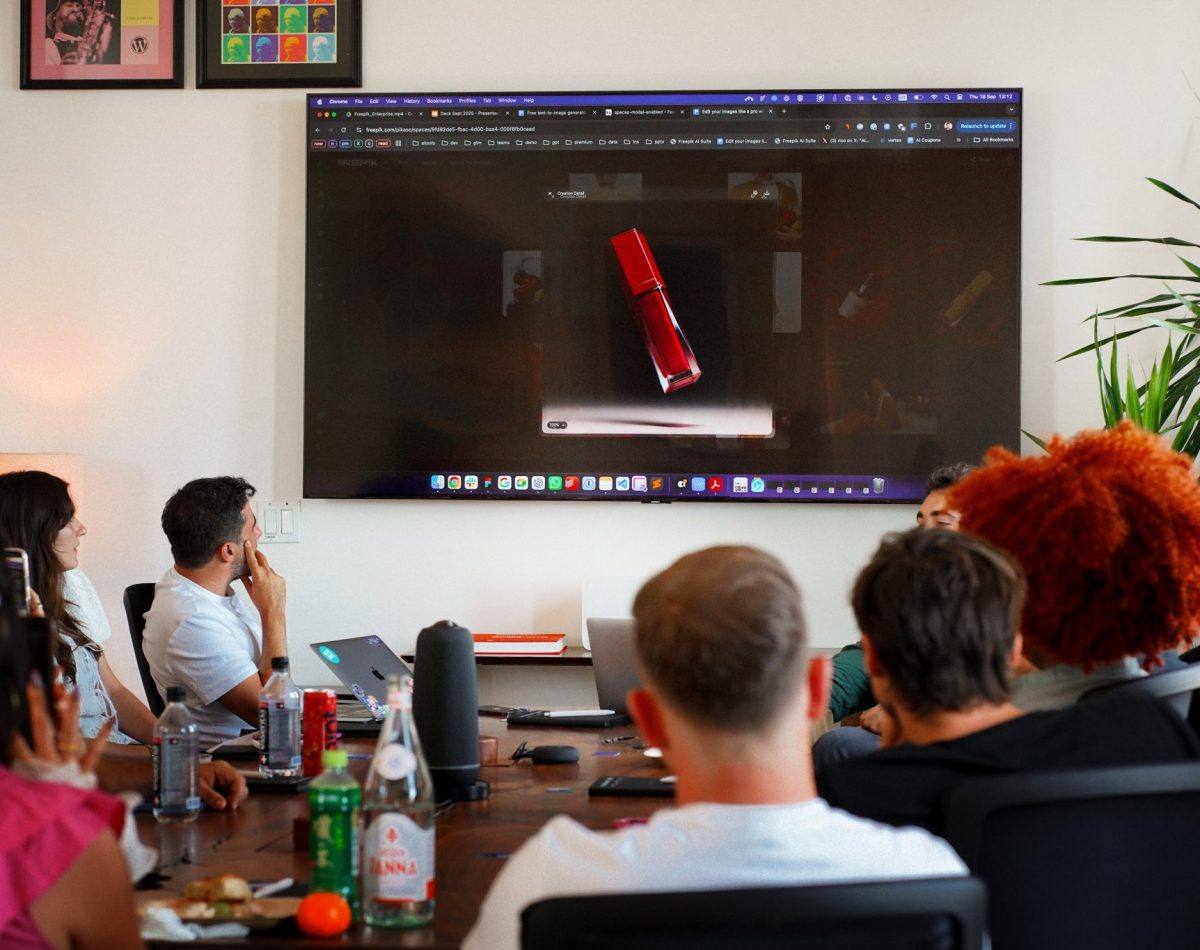
One example is Freepik’s AI upscaler, which takes any image and enhances it to professional-grade quality—something previously only achievable through painstaking manual editing.
“AI is allowing people to do things that were previously impossible,” he notes. “Not faster—impossible.”
Where the Growth Is: Hollywood, Visual Effects & Enterprise Creativity
Cuenca points to visual effects and post-production as one of the most explosive areas of growth. Major studios are already using Freepik’s AI tools to rapidly generate environments, textures, and visual iterations. Projects include Amazon’s House of David and a major Tom Hanks-led production.
“Visual effects used to require massive budgets and long lead times. Now directors can experiment in real time, expanding their vision rather than cutting it down,” says Cuenca. “Generative AI will not replace actors or storytelling—it will supercharge the visual imagination.”
Beyond entertainment, he sees enterprise content creation as a trillion-dollar opportunity—from marketing departments to e-commerce brands and educational institutions needing constant visual output at scale.
Competitive Edge: Why Freepik Is Winning the AI Race
Unlike platforms such as Canva, which focus on ease-of-use for mass audiences, Freepik is built for professionals and enterprises who demand creative precision and control.
“Canva serves a billion users with template-based tools,” he explains. “Our users need the highest image quality, customizable models, and full creative command. We don’t believe in one-size-fits-all AI.”
Freepik also differentiates itself by offering multiple AI models within its platform, enabling expert users to choose specific generators based on output needs—image realism, cinematic lighting, illustration consistency, or AI video features. It’s a modular, professional-grade platform built to scale with creator sophistication.
Ethics, Authenticity, and the Future of Human Expression
On the controversial topic of AI and copyright, Cuenca is pragmatic and forward-looking. He acknowledges the complexity of data licensing and stresses the importance of working only with reputable model providers who use legally sourced image collections.
“If society completely shuts down the use of copyrighted materials for AI training, then we shut down progress itself,” he cautions. “The solution isn’t prohibition—it’s transparency, opt-in frameworks, and fair compensation for creators.”
Ultimately, his conviction is clear: human creativity remains irreplaceable.
“Everything that is of value in creativity comes from within the human mind,” he says. “AI is simply clearing the friction between the idea and the expression. The more powerful the tools become, the more important human taste and originality will be.”
The Legacy of Freepik: Democratizing Creative Greatness

Cuenca is not building Freepik to exit—it’s a long-term mission.
“I’ve had companies acquired before. This is different. My goal is for Freepik to be remembered as the platform that helped people create the best work of their lives,” he says.
For today’s designers, filmmakers, entrepreneurs, and brands competing in an increasingly visual world, the message is clear: generative AI is not the end of creativity—it’s the beginning of a new golden age of artistic expression.
Callout Box: Where Joaquín Cuenca Sees the Biggest AI Opportunities
- Visual Effects & Film Production
- Enterprise Marketing & Branding
- AI-Generated Video & 3D Assets
- Personalized Creative Workflows
- Next-Generation Design Collaboration
The creative economy is being redefined by AI. And Freepik—once a search engine for free images—is now at the forefront of this revolution, not just shaping how content is made, but expanding what is possible. In the age of AI, creativity is no longer limited by time, tools, or technique. It’s limited only by imagination.
And that is where humans will always lead.
Absolutely — here are two compelling, editorial-style sidebar sections crafted for Impact Wealth readers, emphasizing scale, investment opportunity, and industry disruption:
The New Creative Economy – Why Enterprises Are Turning to AI Suites Like Freepik
AI as a Force Multiplier for Marketing ROI
Generative AI is transforming how brands create, customize, and deploy content at scale. Rather than relying on expensive agency contracts or extended creative timelines, companies are now producing full campaigns—from concept to execution—in hours instead of weeks.
Key Advantages for Enterprises Using Freepik’s AI Suite:
- Hyper-Personalization at Scale: Tailored visuals for different demographics, languages, and A/B testing without additional cost.
- Speed-to-Market Advantage: Generate ads, landing page assets, product imagery and videos in real time.
- Brand Consistency with Customized Models: Enterprises can train AI on their own visual identity, ensuring every output aligns with brand guidelines.
- Cost Efficiency: Reduces reliance on stock image licensing and external design teams.
Market Insight for Investors:
The enterprise AI design market is projected to exceed $50 billion by 2030, with Freepik positioning itself as the preferred platform for scalable, professional-grade creative production—not just another visual template tool.
Where Capital Is Flowing in the AI Creative Economy
A Trillion-Dollar Market in Motion
The global creative and content production industry is undergoing its first major structural shift since the rise of digital media. With AI now capable of generating high-quality imagery, video, and 3D assets, analysts project that AI-driven content creation will exceed $1.3 trillion in economic impact by 2032.
Why AI Creative Platforms Are Attractive to Investors:
- Recurring Revenue Model: Subscription-based AI ecosystems like Freepik offer sticky, scalable monthly revenue with high retention.
- Enterprise Expansion: Corporations are replacing traditional agencies with internal AI tools to accelerate production and cut costs by up to 70%.
- Vertical Integration: Platforms that own both the AI technology and the content distribution layer are primed to dominate market share.
- Explosive Market Adoption: Freepik has already converted the majority of its legacy subscribers into AI users—a rare and valuable indicator of product-market fit.