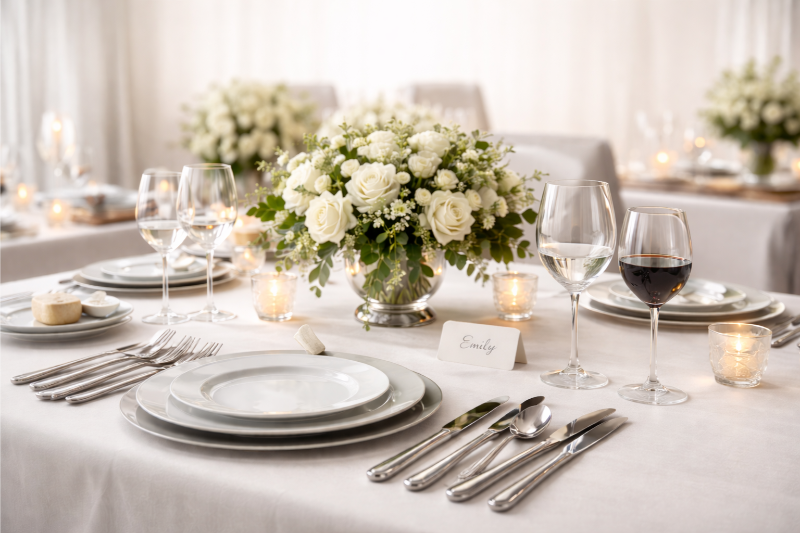
A Formal Dining Cutlery Guide is essential for hosts who want to create elegant and welcoming table settings with confidence. Whether you’re preparing for a wedding reception, corporate dinner, or festive holiday celebration, knowing how to set formal table layouts correctly ensures guests feel comfortable and valued. Proper cutlery placement does more than enhance the table’s appearance it guides diners naturally through each course, helping them enjoy a seamless dining experience.
In addition, a well-structured formal table setting guide eliminates uncertainty about which fork, knife, or spoon to use. By following clear cutlery placement rules and a basic dining etiquette guide, even first-time hosts can arrange a polished and professional table without stress.
This article offers practical advice on cutlery types, placement strategies, and table etiquette. You’ll also find a formal table setting checklist and buying tips, making hosting sophisticated dinners both simple and enjoyable.
Why Formal Dining Cutlery Still Matters?
Formal table settings signal care, attention to detail, and hospitality. They help guests understand course order and prevent awkward moments. In professional settings, they also reflect brand reputation and professionalism.
A well-set table improves:
-
Guest comfort
-
Dining flow
-
Visual appeal
-
Event atmosphere
Therefore, understanding a Formal Dining Cutlery Guide is valuable for anyone who entertains or hosts important gatherings.
Types of Cutlery in a Formal Setting
A proper formal table setting guide includes forks, knives, spoons, and specialty utensils. Each piece has a purpose.
Forks
-
Dinner Fork – Main course
-
Salad Fork – First course
-
Fish Fork – Seafood dishes
-
Dessert Fork – Sweet course
-
Oyster Fork – Shellfish starters
Knives
-
Dinner Knife – Main course
-
Fish Knife – Delicate fish fillets
-
Butter Knife – Bread plate
-
Steak Knife – Optional for red meat
-
Dessert Knife – Cheese or dessert
Spoons
-
Soup Spoon – Soups
-
Dessert Spoon – Puddings
-
Tea Spoon – Coffee or tea
Matching utensil size to plate size keeps the setting balanced.
Cutlery Placement Rules (Step-by-Step)
Learning cutlery placement rules is easier than it looks. Just remember the basic system.
The Five Golden Rules
-
Use cutlery from the outside in
-
Forks go on the left
-
Knives and spoons go on the right
-
Knife blades face the plate
-
Dessert utensils sit above the plate
Standard Formal Setting
Left side (outside → inside):
-
Oyster fork
-
Salad fork
-
Dinner fork
Right side (outside → inside):
-
Soup spoon
-
Fish knife
-
Dinner knife
Top:
-
Dessert spoon
-
Dessert fork
Upper-left:
-
Bread plate + butter knife
Upper-right:
-
Water glass → white wine → red wine → champagne
This layout makes it easy to follow each course naturally.
Dining Etiquette Guide for Guests
A complete Formal Dining Cutlery Guide also covers etiquette. Good manners make meals smoother and more enjoyable.
Dining Styles
Continental Style
-
Fork left hand
-
Knife right hand
-
No switching hands
American Style
-
Cut with both utensils
-
Switch fork to right hand
Non-Verbal Signals
-
Resting: Fork and knife form inverted V
-
Finished: Parallel at 4 o’clock
Common Mistakes
-
Scraping plates
-
Using wrong fork
-
Licking utensils
-
Crossing cutlery on napkin
These simple tips help guests feel confident.
How to Set Formal Table Easily?
If you’re unsure how to set formal table, follow this quick process.
Step-by-Step Method
-
Place charger plate
-
Add forks left side
-
Add knives and spoons right side
-
Place dessert utensils on top
-
Add bread plate and glasses
Check spacing so everything looks symmetrical.
Buying Guide: Choosing Quality Cutlery
A strong formal table setting guide includes choosing the right material.
Best Materials
18/10 Stainless Steel
-
Durable
-
Rust resistant
-
Premium shine
Silver-Plated
-
Luxurious look
-
Needs polishing
Titanium-Coated
-
Modern colors
-
Scratch resistant
Finish Options
-
Mirror polish – glamorous
-
Satin finish – hides fingerprints
Keep finishes consistent for elegance.
Set Size Recommendations
| Guests | Recommended Set |
|---|---|
| 2–4 | 5-piece starter |
| 4–6 | 24-piece set |
| 6–8 | 48-piece set |
| 8+ | Entertainer set |
Buying extra pieces avoids last-minute stress.
Care & Maintenance Tips
Good cutlery lasts years with proper care.
-
Rinse acidic foods quickly
-
Separate pieces in dishwasher
-
Dry immediately
-
Polish quarterly
-
Store in lined drawer
Light rust can be removed with lemon juice and baking soda paste.
Formal Table Setting Checklist
Use this formal table setting checklist before hosting.
Two Days Before
-
Confirm guest count
-
Finalize menu
-
Prepare special utensils
One Day Before
-
Inspect cutlery
-
Plan seating
-
Clean glassware
Day of Event
-
Lay linens
-
Set table
-
Final polish
During Dinner
-
Serve from right
-
Watch for finished signals
After Dinner
-
Clean cutlery
-
Count pieces
-
Store safely
This checklist ensures nothing is forgotten.
Common Hosting Mistakes
Avoid these errors:
-
Too many utensils
-
Mixed finishes
-
Wrong spacing
-
Ignoring left-handed guests
-
Forgetting dessert cutlery
Keep the setup simple and elegant.
Final Thoughts
A complete Formal Dining Cutlery Guide helps hosts create memorable dining experiences. With simple cutlery placement rules, a practical dining etiquette guide, and a clear formal table setting checklist, anyone can host confidently.
Formal dining is not about strict rules it’s about making guests feel respected and comfortable. When tables are set thoughtfully, conversations flow naturally and meals become unforgettable.
FAQ: Formal Dining Cutlery Guide
How many forks are needed?
Usually two or three depending on courses.
Where does dessert spoon go?
Above the plate.
Can I mix cutlery styles?
Yes, but keep finishes consistent.
Do left-handed guests need changes?
You can mirror the setting politely.
Is formal dining outdated?
No. It’s still important for weddings, business dinners, and luxury hospitality.