The news that the Bahrain and Saudi Arabia Grands Prix Cancelled has sent shockwaves across the motorsport world. For years, the Middle East has played a critical role in the global expansion of Formula One, hosting some of the most spectacular races on the calendar.
However, rising geopolitical tensions in the region have forced Formula 1 officials to make a difficult decision. Due to escalating conflict across the Middle East, the races scheduled in Bahrain and Saudi Arabia have been cancelled.
Consequently, the 2026 Formula 1 calendar will now operate with fewer races and a reshaped schedule. The cancellation not only impacts fans but also affects teams, sponsors, logistics, and the championship battle itself.
Why the Bahrain and Saudi Arabia Grands Prix Cancelled?
The decision to announce that the Bahrain and Saudi Arabia Grands Prix Cancelled was not taken lightly. Formula 1 conducted extensive safety evaluations before reaching this conclusion.
Rising Regional Conflict
The escalating military conflict involving Iran, Israel, and the United States has significantly destabilized the region.
Airspace closures, security threats, and military tensions have made it extremely difficult to ensure safe travel for teams, personnel, and spectators.
Moreover, Formula 1 relies on complex global logistics, transporting hundreds of tons of equipment between races. Any disruption in flight routes or cargo networks can seriously impact the championship schedule.
Safety Concerns for Teams and Fans
Safety is always the top priority in international sports events. With missile threats and potential regional instability, hosting races in the Gulf region became too risky.
Key safety concerns included:
-
Airspace restrictions affecting team travel
-
Potential military escalation near major cities
-
Risks to spectators and F1 personnel
-
Difficulties securing international freight shipments
Therefore, Formula 1 concluded that cancelling the races was the safest option.
Official Statements from Formula 1 Leadership
Following the announcement that the Bahrain and Saudi Arabia Grands Prix Cancelled, Formula 1 executives released official statements explaining the decision.
Stefano Domenicali, President and CEO of Formula One, emphasized the seriousness of the situation.
He stated that the decision was extremely difficult but necessary due to current regional instability. Moreover, he thanked the race promoters and the governing body Fédération Internationale de l’Automobile for their cooperation and support.
Officials from Bahrain and Saudi Arabia also expressed disappointment. However, both countries acknowledged the safety concerns and reaffirmed their commitment to hosting Formula 1 in the future.
The Importance of Middle Eastern Races in Formula 1
The news that the Bahrain and Saudi Arabia Grands Prix Cancelled is particularly significant because the Middle East has become a cornerstone of modern Formula 1.
Strategic Role in the Global Calendar
Middle Eastern circuits offer several advantages for Formula 1:
-
World-class infrastructure
-
Strong financial backing
-
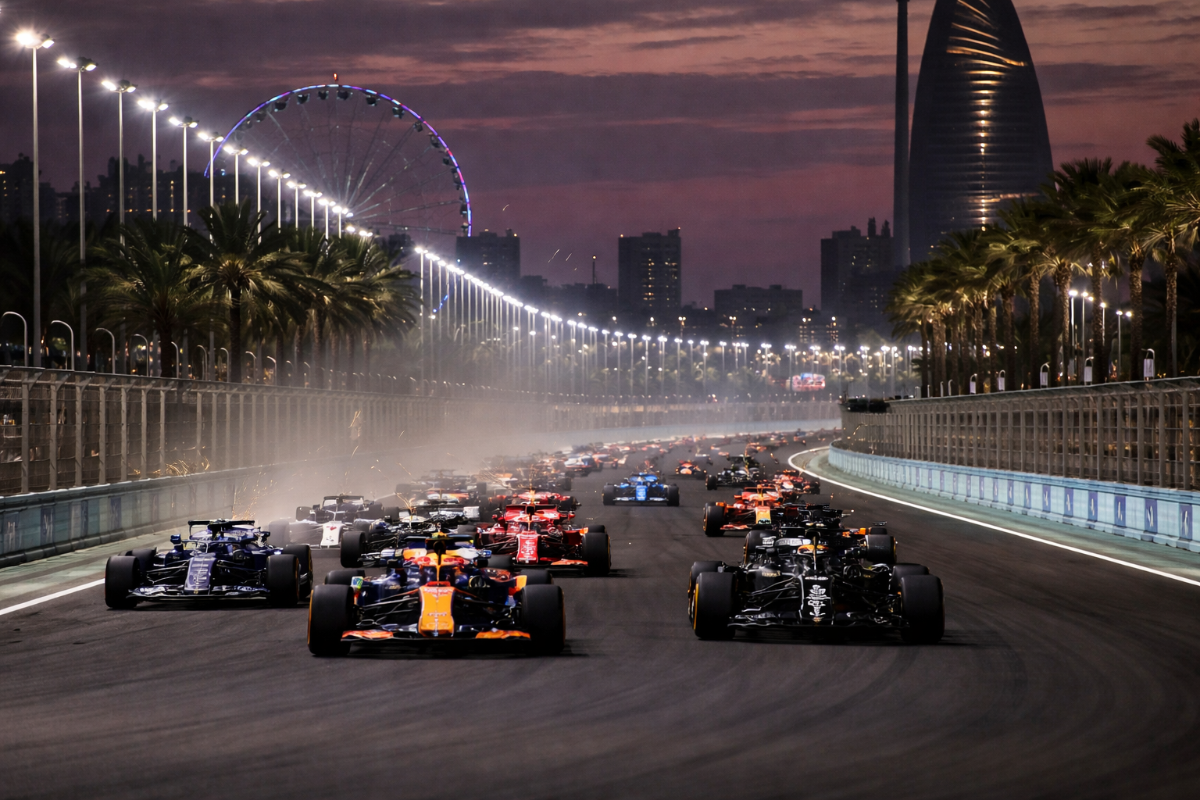
Night race spectacles
-
Global television audiences
Moreover, these races often attract massive international tourism and sponsorship investment.
Key Circuits in the Region
One of the most iconic venues is the Bahrain International Circuit, located in Sakhir. It has hosted Formula 1 races since 2004 and frequently serves as a season opener or early race.
Meanwhile, the high-speed street circuit in Jeddah has quickly gained attention since joining the calendar in 2021.
These venues have become central to Formula 1’s expansion strategy in the Middle East.
Bahrain vs Saudi Arabia Grand Prix Comparison
| Feature | Bahrain Grand Prix | Saudi Arabian Grand Prix |
|---|---|---|
| Circuit | Bahrain International Circuit | Jeddah Corniche Circuit |
| First F1 Race | 2004 | 2021 |
| Race Type | Permanent circuit | Street circuit |
| Location | Sakhir, Bahrain | Jeddah, Saudi Arabia |
| Race Style | Technical track with overtaking zones | Extremely fast street circuit |
| Night Race | Yes | Yes |
Both races are known for their spectacular lighting and modern facilities. However, their cancellation highlights how global events can disrupt even the most established races.
How the Cancellation Affects the 2026 Formula 1 Season?
The announcement that the Bahrain and Saudi Arabia Grands Prix Cancelled has immediate consequences for the 2026 championship.
Reduced Race Calendar
Originally, the 2026 season was scheduled to feature 24 races. However, removing two events reduces the total number of races to 22.
This creates an unusually long break between races.
For example, the gap between the Japanese Grand Prix and the Miami Grand Prix will now stretch to five weeks.
Impact on Team Development
This unexpected break could benefit teams in several ways.
Advantages include:
-
Additional time for car upgrades
-
More opportunities to analyze race data
-
Improved engine development programs
However, teams also lose valuable race data that normally comes from those events.
Consequently, championship momentum could shift dramatically.
Financial Impact on Formula 1
The cancellation of the Middle Eastern races also creates significant financial consequences.
Bahrain and Saudi Arabia are among the highest-paying hosts in Formula 1. Each race contributes tens of millions of pounds in hosting fees.
Therefore, removing both races could result in a loss exceeding £100 million.
Revenue Structure in Formula 1
The revenue generated from race hosting fees is distributed among:
-
Formula 1 management
-
The 10+ competing teams
-
Operational costs for the championship
Moreover, sponsors and tourism organizations also suffer financial losses when races are cancelled.
Attempts to Find Replacement Races
Before confirming that the Bahrain and Saudi Arabia Grands Prix Cancelled, Formula 1 explored several replacement options.
Potential venues included:
-
Autódromo Internacional do Algarve in Portugal
-
Autodromo Internazionale Enzo e Dino Ferrari in Italy
-
Istanbul for a possible return of the Turkish Grand Prix
However, organizing a race on short notice proved extremely challenging.
Challenges included:
-
Ticket sales logistics
-
Transporting equipment
-
Scheduling staff and officials
-
Securing financial agreements
Therefore, Formula 1 ultimately decided not to replace the cancelled events.
The Broader Impact of Geopolitics on Sports
The situation demonstrates how geopolitical tensions can disrupt international sports.
Major sporting events rely on stability, infrastructure, and safe travel conditions.
However, conflicts can affect sports in several ways:
-
Flight restrictions and airspace closures
-
Safety risks for athletes and spectators
-
Political pressure from governments
-
Economic uncertainty for organizers
Consequently, global sports leagues must constantly adapt to changing political landscapes.
Formula 1, in particular, operates across multiple continents, making it highly sensitive to geopolitical events.
What This Means for the Future of Middle Eastern F1 Races?
Despite the cancellation, Formula 1 still values its partnerships in the region.
Both Bahrain and Saudi Arabia have invested heavily in motorsport infrastructure and international events.
Moreover, the Middle East continues to host several major races, including the Abu Dhabi Grand Prix in the United Arab Emirates.
Therefore, once regional tensions ease, Formula 1 is expected to return to Bahrain and Saudi Arabia in future seasons.
The long-term outlook for motorsport in the Middle East remains strong.
Frequently Asked Questions
Why were the Bahrain and Saudi Arabia Grands Prix cancelled?
The races were cancelled due to escalating military conflict in the Middle East, which raised safety concerns for teams, staff, and spectators.
Will the races be rescheduled later in 2026?
No. Formula 1 decided not to reschedule or replace the events, reducing the season to 22 races.
How does this affect the Formula 1 championship?
The cancellations create a five-week break in the season, which could influence team development and championship momentum.
Which races were considered as replacements?
Formula 1 considered potential replacements in Portugal, Italy, and Turkey, but logistical challenges prevented them from being added.
Will Bahrain and Saudi Arabia host races again?
Yes. Both countries remain important partners for Formula 1 and are expected to host future races once regional stability improves.