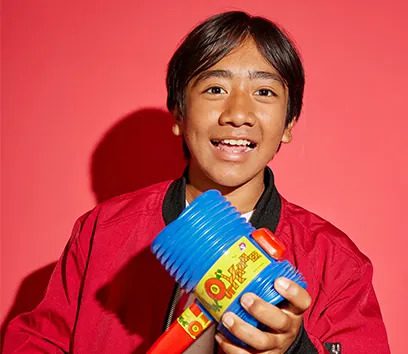
In a single year, a boy not yet in middle school earned nearly $30 million. That boy is Ryan Kaji, the young star of the YouTube channel Ryan’s World. For several years, Forbes has listed him as one of the platform’s highest-paid creators, turning a childhood hobby into a stunning financial success story.
What began as simple Ryan’s Toy Review videos has since exploded into a global brand with tens of billions of views. This makes Ryan the world’s most prominent “kidfluencer”: a child who builds a commercial empire from their internet fame. His face isn’t just on screens; it’s on toy boxes, toothbrushes, and television shows.
But how does a kid opening toys transform into a business this massive? The story of Ryan Kaji reveals the surprising machinery behind the money and explores what the rise of Ryan’s World means for modern childhood.
How a 3-Year-Old’s Hobby Became a Global Brand
It all started with a simple question from a three-year-old. In 2015, after watching other kids on YouTube, Ryan Kaji asked his parents why he couldn’t have his own channel. They obliged, filming him in what are now famously called unboxing videos—recordings focused purely on the excitement of opening a new toy. For months, the channel, then named Ryan’s Toy Review, was just a fun family project capturing genuine childhood play for relatives to see.
That changed dramatically with a single video titled “GIANT EGG SURPRISE.” In it, Ryan opens a massive blue egg filled with over 100 toys from Disney’s Cars franchise. The video became viral, meaning it spread with incredible speed across the internet, eventually earning over a billion views. It was the perfect formula for young viewers: a huge surprise, a familiar character theme, and a child’s authentic delight. Suddenly, millions of kids around the world were discovering Ryan.
The explosion in viewership transformed the Kaji family’s hobby into a full-time job. Keeping up with the massive demand for new content required a more organized approach to filming and uploading. What began as a casual activity in the living room quickly evolved into a professional production schedule. The family had unintentionally laid the groundwork for a business empire, one that would soon extend far beyond simple toy videos.
How Ryan Kaji Actually Makes His Millions (Hint: It’s Not Just Ads)
Many people assume Ryan Kaji’s earnings come solely from the ads that play before his videos. While those views contribute, they represent just one piece of a much larger and more sophisticated business strategy. The viral videos were the launchpad, but the real financial engine was built afterward.
The Ryan’s World business model is best understood as three distinct streams of income:
- YouTube Ad Revenue: The channel earns a percentage of the money from automated ads that YouTube places on its content.
- Sponsored Videos: A toy company pays the family directly to have Ryan feature a specific product in a video.
- Merchandise & Licensing: This is the true powerhouse, accounting for the vast majority of the brand’s earnings.
That third category transformed the channel into an empire. Through a partnership with the media company Pocket.watch, the family began licensing the Ryan’s World brand. Think of it like Disney putting Mickey Mouse on a lunchbox; other companies pay for the right to put Ryan’s name and characters on their products, from action figures to toothbrushes, and the Kajis get a cut of every sale.
This global operation is no longer a simple family hobby. It’s a full-fledged corporation managed by the family’s own production company, Sunlight Entertainment, which handles everything from creative direction to managing a team of animators and employees.
Who Are the People Behind the Billion-Dollar Brand?
At the heart of this empire are Ryan’s parents, Shion and Loann Kaji. They famously transformed from a structural engineer and a chemistry teacher into media executives who now run the family business. Their own company, Sunlight Entertainment, is the professional production house behind the content. It employs a team of animators, editors, and producers to create the slick videos seen today—a far cry from the early days of filming on an iPhone in their living room.
While Sunlight Entertainment manages the creative side, it was a partnership with an outside company, Pocket.watch, that truly unlocked global scale. This specialized kids’ media partner acted as the expert agent, taking Ryan’s YouTube fame and brokering the massive deals for the toys, television shows, and apparel that now fill store aisles. Pocket.watch had the industry connections and licensing experience the Kaji family needed to turn a popular channel into a physical retail presence.
The brand remains a family affair, with Ryan’s younger twin sisters, Emma and Kate, now regular fixtures in videos. This evolution from hobby to corporation raises important questions about the pressures of a public childhood and the ethics of marketing to kids.
Is Ryan’s World Good for Kids? The Parental Concerns Explained
This rapid growth into a retail giant has led many parents to ask: is this content good for our children? The primary concern revolves around the promotion of hyper-consumerism. With a constant parade of new toys being opened and celebrated, critics argue that the videos create an endless cycle of desire. For young, impressionable viewers, the line between entertainment and a commercial is virtually invisible, fueling what parents call “pester power”—the relentless requests for the latest products seen on screen.
Beyond the sheer volume of products, the channel has faced formal criticism for how it presents them. In 2019, a consumer watchdog group filed a complaint with the Federal Trade Commission (FTC), the U.S. government agency that enforces advertising laws. The complaint alleged that Ryan’s World was deceptively marketing to young children, who are unable to distinguish between a sponsored video (a paid ad) and an authentic toy review. This put a spotlight on the entire “kidfluencer” industry and the need for clearer advertising disclosures.
These concerns have highlighted a crucial new aspect of modern parenting: teaching media literacy. Experts suggest that instead of just limiting screen time, it’s beneficial to watch with your children and ask questions. Simple prompts like, “Why do you think they’re showing this toy?” or “Do you think they get to keep all those toys?” can help kids develop a more critical eye. This approach helps them understand the commercial nature of the content they love, turning passive viewing into an active learning experience.
A Guide to the Ever-Expanding Ryan’s World Universe
The influence of Ryan’s World doesn’t stop when a YouTube video ends. What began as a single channel has deliberately transformed into a complete brand ecosystem—a connected universe of content and products designed to keep children engaged across different platforms. The brand’s expansion is key to understanding why it has become a household name, rivaling legacy media companies.
The Ryan’s World empire rests on several main pillars:
- The YouTube Hub: The primary Ryan’s World channel and its many spin-offs, which still form the core of the content engine.
- Broadcast Television: The live-action Nick Jr. show Ryan’s Mystery Playdate, which translates the YouTube format of challenges and reveals for a traditional TV audience.
- Animated Series: Shows like Ryan’s World Galaxy Explorer build a fictional narrative around Ryan and his animated friends.
- Retail Products: A massive line of branded toys, apparel, and home goods that turn viewers into consumers.
Tying this all together is a recurring cast of colorful animated characters. This universe is populated by animated friends like the friendly but mischievous Gus the Gummy Gator and the gaming-obsessed Combo Panda. These characters appear across the TV shows, YouTube videos, and merchandise, creating a unified brand experience. This integrated model of media and merchandise has become a powerful playbook for modern kids’ entertainment.
Ryan’s World vs. Cocomelon: What’s the Real Difference?
To an outside observer, Ryan’s World and Cocomelon might seem like two sides of the same coin: massive YouTube channels for kids. The key to their separate triumphs, however, lies in their fundamentally different approaches. Cocomelon offers anonymous, repetitive animated nursery rhymes, creating a hypnotic and soothing experience. In contrast, Ryan’s World is built entirely around the personality of a real child, making the star of the show a person, not a cartoon.
This personality-driven format fosters a powerful sense of connection. For millions of young viewers, Ryan isn’t just a character on a screen; he feels like a friend they know personally. This phenomenon, known as a parasocial relationship, is the engine behind the success of kid influencers. The trust and familiarity built through this one-sided friendship make his recommendations feel less like advertisements and more like a tip from a playmate.
Ultimately, each channel serves a different psychological need. Cocomelon acts as a calming, predictable visual, while Ryan’s World offers companionship and the vicarious thrill of play. While both are giants, the model pioneered by Ryan—leveraging a deep, personal bond with an audience to build an entire brand—provides a unique and replicable blueprint for a modern media empire.
The Blueprint for a Modern Media Empire
Ryan’s World was a pioneer, creating the definitive blueprint for a new generation of kid influencers and laying down the path from a family hobby to a global brand phenomenon.
This model wasn’t just about gaining views; it was about seamlessly merging entertainment with commerce. By transforming a YouTube personality into a sprawling product line, the brand forged a powerful, and controversial, new connection between what children watch and what they want, changing the rules for an entire industry.
The next time you walk through a toy aisle and see a YouTuber’s face on a box, you won’t just see a product. You’ll recognize the complex business machine, pioneered by Ryan’s World, that put it there.