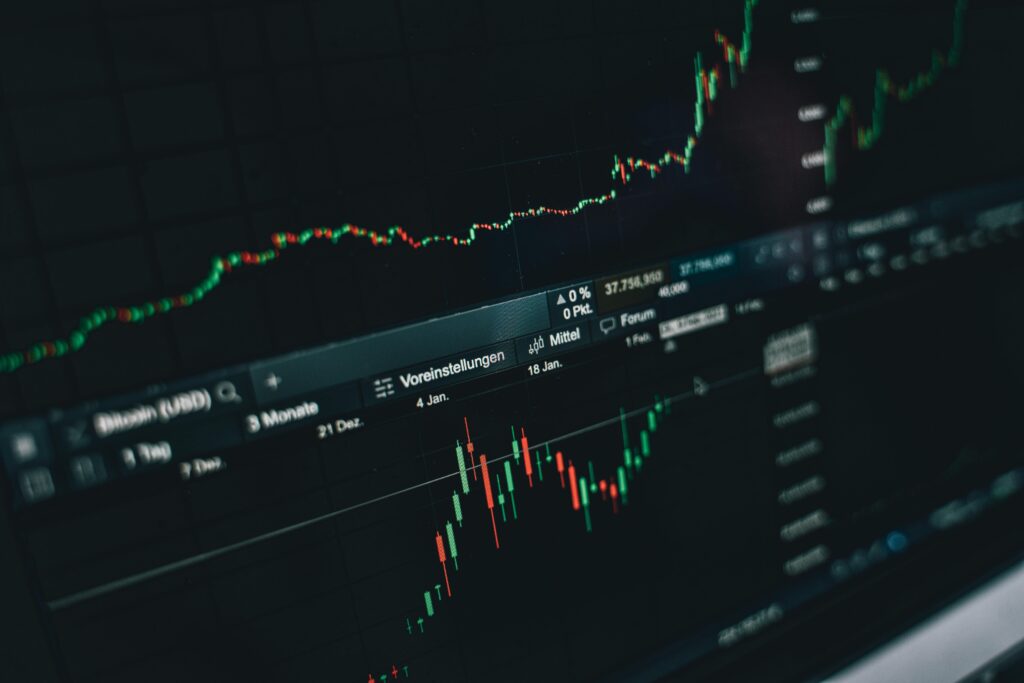
Modern financial markets move faster than ever. Prices change in seconds, news spreads instantly, and millions of investors react simultaneously. In this environment, Emotion-Driven Investing has become a powerful concept shaping how markets behave. Investors are no longer viewed as purely rational decision-makers. Instead, emotions such as fear, greed, excitement, and uncertainty play a critical role in market movements.
Consequently, advanced technologies like artificial intelligence now analyze these emotional patterns to understand market psychology. By studying investor sentiment across news, social media, and trading data, AI systems can identify trends that traditional analysis often misses. This combination of behavioral finance and machine intelligence is transforming the way investors interpret markets.
In this article, we explore what Emotion-Driven Investing means, how behavioral finance influences investment decisions, how AI reads investor sentiment, and what the future holds for AI-powered behavioral investing.
What Emotion-Driven Investing Means in Modern Markets?
Emotion-Driven Investing refers to the influence of human emotions on financial decisions and market behavior. Instead of relying solely on financial metrics, investors often react based on psychological triggers.
For example, during market downturns, fear can push investors to sell assets quickly. Similarly, during strong bull markets, excitement and greed can drive excessive buying.
Therefore, emotional reactions can create significant market volatility.
Key Emotions That Influence Markets
Investor behavior typically revolves around several dominant emotions:
-
Fear: Causes panic selling during market crashes
-
Greed: Encourages risky investments during bullish periods
-
Hope: Keeps investors holding losing assets
-
Regret: Leads to hesitation after past losses
-
Overconfidence: Makes traders underestimate risks
Moreover, these emotions spread rapidly through financial communities, social media platforms, and trading networks. As a result, they can influence entire markets rather than individual investors.
The Role of Behavioral Finance in Investment Decisions
Behavioral finance studies how psychology affects financial decision-making. Unlike traditional financial theory, which assumes rational investors, behavioral finance recognizes cognitive biases and emotional responses.
Consequently, it provides a more realistic explanation of market behavior.
Common Behavioral Biases in Investing
Several psychological biases frequently impact investors:
Loss Aversion
Investors feel losses more strongly than gains. Therefore, they often hold losing investments longer than they should.
Herd Mentality
Many investors follow the crowd rather than performing independent analysis. Consequently, asset bubbles and market crashes can occur.
Confirmation Bias
Investors often search for information that supports their existing beliefs while ignoring contradictory evidence.
Anchoring Bias
People rely heavily on the first piece of information they receive. As a result, investors may base decisions on outdated price levels.
Moreover, these biases can distort market prices and create inefficiencies that sophisticated investors attempt to exploit.
How AI Analyzes Sentiment and Market Psychology?
Artificial intelligence has introduced a new dimension to Emotion-Driven Investing. Instead of guessing investor sentiment, AI systems can measure it directly.
They analyze enormous datasets in real time, including:
-
Financial news articles
-
Social media discussions
-
Trading activity
-
Investor forums
-
Economic reports
Consequently, AI can identify emotional patterns across millions of market participants.
Natural Language Processing in Finance
Natural Language Processing (NLP) allows AI to understand human language.
Using NLP, algorithms can:
-
Detect positive or negative sentiment in news headlines
-
Identify emotional keywords such as “panic,” “surge,” or “crash”
-
Analyze investor discussions on forums and social platforms
-
Track shifts in market optimism or pessimism
Moreover, these insights allow investors to anticipate market reactions before they appear in price movements.
Machine Learning and Pattern Recognition
Machine learning models analyze historical market data alongside sentiment indicators.
Consequently, they can detect patterns such as:
-
Fear spikes before market sell-offs
-
Social hype before speculative rallies
-
Negative sentiment before earnings disappointments
Therefore, AI-powered systems can generate predictive signals for traders and portfolio managers.
Tools That Track Investor Mood and Social Sentiment
Many financial technology platforms now offer sentiment analysis tools designed to monitor investor emotions.
These tools combine data science, artificial intelligence, and behavioral finance.
Popular Sentiment Analysis Sources
Investor sentiment can be measured through multiple channels:
-
Social media platforms
-
News sentiment indicators
-
Volatility indexes
-
Investor surveys
-
Market trading patterns
Moreover, each source provides a unique view of market psychology.
Comparison of Sentiment Data Sources
| Sentiment Source | Data Type | Strength | Limitation |
|---|---|---|---|
| Social Media Monitoring | Real-time discussions | Fast market signals | Can be noisy |
| News Sentiment Analysis | Financial journalism | Professional insights | Slower updates |
| Investor Surveys | Direct sentiment measurement | Structured data | Limited frequency |
| Market Volatility Index | Options pricing | Market fear indicator | Indirect sentiment |
Consequently, investors often combine multiple sources to gain a complete understanding of market mood.
Impact on Trading Strategies and Portfolio Management
Emotion-based insights can significantly influence trading strategies.
Traditional strategies rely on financial indicators such as earnings growth, interest rates, or valuation metrics. However, sentiment data introduces a psychological dimension.
Sentiment-Based Trading Strategies
Several strategies incorporate emotion-driven signals.
Contrarian Trading
Contrarian investors act opposite to the crowd.
For example:
-
Buy when market sentiment becomes extremely negative
-
Sell when investor optimism reaches extreme levels
Consequently, they attempt to profit from market overreactions.
Momentum Trading
Momentum traders often follow positive sentiment trends.
When market mood becomes highly optimistic, prices may continue rising in the short term.
Therefore, momentum strategies attempt to capture these trends.
Risk Management Adjustments
Portfolio managers can also use sentiment indicators to adjust risk exposure.
For instance:
-
Increase diversification during fear-driven markets
-
Reduce leverage during excessive optimism
-
Increase cash holdings during uncertain periods
Moreover, these adjustments can protect portfolios from emotional market swings.
Comparison of Traditional vs Emotion-Based Investing
| Factor | Traditional Investing | Emotion-Driven Investing |
|---|---|---|
| Primary Data | Financial statements | Sentiment & psychology |
| Decision Basis | Valuation metrics | Behavioral patterns |
| Time Horizon | Medium to long-term | Short to medium-term |
| Risk Indicators | Economic factors | Emotional extremes |
Consequently, many modern investment firms combine both approaches.
Risks of Emotion-Based Market Signals
Although Emotion-Driven Investing offers valuable insights, it also carries risks.
Sentiment data can sometimes produce misleading signals.
Noise in Social Sentiment
Social media discussions often include speculation, rumors, and misinformation. Therefore, algorithms must filter irrelevant data carefully.
Short-Term Market Distortions
Emotion-based signals frequently reflect short-term trends rather than long-term fundamentals.
Consequently, relying solely on sentiment can lead to poor investment decisions.
Algorithmic Feedback Loops
If many investors use the same sentiment signals, it can create feedback loops.
For example:
-
AI detects optimism
-
Algorithms buy assets
-
Prices rise further
-
Sentiment becomes even more positive
However, such cycles may eventually collapse quickly.
Data Manipulation Risks
Some traders attempt to manipulate market sentiment through coordinated social media campaigns.
Therefore, sentiment analysis systems must detect abnormal activity.
The Future of AI-Powered Behavioral Investing
The future of Emotion-Driven Investing will likely involve deeper integration between artificial intelligence and behavioral finance.
As data sources expand, AI systems will gain an even clearer understanding of investor psychology.
Advanced Predictive Models
Next-generation AI models will combine:
-
Sentiment analysis
-
macroeconomic indicators
-
global news flows
-
trading patterns
Consequently, they may predict market reactions with greater accuracy.
Real-Time Behavioral Dashboards
Investment platforms may soon offer real-time behavioral dashboards showing:
-
Fear and greed levels
-
social sentiment trends
-
institutional investor activity
Therefore, portfolio managers could respond instantly to shifts in market psychology.
Personalized Investment Strategies
AI could also tailor strategies based on individual investor behavior.
For example:
-
Detect emotional trading patterns
-
Recommend discipline-based investment plans
-
Prevent panic selling during market declines
Moreover, these tools may help retail investors make more rational decisions.
Frequently Asked Questions
What is Emotion-Driven Investing?
Emotion-Driven Investing refers to investment decisions influenced by psychological factors such as fear, greed, optimism, and market sentiment rather than purely financial analysis.
How does AI measure investor sentiment?
AI uses natural language processing and machine learning to analyze news articles, social media posts, trading patterns, and investor discussions to detect emotional signals.
Is sentiment analysis reliable for trading?
Sentiment analysis can provide valuable insights. However, it should be combined with traditional financial analysis to reduce risk.
Can retail investors use emotion-driven investing strategies?
Yes. Many investment platforms now offer sentiment indicators that retail investors can use to understand market mood and adjust strategies.
Does emotional investing cause market volatility?
Yes. Emotional reactions such as panic selling or speculative buying can significantly increase market volatility.