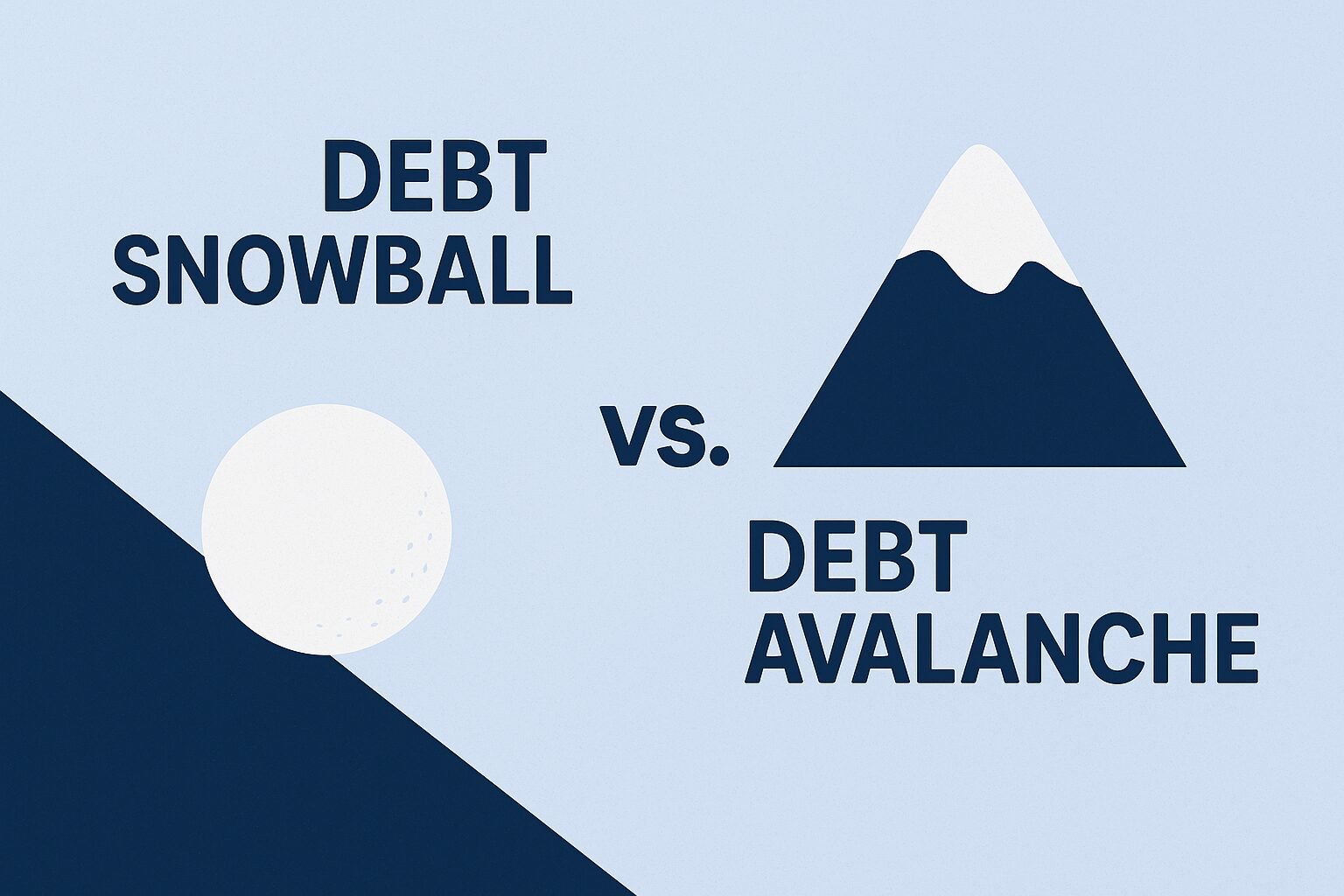
Paying off debt is one of the most important steps toward financial freedom. Whether you have credit card balances, student loans, or personal loans, choosing the right repayment strategy can save you money and help you stay motivated. Two of the most popular methods are the debt snowball and debt avalanche. Understanding the debt snowball vs debt avalanche comparison will help you select the best approach based on your financial situation and personality.
Both methods focus on paying off debts systematically, but they differ in how you prioritize payments. This guide explains how each method works, their pros and cons, and which one is better for you.
What Is the Debt Snowball Method?
The debt snowball method focuses on paying off your smallest debts first, regardless of interest rates. This strategy builds motivation by giving you quick wins.
How It Works
-
List all your debts from smallest balance to largest balance.
-
Make minimum payments on all debts.
-
Put extra money toward the smallest debt.
-
Once the smallest debt is paid off, move to the next smallest.
-
Continue until all debts are cleared.
As you pay off each debt, your available money increases, creating a “snowball” effect.
What Is the Debt Avalanche Method?
The debt avalanche method focuses on paying off debts with the highest interest rates first. This approach minimizes the total interest you pay over time.
How It Works
-
List all debts from highest interest rate to lowest interest rate.
-
Make minimum payments on all debts.
-
Put extra money toward the highest-interest debt.
-
Once that debt is paid off, move to the next highest interest rate.
-
Continue until all debts are paid off.
This method saves money but may take longer to see the first debt eliminated.
Debt Snowball vs Debt Avalanche Comparison Table
| Feature | Debt Snowball Method | Debt Avalanche Method |
|---|---|---|
| Priority | Smallest balance first | Highest interest rate first |
| Focus | Motivation and quick wins | Saving money on interest |
| Interest savings | Lower | Higher |
| Psychological motivation | Very high | Moderate |
| Time to first payoff | Faster | Slower |
| Total repayment cost | Higher | Lower |
| Best for | People needing motivation | People focused on saving money |
This debt snowball vs debt avalanche comparison clearly shows that both methods have unique advantages.
Example of Debt Snowball vs Debt Avalanche
Suppose you have the following debts:
| Debt | Balance | Interest Rate |
|---|---|---|
| Credit Card A | $500 | 18% |
| Credit Card B | $2000 | 22% |
| Personal Loan | $5000 | 10% |
Debt Snowball Order:
-
Credit Card A ($500)
-
Credit Card B ($2000)
-
Personal Loan ($5000)
Debt Avalanche Order:
-
Credit Card B (22%)
-
Credit Card A (18%)
-
Personal Loan (10%)
Snowball focuses on balance size, while avalanche focuses on interest rates.
Advantages of Debt Snowball Method
1. Builds Motivation Quickly
Paying off small debts fast gives you a sense of achievement, encouraging you to continue.
2. Easy to Follow
It is simple and straightforward, making it ideal for beginners.
3. Creates Positive Financial Habits
Quick wins improve confidence and discipline.
4. Reduces Mental Stress
Seeing debts disappear quickly reduces financial anxiety.
Disadvantages of Debt Snowball Method
1. Higher Interest Costs
You may pay more interest because high-interest debts are not prioritized.
2. Less Financial Efficiency
It is not the most cost-effective method.
Advantages of Debt Avalanche Method
1. Saves the Most Money
You pay less interest overall.
2. Faster Total Debt Payoff
Reducing high-interest debt speeds up overall repayment.
3. Financially Efficient
It is mathematically the best strategy.
4. Better for Large Debts
Especially useful for credit cards with high interest rates.
Disadvantages of Debt Avalanche Method
1. Slower Motivation
It may take longer to pay off the first debt.
2. Requires Discipline
Less emotional reward in the beginning.
Which Method Is Better?
The answer depends on your personality and goals.
Choose debt snowball if:
-
You need motivation
-
You feel overwhelmed by multiple debts
-
You want quick psychological wins
Choose debt avalanche if:
-
You want to save the most money
-
You are disciplined
-
You are focused on long-term efficiency
Both methods are effective, and the most important thing is consistency.
Psychological vs Mathematical Approach
The debt snowball method focuses on psychology, while the debt avalanche method focuses on mathematics.
| Factor | Snowball | Avalanche |
|---|---|---|
| Emotional motivation | High | Moderate |
| Financial efficiency | Moderate | High |
| Long-term savings | Lower | Higher |
| Ease of sticking with plan | Easier | Harder |
Your mindset plays a major role in choosing the right strategy.
How Debt Repayment Supports Investing Goals
Paying off debt allows you to invest more money in wealth-building opportunities. High-interest debt can reduce your ability to grow financially.
Once debt-free, you can focus on financial goals such as retirement and investing. Many people combine debt repayment with learning How to Invest in Stock Market Step by Step to build long-term wealth after eliminating debt.
Debt repayment and investing work together to improve financial stability.
Tips to Pay Off Debt Faster
1. Increase Monthly Payments
Pay more than the minimum whenever possible.
2. Reduce Unnecessary Expenses
Cut non-essential spending and redirect money to debt repayment.
3. Increase Your Income
Freelancing, part-time jobs, or side businesses can accelerate repayment.
4. Avoid New Debt
Focus on paying off existing debt first.
5. Stay Consistent
Consistency is more important than speed.
Hybrid Approach: Combining Both Methods
Some people combine both strategies:
-
Start with snowball to build motivation
-
Switch to avalanche to save money
This balanced approach provides both psychological and financial benefits.
FAQs About Debt Snowball vs Debt Avalanche Comparison
1. Which method saves more money?
The debt avalanche method saves more money because it targets high-interest debts first.
2. Which method pays off debt faster?
The avalanche method is usually faster overall, but the snowball method provides quicker small wins.
3. Which method is better for beginners?
The snowball method is often better for beginners because it builds motivation.
4. Can I switch between methods?
Yes, you can switch anytime depending on your needs and progress.
5. Does the snowball method really work?
Yes, it works well because motivation helps people stay consistent.
6. What is the biggest benefit of the avalanche method?
The biggest benefit is saving money on interest.
Final Thoughts
Understanding the debt snowball vs debt avalanche comparison helps you choose the right debt repayment strategy. The snowball method provides motivation and quick wins, while the avalanche method saves money and is more financially efficient.