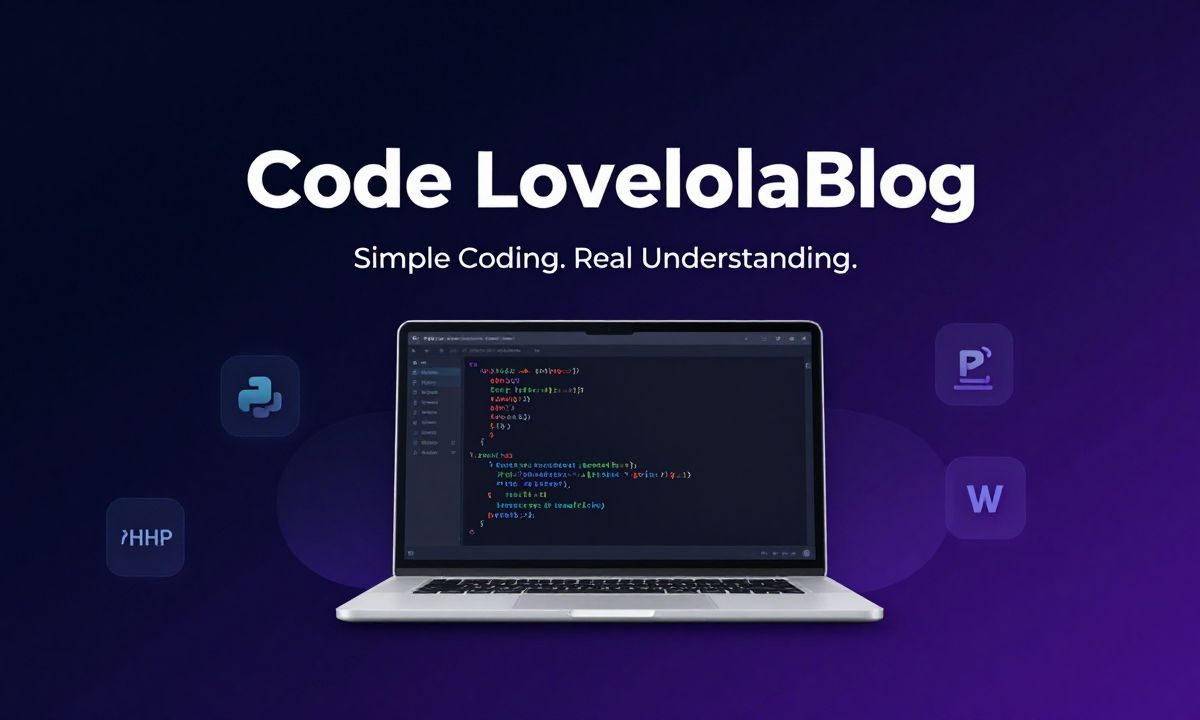
If you searched for Code LovelolaBlog, you already had something specific in mind. You were not looking for just any random coding website or generic tutorial page. Most search results fail to explain what this blog actually is and why people keep coming back to it.
Code LovelolaBlog is not your typical oversized learning platform. It is a focused space where coding concepts are explained simply and practically. People who feel lost on bigger platforms often find comfort in how this blog breaks things down.
This page gives you a complete and honest picture of Code LovelolaBlog. You will learn what it covers, who it serves, and whether it is worth your time. By the end, you will have everything you need to make that decision confidently.
What Exactly Is Code LovelolaBlog?
Code LovelolaBlog is a coding-focused blog built around practical programming knowledge. Instead of throwing heavy theory at readers, it focuses on clear explanations and real examples. The goal is understanding, not just memorizing lines of code.
It does not try to compete with large educational platforms or online academies. It feels more like a personal blog written by someone who genuinely wants to help. That personal touch is exactly what makes it different from the rest.
What sets Code LovelolaBlog apart is its commitment to simplicity and clarity. Many blogs aim to impress readers with complexity, but this one aims to explain. That single difference makes a huge impact on how much a reader actually learns.
See More: Google Finally Lets U.S. Users Change Their Gmail Address
What Topics Does Code LovelolaBlog Cover?
Code LovelolaBlog covers the core development skills that most learners actively search for online. The content is designed to meet beginners where they are and guide them forward step by step. Each topic is chosen based on real-world relevance and practical value.
Programming Languages
Code LovelolaBlog focuses on widely used languages that beginners genuinely need to learn. The explanations stay simple and avoid unnecessary technical jargon throughout. Readers can follow along without feeling overwhelmed or confused by complex terms.
Here is a quick overview of the programming languages covered on Code LovelolaBlog:
| Language | Purpose | Level |
| HTML | Building webpage structure and layout | Beginner |
| CSS | Styling and designing web pages visually | Beginner |
| JavaScript | Adding interactivity and dynamic features | Beginner to Intermediate |
| Python | Backend logic, scripting, and automation | Beginner to Intermediate |
| PHP | Server-side web development and databases | Intermediate |
Tutorials and Step-by-Step Guides
One of the strongest features of Code LovelolaBlog is its tutorial-based content style. Every guide walks readers through a process in a clear and organised manner. Nothing is left unexplained, and every code block comes with a simple description.
The tutorials are written in a way that even complete beginners can follow easily. Each step builds on the previous one, so learners never feel lost or confused. This approach makes learning feel natural rather than stressful or overwhelming.
What you will typically find in the tutorials:
- Step-by-step walkthroughs that guide you from start to finish
- Clear explanations written right beside every code example
- Real working examples that show how the code actually behaves
- Simple language that avoids unnecessary complexity or confusion
Developer Tips and Best Practices
Code LovelolaBlog goes beyond just teaching syntax and basic code writing. It also shares practical advice that helps developers work smarter every day. These tips are often the difference between a struggling beginner and a confident coder.
Topics like clean code, debugging, and avoiding common mistakes are regularly covered. Larger platforms tend to skip this kind of advice, but it matters enormously in real projects. Code LovelolaBlog treats these topics as just as important as the code itself.
Helpful tips and best practices shared on Code LovelolaBlog:
- How to avoid the most common beginner coding mistakes
- How to write cleaner and more readable code consistently
- How to debug your code without losing patience or time
- How to build good habits early in your coding journey
Tools, Frameworks, and Practical Usage
Code LovelolaBlog does not just list tools to fill up space on a page. It explains why each tool exists and when to use it. That added context helps learners avoid poor decisions in their real projects.
Understanding a tool in the right context is far more valuable than just knowing its name. Code LovelolaBlog gives readers the clarity they need to choose the right option. This makes it genuinely useful rather than just another reference list online.
What Code LovelolaBlog explains about tools and frameworks:
- When a specific tool is actually the right choice to use
- Why the tool was created and what problem it solves
- How it fits into a real project from start to finish
- Which tools work well together for common development tasks
See More: Latest Breakthroughs in Quantum Computing 2024: From Theory to Real-World Impact
Who Is Code LovelolaBlog For?
Code LovelolaBlog is designed primarily for people who are just starting their coding journey. It speaks directly to self-taught learners who prefer simplicity over academic depth. If you learn better through examples than through theory, this blog was made for you.
Students working on small projects will also find a lot of value here. The content is practical enough to apply directly to real assignments and personal builds. It does not assume you have a computer science background or any prior experience.
Hobbyists building small apps and tools will feel right at home on this blog. The writing never talks down to readers or makes them feel like outsiders. However, if you are already working at an advanced or professional level, you may find the content too basic for your needs.
Why Is “Code LovelolaBlog” Being Searched?
People search for Code LovelolaBlog because they are looking for the original source directly. Someone shared a tutorial link, a forum post, or a project reference, and now others want to find it. That kind of word-of-mouth discovery drives very specific and intentional searches.
Developer communities and social platforms often mention helpful blogs in passing conversations. When a learner finds a resource they like, they share it with others who share the same struggles. Code LovelolaBlog benefits from exactly this kind of organic and genuine recommendation.
Some searches also come from portfolios, GitHub project pages, and student references. When learners cite their learning sources, others become curious and search for them too. That chain of discovery is what keeps the search interest around this blog growing steadily.
How Code LovelolaBlog Compares to Other Coding Blogs
Most coding blogs out there fall into one of two disappointing extremes. They are either too shallow with repetitive content or too advanced for most beginners to follow. Code LovelolaBlog manages to sit comfortably in the middle of those two extremes.
It uses simpler language, focuses on genuine understanding, and feels more personal in tone. Readers who feel overwhelmed on larger platforms often find this blog much easier to work with. That balance is a rare quality and it is what keeps people coming back to it.
How Code LovelolaBlog stacks up against other coding blogs:
| Feature | Code LovelolaBlog | Large Platforms |
| Language Simplicity | Very simple and clear | Often technical and complex |
| Content Tone | Personal and approachable | Formal and commercial |
| Focus on Beginners | Strong and consistent | Mixed with advanced content |
| Theory vs Practice | Practice-first approach | Often theory-heavy |
| Content Depth | Fundamental and focused | Broad but sometimes shallow |
How to Get the Most Value from Code LovelolaBlog
Reading Code LovelolaBlog passively will not help you grow as a developer. The real value comes when you open a code editor alongside the blog and test everything yourself. Learning by doing is the only method that truly sticks in the long run.
Try modifying every example you come across to see what changes when you adjust the code. Breaking things on purpose is one of the best ways to understand how code actually works. Code LovelolaBlog gives you the perfect foundation to experiment and explore safely.
Apply whatever you learn directly to a small personal project as soon as possible. Even a tiny project helps you connect concepts together in a meaningful and lasting way. The more actively you engage with the content, the faster your skills will develop and improve.
See More: Title: The Rise of AI-Powered Creativity: From Image Generation to Personalized Tattoo Design
Blogs Similar to Code LovelolaBlog
If you enjoy the style of Code LovelolaBlog, you will likely appreciate other practical coding blogs too. Look for blogs that focus on hands-on tutorials rather than lengthy theoretical discussions. The best ones explain concepts step by step with real and working examples.
A good coding blog should feel like a knowledgeable friend explaining things clearly over coffee. It should not feel like reading a textbook or sitting through a confusing lecture. When you find that quality in a blog, it is worth bookmarking and revisiting often.
Exploring multiple sources will always strengthen your overall understanding of coding concepts. Each blog has its own style, examples, and focus areas that can fill gaps in your knowledge. Using Code LovelolaBlog alongside other similar resources gives you the most well-rounded learning experience possible.
Last Words
Code LovelolaBlog is not trying to be the biggest or most comprehensive coding resource online. It focuses on being genuinely useful to the people who need it most. And for beginner learners and self-taught developers, that is exactly the right approach.
If you want a place to learn coding without feeling overwhelmed or talked down to, this blog delivers that. Combine it with consistent practice and a few personal projects, and your skills will grow steadily. Sometimes the simplest resource is the one that actually gets you moving forward.
Frequently Asked Questions
Is Code LovelolaBlog free to use?
Yes, Code LovelolaBlog is free to access and does not require any paid subscription to read its content.
Is it good for complete beginners?
Absolutely, the writing style is clear and friendly, making it easy for anyone starting from scratch to follow.
Does Code LovelolaBlog cover Python?
Yes, Python is among the languages covered, with beginner-friendly explanations and practical usage examples included.
How often is new content added?
Update frequency can vary since it is an independent blog, but the existing content remains highly useful for learners.
Can I learn web development from this blog?
Yes, it covers HTML, CSS, and JavaScript which are the core building blocks of web development for beginners.
Is the content beginner or advanced level?
The content is primarily aimed at beginners and early-stage developers who prefer simple and clear explanations.
What makes Code LovelolaBlog different from other blogs?
It focuses on simplicity and understanding rather than impressing readers with complex jargon or unnecessary depth.
Can I use it alongside other learning resources?
Yes, pairing Code LovelolaBlog with other tutorials and personal projects will give you the best overall learning results.
Does it explain tools and frameworks too?
Yes, it covers tools and frameworks in context, explaining when and why to use them rather than just listing names.
Is Code LovelolaBlog suitable for students?
Yes, students working on coding assignments and small personal projects will find the content practical and easy to apply.