Technology is changing how people interact with vehicles. At CES 2026 Smart Cars presentations, automakers and technology companies showed that cars are no longer just transportation machines. Instead, they are becoming intelligent companions that understand drivers, communicate with other systems, and adapt to everyday life.
At the annual tech showcase in Consumer Electronics Show, automotive innovation stood at the center of attention. Major companies such as BMW, Mercedes-Benz, Hyundai, Sony Honda Mobility, and NVIDIA demonstrated vehicles that combine artificial intelligence, advanced sensors, electric powertrains, and connected ecosystems.
Consequently, the concept of a smart car is evolving. These vehicles do more than drive. They analyze driver behavior, improve safety, manage energy efficiently, and integrate seamlessly with digital lifestyles.
This article explores the biggest innovations revealed in CES 2026 Smart Cars, including AI-powered features, autonomous driving progress, and electric vehicle advancements shaping the future of mobility.
Key Trends From CES 2026 Smart Cars
Several themes dominated automotive announcements during CES 2026. Each trend highlights how the industry is moving toward intelligent mobility.
1. Cars With Conversational AI
Automakers are building cars that communicate naturally with drivers. Voice assistants now understand context, preferences, and daily routines.
For example, next-generation systems powered by platforms from companies like Qualcomm and NVIDIA allow drivers to say:
-
“Find the fastest route home.”
-
“Adjust cabin temperature.”
-
“Schedule charging tonight.”
Moreover, these systems learn habits over time. If a driver usually calls a family member during the commute, the vehicle may suggest it automatically.
Therefore, the car becomes more than a machine. It acts as a personal assistant on wheels.
2. Smart Interiors and Adaptive Cabins
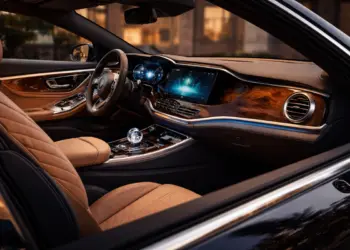
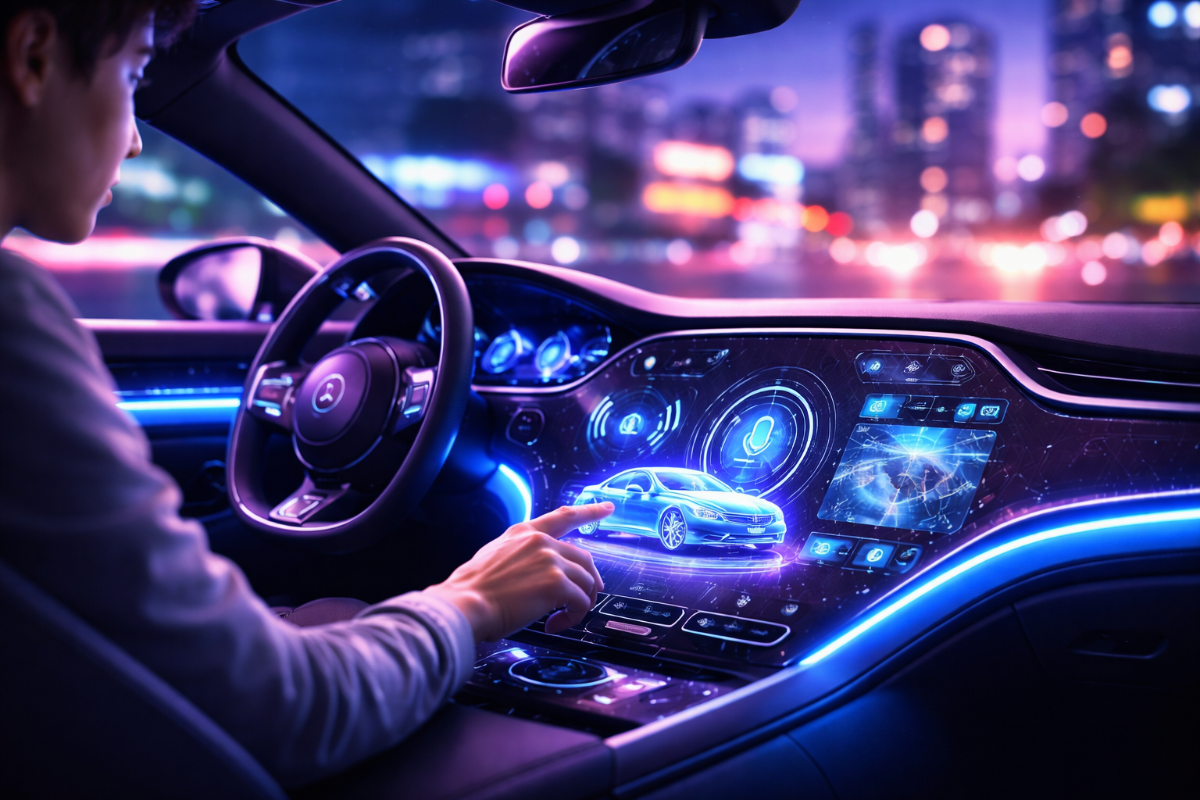
At CES 2026, vehicle interiors looked more like digital living spaces.
Manufacturers introduced:
-
Panoramic digital dashboards
-
Augmented reality head-up displays
-
Adaptive ambient lighting
-
Biometric driver monitoring
For instance, concepts from BMW showcased immersive displays that stretch across the entire windshield.
However, these systems are not just visual upgrades. They improve usability and safety by presenting critical information directly in the driver’s line of sight.
Consequently, drivers spend less time looking down at screens.
3. Vehicle-to-Everything Connectivity
Connectivity also became a major highlight of CES 2026 Smart Cars.
Vehicle-to-Everything (V2X) technology enables cars to communicate with:
-
Traffic infrastructure
-
Other vehicles
-
Cloud platforms
-
Smart homes
For example, a car could detect traffic congestion ahead and adjust the route automatically. Similarly, the vehicle might signal your smart home to turn on lights when you approach.
Therefore, transportation becomes part of a larger digital ecosystem.
AI Integration in Modern Vehicles
Artificial intelligence now drives most automotive innovation.
AI systems analyze large volumes of data from sensors, cameras, and radar systems. As a result, vehicles can make decisions in real time.
How AI Powers Smart Cars?
Modern vehicles use AI for multiple functions:
-
Driver behavior analysis
-
Predictive maintenance
-
Navigation optimization
-
Autonomous driving assistance
-
Safety monitoring
Moreover, AI platforms developed by companies like NVIDIA provide centralized computing power for many of these capabilities.
Consequently, cars are becoming software-defined machines.
AI Personalization Features
AI also improves the personal driving experience.
Smart cars can now:
-
Adjust seat position automatically
-
Recommend music based on mood
-
Suggest charging stations based on route
-
Monitor driver fatigue
For instance, cameras inside the cabin detect signs of distraction or tiredness. If the system senses risk, it can trigger alerts or activate safety support.
Therefore, AI strengthens both comfort and safety.
Autonomous Driving Progress
Autonomous technology also gained attention during CES 2026.
While fully self-driving vehicles remain limited in real-world deployment, automakers revealed major improvements in advanced driver assistance systems.
Companies such as Tesla and Mercedes-Benz continue pushing higher levels of driving automation.
Levels of Vehicle Autonomy
| Level | Description | Driver Role |
|---|---|---|
| Level 1 | Basic driver assistance | Driver controls most functions |
| Level 2 | Partial automation | Driver supervises systems |
| Level 3 | Conditional automation | Car drives under specific conditions |
| Level 4 | High automation | Vehicle handles most environments |
| Level 5 | Full automation | No driver required |
At CES 2026, several manufacturers demonstrated systems approaching Level 3 and Level 4 automation.
However, regulatory approval remains a major challenge.
Therefore, automakers continue focusing on advanced safety systems while gradually expanding autonomy.
Electric Vehicle Innovations
Electric mobility also played a major role in CES 2026 automotive showcases.
Manufacturers revealed improvements in:
-
Battery efficiency
-
Charging speed
-
Energy management software
-
Vehicle range
Companies like Hyundai and Sony Honda Mobility highlighted next-generation EV platforms.
Consequently, electric vehicles are becoming more practical for daily use.
Next-Generation Battery Technology
Battery innovation remains the most important factor for EV adoption.
Key advancements include:
-
Solid-state battery research
-
Faster DC charging systems
-
Thermal efficiency improvements
-
AI-optimized energy management
Solid-state batteries promise higher energy density and shorter charging times. However, large-scale production still requires more development.
Therefore, automakers continue refining lithium-ion technology while preparing future alternatives.
Traditional Cars vs CES 2026 Smart Cars
| Feature | Traditional Vehicles | CES 2026 Smart Cars |
|---|---|---|
| Interface | Basic screens | Immersive digital displays |
| Connectivity | Limited Bluetooth | Full cloud connectivity |
| Driving Assistance | Basic safety alerts | AI-powered driver support |
| Updates | Dealer-based updates | Over-the-air software updates |
| Personalization | Manual settings | AI-driven customization |
This shift clearly shows how vehicles are evolving into connected digital platforms.
EV Innovations Presented at CES 2026
| Innovation | Benefit | Impact on Drivers |
|---|---|---|
| AI battery management | Better energy efficiency | Longer driving range |
| Ultra-fast charging | Reduced charging time | More convenient travel |
| Smart route planning | Optimized charging stops | Less range anxiety |
| Vehicle energy sharing | Power home devices | Expanded utility |
Therefore, electric vehicles are not just environmentally friendly. They are becoming smarter and more integrated with everyday life.
Smart Cars as Lifestyle Companions
One of the biggest messages from CES 2026 Smart Cars demonstrations was simple: cars are evolving into lifestyle platforms.
Instead of focusing only on horsepower or speed, manufacturers now prioritize:
-
digital experiences
-
connectivity
-
automation
-
sustainability
For instance, vehicles may soon coordinate with calendars, smart homes, and health devices.
Moreover, integrated AI assistants could recommend restaurants, schedule charging, or adjust travel plans based on real-time conditions.
Consequently, cars are becoming active participants in daily routines.
Challenges Facing Smart Car Technology
Despite rapid progress, several challenges remain.
Data Privacy
Smart vehicles collect significant amounts of data.
This includes:
-
driving patterns
-
location history
-
biometric information
Therefore, automakers must ensure strong data protection and transparent policies.
Infrastructure Requirements
Many smart car features depend on external systems such as:
-
high-speed networks
-
smart traffic infrastructure
-
EV charging networks
Without these systems, some advanced capabilities cannot function fully.
Regulatory Approval
Autonomous driving regulations vary across countries.
Consequently, automakers must work closely with governments to ensure safe deployment.
The Future of Smart Mobility
Looking ahead, the ideas presented at CES 2026 will influence vehicle design for the next decade.
Future vehicles will likely include:
-
AI copilots
-
fully autonomous capabilities
-
immersive digital cabins
-
sustainable power systems
Moreover, software updates will continuously improve vehicle performance even after purchase.
Therefore, owning a car will feel more like owning a smart device that evolves over time.
Conclusion
The innovations revealed in CES 2026 Smart Cars confirm that the automotive industry is entering a new era. Vehicles are shifting from mechanical machines to intelligent companions powered by software, artificial intelligence, and electrification.
Automakers and technology companies are working together to create cars that understand drivers, improve safety, and integrate seamlessly with digital ecosystems.
Consequently, the future of mobility will be defined not just by speed or design but by intelligence, connectivity, and adaptability.
In the coming years, smart vehicles will continue transforming how people travel, interact with technology, and experience everyday transportation.
Frequently Asked Questions
What are CES 2026 Smart Cars?
CES 2026 Smart Cars refer to the next generation of vehicles presented at the Consumer Electronics Show that integrate AI, connectivity, autonomous systems, and electric technology.
How does AI improve modern vehicles?
AI helps vehicles analyze data from sensors and cameras. Consequently, cars can improve navigation, monitor driver safety, optimize battery usage, and personalize the driving experience.
Are autonomous cars fully ready yet?
Fully autonomous vehicles are still under development. However, many modern cars already offer advanced driver assistance features approaching Level 3 automation.
Why are electric vehicles important for smart mobility?
Electric vehicles reduce emissions and support advanced software systems. Moreover, EV platforms integrate easily with AI-powered energy management and smart charging networks.
Will smart cars replace traditional vehicles?
Smart vehicles will gradually replace traditional cars as technology advances. However, the transition will happen over time as infrastructure and regulations evolve.