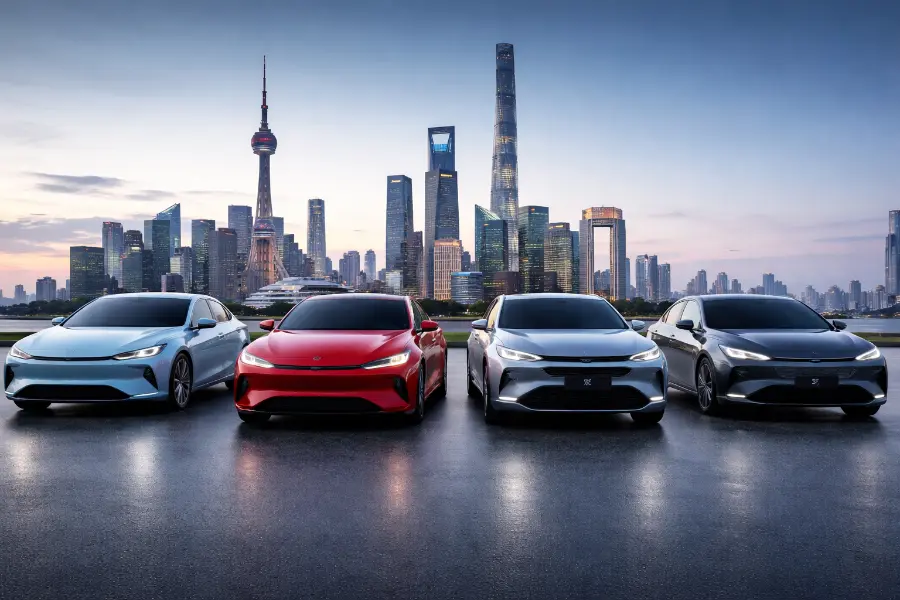
China’s rapid ascent in the global automotive industry is no longer a regional story it is a structural shift with global implications. Over the past decade, the country has transformed itself from a manufacturing base for foreign brands into the world’s most powerful automotive force. This evolution is now being closely monitored by billionaires, institutional investors, and global capital markets.
The focus is not just on production scale, but on control. China has established dominance across critical layers of the automotive ecosystem, particularly in electric vehicles (EVs), battery supply chains, and export markets. These developments are reshaping how wealth, influence, and long-term investments are distributed across the global auto sector.
Consequently, high-net-worth individuals and major investors are paying close attention. The shift signals not just industrial growth, but a broader realignment of economic power one that could redefine the future of mobility and global trade.
China’s Rise in the Global Auto Industry
China’s rise to the top of the automotive industry is built on scale, speed, and strategic alignment between policy and industry. Over the years, the country has invested heavily in infrastructure, manufacturing capabilities, and domestic competition.
It is now firmly established as:
- The largest car producer globally
- The largest automotive market by volume
- The world’s leading car exporter
This transformation did not happen overnight. Instead, it reflects years of coordinated investment and policy support aimed at reducing reliance on foreign automakers and building domestic champions.
Moreover, China’s domestic demand has played a crucial role. With a massive consumer base, automakers benefit from economies of scale that are difficult for other countries to replicate. This allows companies to innovate faster while maintaining cost efficiency.
However, the most significant shift has been China’s ability to move beyond domestic markets. Its emergence as the world’s largest exporter signals a new phase global expansion and influence.
Why Wealthy Investors and Billionaires Are Paying Attention?
For billionaires and institutional investors, China’s automotive sector represents more than just growth it signals a long-term shift in industrial leadership.
Several factors are driving this attention:
- Structural shift in global automotive power
- Rapid growth of EV markets
- Integration of technology and mobility
- Expansion into global export markets
Moreover, investors are recognizing that traditional automotive leaders in the US and Europe are facing increasing pressure. As China accelerates innovation and production, legacy automakers must adapt quickly to remain competitive, as highlighted in a recent BBC report titled “Why the government is relaxed about Chinese car imports”: https://www.bbc.com/news/articles/cnv82v3n6yqo
Therefore, capital is beginning to flow toward companies and supply chains that are positioned within or aligned with China’s ecosystem. This includes battery manufacturers, EV startups, and technology-driven automotive firms.
However, the interest is not purely speculative. It is grounded in measurable trends production growth, export expansion, and technological advancement.
China’s Global Position in the Auto Industry
China’s dominance is now confirmed across multiple dimensions of the automotive sector. Its leadership is not limited to production but extends into critical strategic areas.
Key indicators of China’s global position include:
- Largest automotive manufacturing base in the world
- Leading exporter of vehicles globally
- Dominant player in EV production
- Strong control over battery supply chains
Moreover, China’s integrated approach gives it a competitive advantage. Unlike fragmented systems in other regions, China’s supply chain from raw materials to finished vehicles—is highly coordinated.
However, this dominance also reflects intense domestic competition. Hundreds of companies operate within the EV space, driving innovation and efficiency at an accelerated pace.
Consequently, China is not just leading it is redefining the structure of the global automotive industry.
Key Advantages Driving China Auto Dominance
China’s rise is supported by several structural advantages that are difficult for other regions to replicate.
Core advantages include:
- Strong EV battery ecosystem controlling a large portion of global supply
- Lower production costs due to scale and efficiency
- Highly competitive domestic market driving innovation
- Government support in early-stage industry development
Moreover, the battery ecosystem is particularly critical. Control over battery production gives China leverage over the entire EV value chain, from manufacturing to pricing.
However, cost advantages also play a major role. Chinese manufacturers can produce vehicles at lower costs while maintaining competitive quality, making their products attractive in global markets.
Therefore, these combined advantages create a powerful foundation for sustained dominance.
Role of Electric Vehicles in China’s Dominance
Electric vehicles are at the center of China Auto Dominance. The country has not only embraced EVs but has positioned itself as the global leader in their production and adoption.
Key EV-related strengths include:
- Leading EV production globally
- High domestic adoption rates
- Integrated supply chains from raw materials to finished vehicles
- Leadership in battery manufacturing
Moreover, China’s early investment in EV infrastructure has paid off. Charging networks, battery production facilities, and supply chains are already well established.
However, the integration of these elements is what sets China apart. Instead of relying on external suppliers, Chinese companies operate within a tightly connected ecosystem.
Consequently, this allows faster innovation cycles and more efficient scaling, reinforcing China’s leadership in the EV sector.
Global Implications of China Auto Dominance
China’s growing influence is reshaping the global automotive landscape, creating both opportunities and challenges.
Key global implications include:
- Increased pressure on US and European automakers
- Rising trade tensions and tariff discussions
- Shifts in global market dynamics
- Growing competition in emerging markets
Moreover, traditional automakers are facing a new reality. They must compete not only on quality but also on cost, speed, and technological integration.
However, geopolitical factors are also becoming more prominent. Trade policies, tariffs, and regulatory frameworks are increasingly influencing market access and competitiveness.
Therefore, China Auto Dominance is not just an industrial story it is a geopolitical and economic one.
Read also: Why Chinese Luxury Cars Feel 10 Years Ahead of Everyone Else
Industry Structure and Domestic Competition
China’s automotive industry is characterized by a highly competitive and fragmented structure. This internal competition plays a key role in driving innovation.
Industry characteristics:
- Hundreds of EV-related companies operating domestically
- Intense competition leading to rapid innovation
- Continuous product development cycles
- Strong focus on technology integration
Moreover, this environment forces companies to evolve quickly. Only the most efficient and innovative firms survive, which strengthens the overall industry.
However, this also raises concerns about overcapacity and sustainability. Not all companies will succeed, and consolidation may be inevitable.
Consequently, the competitive landscape is both a strength and a potential risk.
China vs US vs Europe Auto Industry Comparison
| Metric | China | United States | Europe |
|---|---|---|---|
| Production حجم | Highest globally | Moderate | Moderate |
| Export Leadership | #1 globally | Lower | Strong but declining |
| EV Market Share | Leading | Growing | Growing |
| Battery Supply Control | Dominant | Limited | Limited |
| Cost Efficiency | High | Medium | Medium |
Investor Perspective on China Auto Dominance
From an investment standpoint, China’s automotive sector presents both opportunity and strategic importance.
Investor considerations include:
- Long-term growth potential in EV markets
- Strategic positioning within supply chains
- Access to rapidly expanding global markets
- Integration of technology and mobility
Moreover, investors are particularly interested in companies involved in battery production and EV technology. These segments are expected to drive future growth.
However, investment decisions are also influenced by regulatory and geopolitical factors. These risks must be carefully evaluated.
Therefore, while the opportunities are significant, they are accompanied by complexity.
Challenges and Concerns
Despite its dominance, China’s automotive sector faces several challenges that could impact its trajectory.
Key concerns include:
- Overcapacity in manufacturing
- Debate over government subsidies
- Regulatory risks
- Geopolitical tensions affecting trade
Moreover, overcapacity could lead to pricing pressures and reduced profitability for some manufacturers.
However, regulatory scrutiny is also increasing globally. Governments are examining trade practices and market access, which could influence future growth.
Consequently, these challenges add a layer of uncertainty to an otherwise strong growth story.
EV Supply Chain Control: China vs Rest of World
| Segment | China Control Level | Rest of World |
|---|---|---|
| Battery Production | High | Limited |
| Raw Material Processing | Dominant | Partial |
| EV Manufacturing | Leading | Growing |
| Technology Integration | Advanced | Developing |
2026 Trends to Watch
Looking ahead, several trends are expected to shape the future of China Auto Dominance.
Key trends include:
- Continued global expansion of Chinese EV brands
- Entry into Europe, Asia, and emerging markets
- Increased competition with legacy automakers
- Further integration of technology and mobility
Moreover, Chinese companies are expected to strengthen their global presence through exports and partnerships.
However, competition will intensify as other regions accelerate their EV strategies.
Therefore, the coming years will be critical in determining how sustainable China’s dominance will be.
FAQs
Why is China dominating the auto industry?
China dominates due to its large-scale production, strong EV ecosystem, and control over battery supply chains.
Are Chinese EVs better or cheaper?
They are generally more cost-efficient due to lower production costs and integrated supply chains.
Why are investors interested in China’s auto sector?
Investors see long-term growth potential, especially in EVs and battery technologies.
How does this affect global car companies?
It increases competition and forces traditional automakers to innovate and reduce costs.
What are the risks of investing in China’s auto market?
Key risks include overcapacity, regulatory changes, and geopolitical tensions.