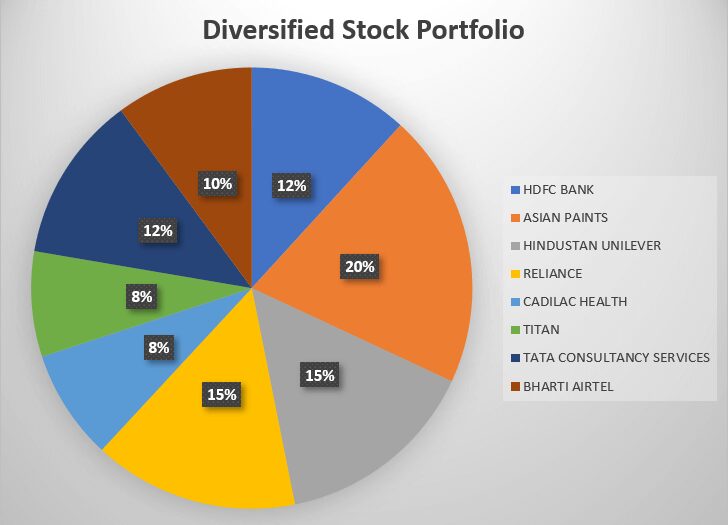
For decades, traditional investing followed a familiar script. You earned income, saved a portion, and placed it into stocks, bonds, mutual funds, or real estate. Over time, compounding returns did the heavy lifting. It was steady, sensible, and widely accepted as the responsible path to financial growth.
But a new generation of traders and investors is challenging that narrative. They aren’t content with modest annual returns or waiting decades to see meaningful results. They want speed, scalability, and access to capital without risking their life savings. That’s where funded trading models enter the picture.
Funded trading firms, often called proprietary or “prop” firms, are reshaping how individuals approach the financial markets. Instead of trading only with personal capital, traders can now access firm-backed funds after proving their skills through structured evaluation programs. This shift is transforming trading from a solitary pursuit into a performance-based partnership.
As more traders explore alternatives to traditional investing, funded trading models are gaining serious traction. Let’s explore why.
The Limits of Traditional Investing
Traditional investing has undeniable strengths. Diversified portfolios, retirement accounts, and long-term strategies provide a stable foundation for wealth accumulation. Yet it also comes with constraints.
Capital is the first limitation. Most people can only invest what they’ve saved. For someone starting out, that might mean a few thousand dollars. Even with strong returns, the absolute gains remain modest until the account grows substantially.
Time is the second constraint. Traditional strategies are built around patience. While patience is a virtue in finance, not everyone wants to wait 20 or 30 years for financial independence.
Then there’s risk concentration. Retail investors shoulder all the downside risk. If a portfolio drops 20 percent, that loss comes directly out of personal savings. There’s no institutional backing or risk-sharing mechanism.
For many aspiring traders, these limitations feel restrictive. They understand market dynamics. They study charts, risk management, macro trends, and price action. Yet their ability to scale remains capped by personal capital.
Funded trading models aim to solve exactly that problem.
What Is a Funded Trading Model?
At its core, a funded trading model is simple. A proprietary trading firm provides capital to traders who demonstrate skill, discipline, and risk control. The trader keeps a percentage of the profits while the firm takes a share in return for supplying the funds.
The process usually begins with an evaluation phase. Traders must meet predefined profit targets while respecting strict risk parameters. This ensures that only disciplined traders advance. Once they pass, they receive access to a funded account.
One example of this structure can be seen in programs like the forex funding program, where traders prove their performance under controlled conditions before gaining access to larger capital pools. The emphasis is not just on profitability, but consistency and risk management.
This model flips traditional investing on its head. Instead of risking personal savings to chase higher returns, traders risk evaluation fees and time. If they succeed, they gain access to significantly larger capital than they might otherwise have.
Lower Barriers to Entry
One of the most compelling aspects of funded trading is accessibility.
In the past, proprietary trading desks were reserved for professionals in major financial hubs. You needed credentials, connections, or employment at a financial institution. Today, remote prop firms allow traders from anywhere in the world to compete for funding.
All you need is a reliable internet connection, a solid strategy, and the discipline to follow risk rules.
This democratization has expanded participation dramatically. Talented traders who might never have entered Wall Street can now prove themselves through transparent evaluation metrics.
It levels the playing field. Performance matters more than pedigree.
Risk Management at the Core
Traditional investing encourages diversification, but retail traders often struggle with risk discipline. Emotional decisions creep in. Overleveraging happens. Losses spiral.
Funded trading firms address this head-on. Their evaluation systems are designed to reward strict risk management. Daily drawdown limits, maximum loss caps, and structured profit targets enforce discipline.
This isn’t a drawback. It’s a training ground.
Traders quickly learn that protecting capital is the priority. A strategy that generates wild gains one week and heavy losses the next won’t pass evaluation. Consistency wins.
In many ways, funded models instill habits that even long-term investors could benefit from: calculated position sizing, emotional control, and structured trade planning.
Capital Efficiency and Scalability
Perhaps the most powerful advantage of funded trading is capital efficiency.
Imagine a skilled trader with $5,000 in personal savings. Even with a strong 10 percent monthly return, the absolute gains remain relatively small. Growth compounds, but slowly.
Now imagine that same trader managing a $100,000 funded account. The percentage returns remain the same, but the profit potential increases dramatically. With profit splits commonly ranging from 70 to 90 percent in favor of the trader, the earning potential becomes significant.
Many firms also offer scaling plans. Consistent performance leads to larger account sizes over time. Traders can grow from managing five figures to six or even seven figures without ever risking their own substantial capital.
That scalability changes the game. It turns trading from a side activity into a legitimate income stream.
A Shift in Mindset: Performance Over Possession
Traditional investing emphasizes ownership. You buy assets and hold them. Success depends on appreciation over time.
Funded trading emphasizes performance. You don’t need to own the capital. You need to manage it well.
This subtle shift has a psychological impact. Traders focus less on how much money they personally have and more on how effectively they deploy available capital.
It also creates accountability. Underperformance means losing the funded account. Consistency means scaling up.
For driven individuals, that performance-based structure feels motivating. It mirrors professional environments where compensation aligns directly with results.
Technology and Market Accessibility
The rise of funded trading models would not be possible without technological advancements.
Retail trading platforms have become faster, more sophisticated, and more transparent. Real-time data, advanced charting tools, algorithmic trading capabilities, and global market access are now standard.
At the same time, communication channels allow firms to manage remote traders seamlessly. Risk monitoring systems track performance automatically. Automated rules enforce compliance without manual oversight.
This infrastructure reduces operational costs for prop firms and allows them to allocate capital across a global pool of talent.
Technology has effectively bridged the gap between institutional capital and individual traders.
The Appeal to a New Generation
Millennials and Gen Z investors grew up during financial crises, rapid technological change, and evolving job markets. They’ve witnessed market volatility firsthand. Many are skeptical of traditional career paths and long-term retirement strategies that rely solely on steady employment and passive investing.
Funded trading offers something different: autonomy, meritocracy, and faster feedback loops.
You don’t need decades to see results. You know quickly whether your strategy works. You refine, adapt, and improve in real time.
It also aligns with the broader gig economy mindset. Just as freelancers monetize skills online, traders monetize market insight.
For ambitious individuals, that independence is compelling.
Income Diversification and Portfolio Strategy
Funded trading doesn’t have to replace traditional investing. In fact, many traders use it to complement long-term portfolios.
Profits generated from funded accounts can be reinvested into stocks, ETFs, real estate, or retirement accounts. This creates a hybrid strategy: active capital generation combined with passive wealth accumulation.
Instead of waiting for capital to grow slowly through contributions, traders use funded profits to accelerate portfolio expansion.
This layered approach appeals to those who want both growth and stability.
Addressing the Skepticism
Critics argue that funded trading models can encourage short-term thinking or unrealistic expectations. That’s a fair concern. Not every trader succeeds. Evaluation rules can be strict, and emotional discipline is essential.
However, the same can be said for entrepreneurship, freelance careers, or active investing. Success requires skill and resilience.
Reputable firms are transparent about rules, profit splits, and expectations. They don’t promise guaranteed income. They provide opportunity based on merit.
For traders willing to treat it as a professional endeavor rather than a shortcut to quick riches, funded trading can be a legitimate pathway.
Professional Development and Skill Building
Another overlooked benefit is the structured development environment.
Evaluation phases push traders to refine their strategies. Many firms provide educational resources, community forums, and performance analytics. Traders receive data-driven feedback that helps them identify weaknesses.
Over time, this process sharpens execution. It fosters habits such as journaling trades, reviewing performance metrics, and adhering strictly to risk parameters.
These are professional-grade practices that elevate trading from speculation to systematic performance.
Even traders who eventually move on carry those skills into other financial ventures.
Global Economic Shifts and Opportunity
Global markets operate around the clock. Currency markets, indices, commodities, and cryptocurrencies provide continuous opportunities.
Funded trading firms tap into this constant flow. Traders in different time zones can focus on sessions that match their strengths. A trader in Asia might specialize in Asian market hours, while someone in Europe focuses on the London session.
This decentralized model reflects broader globalization trends. Capital is no longer confined to physical trading floors. It moves digitally, instantly, across borders.
Funded trading aligns perfectly with that environment.
The Psychological Edge
One surprising advantage of trading with firm capital is psychological separation.
When traders use personal savings, emotional attachment can cloud judgment. Losses feel personal. Fear and greed intensify.
With funded accounts, the mindset shifts. While responsibility remains high, the emotional burden often decreases because the capital isn’t tied directly to personal survival.
This separation can improve decision-making. Traders focus more on execution and less on anxiety.
Of course, discipline is still required. But many report improved clarity once they operate within structured funded models.
Is It Right for Everyone?
Funded trading isn’t a universal solution. It demands time, focus, and emotional resilience. Not everyone enjoys the fast-paced nature of active markets.
Long-term investing remains powerful and appropriate for many individuals. Retirement accounts, diversified portfolios, and steady contributions build wealth reliably.
Yet for those with trading aptitude and ambition, funded models offer a compelling alternative or complement.
The key is self-awareness. Are you comfortable with short-term fluctuations? Can you follow strict rules without deviation? Are you willing to treat trading as a business rather than a hobby?
If the answer is yes, funded trading may unlock opportunities traditional investing alone cannot provide.
The Future of Capital Allocation
Financial markets continue to evolve. Retail access has expanded dramatically over the past two decades. Commission-free trading, digital platforms, and algorithmic tools have reshaped participation.
Funded trading models represent the next stage in that evolution. They decentralize capital allocation and distribute opportunity based on measurable performance.
Rather than gatekeeping access through institutional employment, they allow independent traders to prove their capabilities directly.
As more individuals seek financial independence outside conventional career structures, these models are likely to grow.
Final Thoughts
Traditional investing isn’t disappearing. It remains a cornerstone of wealth building. But it no longer stands alone as the only viable path.
Funded trading models provide a performance-driven alternative. They lower capital barriers, enforce disciplined risk management, and offer scalable income potential for skilled traders.
For those willing to commit to the craft, the appeal is clear. You don’t need a large personal bankroll. You need strategy, consistency, and discipline.
In a world where access to markets has never been easier, funded trading reflects a broader shift toward merit-based opportunity. It empowers individuals to turn skill into capital access and capital access into meaningful returns.
As financial landscapes continue to change, one thing is certain: the conversation about investing is expanding. And funded trading models are firmly part of that discussion.