Everyday drivers often underestimate the real dangers on the road. Deadly Driving Mistakes from distracted texting to aggressive tailgating contribute to thousands of preventable accidents annually. These behaviors not only put lives at risk but also carry financial and legal consequences that can affect drivers for years. Understanding these mistakes is the first step toward safer driving.
Beyond immediate injury risks, high-risk driving behaviors can lead to costly repairs, rising insurance premiums, and potential criminal charges. Young drivers and inexperienced motorists are particularly susceptible, as they may not yet fully anticipate hazards or gauge safe distances. Moreover, everyday distractions like smartphones, infotainment systems, and even passengers can amplify these risks.
Fortunately, awareness and proactive measures can prevent most of these accidents. By learning to identify Deadly Driving Mistakes and adopting defensive driving techniques, motorists can significantly reduce their accident exposure. From urban intersections to high-speed highways, mastering safe vehicle operation patterns ensures that drivers maintain control, avoid collisions, and safeguard their well-being.
What Are Deadly Driving Mistakes?
Deadly Driving Mistakes are preventable errors that directly increase the likelihood of serious accidents. Common high-risk behaviors include:
-
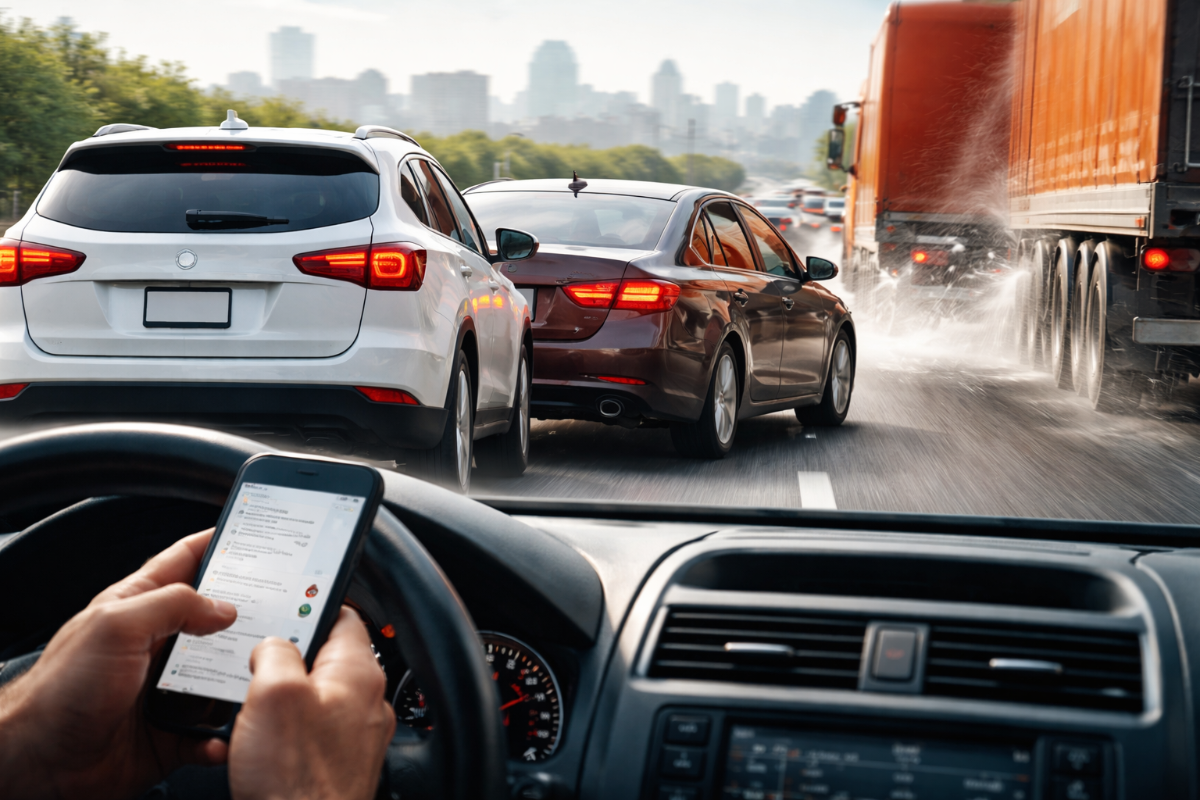
Distracted Driving: Texting, calling, or adjusting controls while in motion
-
Speeding: Driving above safe limits for road conditions
-
Tailgating: Following too closely, reducing reaction time
-
Impaired Driving: Driving under the influence of alcohol, drugs, or fatigue
-
Poor Lane Discipline: Unsafe lane changes and drifting
-
Fatigue: Driving while drowsy or sleep-deprived
-
Improper Braking: Sudden stops or inconsistent braking patterns
-
Failure to Anticipate Hazards: Ignoring pedestrians, cyclists, or road obstacles
These behaviors can manifest in both urban congestion and high-speed highway environments. Consequently, awareness of each mistake’s impact is crucial for reducing risks and avoiding accidents.
Common Deadly Mistakes Table
| Mistake | Risk Level | Accident Type Caused | Legal Penalty Range | Prevention Strategy |
|---|---|---|---|---|
| Distracted Driving | High | Rear-end collisions, side-swipes | $200–$2,500, license points | Use hands-free devices, limit phone use |
| Speeding | High | Run-off-road, multi-vehicle crashes | $150–$1,000, fines & points | Obey speed limits, adjust for conditions |
| Tailgating | Medium-High | Rear-end collisions | $100–$500, fines & points | Maintain 2–3 second following distance |
| Impaired Driving | Very High | Fatal collisions | DUI charges, imprisonment | Never drive under influence, use rideshares |
| Poor Lane Discipline | Medium | Side collisions, rollovers | $100–$400, fines & points | Check mirrors, use indicators |
| Fatigue | High | Single-vehicle accidents | Liability in civil suits | Take breaks, avoid late-night driving |
| Improper Braking | Medium | Chain collisions | Liability for damages | Anticipate stops, gradual braking |
| Failure to Anticipate Hazards | High | Pedestrian/cyclist accidents | Civil & criminal liability | Scan road ahead, defensive mindset |
How Deadly Driving Mistakes Manifest?
1. Distracted Driving
Whether texting, eating, or using navigation apps, distracted driving reduces reaction time and situational awareness. Urban areas with stoplights, pedestrians, and cyclists are especially hazardous.
2. Speeding
High-speed driving decreases the ability to stop safely. On highways, small errors at high speeds can result in catastrophic outcomes, particularly in wet or icy conditions.
3. Tailgating
Following vehicles too closely leaves minimal time to respond to sudden stops. Aggressive tailgating is often linked to road rage incidents, compounding danger.
4. Impaired Driving
Alcohol, drugs, or even fatigue dramatically impair judgment and reflexes. Drivers may fail to perceive obstacles or misjudge distances, creating fatal risk scenarios.
5. Poor Lane Discipline
Unsafe lane changes, drifting, or failing to signal can trigger side collisions. Defensive drivers maintain lane position and anticipate others’ movements to reduce accidents.
Defensive Driving Techniques Table
| Technique | Purpose | Accident Reduction Impact | Skill Level Required | Real-World Example |
|---|---|---|---|---|
| Maintain Safe Following Distance | Prevent rear-end collisions | High | Moderate | Keeping 3-second gap on highways |
| Scan and Anticipate | Detect hazards early | High | Advanced | Observing intersections 100 m ahead |
| Use Mirrors and Signals | Avoid side collisions | Medium | Moderate | Lane changes with clear signaling |
| Adjust Speed for Conditions | Prevent loss of control | High | Moderate | Slowing for rain or traffic |
| Take Rest Breaks | Combat fatigue | High | Low | Stopping every 2 hours on long drives |
| Hands-Free Operation | Reduce distractions | Medium | Low | Using voice commands for calls |
To further improve your skills and avoid dangerous habits, these essential road safety tips that can help you prevent accidents every day.
Why Drivers Make These Mistakes?
Several factors contribute to high-risk driving behaviors:
-
Overconfidence in driving skills
-
Habitual multitasking
-
Underestimating road hazards
-
Peer pressure and rush-hour stress
Moreover, younger drivers are more prone to errors due to inexperience and overestimation of their reflexes. Consequently, these preventable mistakes continue to be a leading cause of injuries and fatalities on roads worldwide.
The Future: Reducing Deadly Driving Mistakes
Advancements in AI-assisted driving systems and ADAS are reshaping road safety. Vehicles can now detect hazards, automatically apply brakes, and assist with lane control. Stricter law enforcement, combined with smarter infrastructure such as adaptive traffic signals and connected roads, will further reduce the prevalence of deadly driving mistakes.
Moreover, real-time monitoring and telematics for insurance purposes can encourage safer behaviors, while continuous education campaigns promote defensive driving. As technology evolves, the integration of semi-autonomous and fully autonomous vehicles may eventually eliminate many high-risk behaviors, drastically reducing accidents, injuries, and fatalities.
FAQ: Deadly Driving Mistakes
1. What happens if I cause an accident due to a deadly driving mistake?
Legal liability may include fines, points on your license, or criminal charges, depending on severity. Civil lawsuits for damages are also possible.
2. How does insurance react to these mistakes?
Accidents caused by high-risk behaviors typically increase premiums. Repeated violations can lead to policy cancellation.
3. How can I improve reaction times?
Defensive driving courses, adequate rest, and minimizing distractions enhance response times and decision-making.
4. Are defensive driving courses effective?
Yes. They teach hazard anticipation, safe stopping distances, and accident avoidance strategies.
5. What technology helps prevent deadly mistakes?
Modern vehicles with ADAS—like lane-keeping assist, collision warning, automatic braking, and fatigue detection reduce errors significantly.