The ancient city of Rome, the bustling capital of the ancient world’s most powerful empire, brought devastation and tragedy to the Jewish people. Conversely, it was also home to one of Europe’s oldest Jewish communities (some say the oldest). Rome’s Jews lived and worshiped in the very heart of the Roman Empire, and laid the foundation for two thousand years of Jewish heritage in Italy.
The modern city of Rome is the capital of Italy and home of the Vatican. Its astonishing history, architecture, religious and art treasures, culture and food attract millions of tourists every year. But there are several historical sites of special interest to Jews that are slightly off the usual tourist trail. They are “must see” places for anybody who is interested in the city’s fascinating Jewish past.
This article provides a sample itinerary for a family-friendly tour of Jewish Rome, including a tour of Rome’s Jewish Ghetto, a visit to the Great Synagogue and the Arch of Titus. The itinerary is geared towards a four day city-break, but it’s easy to spend a lot longer in Rome, particularly if you arrive in time for the beautiful late spring or early fall weather.
Days 1–2: Rome’s Jewish Ghetto & Ancient Connections
The Great Synagogue (Tempio Maggiore) was built in 1904 and is a symbol of Jewish resilience. It’s the perfect place to begin a tour of the Eternal City and dive into its rich Jewish heritage. The spectacular synagogue is famous for its distinctive square dome and imposing facade. The Tempio Maggiore is arguably the finest synagogue in Europe. Another fascinating place to visit is the Jewish Museum of Rome. It displays artifacts from 2,000 years of Roman Jewish life, including remnants of the Spanish Synagogue.
A walking tour of Rome’s Jewish Ghetto with a private guide will give you a compelling insight into life in the cramped and poverty-stricken confines of the Ghetto. As you walk, your guide will bring the remaining streets and buildings of the Ghetto to life with historical accounts and explanations, and will show you hidden gems like the Turtle Fountain.
An important historical site for Jews is the Portico of Octavia. The Roman monument is close to where the Ghetto was first established in 1,555, and its stones bore witness to forced conversions, humiliations – and survival.
The Arch of Titus, which straddles the ancient Via Sacra, is another Roman monument with deep and tragic significance for Jews. The Arch was built in the First Century to commemorate Rome’s brutal suppression of the revolt in Judea. Panels on the arch depict the original triumphal procession and Jewish ritual items, including a large menorah, looted from the Temple. Generations of Roman Jews avoided walking under the arch as a sign of mourning and defiance.
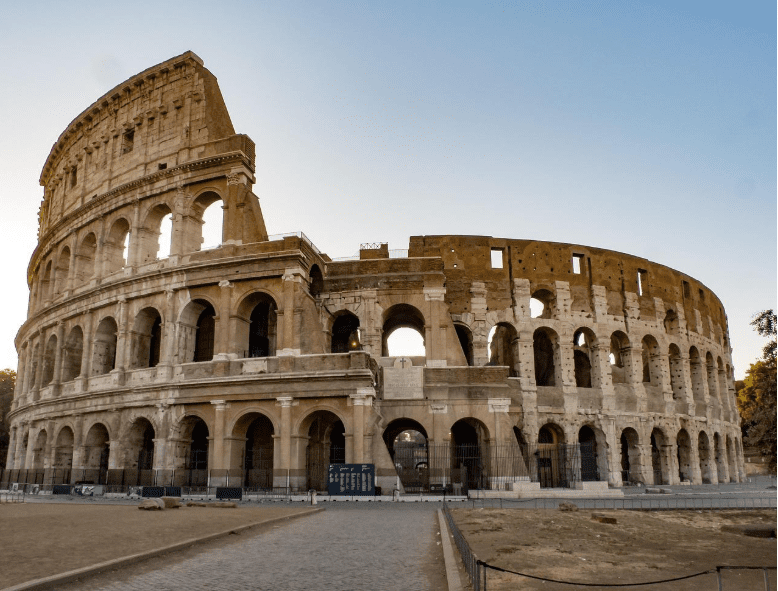
The Colosseum and Roman Forum are recommended additions to your Jewish travel itinerary in Rome. Apart from the fact that they are amazing places to explore, they bring home the power and splendor of ancient Rome. It’s easy to imagine Jewish merchants in the forum, or Jewish prisoners condemned to fight as gladiators in the arena.
Rome offers some excellent opportunities for gourmet kosher dining. Some of the mainstays of Kosher Rome include famous spots like Ba’Ghetto and Yotvata. A pleasant evening stroll in Trastevere – a lively area with Jewish historical ties – is the perfect end to a day of historical exploration and sightseeing.
Days 3–4: Modern Rome: A Center of Jewish Heritage in Italy
Fascist Italy was a relative latecomer to official anti-Semitism, enacting persecutory laws against Italian Jews in 1938. In September 1943 the Germans occupied Italy and began the deportation of Jews. From a pre-war population of 45,500 people, 7,680 were murdered.
The Casina dei Vallati is a Holocaust museum that preserves the Italian experience of the Shoah and commemorates its victims. Another form of memorial is the Stolpersteine (Stumbling Stones). These brass plaques have been set in pavements across Europe since 1995 to commemorate the Holocaust dead. You will see them as you walk through the Jewish Ghetto and other districts.
Another interesting place to visit – although it may not be everyone’s cup of tea – is Rome’s Jewish Catacombs. The ancient subterranean burial sites were used by Roman Jews to inter their dead. There are currently two catacombs open to the public at Vigna Randanini and Villa Torlonia. They provide a unique insight into customs and burial practices of early European Jews.
One of Rome’s most attractive green spaces is the Villa Borghese Park. It’s a relaxing place to wander or picnic and there is an option for bike rentals. Italians make some of the world’s best ice cream or gelato. If you’re not satisfied by the ice cream stands in the Villa Borghese, try the gelato places on the Piazza Navona & Pantheon. Your children or grandchildren will love them! If you’re a fan of Italian food, your Jewish travel agency may be able to arrange some kosher cookery classes while you’re in Rome.
Plan a Family-friendly Visit to Jewish Rome
The Roman Empire had an enormous influence on the development of Western civilization and continues to influence the modern world today. A Jewish travel trip to Rome is a wonderful educational opportunity for kids. You can organize a unique family vacation that will give your children a precious insight into history and create some wonderful memories.
As you explore Rome and visit its synagogues, museums and ancient sites, you’ll begin to understand the magical atmosphere of the Eternal City and feel its history come to life around you. If you’re looking for a Kosher travel experience, Rome has excellent kosher restaurants and luxury kosher-friendly hotels. It’s also a child-friendly city with plenty of engaging activities, including interactive museums, storytelling and outdoor fun. Gil Travel can draw on its extensive contacts in Rome to create the perfect tailored itinerary for you and your family!
This article was written by:
Iris Hami is President of Gil Travel Group, the largest travel management firm sending people to Israel. She has over 40 years of experience in the travel industry, and uses that knowledge to craft unique Jewish journeys around the world. Her company has won multiple awards, including one from State of Israel Bonds for Extraordinary Achievements Promoting the State of Israel.