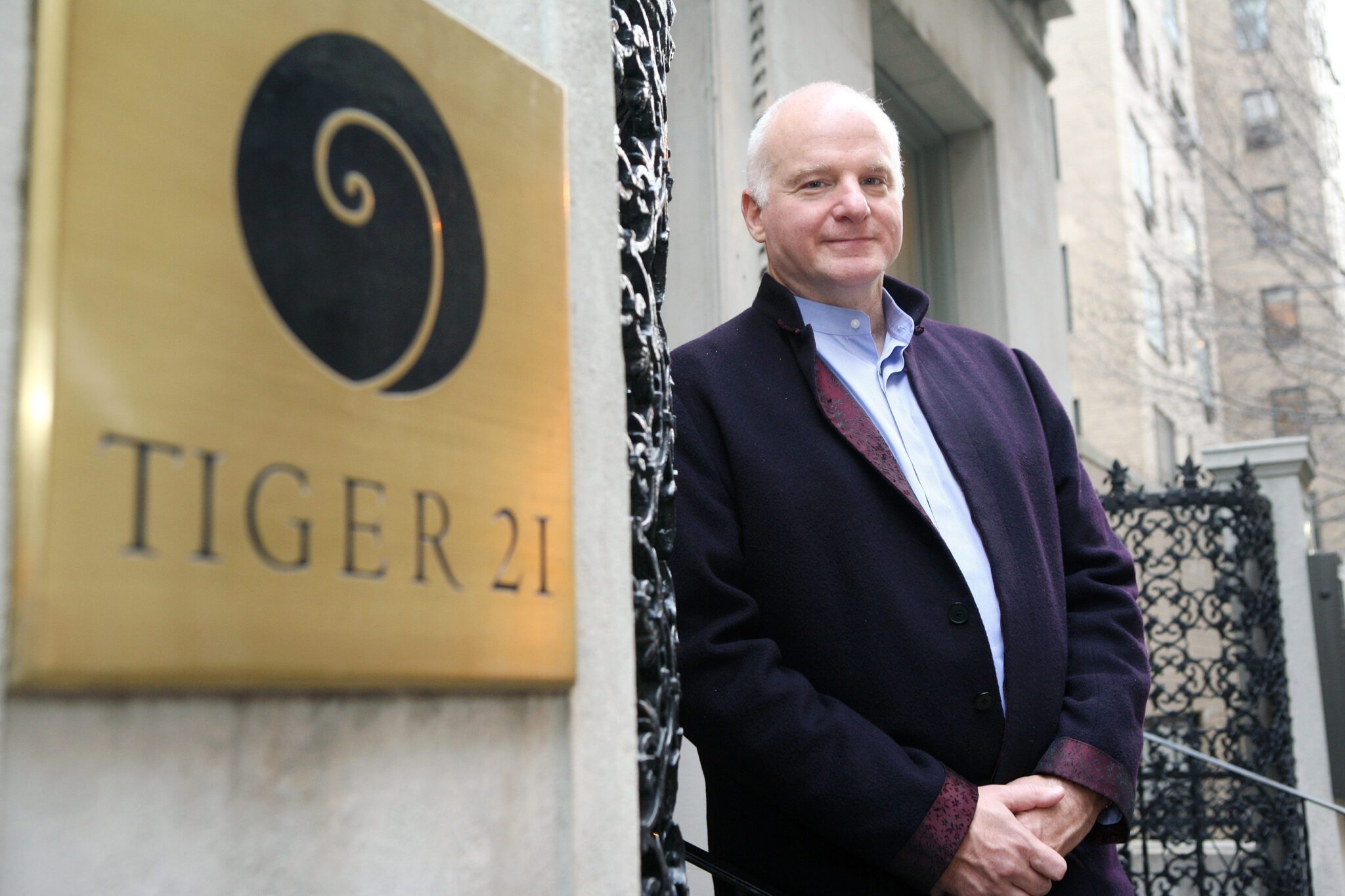
In an exclusive interview with Impact Wealth, TIGER 21 founder and chairman Michael Sonnenfeldt reveals how a global network of nearly 2,000 ultra-high-net-worth members is reshaping investment strategies, embracing private equity, and navigating the complexities of generational wealth.
For the world’s most successful entrepreneurs, building a fortune is often only the beginning. Preserving it, investing it wisely, and determining its purpose across generations can present an entirely different set of challenges. Few understand that transition better than Michael Sonnenfeldt, founder and chairman of TIGER 21, the exclusive peer-to-peer network that has quietly become one of the most influential communities in global wealth.
What began nearly three decades ago as an intimate gathering of six successful entrepreneurs has evolved into an international network approaching 2,000 members, with an average net worth of approximately $140 million. Collectively, its members represent an estimated $280 billion in wealth, creating a powerful lens into how some of the world’s most sophisticated private investors are deploying their capital.
In an exclusive conversation with Impact Wealth, Sonnenfeldt discussed the organization’s evolution, the expanding influence of family offices, the rise of younger entrepreneurs, and the investment trends transforming the portfolios of the ultra-wealthy.
Perhaps the most revealing development is a fundamental shift in how members are investing: private equity has reached an unprecedented 34% of portfolio allocations, while traditional hedge funds and cash reserves have declined significantly.
The implications extend far beyond TIGER 21’s membership. They offer a window into the changing philosophy of wealth itself.

From Wealth Creation to Wealth Preservation
When Sonnenfeldt founded TIGER 21 approximately 28 years ago, his vision was rooted in a deceptively simple observation: extraordinary financial success can be surprisingly isolating.
“TIGER 21 is about 28 years old, and it started with a very simple idea that entrepreneurs lead somewhat isolated lives sometimes,” Sonnenfeldt explained.
The transition from entrepreneur to investor can be particularly challenging. Business founders who have spent decades building companies suddenly find themselves responsible for managing substantial liquidity, evaluating unfamiliar asset classes, and making decisions that may influence their families for generations.
“Particularly when they sell a business successfully and go from being a wealth creator to a wealth preserver, that’s a challenge that they have not dealt with before,” he said.
For many entrepreneurs, the expertise that enabled them to create significant wealth does not automatically translate into the skills required to preserve it.
TIGER 21 was designed to address that gap through confidential peer groups where accomplished individuals could exchange perspectives, challenge assumptions, and learn from others facing similar circumstances.
Today, the organization’s members span approximately 30 countries, with established peer groups operating across 14 countries in North America, Europe, and Asia.
The model remains remarkably consistent with its origins. Members typically meet for one full day each month, engaging in confidential discussions that extend beyond financial performance to encompass family dynamics, philanthropy, personal fulfillment, and the responsibilities that accompany substantial wealth.
Despite its international expansion, Sonnenfeldt believes the organization’s greatest value continues to reside in these intimate gatherings.
“The biggest event is the monthly event,” he emphasized. “Every month you meet for a full day. That’s the core experience.”
Inside One of the World’s Most Exclusive Wealth Networks
Membership in TIGER 21 is not simply a function of financial resources.
According to Sonnenfeldt, prospective members undergo a comprehensive qualification process that includes financial verification, background checks, criminal checks, and interviews with existing members.
Character and compatibility are central considerations.
The organization seeks individuals who can contribute meaningful experience and perspective while respecting the confidentiality that underpins its discussions.
“Our core groups have members with net worths between $20 million and a billion, and our family office members generally start at $250 million and up,” Sonnenfeldt explained.
With an average member net worth of approximately $140 million, the organization represents an unusually concentrated community of entrepreneurial and investment expertise.
Yet Sonnenfeldt emphasizes that financial qualifications alone do not determine admission. Existing members must also determine whether a prospective participant will enhance the group’s collective experience.
That selectivity becomes particularly important when members are discussing sensitive matters involving investments, succession planning, business challenges, or family relationships.
For entrepreneurs accustomed to being the ultimate decision-makers in their organizations, access to a trusted group of equally accomplished peers can provide an unusual opportunity for candid dialogue.
The Private Equity Revolution: Why the Ultra-Wealthy Are Moving Away From Traditional Investments
One of the most significant revelations from Sonnenfeldt’s interview concerns the dramatic transformation of TIGER 21 members’ investment portfolios.
Rather than focusing on short-term market fluctuations, Sonnenfeldt believes the most important insights emerge from examining allocation trends over the past decade or more.
“The overarching trend is private equity has grown from about 10% to 34%. It’s an all-time high now, just extraordinary,” he said.
That increase represents a profound reallocation of capital toward privately held businesses, direct investments, and entrepreneurial ownership.
How TIGER 21 Members Are Allocating Their Wealth
| Asset class | Allocation trend |
| Private equity | Approximately 34%, up from 10% historically |
| Real estate | Approximately 26–28%, now the second-largest allocation |
| Cash | Approximately 7–8%, down from a historical 12% |
| Hedge funds | Approximately 2%, down from 7% |
| Bitcoin and other digital currencies | Roughly 1–3% |
| Gold | Roughly 1–3% |
Figures reflect approximate allocations and historical comparisons discussed by Sonnenfeldt during the interview, rather than a complete portfolio breakdown.
For years, real estate represented the largest allocation within TIGER 21 portfolios. That hierarchy has now shifted, with private equity taking the lead.
The transition is particularly noteworthy because many TIGER 21 members originally created their fortunes through entrepreneurial ventures. Their increasing preference for private investments suggests a desire to remain connected to the operating businesses and entrepreneurial opportunities they understand.
“The big story is really private equity, and within private equity, it’s direct ownership of parts of businesses or complete ownership of businesses, as well as probably a healthy dose of venture capital,” Sonnenfeldt said.
Rather than relying exclusively on traditional investment managers, members are increasingly participating directly in the ownership and growth of private enterprises.
For family offices, this trend has important implications. Direct investments may provide greater influence over business strategy, governance, and long-term value creation, although they also introduce concentrated risks, liquidity constraints, and operational responsibilities.

Why Direct Ownership Is Winning Over Traditional Private Equity Funds
While institutional private equity funds continue to attract substantial capital globally, Sonnenfeldt sees a distinction between conventional fund investing and the strategies favored by many TIGER 21 members.
He suggested that members often prefer entrepreneurial opportunities where they can leverage their own business experience, industry relationships, and investment judgment.
“They tend to stay away from the plain vanilla large asset aggregator funds, all the big names, who’ve had good returns, but our members have had better returns by focusing directly on entrepreneurial direct ownership or partial ownership,” he said.
His observation highlights an increasingly important distinction within private markets: the difference between passive exposure to private equity and active participation in business ownership.
Many successful entrepreneurs possess advantages that can be particularly valuable in direct investing, including sector-specific expertise, established professional networks, and experience identifying opportunities that institutional investors may overlook.
Sonnenfeldt noted that members pursue opportunities across a broad spectrum, including established companies, distressed businesses, and early-stage ventures.
He estimated that venture capital might account for approximately five percentage points of the overall 34% private equity allocation, although he stressed that this was an anecdotal assessment rather than a precise measurement.
Distressed investing also remains an area of interest for members with the specialized expertise required to evaluate and restructure underperforming businesses.
For sophisticated investors, the appeal of these strategies is not simply the potential for higher returns. It is also the opportunity to apply entrepreneurial knowledge directly to the investment process.
The Surprising Decline of Cash and Hedge Funds
Perhaps equally revealing is what TIGER 21 members are choosing to hold less of.
Historically, members maintained approximately 12% of their portfolios in cash, a level that Sonnenfeldt described as remarkably consistent over time.
That allocation has now declined to approximately 7–8%.
“Members have dropped their cash from 12% to seven or eight,” he said, describing the shift as one of the most extraordinary changes in the organization’s portfolio data.
The reduction suggests greater willingness among members to deploy capital rather than maintain historically elevated liquidity reserves.
Sonnenfeldt attributes part of that shift to increasing comfort with investing in operating businesses through private equity.
Hedge funds have experienced an even more pronounced decline in their share of member portfolios, falling from approximately 7% historically to just 2%.
The trend raises broader questions about the role of traditional alternative investment managers within ultra-high-net-worth portfolios, particularly as wealthy entrepreneurs seek greater transparency, direct ownership, and opportunities to leverage their own expertise.
It does not necessarily signal the disappearance of hedge funds from sophisticated portfolios, but it demonstrates how significantly investment preferences have evolved within this particular community.
Bitcoin and Gold: Alternative Stores of Value Gain Ground
Although private equity dominates the discussion, Sonnenfeldt also identified growing interest in Bitcoin and gold.
Both asset categories currently represent relatively modest allocations, generally in the range of 1–3% each across member portfolios.
Given the scale of TIGER 21’s collective wealth, however, even small percentages translate into substantial dollar amounts.
Sonnenfeldt estimated that members collectively hold approximately $3 billion to $5 billion in Bitcoin and other digital currencies.
The figures underscore the growing presence of digital assets within sophisticated private portfolios, even as allocations remain considerably smaller than those devoted to traditional private investments.
Importantly, these percentages represent averages across a diverse membership.
“Some people have a lot more, and some people don’t have any,” Sonnenfeldt explained.
The variation reflects the different investment philosophies, risk tolerances, and wealth preservation priorities among members.
For family offices, Bitcoin and gold can occupy distinct positions within broader diversification strategies, although their volatility, liquidity characteristics, and underlying risks differ substantially.
The Rise of the Next Generation of Wealth Creators
One of the most compelling developments within TIGER 21 is the rapid expansion of its younger membership.
The organization’s network for members aged 49 and under has grown to approximately 700 participants, reflecting a new generation of entrepreneurs achieving significant financial success earlier in their careers.
“We’ve had explosive growth in our 49 and under members,” Sonnenfeldt said.
He attributes the trend partly to the transformation of the global economy and the ability to scale businesses more rapidly than in previous generations.
“That’s a reflection of the nature of the economy and the nature of a frictionless economy where you can grow successful businesses quicker than you could have in a prior generation,” he explained.
The emergence of younger ultra-high-net-worth individuals is reshaping the broader wealth management landscape.
Technology-enabled businesses, global distribution platforms, and increasingly interconnected capital markets have created opportunities for entrepreneurs to build substantial enterprises on accelerated timelines.
For organizations serving wealthy families, this generational shift introduces new considerations around investment preferences, technology, philanthropy, lifestyle, and the long-term stewardship of capital.
TIGER 21 has responded by developing specialized networks that connect members beyond their traditional monthly peer groups.
These include communities focused on women, philanthropy, real estate, aviation, motorsports, golf, and other shared interests.
The result is a network that increasingly extends beyond financial discussions to encompass professional collaboration, personal relationships, and global experiences.
Family Offices: The Next Frontier for TIGER 21
As the global population of ultra-high-net-worth families expands, Sonnenfeldt sees family offices as one of TIGER 21’s most promising areas of future growth.
The organization has developed a dedicated offering for family office members, generally beginning at the $250 million wealth level.
Sonnenfeldt believes TIGER 21’s existing international infrastructure gives it a meaningful advantage in serving this increasingly sophisticated market.
“We have a unique position in the family office market because we’re already deployed around the globe with our chairs and our teams,” he said.
Family offices face a particularly complex set of responsibilities, ranging from asset allocation and governance to succession planning, philanthropy, and the coordination of multigenerational interests.
Unlike conventional wealth management clients, many family offices operate as highly sophisticated investment organizations, with dedicated teams evaluating private transactions, direct investments, real estate, and alternative assets.
Yet even the most established family offices can benefit from exchanging perspectives with similarly situated families.
For Sonnenfeldt, the opportunity lies in creating a global community where members can access expertise, build trusted relationships, and learn from experiences across industries and geographic markets.
A Global Network Built on Relationships, Not Just Wealth
TIGER 21’s international expansion reflects another fundamental shift in the way the ultra-wealthy conduct business and manage their lives.
As family offices become increasingly global, access to trusted relationships in multiple markets has become an important strategic advantage.
Sonnenfeldt described how members can draw upon the network when exploring business opportunities, philanthropic initiatives, or even personal needs in unfamiliar locations.
From Singapore and Mumbai to Madrid and New York, the value of membership increasingly extends beyond a single city or peer group.
The organization has also expanded its calendar of international gatherings and curated experiences, including trips to destinations such as Peru and India, as well as events connected to members’ shared interests.
These experiences provide opportunities to develop relationships that might otherwise take years to establish.
Yet Sonnenfeldt remains deliberate about expansion.
TIGER 21 has historically grown at approximately 15–20% annually, a pace he considers sustainable without compromising the quality of the membership experience.
“We’re pretty focused not on pursuing growth for growth’s sake, but filling out a global footprint of members whom other members want to connect with,” he said.
That philosophy reflects the organization’s central proposition: the value of a network depends not simply on its size, but on the quality, expertise, and integrity of its participants.
Beyond the Balance Sheet: The Future of Wealth
The story of TIGER 21 is ultimately about more than asset allocation or access to exclusive investment opportunities.
It reflects a broader evolution in the meaning of wealth among entrepreneurs and family offices.
The financial decisions facing successful business founders are increasingly intertwined with questions of identity, legacy, purpose, and the responsibilities that accompany extraordinary success.
At the same time, the investment landscape is changing. Private markets have become a central component of sophisticated portfolios, younger entrepreneurs are creating substantial wealth at unprecedented speed, and family offices are assuming a more prominent role in global capital allocation.
For Sonnenfeldt, the challenge remains much the same as it was when he first brought six entrepreneurs together nearly three decades ago: helping successful individuals navigate a world in which their financial achievements have created an entirely new set of decisions.
What has changed is the scale.
With nearly 2,000 members, a growing international presence, and hundreds of billions of dollars in collective wealth, TIGER 21 has evolved into a revealing barometer of how the world’s wealthiest entrepreneurs think about capital, opportunity, and the future.
And if its latest investment trends are any indication, that future will be defined increasingly by direct ownership, entrepreneurial conviction, and the power of trusted relationships.
About TIGER 21: Founded approximately 28 years ago, TIGER 21 takes its name from its original designation, The Investment Group for Enhanced Results in the 21st Century. The organization connects ultra-high-net-worth entrepreneurs, investors, and family office principals through confidential peer groups and specialized global networks.