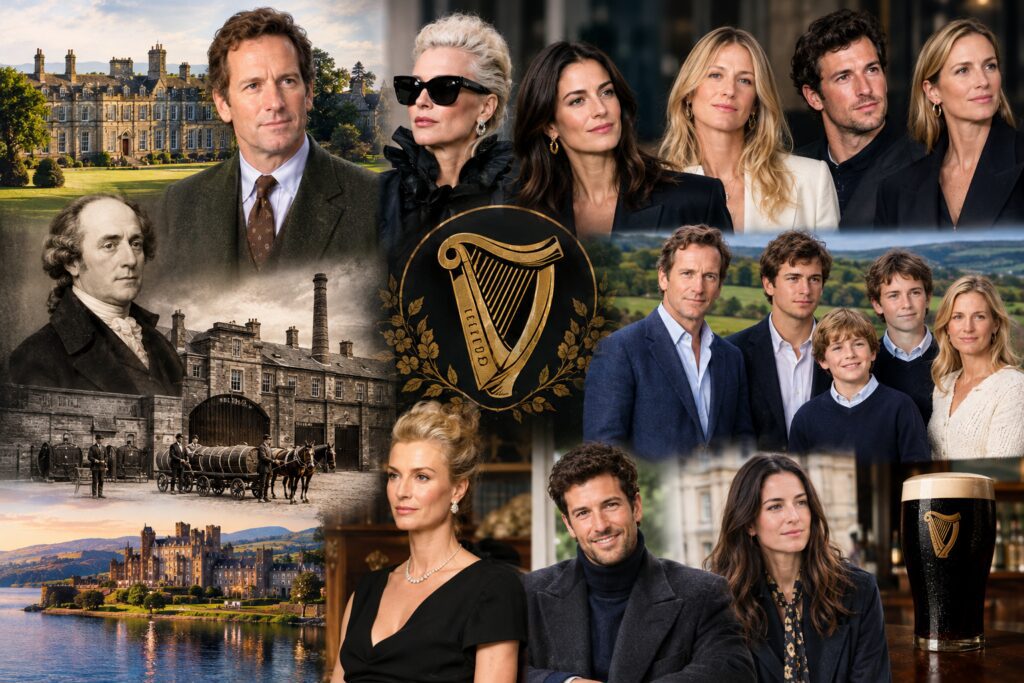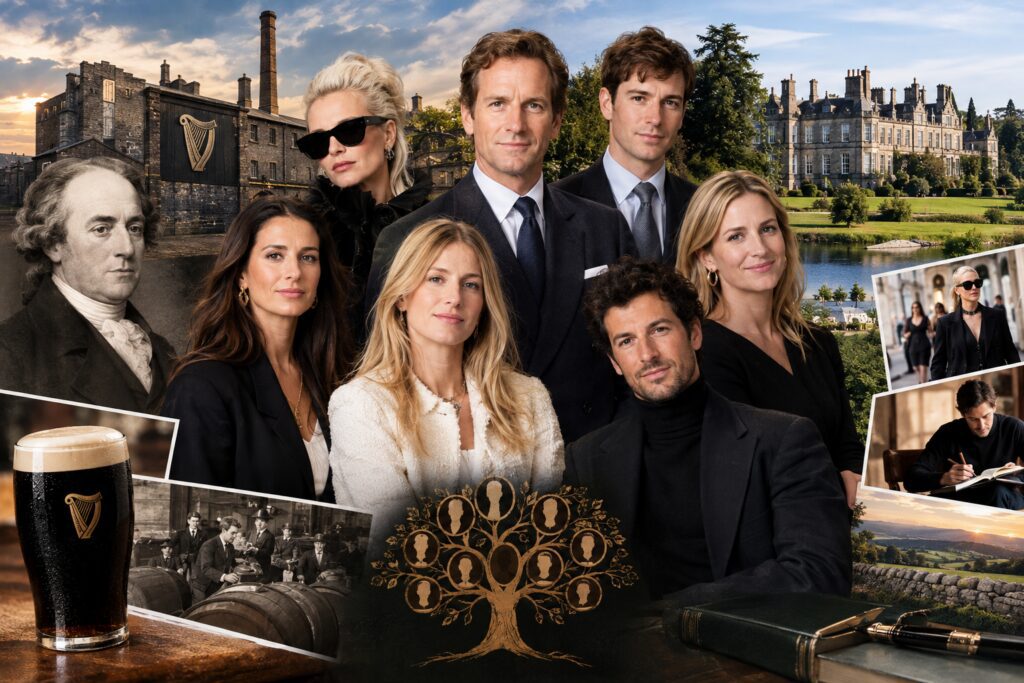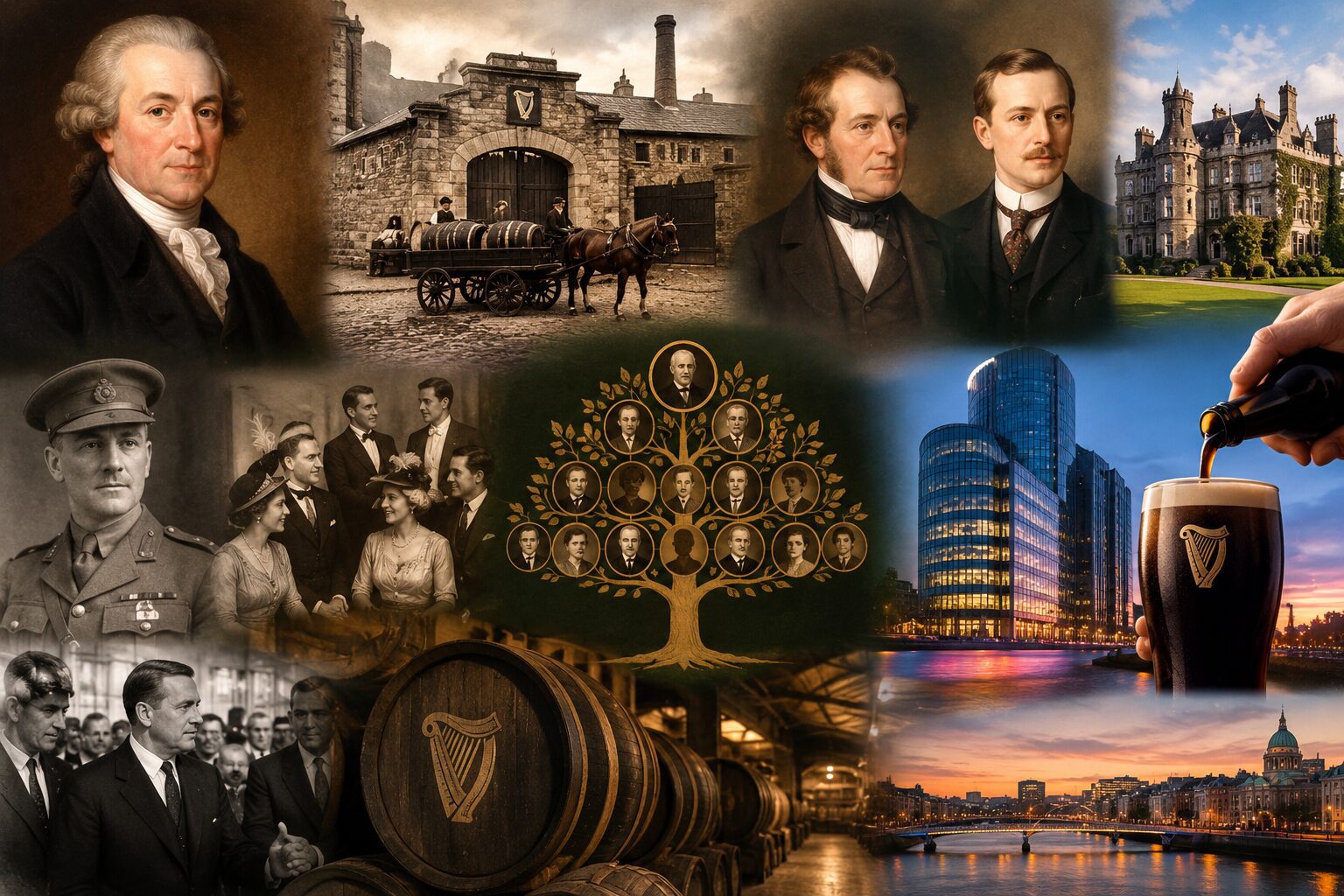
The Guinness family is an Anglo-Irish dynasty founded by Arthur Guinness, who founded the Guinness Brewery in Dublin, Ireland, in 1759. Over 250-plus years, the family built one of the world’s most recognizable beer brands, amassed vast wealth, and became prominent in Irish and British aristocracy, politics, and philanthropy. Today, the family no longer runs the company — Guinness is owned by Diageo, formed in 1997 when Guinness plc merged with Grand Metropolitan — but descendants still hold shares, titles, and land, and their story inspired Netflix’s 2025 drama House of Guinness.
See More: Fighting With My Family: Cast, True Story, and Where to Watch the 2019 Film
Guinness Family History: From Arthur Guinness to Today
2.1 The Founder: Arthur Guinness (1725–1803)
Arthur Guinness was born around 1725 in Celbridge, County Kildare, and died on 23 January 1803 in Dublin. He was an Irish brewer, entrepreneur, and philanthropist who founded the Guinness Brewery at St. James’s Gate in 1759, one of the most famous business origin stories in history.
Key early-life facts:
- His father, Richard Guinness, worked as land steward for the Rev. Dr. Arthur Price, and Arthur was the eldest of four sons.
- A £100 bequest from Price’s will funded Arthur’s first brewery venture in Leixlip around 1755.
- In 1759, he signed a legendary 9,000-year lease on the derelict St. James’s Gate brewery in Dublin.
- Arthur fathered at least twenty-one children, with twelve — seven daughters and five sons — surviving to adulthood.
- He began by brewing ale, moved into porter in 1778, and by 1799 had stopped brewing ale altogether to focus on the dark, rich style that became stout.
Arthur wasn’t purely a businessman. He was a devout Protestant who founded Dublin’s first Sunday school in 1786 and pushed his fellow gentry to set a moral example, while generally supporting Catholic civil rights.
2.2 Second and Third Generation: Expansion and Scandal
Arthur Guinness II (1768–1855) was an Anglo-Irish brewer, banker, and politician who took over after his father’s death. The brewery grew steadily under his stewardship, and the family began diversifying into banking — a separate “banking line” of Guinnesses descends from Arthur’s brother Samuel.
The mid-1800s brought real family drama, later dramatized loosely in House of Guinness:
- Arthur III was allegedly issuing brewery notes without his father’s or brother’s knowledge, in what may have been payments connected to a personal scandal, and ultimately left the family business, taking £12,000 to buy a new home outside Dublin.
- Benjamin Guinness, the third-generation leader, worked to restore the company’s reputation after this episode, introducing the brand’s now-iconic trademark label featuring the Guinness signature and Celtic harp in 1862. His death in 1868 set off the succession struggle among his children that forms the backbone of the Netflix series.
2.3 The Golden Age: Edward Guinness and the 1st Earl of Iveagh
Edward Guinness scaled the brewery up massively, and by 1879 production topped roughly 565,000 hogsheads (about 25 million gallons); within seven years output neared 907,000 hogsheads, prompting Edward to float two-thirds of the company on the London Stock Exchange in 1886.
This IPO — one of the largest of the Victorian era — made Edward, later Edward Cecil Guinness, 1st Earl of Iveagh, the richest person in Ireland, and it also marked the beginning of the family’s gradual separation from day-to-day control of the brewery.
Edward wasn’t only about profit. He became one of history’s most notable philanthropists, best remembered for funding affordable housing in London and Dublin through charitable trusts — a legacy that still exists today through the Iveagh Trust in Dublin and the Guinness Trust (now Clarion Housing) in London.
2.4 20th Century: War, Politics, and Slow Retreat from the Brewery
The 20th century saw Guinness family members move deeper into British aristocracy, politics, and public life, while their direct control over the brewing business steadily eroded:
- Rupert Guinness, son of the 1st Earl, served in both World Wars and carried the family legacy through difficult decades.
- Family members married into other aristocratic houses (Mitford, Rothschild, and others), cementing the Guinnesses’ place among Britain’s most connected families.
- The last Guinness family member to hold serious power in the business was Benjamin Guinness, who became company president in 1986, but after a hostile takeover of rival Distillers that same year, the family’s shares were heavily diluted.
2.5 The Merger That Ended Family Control (1997)
By the time Guinness merged to form Diageo, the dynasty’s direct control over the brewery had vanished completely. Guinness merged with Grand Metropolitan in 1997 to create Diageo, and the Guinness family has not had a controlling stake in the company for almost 40 years.
The Guinness Family Tree
Below is a simplified overview of the main Guinness lines. This is not exhaustive — the full family tree spans hundreds of descendants across multiple noble branches.
3.1 Main Guinness Family Branches
| Branch | Founded By | Known For |
| Brewing line (Earls of Iveagh) | Arthur Guinness → Edward Guinness, 1st Earl of Iveagh | Brewery ownership, Elveden Estate, philanthropy |
| Moyne line | Walter Guinness, 1st Baron Moyne | Politics, colonial administration |
| Ardilaun line | Arthur Edward Guinness, 1st Baron Ardilaun | Dublin philanthropy, St. Stephen’s Green restoration |
| Banking line (Guinness Mahon) | Samuel Guinness (Arthur’s brother) → Robert Rundell Guinness | Founded Guinness Mahon merchant bank in 1836 |
| Bohemian/creative line | Descendants via Oonagh, Aileen, and Maureen Guinness (“the Golden Guinness Girls”) | Arts patronage, socialites, “Swinging London” figures |
3.2 Arthur Guinness’s Direct Line (Simplified)
- Arthur Guinness (1725–1803) — founder
- Arthur Guinness II (1768–1855) — expanded the brewery
- Sir Benjamin Guinness, 1st Baronet (1798–1868) — modernized the brand, died 1868 (starting point of House of Guinness)
- Edward Cecil Guinness, 1st Earl of Iveagh (1847–1927) — took the company public in 1886
- Rupert Guinness, 2nd Earl of Iveagh — inherited the title
- Benjamin Guinness, 3rd Earl of Iveagh — his father, Viscount Elveden, was killed in WWII
- Arthur Edward “Ned” Rory Guinness, 4th Earl of Iveagh (b. 1969) — current head of the family
3.3 Notable Non-Direct Descendants Often Searched
- Daphne Guinness — fashion icon and designer
- Jasmine Guinness — model, granddaughter of Loel Guinness
- Tara Browne — socialite, died 1966, inspired lyrics in The Beatles’ “A Day in the Life”
- Garech Browne — founder of Claddagh Records, key figure in Irish traditional music revival
- Julia Samuel — psychotherapist and close friend of the British royal family
Does the Guinness Family Still Own Guinness?
No. The Guinness family does not still own the Guinness company; Guinness merged with Grand Metropolitan in 1997 and formed Diageo plc, which now owns Guinness.
4.1 What the Family Still Has
| Aspect | Status Today |
| Ownership of the brewery | None — owned by Diageo |
| Executive roles | No living Guinness family member holds an executive role or works within Diageo |
| Shareholding | Family held a stake in Diageo worth roughly £200 million ($273 million) as of 2017 |
| Brewing location | Guinness is still brewed by Diageo at the original St. James’s Gate site in Dublin |
| Titles and land | Still holds titles (Earl of Iveagh) and estates such as Elveden Hall |
| Former properties | Some estates, like Ashford Castle, have been sold and are now a luxury hotel |
4.2 Why the Family Lost Control
The short version: going public in 1886 diluted family ownership over generations, and a series of corporate mergers and takeovers in the 20th century finished the job. A 1986 hostile takeover of Distillers by Guinness plc heavily diluted family shares, and by the 1997 Diageo merger, the family’s direct control had disappeared entirely.
Guinness Family Net Worth
5.1 Overall Family Fortune
According to the Sunday Times Rich List 2025, the total Guinness family fortune stands at approximately £856 million ($1.13 billion). That figure spans the entire extended family across multiple branches — it isn’t one person’s net worth.
5.2 Individual Wealth Highlights
| Person | Estimated Worth / Detail |
| Arthur “Ned” Rory Guinness, 4th Earl of Iveagh | Reportedly worth around $1.153 billion together with the wider family, per Business Insider |
| Family stake in Diageo (2017) | Approximately £200 million ($273 million) |
| Elveden Estate | 22,500-acre farmed estate in Suffolk, one of the largest privately farmed estates in England |
| Farmleigh sale (1999) | Sold to the Irish government for £18.9 million |
5.3 Where the Modern Wealth Comes From
It’s a common misconception that the Guinness family is still rich purely “because of the beer.” In reality, today’s wealth mostly comes from:
- Land and estates accumulated over centuries (Elveden, Biddesden House, Wilbury House)
- Diversified investments, including Edward Guinness co-founding the investment firm Venturewave
- Diageo shares retained from the original merger
- Inherited titles and trusts rather than active brewery income
The Guinness Family on Netflix (House of Guinness)
6.1 What the Show Is About
Netflix’s “House of Guinness” is a historical drama exploring one of Europe’s most famous and enduring dynasties, set in 19th-century Dublin and New York. It begins immediately after the death of Sir Benjamin Guinness and follows the impact of his will on his four adult children — Arthur, Edward, Anne, and Ben.
The series premiered on Netflix on Thursday, September 25, 2025, and was created by Steven Knight, best known for Peaky Blinders.
6.2 Cast vs. Real Guinness Family Members
| Actor | Real Person Played |
| Anthony Boyle | Arthur Guinness |
| Louis Partridge | Edward Guinness |
| Emily Fairn | Anne Plunket (née Guinness) |
| Fionn O’Shea | Benjamin Guinness |
| James Norton | Sean Rafferty (fictionalized/composite figure) |
| Dervla Kirwan | Aunt Agnes Guinness |
| Ann Skelly | Adelaide Guinness |
6.3 Is It Historically Accurate?
Partially. The show doesn’t depict how the Guinness name became globally famous — it focuses on the aftermath of Benjamin Guinness’s 1868 death and the family’s fight to hold onto the business. Production also took creative liberties with location: the crew filmed in Liverpool and Manchester rather than Dublin because the real St. James’s Gate is now a working brewery and museum, not a 19th-century set.
6.4 Season 2
Netflix renewed House of Guinness for Season 2 on June 12, 2026, after Season 1’s cliffhanger ending.
Was the Guinness Family Catholic or Protestant?
Protestant. The Guinness family is an Anglo-Irish Protestant family that, beginning in the late 18th century, became part of what is known in Ireland as the Protestant Ascendancy.
7.1 Why This Matters Historically
- Arthur Guinness himself was a devout Protestant who founded the first Sunday school in Dublin.
- The family’s history included a careful balancing act across Ireland’s Catholic-Protestant divide, with the Protestants — including the Guinnesses — typically wealthier and more closely tied to England, while Irish Catholics saw the country as their own.
- Dublin locals nicknamed the beer “Guinness’s Black Protestant Porter,” and Arthur reportedly adopted the Celtic harp trademark partly to counter the association with English Protestant loyalty.
This religious identity is a major theme in House of Guinness, which portrays tension between the Protestant Guinnesses and the rising Irish nationalist movement.
The Guinness Family “Curse”
8.1 Where the “Curse” Idea Comes From
For over a century, tabloids and family lore have referred to a string of untimely deaths and tragedies in the Guinness family as a “curse.” Ten of Arthur Guinness’s 21 children died, and several grandchildren later suffered misfortune too — some died of alcoholism, and two died in mental institutions.
8.2 Notable Tragedies Associated With the “Curse”
| Year | Event |
| 1944 | Lord Moyne, a British minister to the Middle East, was murdered by the Stern Gang in Cairo |
| WWII | Edward Guinness, heir to the family fortune, was killed in action shortly before the war ended |
| 1966 | Tara Browne, 21-year-old Guinness heir, died in a car crash in London — later referenced in The Beatles’ “A Day in the Life” |
| 1978 | Lady Henrietta Guinness died after falling from a bridge in Umbria, Italy; four-year-old Peter Guinness died separately in a car crash the same year |
| 2005 | Robert Hesketh, married to a Lord Moyne heir, died in his sleep of a heart attack |
| 2020 | Honor Uloth, 19-year-old granddaughter of Benjamin Guinness, died six days after being found unconscious in a swimming pool at a family party |
8.3 Do Family Members Believe in the Curse?
Not officially. In a 1978 interview, Jonathan Guinness — then vice-president of the brewery — firmly denied the family was cursed, describing the tragic deaths as coincidences. Most modern commentary treats the “curse” as a product of the family’s sheer size, wealth-related risk exposure (fast cars, high-society lifestyles, substance use), and decades of tabloid framing rather than anything supernatural.
The Guinness Family Today: Who’s Who
9.1 The Current Head of the Family
Arthur Edward Rory Guinness, 4th Earl of Iveagh, was born on 25 August 1969 and is a member of the Guinness family. He became head of the family at just 23, in 1992, after his father Benjamin died at age 55.
- He lives on the 22,486-acre Elveden Estate in Suffolk, England.
- He married interior designer Clare Hazell in 2001; they divorced, and she died of brain cancer in 2025. They had two sons, including Arthur, Viscount Elveden, born in 2002.
- He has described being a Guinness as simply “normal” in his day-to-day life.
9.2 Other Notable Living Family Members
| Name | Known For |
| Arthur, Viscount Elveden (b. 2002) | Heir apparent to the Iveagh title |
| Daphne Guinness | Fashion designer, musician, style icon |
| Jasmine Guinness | Model |
| Julia Samuel | Psychotherapist, godmother/close friend of the British royal family |
| Hugo Guinness | Artist and screenwriter |
9.3 What Happened to the Family’s Great Estates
- Ashford Castle, once a Guinness home, is now a five-star luxury hotel.
- Farmleigh in Dublin was sold to the Irish government in 1999 for £18.9 million and now hosts visiting dignitaries.
- Elveden Hall in Suffolk remains the family’s primary residence and working estate.
See More: Family Costume Ideas for 4: The Complete 2025-2026 Halloween Guide
Guinness Family: Fact vs. Fiction Comparison
| Claim / Question | Reality |
| “The Guinness family still owns Guinness beer.” | False — Diageo has owned Guinness since the 1997 merger |
| “Guinness family members work at the brewery today.” | False — no living family member holds an executive role at Diageo |
| “The family is completely broke now.” | False — the extended family fortune is estimated at £856 million as of 2025 |
| “House of Guinness is a documentary.” | False — it’s a dramatized fictionalized series inspired by real events and people |
| “The Guinness family was Catholic.” | False — they were a Protestant Anglo-Irish family |
| “The family curse is officially confirmed.” | Disputed — family spokespeople have called it coincidence, not a curse |
Key Takeaways
- The Guinness family was founded by Arthur Guinness, who launched the brewery at St. James’s Gate in Dublin in 1759.
- The family no longer owns Guinness — Diageo has owned the brand since the 1997 merger with Grand Metropolitan.
- The extended family’s collective net worth is estimated at £856 million ($1.13 billion) as of 2025.
- The current head of the family is Arthur “Ned” Rory Guinness, 4th Earl of Iveagh.
- Netflix’s House of Guinness dramatizes real 19th-century family events but takes creative liberties.
- The Guinness family has always been Protestant, part of Ireland’s historic Protestant Ascendancy.
- A string of tragedies across generations has fueled the popular idea of a Guinness family “curse,” though the family disputes this framing.
Frequently Asked Questions
What is the Guinness family known for?
The Guinness family is known for founding the Guinness stout brand in 1759, building enormous wealth through brewing and later banking, and becoming prominent members of Anglo-Irish aristocracy, known for philanthropy, politics, and — more recently — for inspiring Netflix’s House of Guinness.
Does the Guinness family still own Guinness beer?
No. The Guinness family does not own the Guinness company; it merged with Grand Metropolitan in 1997 to form Diageo plc, which now owns the brand.
What is the Guinness family’s net worth today?
According to the Sunday Times Rich List 2025, the total Guinness family fortune is estimated at £856 million ($1.13 billion), spread across multiple branches of the extended family.
Who is the current head of the Guinness family?
Arthur Edward Rory Guinness, 4th Earl of Iveagh, born in 1969, is the current head of the family, having inherited the title at age 23 in 1992.
Is House of Guinness on Netflix based on a true story?
Yes, loosely. The show is inspired by the real Guinness family, beginning after the 1868 death of Sir Benjamin Guinness and following the fate of his four children, though names, timelines, and specific events were dramatized for television.
Who plays the Guinness family in the Netflix show?
Anthony Boyle plays Arthur Guinness, Louis Partridge plays Edward Guinness, Emily Fairn plays Anne Plunket (née Guinness), and Fionn O’Shea plays Benjamin Guinness.
Was the Guinness family Catholic or Protestant?
The Guinness family has always been Protestant, part of Ireland’s Protestant Ascendancy, not Catholic.
What is the Guinness family curse?
It refers to a long pattern of untimely deaths, accidents, and tragedies across generations of the family — including Tara Browne’s fatal 1966 car crash and Honor Uloth’s death in 2020 — although family members have publicly rejected the idea that these events are anything more than coincidence.
How many children did Arthur Guinness have?
Arthur Guinness fathered at least twenty-one children, of whom twelve — seven daughters and five sons — survived to adulthood.
Why did the Guinness family lose control of the company?
Control eroded gradually after Edward Guinness floated two-thirds of the company on the London Stock Exchange in 1886, and was effectively ended by a 1986 hostile takeover that diluted family shares, followed by the 1997 Diageo merger.
Do any Guinness family members work at Diageo today?
No. According to Guinness’s own company FAQs, the family is still a shareholder but no family member holds an executive role or works within Diageo.
Where does the Guinness family live now?
The current head of the family, the 4th Earl of Iveagh, lives on the 22,486-acre Elveden Estate in Suffolk, England, which the family has held for generations.
Is Guinness still brewed at its original Dublin location?
Yes. Diageo continues to brew Guinness at St. James’s Gate in Dublin, though all distribution and marketing are managed by the corporation, not the family.
Conclusion
The Guinness family’s story is one of the most remarkable in business history: a single 18th-century brewer’s 9,000-year lease grew into a global stout empire, a vast aristocratic dynasty, and — more recently — a hit Netflix drama. While the family no longer owns or runs the company that made their name famous, they remain wealthy, titled, and culturally influential, with a net worth in the hundreds of millions and a legacy that stretches from Dublin’s St. James’s Gate to English country estates. Whether it’s the philanthropy of the 1st Earl of Iveagh, the tragedy behind the “curse,” or the dramatized sibling rivalries of House of Guinness, the Guinness family continues to capture public fascination more than 265 years after Arthur Guinness first signed his famous lease.