Led by entrepreneur and medical technology veteran Steve de Jaray, 5Q Spectra is developing a new approach to blood-based cancer detection that could change the diagnostic journey for prostate cancer patients today—and potentially breast cancer patients in the future.
In cancer, timing can change everything. Detecting disease earlier can mean more treatment options, less invasive intervention and, potentially, better outcomes. Yet despite decades of medical advances, cancer patients can still find themselves caught in an unsettling space between an abnormal screening result and an actual cancer diagnosis.
5Q Spectra is working to close that gap.
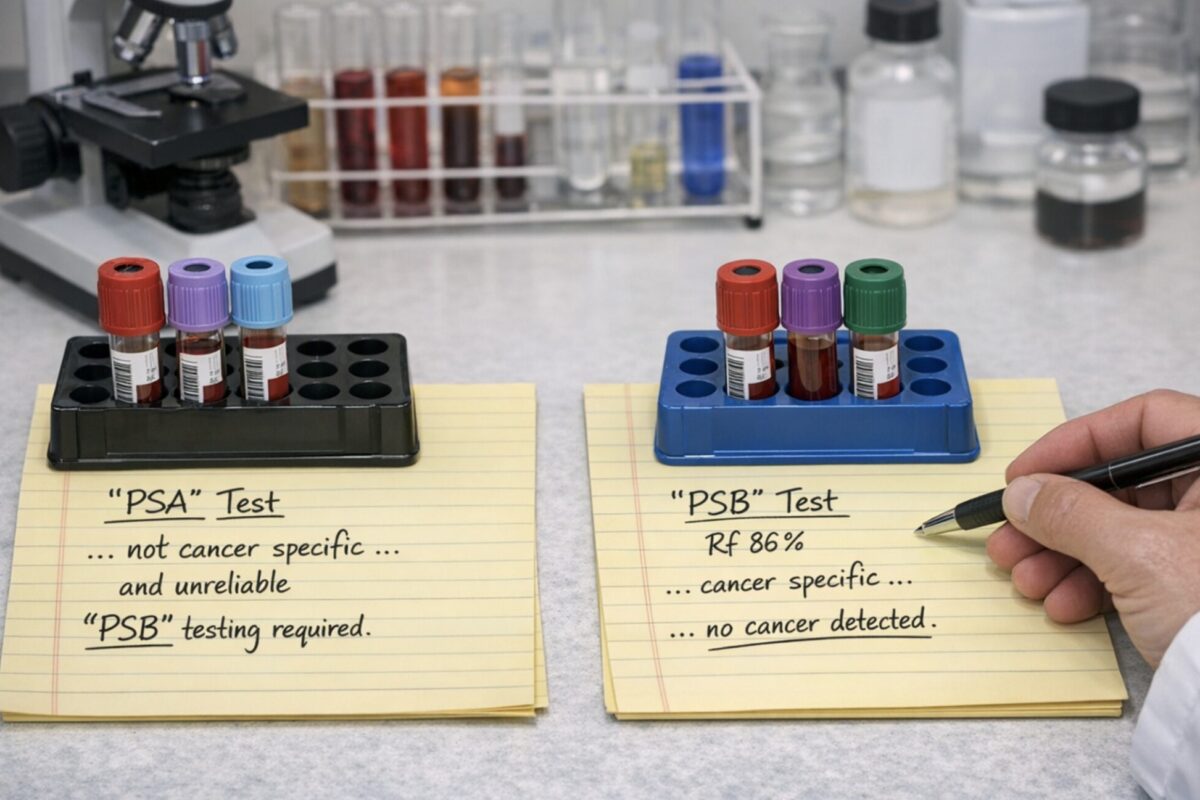
Led by co-founder, chairman and CEO Steve de Jaray, the medical technology company has developed a patented blood-testing platform designed to detect molecular evidence associated with cancer. Its first clinical application, Prostate Dx, also known as the Prostate Specific Biomarker or “PSB” test, is designed to help physicians determine whether clinically significant prostate cancer may actually be present following an elevated PSA.
More than 15 years of scientific development with the University of Alberta and over C$85 million invested in the underlying technologies and miRNA science have gone into developing the PSB platform. The test is now available as a Laboratory-Developed Test through CLIA-certified laboratories. But for de Jaray, prostate cancer and PSB may be only the beginning.
The larger opportunity lies in 5Q’s portfolio of medical patents and whether the technology can eventually be expanded into breast cancer and other diseases—potentially creating a broader clinical testing platform for detecting cancer earlier through a blood draw.
Moving Beyond the PSA
PSA testing has long been an important first-line tool for identifying men who may be at risk for prostate cancer. The problem is that an elevated PSA does not necessarily mean cancer is present.
Benign prostate enlargement, inflammation, infection and age-related changes can also increase PSA levels. The result can leave men facing repeat testing, imaging, surveillance and potentially an invasive biopsy before receiving a definitive answer.
5Q’s PSB test is designed to add another clinical step between that initial diagnosticwarning and an—all to-often, needless—surgically invasive procedure.
Rather than relying solely on the PSA level, the PSB test looks for molecular-specific evidence associated with prostate cancer in the blood. The goal is relatively simple: provide physicians with additional cancer-specific information to help determine which patients should move forward with imaging, biopsy or treatment and which may be able to avoid unnecessary procedures.
For patients, however, the importance of the 5Q’s novel science and actual, reliable clinical PSB blood testing technology is going goes far beyond the status quo of mere statistics underlying the current PSA test for men that is prone to false positive results.
The Power of Knowing You Don’t Have Cancer
One of the most compelling insights to emerge from de Jaray’s work with 5Q has been something he did not initially anticipate: the emotional value of a reliable negative, “no cancer found” result.
An elevated PSA can immediately create fear. Patients may assume the worst before cancer has ever been diagnosed, bringing spouses, children and other family members into that uncertainty.
De Jaray has witnessed what happens when PSB provides hard and reliable micro-cellular evidence when that Prostate cancer is not present.
“The best part of my job is when we see cancer it isn’t there,” he says.
He describes men leaving their urologist’s office and immediately calling their families with the news they desperately wanted to hear: “I don’t have cancer.”
For de Jaray, those moments have become central to the company’s mission.
“We get the notes, we get the comments. Thank you,” he says. “I had no idea that we would get so much joy.”
That relief can arrive from a urologist ordering a PSB blood test within days of an a patients’ elevated PSA rather than after a lengthy diagnostic journey through invasive surgical biopsy.
At the other end of the diagnostic spectrum, identifying true evidence of prostate cancer earlier may allow a patient and physician to begin addressing the disease while the biological burden remains relatively low. The potential value, therefore, lies on both sides of the equation: helping identify patients who require additional intervention while potentially sparing others from procedures they may not need.
Following Cancer Over Time
5Q also sees an opportunity for its technology beyond initial detection.
Because PSB involves a simple blood draw, it could potentially be repeated over time to monitor changes in a patient’s cancer-associated signal. This creates the possibility of longitudinal surveillance following surgery, radiation or other treatment.
De Jaray stresses that 5Q is providing physicians with information rather than making treatment decisions itself.
“We are a the reliable blood test for prostate cancer cells,” he says. “We are not the predictive or prognostic steps of the urologist. We are simply doing the reliable detecting in aid of making those clinical decisions.”
The distinction is important. The objective is to give clinicians another tool that may help them make more informed decisions about what should happen next.


Breast Cancer Could Be the Next Major Frontier
The potential expansion into breast cancer may ultimately be one of the most significant chapters in the 5Q story.
The company is conducting advancing a women’s cohort study as it works toward a blood-based breast cancer test called the Mammobiogram.
De Jaray envisions a future in which the Mammobiogram could play a role similar to PSB: providing additional biological information after an abnormal screening result and before a woman proceeds further down the diagnostic pathway.
The breast cancer application remains under development and is not at the same stage as the company’s prostate test. 5Q hopes to pursue validation following completion of its women’s cohort study.
A reliable blood test capable of adding meaningful biological information at that point in the journey could potentially change the experience dramatically one day soon for women as it is today for men and prostate cancer.
For de Jaray, the breast cancer mission is also deeply personal.
From Entrepreneur to Cancer Detection

De Jaray’s career has been built at the intersection of technology, manufacturing, imaging and healthcare.
Over more than three decades, he has founded, financed, operated and scaled businesses across North America and internationally. His biography credits him with investing more than $1 billion in development capital, and his career has included work with Fortune 100 companies, strategic M&A, intellectual property and medical technology. He has twice been nominated for Ernst & Young’s Entrepreneur of the Year and received Deloitte’s Fast 50 recognition.
Before 5Q, de Jaray built a significant microelectronics and medical electronics manufacturing business. He recalls producing technology connected to medical imaging and diagnostic equipment for companies including General Electric and Abbott Laboratories, eventually operating five facilities and employing thousands of people.
Then cancer became personal.
De Jaray lost his wife to triple-negative metaplastic breast cancer.
Following the successful exit from his previous business, he was in a position, together with colleagues, to help fund the science that eventually became central to 5Q.
“I was very fortunate to take an exit,” he recalls. Losing his wife, he says, became part of the journey that ultimately allowed him to devote his experience and resources to advancing early cancer detection.
His background also explains why he approaches 5Q differently from a purely scientific founder. He views the company simultaneously through the lenses of medicine, intellectual property, commercialization and scale.
The Bigger Value May Be in the Patents
While Prostate Dx and the PSB test is 5Q’s current flagship product, de Jaray believes the company’s most important long-term asset may ultimately be in the breadth of its intellectual property.
The underlying technology is designed around detecting and analyzing viable circulating tumor cells and their molecular signals derived by miRNA. If When that platform is can be successfully validated across additional cancers—including breast, bladder, lung and colon cancer—the same core science and blood testing protocol could potentially support these multiple clinical diagnostic applications.
5Q is already looking beyond prostate and breast cancer. De Jaray discussed current development possibilities involving bladder and eventually lung cancer, although those programs remain at earlier stages.
The company’s patents may also have implications beyond detection.
De Jaray describes future possibilities in which related technology could contribute to more targeted ways of studying or treating cancer cells. Some of those applications could require years of additional development, clinical trials and regulatory approval, and he readily acknowledges that they may ultimately be better suited to the resources of a major global healthcare or pharmaceutical company.
That is precisely why he sees the patent portfolio as such a significant asset.
5Q’s near-term mission is self-limited to early cancer detection. The underlying science, however, could potentially have a much longer runway.
Where Medicine Meets Investment
Cancer diagnostics can be enormously expensive. An inconclusive screening result can lead to specialist visits, advanced imaging, biopsies and other procedures. Treatment of disease discovered at a later stage can be dramatically more complex and dramatically more expensive.
A reliable clinical blood test capable of helping physicians avoid unnecessary procedures while directing patients with evidence of cancer toward earlier intervention has an obvious human benefit. It could also create meaningful economic value for healthcare systems and insurers.
“For every negative PSB test today, it’s likely a surgical prostate biopsy they may not need to do,” de Jaray says. “And more importantly, for every positive test, it’s prostate cancer that is found early.”
That alignment between patient outcomes and healthcare economics is one reason de Jaray believes 5Q has the potential to scale significantly.
He is currently overseeing the company’s U.S. public-market initiative while developing relationships with laboratories, multiple supportive urology groups, major institutional investors, impact targeted family offices and leading, strategic, healthcare partners.
Ultimately, he believes a global healthcare company could become the natural home for some or all of 5Q’s technology.
“This is a company with a science and a patent suite that we will not own in the long term,” he says, envisioning a future in which a major medical company possesses the resources and infrastructure to take the 5Q medical technology technologies even further.

A New Chapter in Early Detection
The future of cancer care will not be determined by treatment advances alone. Finding disease earlier—and determining more quickly when disease is not present—could prove equally transformative.
That is the opportunity 5Q Spectra is pursuing.
Today, its clearest clinical application is prostate cancer, where Prostate Dx as the “PSB” test is designed to provide additional biological information following an elevated PSA. Bladder and Breast cancer represent the next major opportunities if Breast Dx asthe Mammobiogram and Bladder Dx successfully complete development and validation. Beyond that sits a broader portfolio of intellectual property that could potentially extend the platform into other cancers and applications.
There is still much to prove as 5Q expands beyond prostate cancer. New indications will require clinical evidence, validation and, where applicable, regulatory review. But the vision behind the company is compelling precisely because it addresses one of cancer’s most fundamental challenges: getting a meaningful answer earlier.
The ultimate value of 5Q may one day be measured in patents, market capitalization or the scale of a strategic transaction. But its impact could be measured much more simply, in the number of patients who receive the right answer before fear, unnecessary procedures or advancing disease change the course of their lives.
For Information Contact:
5Q Spectra Corp,
Mr. Steven de Jaray CEO
PH: 1.689.888.8889
EM: Steve@5QSpectra.com
WEB: 5QSpectra.com