Some wellness products are easy to understand at a glance.
A yoga mat has a clear price. A massage gun may come in several versions, but the differences are usually obvious. Even a home sauna often has a visible starting cost and a familiar list of upgrades.
Large recovery equipment is different.
Two devices can look almost identical in photographs, yet their quotes may be thousands of dollars apart. At first, that can feel like branding, luxury pricing or a supplier simply choosing a higher number.
Sometimes that is part of the story. More often, the real difference is hidden in the parts, services and practical requirements that never make it into the main product photo.
The Visible Product May Be Only Part of the System
People naturally compare what they can see.
They notice the shape of the enclosure, the finish, the control screen and the amount of space inside. If two products look similar, it seems reasonable to expect them to cost roughly the same.
But complex wellness equipment is a little like a car. Two vehicles may have a similar body shape while using completely different engines, safety systems, materials and internal components.
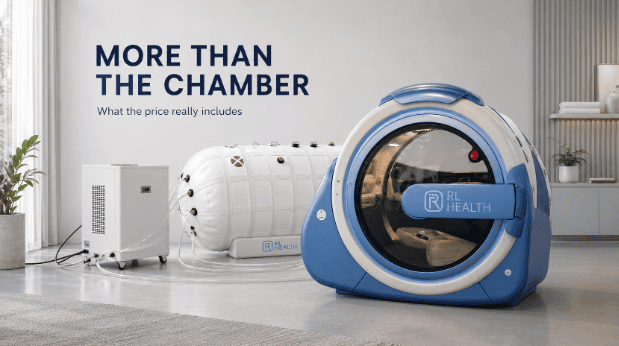
The enclosure may be only one part of the full setup. Depending on the equipment, there may also be compressors, oxygen systems, control units, hoses, valves, monitoring components and safety features.
Some suppliers include most of those items in the quote. Others price them separately.
That is why a lower number is not always a lower total cost. It may simply represent a less complete package.
What HBOT Equipment Actually Does
HBOT stands for hyperbaric oxygen therapy.
At a basic level, HBOT equipment creates an enclosed environment where pressure is raised above normal atmospheric pressure. Depending on the system and its intended use, oxygen may be supplied through the chamber environment or through a separate breathing system.
The equipment must control both pressurization and decompression. It also needs systems for airflow, pressure monitoring and emergency release.
This is one reason a chamber costs more than an ordinary wellness product. The visible enclosure is only the part the user enters. Much of the engineering is designed to create and manage the pressurized environment around it.
Different chamber types may use different pressure ranges, oxygen arrangements and control systems. Those differences can affect the price, but a higher specification does not automatically make one model more suitable for every buyer.
There Is No Single Hyperbaric Chamber Price
A realistic hyperbaric chamber price depends on the type of chamber being discussed.
Soft-shell and hard-shell chambers use different structures and materials. A compact seated model is not built in the same way as a full-length horizontal unit. A chamber designed for occasional personal use may also have different requirements from equipment intended for repeated use in a managed recovery space.
Even within the same general category, small design choices can affect the quote.
A wider entrance may require a more involved door structure. A two-person chamber needs more room, more material and a different internal layout. A model designed for someone to sit upright may fit a room that could never accommodate a long horizontal chamber.
Asking “How much does a hyperbaric chamber cost?” is therefore a little like asking how much a car costs. The answer depends on the type, size and level of equipment being compared.
Soft-Shell and Hard-Shell Chambers Have Different Cost Structures
Soft-shell chambers use flexible materials supported by an external structure. They are often easier to transport and may be more practical for homes or spaces where a permanent installation is not preferred.
Hard-shell chambers use a rigid body. They are generally heavier, more difficult to move and more likely to require a planned delivery route and permanent location.
Those structural differences affect more than appearance.
They can influence:
- material and production costs;
- packaging and freight;
- installation requirements;
- supporting equipment;
- maintenance access;
- and the amount of room needed around the chamber.
Neither type is automatically the better choice. The useful comparison is whether the structure fits the intended environment, expected use and available space.
Bigger Changes More Than Comfort
Size does not just affect how spacious a device feels.
A larger unit may require more structural material, a bigger shipping crate and more room during transport. It may also need wider doorways, clearer access through the building and more space around the equipment once installed.
This is one of the easiest costs to underestimate.
A product may fit perfectly in the room itself but still be difficult to move through a narrow hallway, stairwell or doorway. In some cases, the delivery problem becomes more important than the product dimensions shown on the website.
Anyone considering a large wellness device should therefore think about the complete route from the delivery vehicle to the final room, not just the empty floor area where the equipment will sit.
Pressure and Control Features Add Complexity
Product listings often reduce complex systems to a few specifications.
Pressure levels, control screens and operating modes appear as neat numbers or short bullet points. Behind them are the parts responsible for creating pressure, keeping it stable and releasing it safely.
Depending on the model, the system may also include internal and external controls, communication features, monitoring displays and emergency-release components.
Those systems require parts, assembly and testing.
That does not mean the chamber with the highest pressure rating or longest feature list is automatically the best option. A buyer may be paying for a level of complexity that does not suit the actual setting.
Pressure should be considered together with intended use, chamber structure, operating support and local requirements—not as a stand-alone measure of quality.
Customization Can Solve Real Problems
Customization is often associated with colours, finishes and branding, especially when equipment is being installed in a spa or recovery studio.
But many custom requests are practical rather than decorative.
A buyer may need a particular voltage. The room may require an upright chamber instead of a horizontal one. A facility may want a wider entrance or a different seating arrangement. International buyers may also need specific packaging or documentation for delivery and import.
These changes take additional planning and communication. Some may also affect production or shipping.
Once a standard model has been adapted for a particular room, user or destination, it no longer makes sense to compare its final quote directly with the most basic version shown online.
The First Quote May Not Be the Final Cost
Large wellness equipment does not arrive like a small online order.
Packaging, freight, delivery and setup can add a meaningful amount to the total. The final cost may also depend on whether the quote covers transport only to a port, delivery to the property or placement in the room where the equipment will be used.
RL Health is a global hyperbaric chamber supplier that supports international buyers with model selection, customization and export packaging. Its ordering support also covers delivery coordination and after-sales assistance, which may need to be considered alongside the initial equipment quote.
The important detail is not whether a supplier offers every possible service. It is whether the buyer understands exactly what is included.
A low equipment price can become much less attractive if freight, supporting components and technical help are added later. A higher quote may already include some of those items.
Without a clear breakdown, the two numbers are not really comparable.
A Useful Quote Should Explain Its Limits
A good quote does not need to be complicated, but it should remove uncertainty.
A detailed quote for an hbot chamber should make clear which model is included, what supporting equipment comes with it and which accessories are optional.
It should also explain how the equipment will be packaged, how far the delivery service goes, whether setup or training is available, what the warranty covers and how replacement parts or technical support are handled.
This is not about turning the purchase into an endless checklist. It is about making sure two quotes describe the same thing.
A price that covers only the chamber should not be compared directly with one that also includes supporting equipment, shipping and after-sales service.
Ownership Continues After Delivery
The cost of a large wellness device does not end when it arrives.
There may be electricity use, routine cleaning, filter changes, inspections, replacement parts and maintenance. A commercial space may also need staff training. A home user may need to keep enough space around the equipment for comfortable access and regular care.
These ongoing costs do not automatically make the purchase a poor decision. They simply belong in the calculation.
The same is true of many expensive home and lifestyle products. A swimming pool costs more than the installation bill. A car costs more than the sticker price. Large recovery equipment also comes with responsibilities that are easy to ignore while looking at a polished product page.
The Cheapest Quote Is Not Always the Cheapest Option
A low quote may become expensive if important equipment, delivery or support is missing.
At the same time, a high quote is not automatically better. It may include extra size, pressure capacity, features or customization that the buyer does not actually need.
The most useful comparison is based on the complete scope.
When two similar-looking products have very different prices, the explanation is rarely one dramatic feature. The difference is usually spread across structure, pressure systems, size, supporting equipment, customization, shipping and long-term service.
For high-end wellness equipment, knowing what the price includes is often far more valuable than finding the lowest number.