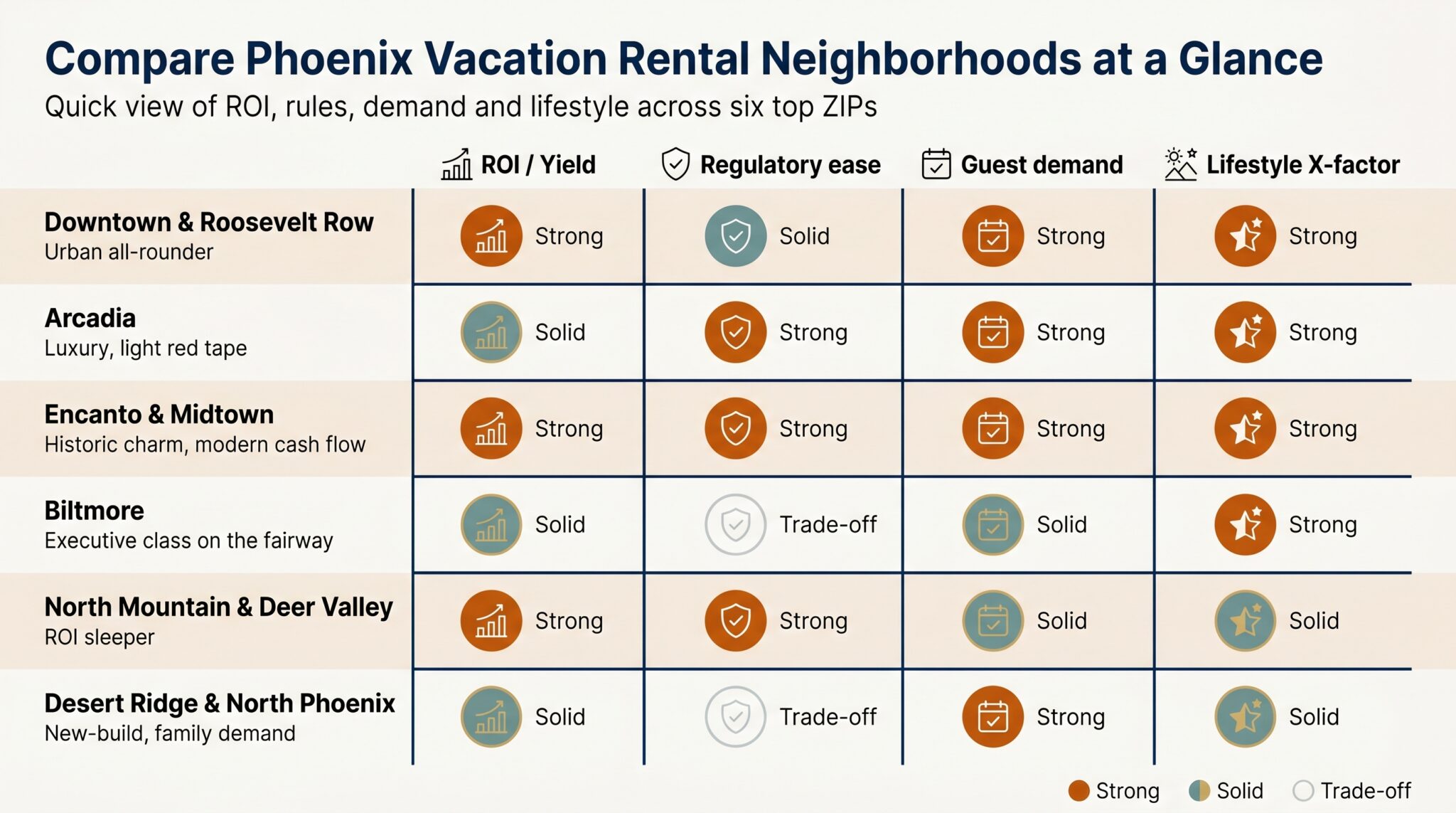
Phoenix is buzzing. Local hosts earn about $37,000 a year on a $291 average daily rate, according to AirROI. Profits look easy—until an HOA fine or an empty summer calendar wipes them out.
We crunched every active ZIP across five factors—ROI, red tape, demand, buy-in price, and lifestyle—to spotlight the seven neighborhoods that truly pay. You’ll see where nightly rates top $200, where HOAs bite, and exactly how to stay on the city’s good side.
Prefer a shortcut? Pros like SkyRun Phoenix rentals already use this data daily. Ready to claim your ZIP? Let’s dive in.
How we ranked the neighborhoods
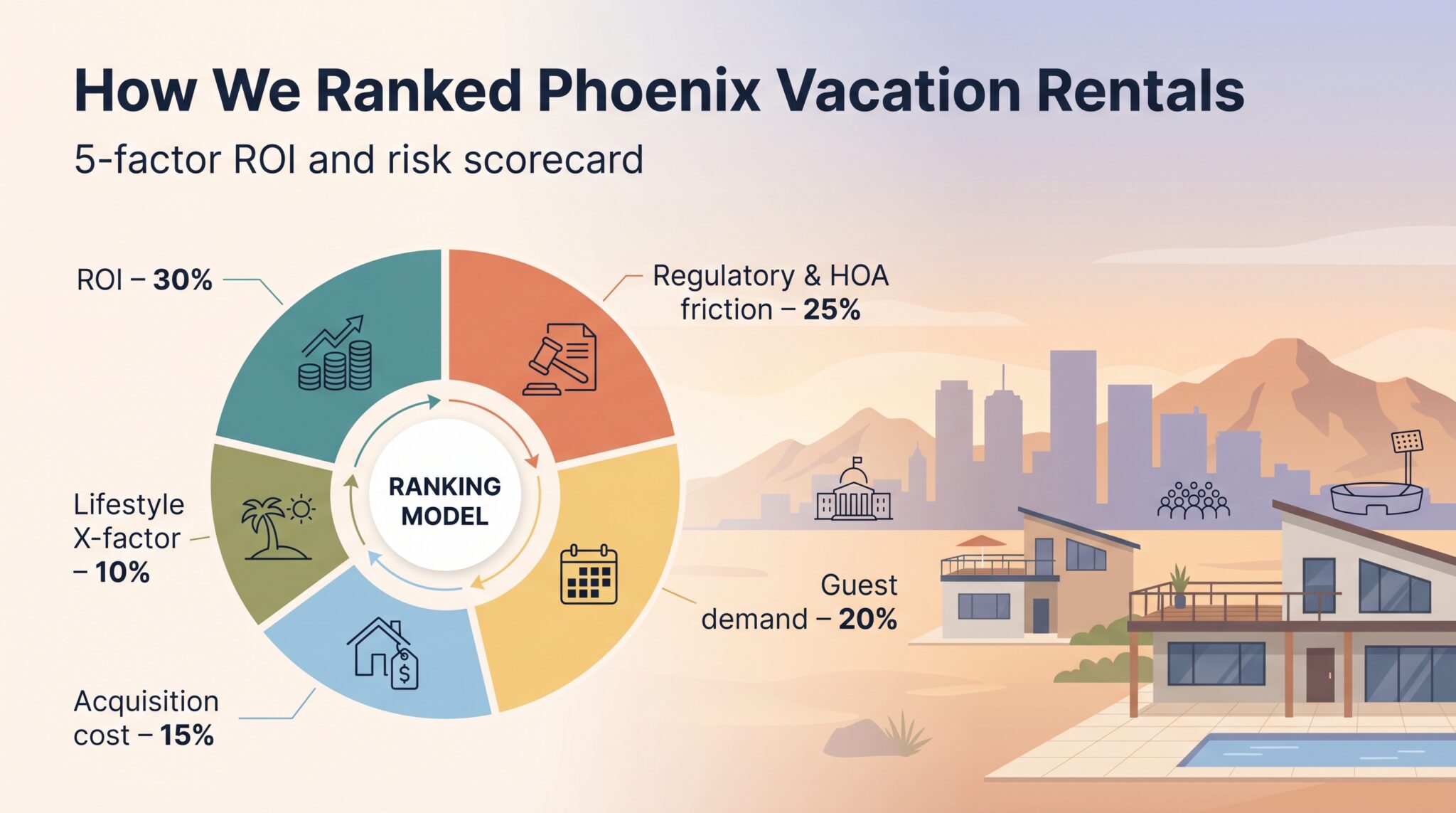
You want a clear, defensible scorecard—not back-of-napkin hype. We built a five-factor model and ran every Phoenix ZIP with meaningful short-term-rental activity through it.
First, we asked a blunt question: Will the property make money without legal headaches? That split into five weighted metrics:
- Return on investment – 30 percent. Gross yield today plus likely five-year appreciation, powered by AirROI and Zillow data.
- Regulatory and HOA friction – 25 percent. Thirty-night minimums or four-figure fines drag a ZIP’s score down fast.
- Guest demand – 20 percent. Stable occupancy fueled by downtown events and Cactus League crowds beats summer-slump suburbs.
- Acquisition cost – 15 percent. Lower buy-in means cash flow turns positive sooner, even with professional management.
- Lifestyle X-factor – 10 percent. Views, walkability, and prestige that spark five-star reviews and future resale gains.
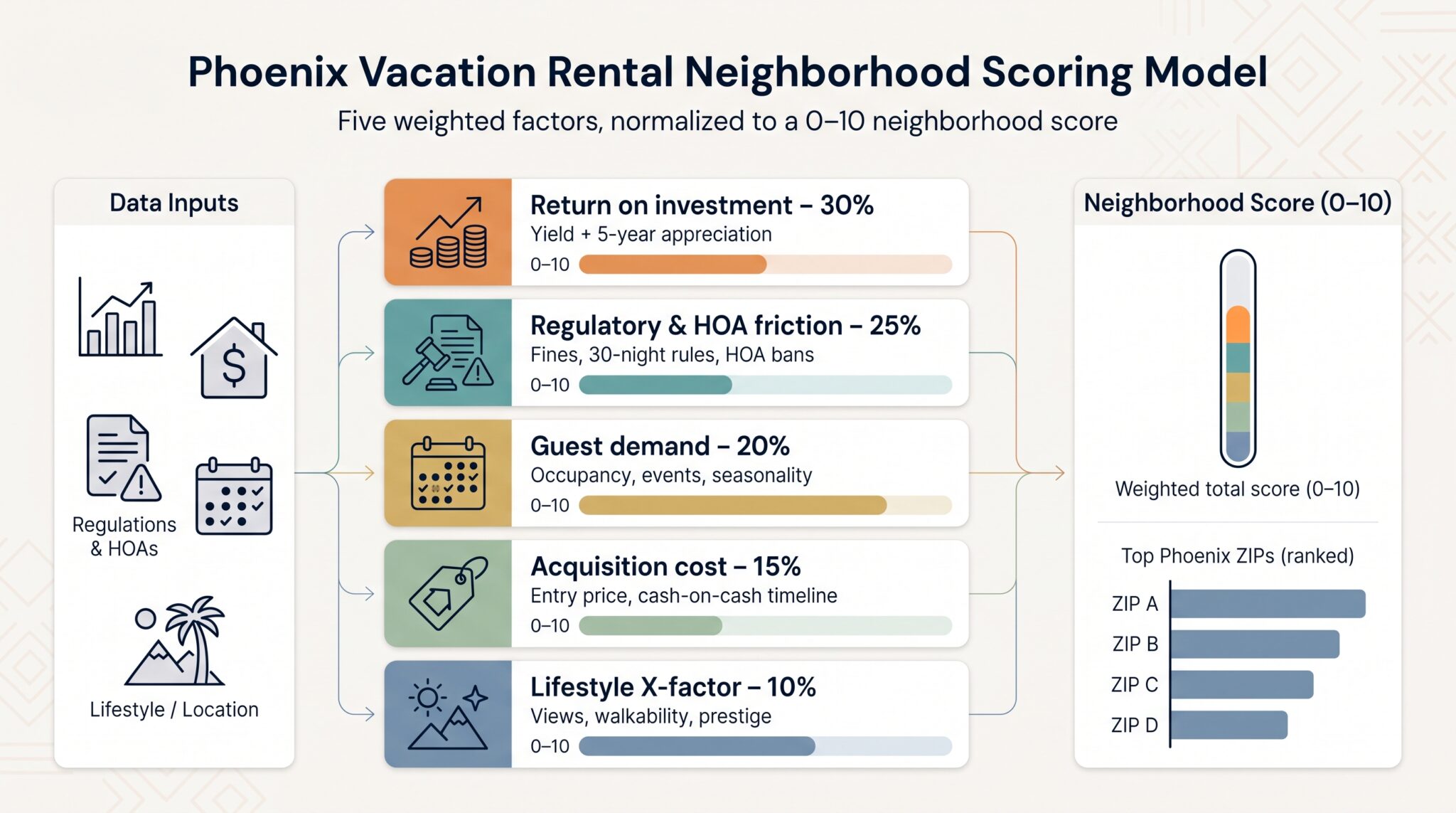
We normalized each metric on a 0–10 scale, applied the weights, and stacked the totals. The math revealed seven clear winners. High ROI alone isn’t enough—smooth compliance and steady demand lift a neighborhood to the top.
1. Downtown Phoenix & Roosevelt Row: the urban all-rounder
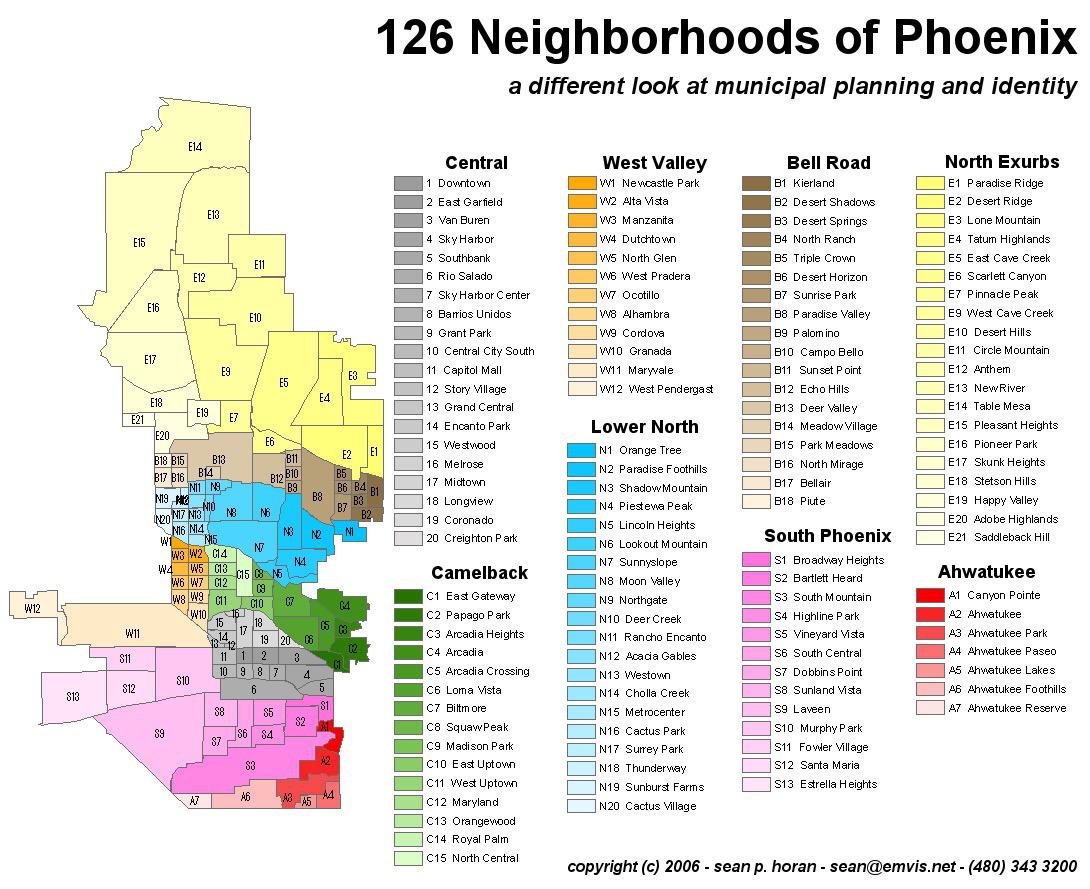
Phoenix neighborhood map highlighting top 6 vacation rental areas
Downtown is Phoenix’s front-row seat. Business travelers fill condos on weekdays, sports fans and concertgoers grab weekends, and art lovers drift through Roosevelt Row each night.
That churn shows in the data. Listings average about 75 percent occupancy, one of the city’s highest rates according to BNBcalc. Revenue stacks fast when beds rarely sit empty.
Data from SkyRun Phoenix rentals shows its downtown homes are booked 2.4 times more often than the typical listing on major booking channels.
SkyRun Phoenix rentals downtown performance screenshot
The team attributes that edge to dynamic pricing that lifts rates around Suns home games, Chase Field concerts, and convention weeks—an event-driven tactic any host can adopt.
Entry costs stay reasonable. A typical single-family home in the 85003 ZIP sells near $580,000, while remodeled two-bed condos often trade for half that. High yield and lower capital outlay make this area our top performer.
Compliance is straightforward unless the building says otherwise. Many downtown HOAs ban stays under 30 nights, a fact Phoenix hosts highlight often. Always read the CC&Rs before ordering an appraisal.
Guests rave about walkability. Chase Field, Footprint Center, convention halls, breweries, and ASU’s downtown campus all sit within a 15-minute stroll. Fewer rental cars, higher reviews, and stronger midweek bookings create a triple win for cash flow.
Keep operations professional. Install noise sensors, post the city permit inside the listing, and raise rates whenever the Cactus League or a major concert hits the calendar. Follow those basics and Downtown will keep earning while the suburbs bake in the summer heat.
2. Arcadia: luxury with light red tape
Arcadia offers leafy streets, Camelback views, and backyard citrus. Guests pay for that setting. A typical four-bedroom home averages $190 per night and about 68 percent occupancy, solid numbers for a residential district.
Return on investment looks modest at roughly 5 percent gross yield, yet two factors lift returns. Spring events push winter weekends past $250 a night, and most lots lack an HOA, so you avoid 30-night rules that hurt other luxury ZIPs.
Compliance stays simple. File the city permit, carry the required $500,000 liability policy, and send neighbor notices once. Deep lots and mature landscaping absorb noise, so party complaints are rare when you screen guests.
Visitors treat the neighborhood like a private resort. They walk to La Grande Orange for breakfast, ride five minutes to Old Town nightlife, hike Echo Canyon at dawn, then post poolside photos with Camelback glowing behind them. Those images refill your calendar.
Buyers need capital. Median sale prices hover near $1 million, and pools demand extra care in summer. The upside: appreciation history rivals blue-chip stocks, and demand widens each season as new restaurants and trailheads appear.
If you want a property that almost markets itself and appreciates steadily, Arcadia fits. Just remember: every vacant night is costly here, so professional management and dynamic pricing protect your yield.
3. Encanto & Midtown: historic charm, modern cash flow
Walk a few blocks north of downtown and glass towers fade into 1920s bungalows, mid-century ranches, and leafy park blocks. That mix of vintage character and center-city access is Encanto’s edge.
Well-staged three-bed homes average about 70 percent occupancy at $155 a night. Purchase prices sit near $550,000 for a restored historic house, producing roughly 6 percent gross yield and a faster path to break-even than Phoenix’s luxury districts.
Red tape is minimal. These streets pre-date master-planned HOAs, so the city license and a neighbor notice cover compliance. Lots are tight, so add basic noise sensors and spell out quiet hours in every booking note.
Travelers book this area for walkability. They stroll to the Heard Museum, hop on light rail to a Suns game, or bike to Roosevelt Row’s murals in ten minutes. Hosts who lean into that urban-village vibe—think bikes, transit passes, local coffee guides—see higher occupancy and better margins.
Inventory here is limited; Phoenix cannot build another historic district. Scarcity props up values even in slower markets, giving investors a rare blend of cash flow today and appreciation tomorrow. If you crave downtown revenue without downtown concrete, Encanto and Midtown deserve a close look.
4. Biltmore: executive class on the fairway
Manicured greens, gated drives, and a Waldorf Astoria address define Biltmore. Corporate travelers and golf groups gladly pay about $200 a night for a four-bedroom townhouse that feels like a private resort wing.
Revenue is steady, not spectacular. Homes average $40,000 a year at 60 percent occupancy. The trade-off is buy-in: median price hovers near $700,000, often inside an HOA that limits stays shorter than a week. With gross yield around 5.5 percent, tight operations matter.
Regulatory risk sits at the HOA, not City Hall. Some pockets in Taliverde and Colony Biltmore still require 30-night minimums, while nearby streets allow nightly bookings with a simple city permit. Read covenants before touring, then confirm the rules in writing.
Guests choose Biltmore for convenience and status. They tee off at the Biltmore Golf Club before breakfast, ride ten minutes to downtown meetings, then finish the day shopping at Fashion Park. Offer fast Wi-Fi and a quiet workspace, and midweek dates fill quickly.
Expenses run higher here. Luxury visitors expect a heated pool, premium linens, and same-day maintenance. Budget an extra 10–15 percent for furnishings and service upgrades; those touches turn one-time stays into annual corporate contracts.
Buy here for prestige and appreciation, not headline cap rates. If Arcadia is the reunion villa, Biltmore is the executive suite: polished, predictable, and always ready for a quarterly earnings call by the pool.
5. North Mountain & Deer Valley: the ROI sleeper
Drive 15 minutes north of downtown and tower blocks give way to desert peaks. Three-bed homes list near $450,000 yet earn about $44,000 a year—roughly 10 percent gross yield, the best in the city according to GetChalet’s 85023 ZIP analysis.
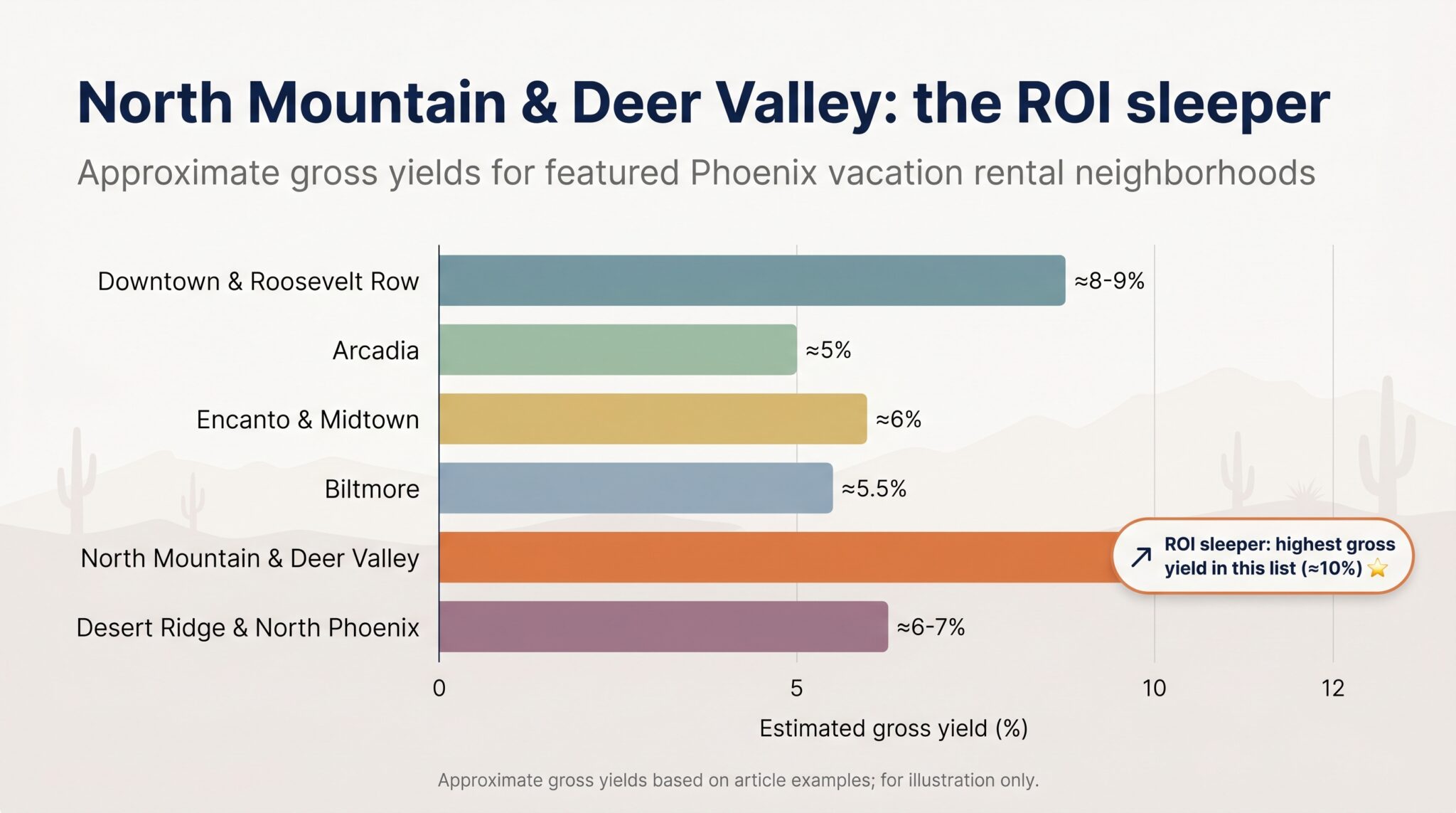
The edge is steady, middle-market demand. Youth sports teams fill weekends at Reach 11, spring training fans swarm in March, and budget-minded snowbirds lock in month-long stays all winter. That mix smooths cash flow even when 110-degree heat empties pricier districts.
Red tape is light. Most streets lack HOAs, so a Phoenix permit and neighbor notice cover compliance. Lots are bigger, so noise issues drop, but install door cameras; you are still liable if a team bus turns into a backyard party.
Guests crave space. Promote double garages for gear, fenced yards for kids, and freeway access that puts five MLB stadiums within 30 minutes. Hosts who add bunk rooms and game tables often outrank plain listings.
For investors, the suburb is scale-friendly. Two homes here can outperform one Arcadia villa on both cash flow and vacancy risk. Hold them a few years and incoming semiconductor plants plus new retail hubs promise a second payoff through appreciation.
North Mountain favors profit over postcard views. If ROI tops your wish list, this is Phoenix’s value play.
6. Desert Ridge & North Phoenix: new-build convenience, family demand
If Arcadia is vintage wine, Desert Ridge is a crisp, consistent lager. Master-planned streets lined with early-2000s stucco homes attract families who want space, safety, and Scottsdale proximity without the Scottsdale price.
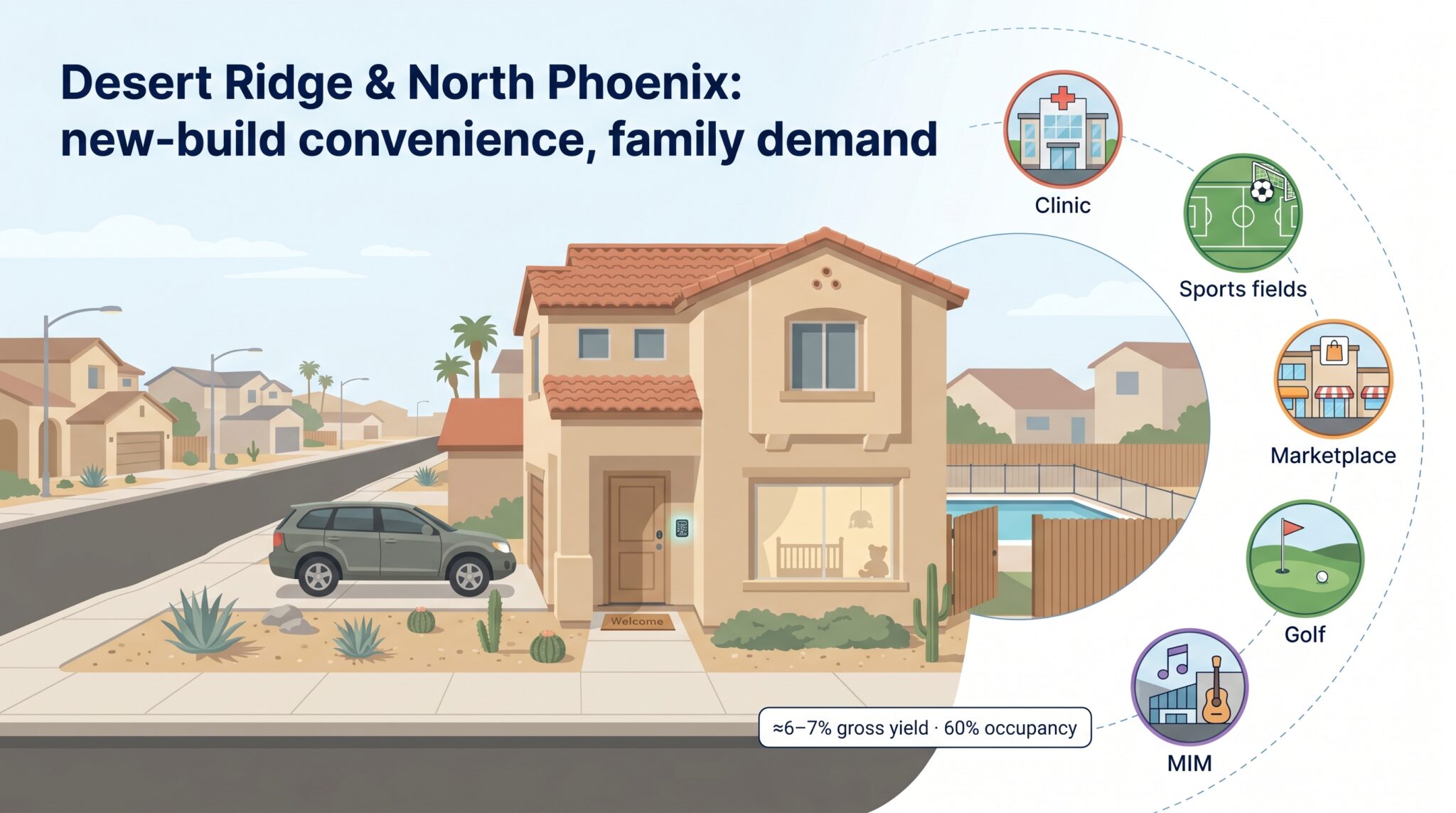
Numbers land in the middle lane. A four-bedroom here grosses about $38,000 a year at 60 percent occupancy, producing 6–7 percent gross yield. Not the knockout of North Mountain, but stronger than many U.S. suburbs with similar home values.
Medical and youth-sports traffic keep calendars full. Mayo Clinic guests stay for weeks, soccer tournaments at Reach 11 pack weekends, and Barrett-Jackson fans spill over every January. Supply still lags demand, so well-furnished homes lock long bookings early.
The main hurdle is HOA fine print. Some pockets permit nightly stays; others require 30 nights. Before you bid, request the CC&Rs and get written confirmation that short-term rentals remain allowed. Lose that fight and your average daily rate falls to corporate-housing territory.
Guests love “everything in ten minutes.” They can tour the Musical Instrument Museum at noon, shop Desert Ridge Marketplace by four, and tee off at TPC Scottsdale after breakfast the next day. Call out those quick hops and inquiries climb fast.
Expenses stay predictable. Newer homes mean fewer HVAC surprises and more budget for family-friendly touches: cribs, blackout curtains, and pool fences that lift review scores. If you want dependable mid-tier returns with little renovation drama, Desert Ridge checks every box.
Conclusion
Phoenix’s vacation-rental landscape rewards hosts who balance yield, compliance, and guest experience. From Downtown’s year-round demand to North Mountain’s value-driven cash flow, each neighborhood offers a distinct path to profit. Match your budget, risk tolerance, and hosting style to the right ZIP, follow local rules closely, and the city’s desert sun can power dependable returns for years to come.