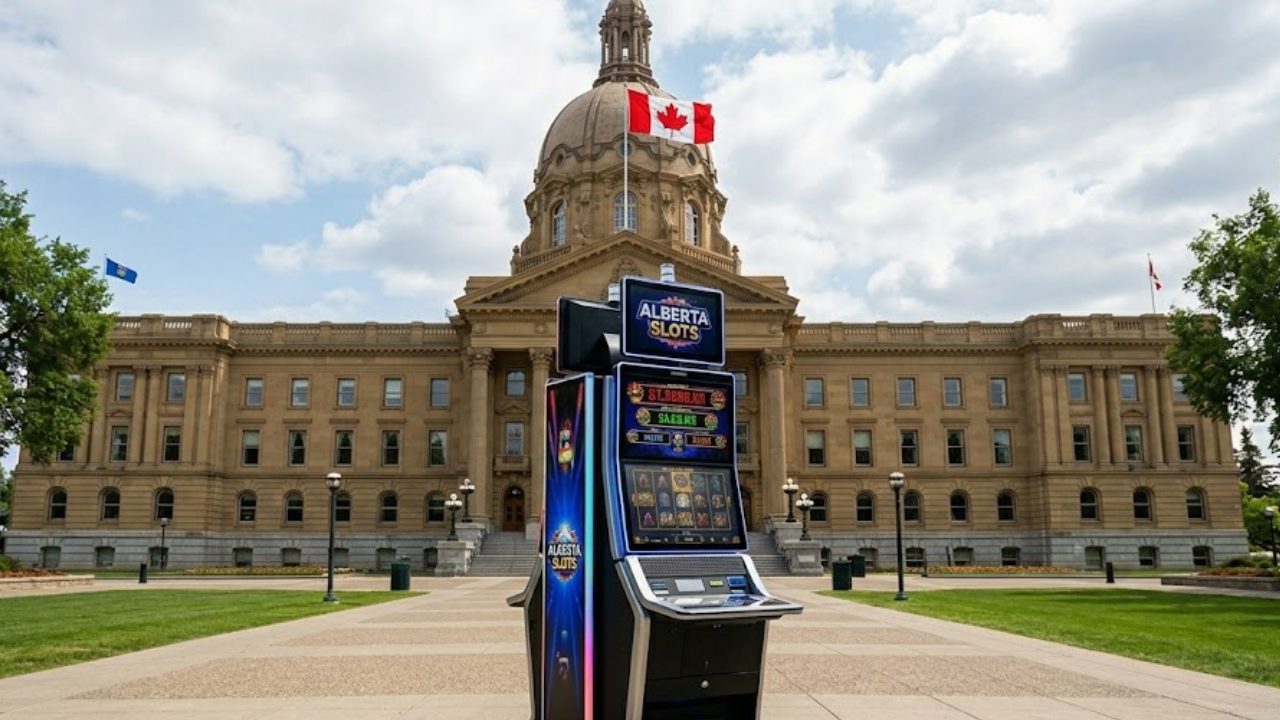
In terms of online gambling markets in North America in 2026, few places are being watched as closely as Alberta. The Canadian province recently announced it will be opening its regulated online casino market in July 2026. So far no less than 32 operators have already started applications to join up. So what has got operators and regulators so interested in Alberta? And how might the market shape up for its players?
Well, a lot of that might be influenced by the way Ontario has done things. Signs are that Alberta is following a similar model to the first and so far only Canadian province to launch an open but regulated online gambling market. This has the industry waiting to see if Ontario’s success in capturing players from offshore sites can be repeated. Alberta’s strong economy with high wages, coupled with a July launch to coincide with the 2026 World Cup, has many eyes on the new market.
Alberta’s Strong Economy Could Mean a Big Market Launch
Currently, the only locally-regulated online gambling option in Alberta is province-backed PlayAlberta. However, a significant majority of players continue to use offshore sites. Like Ontario before them, Alberta’s government wants that to change.
This means operators are getting a confluence of factors that interest them. A new market opportunity around a big ticket event in the 2026 World Cup. A new market that is rolling out the carpet for operators with a relatively favorable revenue sharing deal expected. And a market that has one of the country’s highest concentrations of wealth per capita.
Alberta has a 4.7 million population, which is not huge at all by global markets. But it’s not small either. And, crucially, it is a population with high levels of disposable income to spend on entertainment.
Several recent estimates of the potential market size put it at $700 million to $800 million in revenue within the first year. Those figures are partly based on the provincial operator which made $275 million in revenue in 2025. That was despite estimates it only held a 25% to 30% market share against offshore operators.
Players right now often turn to comparison sites offering guides to all the online casinos available in Alberta. If (when) the game changes to 32 regulated operators, these resources will likely see even more use. Players can see all the offers, rewards and site features that will be debuting, so they can assess them all at once.
The 2026 World Cup Will be a Big Launchpad
The World Cup 2026 will be partly held in Canada. As one of the largest events in the world sporting calendar, Alberta’s launch lining up with the start of the tournament will be massive for betting operators.
Even in terms of online casinos, football themed games and bonus offers will abound in order to cross-sell to sportsbook customers. Because Alberta will be launching with sports betting and casino gambling at the same time, operators will be offering a shared platform from the start. Globally, $150 billion is expected to be bet on the 2026 World Cup, as well as all the tourists coming to Canada, so operators will be going all out to attract custom.
One risk is that a huge market opening for sports betting during the World Cup could set unrealistic expectations for growth of the new Albertan market long-term. Especially considering, unlike many US gambling markets, online casinos are generally more popular than sports betting in Canada.
Another is that sports betting, unlike casino gambling for the most part, can be quite volatile based on sporting results. If Canada can do well in the World Cup, largely against the odds, sportsbooks could take a hit with lots of bettors backing the host nation. That risk will be compounded by the generous promotions companies employ at the opening of the market.
However, those chances are slim. Plus, the cross-selling boost to online casino custom should more than make up for it if Canada do make an unexpected deep run.
Alberta is Following Ontario’s Model – Regulators are Interested if Success Can Be Replicated
Ontario was the first Canadian province to take the bold decision that the province-backed monopoly model was not working effectively. The case can be argued about problem gambling and excessive marketing remaining a problem – but in terms of doing what politicians wanted from the market, Ontario massively succeeded.
Yes, bettors have spent billions, but they were doing so before at offshore sites that aren’t taxed. Now the provincial government gets hundreds of millions in tax revenues and they have control over advertising and responsible gambling rules. Officials from the government of Alberta have basically said the same in so many words themselves.
Of course, Ontario’s system is not perfect. For example, Alberta may introduce a province-wide self exclusion scheme – something Ontario has only recently begun to roll out.
So, if Alberta succeeds in following in Ontario’s footsteps, they may set the template for the rest of Canada to join them. Regulators, operators and players will be closely watching to see what lessons they can learn from the country’s second crack at an open but regulated casino market.