In 2026, Private Air Charter has evolved from a luxury travel option into a strategic tool for high-net-worth individuals and corporate leaders who prioritize time above all else. As global business accelerates and decision cycles shorten, executives are no longer measuring wealth purely in financial terms they are measuring it in hours saved, deals closed faster, and opportunities captured ahead of competitors. Private aviation is now positioned at the center of this shift.
Time efficiency has become the defining asset for millionaires and entrepreneurs. Commercial aviation, despite its affordability, introduces delays, rigid schedules, and productivity losses that can significantly impact high-value operations. In contrast, private air charter allows travelers to dictate their own schedules, avoid congestion, and operate on their own terms.
Moreover, private aviation eliminates traditional bottlenecks such as long security queues, boarding delays, and layovers. As a result, professionals can maximize productive hours, turning travel time into an extension of their working day. In this environment, Private Air Charter is no longer just about comfort it is a calculated advantage in the race against time.
What Is Private Air Charter?
Private Air Charter refers to the on-demand booking of an entire aircraft for personal or business use, allowing travelers to fly according to their own schedule rather than relying on commercial airline timetables. Unlike traditional airline tickets, charter services operate on a pay-per-trip model, providing access to a wide range of aircraft tailored to specific mission requirements.
This model enables travelers to choose from various jet categories depending on distance, passenger count, and urgency. Whether it is a short regional trip or an intercontinental business mission, private charter offers unmatched flexibility. Additionally, flights can depart from smaller regional airports, significantly reducing total travel time.
- On-demand booking with no fixed schedules
- Access to multiple jet categories
- Custom departure times and routes
- Use of regional and private airports
- Personalized onboard experience
In contrast to commercial aviation, where passengers must align with airline schedules, private charter flips the equation. The aircraft adapts to the traveler’s needs, not the other way around. Consequently, this model is particularly valuable for executives managing tight schedules or multiple engagements across different cities.
The “Time Advantage” Explained
The core value of Private Air Charter lies in its ability to eliminate inefficiencies inherent in commercial travel. Time savings are achieved at every stage of the journey, from arrival at the airport to final destination access.
Private charter passengers typically arrive just minutes before departure, bypassing crowded terminals and lengthy security checks. Flights operate through Fixed Base Operators (FBOs), which provide streamlined boarding processes and minimal waiting times. This alone can save several hours per trip.
- No long airport queues
- Minimal security delays
- Direct boarding through private terminals
- Faster turnaround times
- Immediate departure upon arrival
Moreover, private jets offer direct routing, avoiding unnecessary layovers or connections. This not only reduces travel duration but also minimizes fatigue and scheduling risks. As a result, executives can attend more meetings, visit multiple locations in a single day, and maintain tighter control over their agendas.
From a financial perspective, time saved directly translates into increased productivity. A business leader who saves 5–6 hours per trip can reinvest that time into revenue-generating activities, making private charter a strategic investment rather than an expense.
Private Air Charter vs Commercial Travel (2026)
| Factor | Private Air Charter | Commercial Travel |
|---|---|---|
| Time Saved | 4–6 hours per trip | Minimal |
| Flexibility | Full control over schedule | Fixed airline schedules |
| Cost | High | Low to moderate |
| Productivity | High (work onboard) | Limited |
| Ideal User | Executives, millionaires | General public |
This comparison highlights why private aviation is increasingly favored by high-value travelers. While the cost is higher, the return on time investment often outweighs the financial difference.
Private Jet Categories & Use Cases
Selecting the right aircraft is critical for optimizing both cost and time efficiency in Private Air Charter. Different jet categories are designed for specific travel needs, ensuring that travelers do not overspend or underutilize resources.
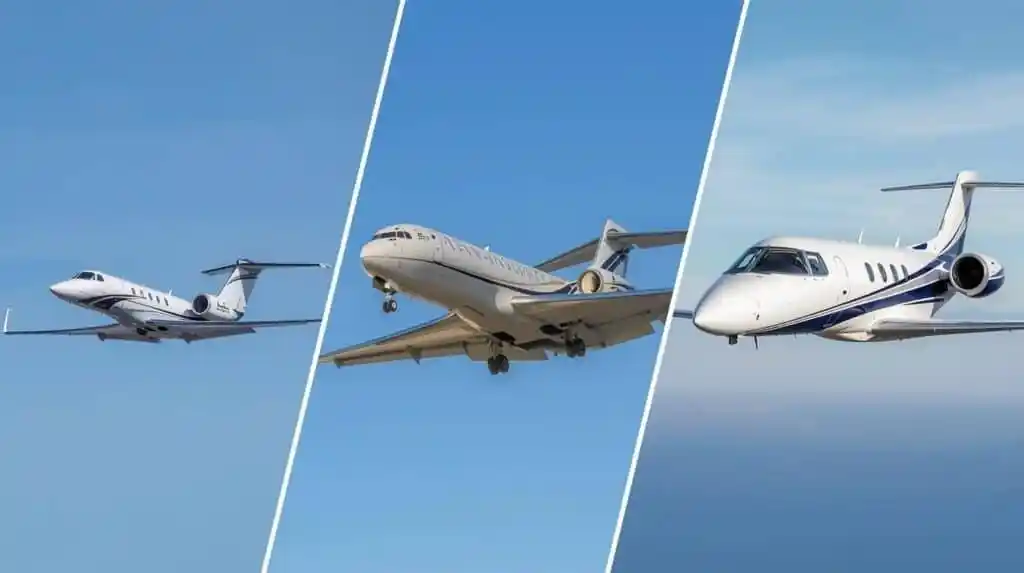
Very Light Jets (VLJs) are ideal for short regional trips, typically covering distances of up to 1,200 miles. These jets are cost-effective and allow access to smaller airports, making them suitable for quick business hops between nearby cities.
Light Jets offer extended range and improved cabin comfort, making them a popular choice for business travel between major cities. They balance affordability with performance, making them one of the most frequently used categories in private aviation.
- Very Light Jets: short trips, 2–4 passengers
- Light Jets: regional business travel
- Midsize Jets: cross-country efficiency
- Heavy Jets: international travel
- Ultra-long-range jets: global connectivity
Midsize Jets provide greater range and cabin space, making them suitable for longer domestic routes. Heavy Jets, on the other hand, are designed for international travel, offering luxury interiors, sleeping arrangements, and extended flight durations without refueling.
Choosing the correct jet category ensures that travelers maximize efficiency while controlling costs. Consequently, experienced charter users often work closely with brokers to match aircraft selection with mission objectives.
Read also: Private Plane Tickets: The Billionaire Way to Fly
Cost of Private Air Charter
Understanding the cost structure of Private Air Charter is essential for evaluating its value proposition. Pricing is typically calculated on an hourly basis, with rates varying depending on aircraft type, distance, and demand.
- VLJs: $2,500–$3,500 per hour
- Light Jets: $3,500–$5,000 per hour
- Midsize Jets: $5,000–$8,000 per hour
- Heavy Jets: $10,000–$20,000 per hour
These base rates are influenced by several additional factors. Fuel prices, landing fees, crew costs, and airport handling charges can all impact the final cost. Furthermore, peak travel seasons often lead to increased demand and higher pricing.
However, for millionaires and business leaders, the cost is often justified by the value of time saved. A single high-stakes meeting secured through faster travel can offset the entire expense of a charter flight.
Why Millionaires Prefer Private Air Charter?
Millionaires and high-level executives consistently choose Private Air Charter because it aligns with their core priority: maximizing time efficiency. In a world where decisions are time-sensitive, the ability to move quickly provides a significant competitive edge.
Private aviation enables seamless travel between multiple destinations within a single day. This flexibility allows business leaders to manage operations across regions without compromising productivity or missing opportunities.
- Maximized business time
- Enhanced privacy and confidentiality
- Reduced travel stress
- Greater control over schedules
- Improved decision-making efficiency
Privacy is another critical factor. Private jets offer a secure environment where sensitive discussions can take place without risk. This is particularly important for industries dealing with confidential data or high-value negotiations.
Productivity in the Sky
One of the most significant advantages of Private Air Charter is the ability to transform travel time into productive work hours. Modern private jets are equipped with advanced technology that supports seamless connectivity and collaboration.
High-speed WiFi, satellite communication, and onboard meeting spaces allow executives to conduct business as if they were in a traditional office. This eliminates downtime and ensures continuity in operations.
- High-speed internet connectivity
- Conference-style seating
- Quiet, distraction-free environment
- Secure communication systems
- Comfortable workspace design
Moreover, the quiet cabin environment allows for focused decision-making, which is often impossible in crowded commercial flights. Consequently, private jets function as mobile offices, enabling executives to maintain momentum even while traveling.
Private Air Charter vs First-Class Travel
| Factor | Private Air Charter | First-Class Travel |
|---|---|---|
| Time Efficiency | Maximum | Moderate |
| Cost | Very high | High |
| Comfort | Fully customizable | Premium but standardized |
| Privacy | Complete | Limited |
| Flexibility | Full control | Airline-dependent |
While first-class travel offers luxury, it cannot compete with the flexibility and time efficiency of private charter. This distinction is crucial for individuals whose schedules demand precision and adaptability.
Ownership vs Charter vs Membership
The private aviation industry offers multiple access models, each catering to different travel frequencies and financial considerations. Understanding these options helps users choose the most efficient solution.
Charter remains the most flexible option, allowing users to pay only when they fly. This is ideal for occasional travelers who need convenience without long-term commitments.
Jet cards provide prepaid flight hours, offering better pricing stability for frequent flyers. These programs are gaining popularity due to their simplicity and predictability.
- Charter: pay-per-use flexibility
- Jet cards: prepaid convenience
- Fractional ownership: shared aircraft access
- Full ownership: maximum control
- Leasing options: hybrid solutions
Full ownership offers complete control but comes with significant costs, including maintenance, crew salaries, and storage. Consequently, many millionaires prefer charter or membership models for better cost efficiency.
Limitations & Considerations
Despite its advantages, Private Air Charter is not without limitations. The most obvious factor is cost, which remains significantly higher than commercial alternatives.
Availability can also be a challenge during peak seasons, when demand for private jets increases. Early booking and strategic planning are essential to secure preferred aircraft.
- High cost compared to commercial flights
- Limited availability during peak periods
- Weather-related disruptions
- Operational constraints
- Need for advance planning
Additionally, weather conditions and air traffic regulations can impact flight schedules. While private aviation offers flexibility, it is still subject to certain external factors.
2026 Private Aviation Trends
The private aviation industry is experiencing rapid growth in 2026, driven by increasing demand for time-efficient travel solutions. Private Air Charter is at the forefront of this expansion, with new technologies and business models reshaping the market.
Demand for charter services continues to rise as more professionals recognize the value of time savings. This trend is particularly strong among entrepreneurs, investors, and global executives.
- Growth in charter demand
- Expansion of global networks
- Rise of jet card programs
- Increased focus on sustainability
- Adoption of fuel-efficient aircraft
Sustainability is also becoming a key focus, with operators investing in fuel-efficient jets and exploring sustainable aviation fuels. This shift reflects a broader industry effort to balance efficiency with environmental responsibility.
FAQs
What is private air charter?
Private air charter is an on-demand service where individuals or companies rent an entire aircraft for specific trips, offering flexibility and control over travel schedules.
How much does private air charter cost?
Costs range from $2,500 to $20,000 per hour depending on the aircraft type, distance, and additional operational factors.
Is private charter worth it?
For high-value travelers, the time saved and productivity gained often justify the higher cost compared to commercial travel.
Why do millionaires use private jets?
Millionaires use private jets to maximize time efficiency, maintain privacy, and ensure seamless travel for business and personal needs.
What is the difference between charter and ownership?
Charter involves paying per trip, while ownership requires purchasing and maintaining an aircraft, offering full control but at significantly higher costs.