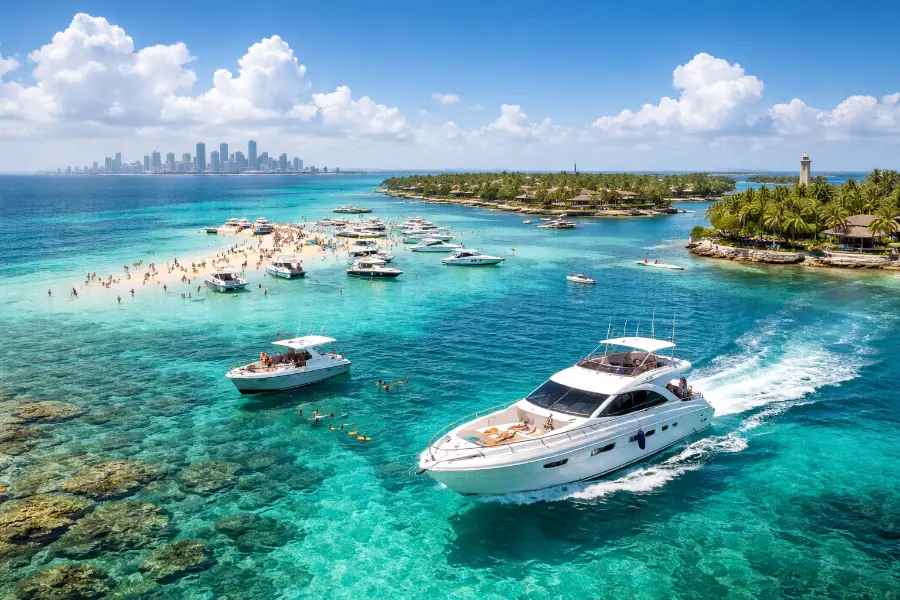
The journey from Miami to the Florida Keys by boat is more than a simple coastal trip—it is a gradual transformation of scenery, pace, and lifestyle. What begins as a high-energy urban departure framed by glass towers and bustling marinas slowly transitions into a serene chain of islands surrounded by turquoise waters and coral reefs. This route offers a unique perspective of South Florida that cannot be replicated by road.
Travelers embarking on this voyage quickly realize that the contrast is the experience. Miami’s skyline represents ambition, luxury, and speed, while the Florida Keys embrace a slower rhythm rooted in nature, fishing culture, and island simplicity. Moving between these two worlds by water allows for a seamless yet striking shift in atmosphere.
Moreover, boating unlocks access to hidden sandbars, remote anchorages, and marine ecosystems that remain unseen by land-based visitors. Consequently, this journey has become one of the most sought-after coastal boating routes in the United States, appealing to both seasoned sailors and luxury travelers.
The Boating Culture of Miami and South Florida
Miami serves as one of the most active boating hubs in North America. The region’s extensive coastline, warm climate, and year-round boating conditions make it a prime destination for yacht owners, charter clients, and marine enthusiasts. Marinas are filled with vessels ranging from sleek center consoles to multi-million-dollar yachts.
The boating culture here is deeply integrated into daily life. Weekends often revolve around sandbar gatherings, offshore fishing trips, and social cruising through Biscayne Bay. Moreover, events such as boat shows and regattas reinforce Miami’s position as a global boating hotspot.
However, as one departs southward, the intensity begins to fade. The crowded waters give way to open expanses, and the focus shifts from social display to natural immersion. This gradual change defines the essence of traveling from Miami to the Florida Keys by boat.
Miami’s Skyline vs. the Florida Keys Lifestyle
The visual contrast between Miami and the Florida Keys is immediate and profound. Miami’s skyline is dominated by modern architecture, luxury condos, and vibrant waterfront developments. The energy is fast-paced, with yachts weaving between commercial vessels and recreational boats.
In contrast, the Florida Keys present a laid-back environment characterized by low-rise buildings, waterfront cottages, and open horizons. Life here revolves around the water in a more relaxed and practical way. Fishing boats, dive charters, and small cruisers replace the flashy yachts of Miami.
Moreover, the cultural shift is equally noticeable. Miami thrives on nightlife and luxury experiences, whereas the Keys emphasize simplicity, outdoor recreation, and community. Consequently, the journey by boat becomes a transition not just in geography but in mindset.
Route Highlights from Miami to the Florida Keys
The route from Miami to the Florida Keys by boat is filled with iconic stops and scenic landmarks. Boaters typically follow a path through Biscayne Bay and along the Atlantic side of the Keys, offering both protected waters and open ocean segments.
Key Stops Along the Route
| Route Stop | Distance (Approx.) | Highlights |
|---|---|---|
| Biscayne Bay | 0–20 miles | Calm waters, city views, marine life |
| Key Largo | 50 miles | Coral reefs, diving, snorkeling |
| Islamorada | 80 miles | Sport fishing capital, sandbars |
| Marathon | 110 miles | Family-friendly marinas, bridges |
| Key West | 160 miles | Historic charm, nightlife, sunsets |
Biscayne Bay offers a protected and scenic start to the journey. The water here is relatively calm, making it ideal for easing into the trip. As boaters move further south, Key Largo introduces the first major shift, with access to coral reefs and clear waters.
Islamorada, often referred to as the sport fishing capital, provides a mix of adventure and relaxation. Sandbars become more frequent, and the water takes on a vivid turquoise hue. Finally, Key West marks the endpoint, offering a blend of history, culture, and vibrant coastal life.
Scenic Experiences: Sandbars, Reefs, and Turquoise Waters
One of the defining features of traveling from Miami to the Florida Keys by boat is the access to unique marine landscapes. Sandbars are among the most popular attractions, where boats anchor in shallow waters for social gatherings and relaxation.
Moreover, the coral reef system along the Florida Keys is the only living coral barrier reef in the continental United States. Snorkeling and diving opportunities are abundant, allowing travelers to explore vibrant underwater ecosystems.
The water itself becomes part of the experience. As the journey progresses, the color shifts from deep blue near Miami to crystal-clear turquoise in the Keys. Consequently, the visual transformation reinforces the sense of escape and immersion in nature.
Popular Stops and Anchor Points
Boaters have a variety of anchor points to choose from, depending on their itinerary and vessel type. Popular stops include:
- Nixon Sandbar (near Key Biscayne)
- Rodriguez Key (near Key Largo)
- Whale Harbor (Islamorada)
- Boot Key Harbor (Marathon)
- Key West Bight
Each location offers distinct advantages. For example, sandbars provide shallow, social environments, while harbors offer facilities such as fuel, docking, and dining. Moreover, many of these stops are strategically located for overnight stays or extended exploration.
Activities Along the Route
The journey is not just about movement it is about experiences. Boaters can engage in a wide range of activities:
- Snorkeling and diving in coral reefs
- Fishing in offshore and inshore waters
- Island hopping between the Keys
- Wildlife watching, including dolphins and sea turtles
- Sunset cruising in Key West
These activities enhance the journey, making it interactive and dynamic. However, proper planning is essential to maximize opportunities and ensure safety.
Read also: Small Electric Boats for Lakes: Best Models, Prices & Buying Guide
Best Time of Year for Boating in South Florida
South Florida offers year-round boating conditions, but certain seasons are more favorable. The best time to travel from Miami to the Florida Keys by boat is typically between November and May.
During this period, the weather is more stable, humidity is lower, and hurricane risks are minimal. Moreover, water conditions are generally calmer, making navigation easier and safer.
However, summer months can still be enjoyable with proper precautions. Afternoon thunderstorms are common, and boaters must remain vigilant. Consequently, checking weather forecasts and planning routes carefully becomes critical.
Types of Boats Ideal for This Journey
Different types of vessels are suitable for this route, depending on the traveler’s preferences and budget.
| Boat Type | Ideal Use Case |
|---|---|
| Center Console | Day trips, fishing, speed |
| Motor Yacht | Luxury travel, extended stays |
| Catamaran | Stability, comfort, group travel |
| Sailboat | Leisurely cruising, eco-friendly travel |
| Cabin Cruiser | Overnight trips, moderate comfort |
Center consoles are popular for shorter trips due to their speed and versatility. In contrast, motor yachts and catamarans provide comfort and amenities for longer journeys. Therefore, selecting the right vessel significantly impacts the overall experience.
Travel Time and Route Planning Considerations
The total distance from Miami to Key West is approximately 160 nautical miles. Travel time varies depending on speed, stops, and weather conditions.
- Fast boats: 6–8 hours (direct)
- Leisurely: 2–4 days with stops
- Chartered trips: Often planned over multiple days
Moreover, navigation requires attention to depth, channels, and marine traffic. Using GPS systems and updated charts is essential. Consequently, proper route planning ensures both efficiency and safety.
Costs Involved in the Journey
Boating from Miami to the Florida Keys involves several cost components:
- Fuel: One of the largest expenses, depending on boat size
- Docking fees: Marinas charge per night
- Charter costs: Can range from moderate to luxury pricing
- Food and supplies: Vary based on trip duration
Luxury yacht charters can cost thousands of dollars per day, while smaller boats offer more budget-friendly options. However, even private boat owners must account for operational expenses. Therefore, budgeting is a crucial part of planning.
Read also: Used Yachts for Sale: Yachts, Sailboats, Catamarans & Repo Boats
Popularity Among Luxury Travelers and Enthusiasts
This route has gained significant popularity among high-end travelers and boating enthusiasts. The combination of scenic beauty, exclusive experiences, and accessibility makes it highly appealing.
Moreover, social media and travel platforms have amplified its visibility. Images of turquoise waters, sandbars, and luxury yachts attract global attention. Consequently, demand for yacht charters and guided trips continues to grow.
Environmental Considerations
The Florida Keys ecosystem is delicate and requires responsible boating practices. Coral reefs are particularly vulnerable to damage from anchors and pollution.
Boaters are encouraged to:
- Use designated mooring buoys
- Avoid shallow reef areas
- Follow speed limits in protected zones
- Dispose of waste properly
Moreover, conservation efforts are actively promoted by local authorities. Therefore, sustainable boating ensures that future generations can enjoy the same natural beauty.
Trends in Yacht Charters and Boating Tourism
Recent years have seen a surge in yacht charters and boating tourism in Florida. Travelers are increasingly seeking private, customizable experiences that avoid crowded destinations.
Additionally, technology has made booking charters more accessible. Online platforms allow users to compare options, prices, and itineraries. Consequently, the barrier to entry for boating experiences has decreased.
Furthermore, the demand for eco-friendly and hybrid vessels is rising. This reflects a broader trend toward sustainable travel. Therefore, the future of boating in South Florida is likely to balance luxury with environmental responsibility.
FAQs
How long does it take to go from Miami to the Florida Keys by boat?
Travel time varies from 6–8 hours for direct trips to several days for leisurely journeys with stops along the route.
What are the best stops along the route?
Top stops include Biscayne Bay, Key Largo, Islamorada, Marathon, and Key West, each offering unique attractions and experiences.
Is it safe to boat in this area?
Yes, boating is generally safe with proper planning, navigation tools, and awareness of weather conditions and marine zones.
What type of boat is best for this trip?
The ideal boat depends on your needs center consoles for speed, yachts for luxury, and catamarans for comfort and stability.
When is the best time to go?
The best time is between November and May due to favorable weather and calmer water conditions.