Sorting through treatment options for bipolar disorder can bring up a strange mix of hope and hesitation. Virtual care sounds convenient, but it can also raise real questions: Will it feel personal enough? Is it appropriate for a condition that can shift over time? Can it work alongside medication and psychiatric care?
For many adults, online therapy for bipolar disorder may be one useful part of a broader treatment plan, not a replacement for every kind of care. Bipolar disorder is a long-term mood condition that can involve episodes of depression, mania, or hypomania, which is a milder but still clinically important elevation in mood and energy. Because symptoms can change in intensity and timing, treatment often works best when it includes both ongoing monitoring and a plan that can adjust when needed.
Where virtual therapy can fit
Bipolar disorder is usually treated with a combination of approaches. Medication often plays a central role, while psychotherapy, psychoeducation, sleep and routine support, and regular follow-up can help people manage symptoms and reduce disruption over time.
That makes online care appealing for practical reasons. It may reduce travel, make it easier to keep appointments, and lower some of the friction that can get in the way of consistent treatment. Research on digital and internet-based interventions in bipolar disorder suggests that some people benefit from online psychoeducation, mood monitoring, and structured therapy approaches, especially when these tools are part of a larger care plan rather than used on their own.
What matters most here is fit. Virtual therapy may be a good option for someone who is stable enough for outpatient care, has internet access and a private space, and wants more regular support without the burden of commuting. It may be less appropriate when symptoms are escalating quickly, sleep is severely disrupted, judgment is impaired, or urgent in-person assessment is needed.
What kinds of therapy may be offered online
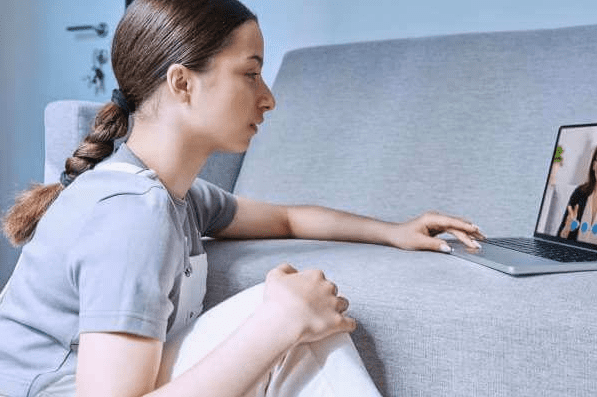
Not all therapy for bipolar disorder looks the same, and that matters whether treatment happens in person or through a screen.
Some online programs use cognitive behavioral therapy, or CBT, which helps people notice patterns in thoughts, emotions, and behavior. A 2023 systematic review and network meta-analysis found that online CBT may help with depressive symptoms in people with unipolar and bipolar spectrum disorders, though the evidence is still developing and the studies were not all designed in the same way. That means the results are encouraging, but not a reason to assume one digital approach works for everyone.
Other virtual services may focus on psychoeducation. This means learning how bipolar disorder tends to work over time, how to recognize early warning signs, why daily routines matter, and how treatment pieces connect. Earlier research on online psychoeducation and mood tracking found these tools can be feasible and useful for some people, particularly when they support insight and regular monitoring.
Some clinicians also incorporate family or caregiver sessions virtually. That can help when loved ones are part of relapse prevention planning, communication support, or day-to-day stability.
Potential benefits of online treatment
The biggest advantage is often consistency. Bipolar disorder can be easier to manage when care is not only available during a crisis, but also steady during the quieter stretches in between. Online therapy may support that kind of continuity.
Possible benefits include:
- easier access to therapy in areas with fewer specialists
- fewer missed appointments because of travel, work, or fatigue
- more frequent check-ins when symptoms need closer monitoring
- support with routines, sleep habits, and mood tracking
- a familiar home setting, which some people find less stressful
For some adults, virtual care also feels more doable at the start. That matters. A treatment option does not have to be perfect to be meaningful; sometimes it just has to be realistic enough to begin.
Research on digital therapy acceptability in other mood disorders suggests many people do find virtual treatment workable and satisfactory. Still, acceptability is not the same as effectiveness in every case, and bipolar disorder brings risks that require more careful clinical judgment than a general talk therapy model may provide.
Limits and risks to understand
Convenience does not remove clinical complexity. Bipolar disorder can involve periods when insight drops, impulsivity increases, or depression becomes heavy enough that keeping appointments feels hard. Those shifts can affect how well virtual care works.
There are also limits that are easy to overlook:
- a therapist may have less access to visual and behavioral cues on screen
- privacy at home may be inconsistent
- technology problems can interrupt sessions
- some platforms are better suited to therapy than medication management
- digital tools may help track mood, but they do not replace a full psychiatric assessment
A useful way to think about this is that online care may expand access, but it does not automatically provide the level of structure every person needs. Reviews of internet-based interventions for bipolar disorder have generally described the field as promising but still mixed, with variation in study quality, program design, and outcomes.
That uncertainty is important. It is more honest, and more useful, to say that virtual care can help some people under the right conditions than to frame it as a universal answer.
Why medication and psychiatric follow-up still matter
Psychotherapy can help with coping, routines, stress, relationships, and early symptom recognition. But bipolar disorder treatment often also involves medication management, because mood episodes can have a strong biological component and may return over time.
Long-term course research continues to show that bipolar disorders often follow a recurring pattern, which is one reason maintenance treatment is so important. Therapy delivered online may complement medication care well, but it usually should not be viewed as a stand-alone substitute for psychiatric treatment when medication is indicated.
This is especially relevant during times of mood elevation. Mania and hypomania can distort judgment in ways that make self-monitoring harder. Someone may feel more energized or productive while people around them notice they are sleeping less, talking faster, spending impulsively, or becoming more irritable. In those moments, a broader treatment team may be safer than therapy alone.
Signs online therapy may be a good fit
Virtual care may make sense when a person:
- has a confirmed diagnosis and is looking for ongoing support
- is medically and psychiatrically stable enough for outpatient treatment
- wants help with coping skills, routines, relapse prevention, or depression symptoms
- can attend sessions regularly and use technology reliably
- has access to psychiatric support for medication when needed
It may also help people who have trouble reaching in-person providers because of distance, transportation, work schedules, or caregiving demands.
To keep this grounded, the best question is usually not “Is virtual care good or bad?” It is “What kind of support do I need right now, and can online treatment safely provide it?”
Signs in-person or higher-acuity care may be better
Online therapy may not be the best fit when symptoms are severe, fast-changing, or hard to monitor remotely. That can include situations where a person is becoming highly activated, severely depressed, unable to sleep for long stretches, disconnected from reality, or unable to function safely at home.
A steady way to approach this is to look at intensity, not preference alone. Some people do very well with telehealth during stable periods and need in-person or more intensive services during flare-ups. That is not a failure of treatment. It is simply a reflection of how bipolar disorder can change over time.
Questions to ask before starting virtual care
Choosing a therapist or program can feel less overwhelming when the questions are concrete. Before starting, it may help to ask:
- Do you have experience treating bipolar disorder specifically?
- How do you handle mood changes that suggest mania, hypomania, or worsening depression?
- Do you coordinate with psychiatrists or prescribing clinicians?
- What is the plan if symptoms escalate between sessions?
- Do you use structured tools like mood tracking or relapse prevention planning?
- Is this service meant to supplement medication care, or replace it?
Those questions can tell you a lot about whether a provider understands the condition beyond general therapy skills.
What realistic progress can look like
Improvement is not always dramatic. In bipolar disorder treatment, progress may look quieter than people expect.
It can mean noticing mood changes earlier. Sleeping on a more regular schedule. Catching the start of an episode sooner. Having fewer missed appointments. Understanding personal triggers better. Repairing some of the confusion that often builds after unstable periods.
When you have a quiet minute, it may help to remember that successful treatment is often about reducing disruption and building steadiness, not chasing a perfect emotional state. That frame can take some pressure off.
Conclusion
Online therapy can play a meaningful role in bipolar disorder treatment, especially for adults who want more accessible, consistent support. It may be most helpful for psychoeducation, coping skills, mood monitoring, routine-building, and ongoing therapy during stable outpatient care.
At the same time, bipolar disorder usually requires a broader view than therapy alone. Medication management, psychiatric follow-up, and flexibility in the level of care still matter. The key point is not whether virtual treatment is inherently better or worse than in-person care. It is whether the format matches the person, the symptom pattern, and the level of support needed right now.
For many people, virtual care is not the whole answer. It may, however, be a practical and valuable part of one.
Safety Disclaimer
If you or someone you love is in crisis, call 911 or go to the nearest emergency room. You can also call or text 988, or chat via 988lifeline.org to reach the Suicide & Crisis Lifeline. Support is free, confidential, and available 24/7.
Author Bio
Earl Wagner is a health content strategist focused on behavioural systems, clinical communication, and data-informed healthcare education.
Sources
- Gutiérrez, G., et al. (2023). Online cognitive behavioral therapy (eCBT) for the management of depression symptoms in unipolar and bipolar spectrum disorders: A systematic review and network meta-analysis. Journal of Affective Disorders. https://doi.org/10.1016/j.jad.2023.09.005
- Gliddon, E., et al. (2017). Online and mobile technologies for self-management in bipolar disorder: A systematic review. Psychiatric Rehabilitation Journal. https://doi.org/10.1037/prj0000270
- Hidalgo-Mazzei, D., et al. (2015). Internet-based psychological interventions for bipolar disorder: Review of the present and insights into the future. Journal of Affective Disorders. https://doi.org/10.1016/j.jad.2015.08.005
- Bilderbeck, A. C., et al. (2016). Psychoeducation and online mood tracking for patients with bipolar disorder: A randomized controlled trial. Journal of Affective Disorders. https://doi.org/10.1016/j.jad.2016.06.064
- Morton, E., et al. (2021). Using apps for bipolar disorder: An online survey of healthcare provider perspectives and practices. Journal of Psychiatric Research. https://doi.org/10.1016/j.jpsychires.2021.02.047
- Czempiel, T. (2025). Long-term courses of bipolar disorders. Der Nervenarzt. https://doi.org/10.1007/s00115-024-01791-6
- Amiot, O., et al. (2024). Prospective acceptability of digital therapy for major depressive disorder: Multicentric real-life study. JMIR Formative Research. https://doi.org/10.2196/53204