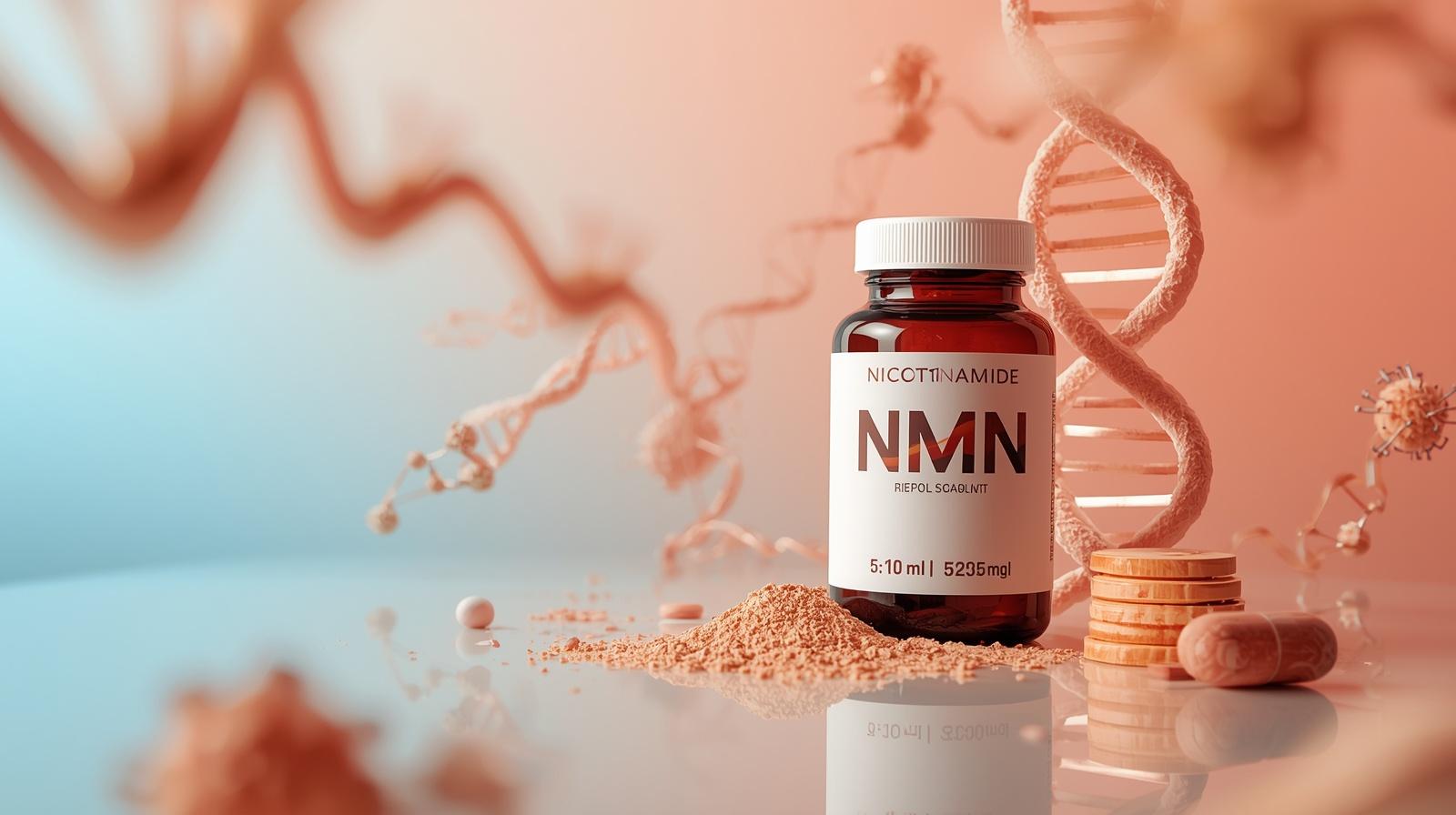
The science of cellular aging has produced few compounds as consistently compelling as nicotinamide mononucleotide. Over the past decade, NMN has moved from laboratory curiosity to one of the most actively researched longevity compounds in human clinical trials. Yet despite growing mainstream awareness, significant confusion remains about what NMN actually does, how to evaluate supplement quality, and how it fits into a broader daily health routine. This guide addresses all three — grounded in peer-reviewed evidence rather than promotional claims.
Understanding NMN: The Biochemistry Behind the Supplement
Nicotinamide mononucleotide is a nucleotide — a class of molecule involved in energy transfer and cellular signaling throughout the body. Its primary biological role is serving as a direct precursor to NAD+ (nicotinamide adenine dinucleotide), a coenzyme present in every living cell and essential to fundamental biological processes.
Why NAD+ Matters More Than Most People Realize
NAD+ is not a peripheral wellness compound. It sits at the center of cellular metabolism, functioning as an electron carrier in the mitochondrial reactions that produce ATP — the energy currency that powers virtually every biological process in the human body. Beyond energy metabolism, NAD+ plays critical roles in:
- DNA repair: PARP enzymes that identify and patch DNA strand breaks require NAD+ as their primary substrate
- Sirtuin activation: The SIRT1–SIRT7 protein family, associated with longevity and metabolic regulation, depends on NAD+ to perform its regulatory functions
- Circadian rhythm maintenance: Clock genes governing sleep-wake cycles and metabolic timing rely on NAD+ cycling for accurate biological timekeeping
- Inflammatory regulation: NAD+-dependent pathways influence the body’s inflammatory response at the cellular level
The critical problem is that NAD+ levels decline substantially with age, falling by approximately 50% between the ages of 40 and 60 in most human studies. This decline correlates with reduced mitochondrial efficiency, impaired DNA repair, sirtuin downregulation, and the broad physiological deterioration associated with biological aging.
How NMN Addresses NAD+ Decline
NMN enters the NAD+ salvage pathway — a metabolically efficient recycling route that rebuilds NAD+ from existing molecular components. This pathway is more direct than synthesizing NAD+ from dietary tryptophan or niacin, which requires multiple additional enzymatic steps before reaching the same endpoint. Human pharmacokinetic studies confirm that oral NMN supplementation produces measurable increases in blood NAD+ levels within one to two hours of ingestion, with tissue-level saturation building over weeks of consistent use.
Evaluating a Nicotinamide Mononucleotide Supplement: What Quality Actually Looks Like
The NMN supplement market has expanded rapidly, and product quality varies enormously. Understanding what separates a scientifically credible product from a poorly formulated one is essential knowledge for any informed consumer.
Purity Verification Through Independent Testing
NMN purity is measured by HPLC (high-performance liquid chromatography) analysis. Reputable products achieve purity levels of 98% or above, verified by third-party laboratories independent of the manufacturer. A certificate of analysis from an accredited external lab is the only reliable verification method — self-reported purity claims carry no independent evidentiary weight.
Clinically Meaningful Dosing
Human clinical trials have studied NMN doses ranging from 250 mg to 900 mg daily, with safety confirmed across this range in published research. Products that list “NMN complex” without specifying elemental content, or that conceal dosing within proprietary blends, make it scientifically impossible to determine whether the amount delivered falls within a research-supported range.
Bioavailability Considerations
Standard oral capsule delivery is the most common and well-studied NMN administration method. Some manufacturers offer sublingual formulations claiming enhanced absorption by bypassing first-pass hepatic metabolism. The comparative evidence for sublingual superiority remains mixed, though it represents a legitimate area of active investigation. Fat-soluble carrier systems and liposomal encapsulation are also being explored to improve cellular uptake.
Stability and Storage Requirements
NMN is hygroscopic and degrades under heat and humidity. Moisture-resistant packaging, appropriate encapsulation technology, and clear storage guidance are functional quality requirements — not optional product features. A thorough, evidence-based evaluation of what distinguishes a high-quality nicotinamide mononucleotide supplement from lower-standard alternatives provides the scientific framework needed to make genuinely informed purchasing decisions.
NMN in a Daily Routine: Practical Integration Considerations
Understanding the science of NMN is useful only when it translates into consistent, practical supplementation behavior. How NMN fits into existing daily habits — and how it interacts with other commonly used compounds — matters as much as the biology itself.
Timing and Circadian Alignment
NAD+ biosynthesis follows a circadian pattern, with activity peaking during daylight hours. Morning NMN supplementation aligns with this biological rhythm, supporting natural NAD+ cycling rather than working against it. Some users report mild sleep disruption when taking NMN in the evening, which is consistent with its influence on circadian-regulating pathways.
NMN and Morning Coffee: A Practical Consideration
Many NMN users also incorporate creatine into their supplement protocols — a logical combination given creatine’s well-documented cognitive and physical performance benefits, which complement NMN’s cellular energy support. A common practical question arises around morning routines: specifically, whether mixing creatine with coffee affects its stability or absorption. This question has more scientific nuance than most assume. A detailed, evidence-led answer to whether can you put creatine in coffee affects the compound’s efficacy is worth understanding before making assumptions about your morning stack.
Synergistic Compounds Worth Considering
NMN does not operate in biological isolation. Several compounds address complementary aspects of NAD+ biology and are frequently co-administered in research-aligned protocols:
TMG (Trimethylglycine): NMN metabolism consumes methyl groups as a biochemical byproduct. TMG supplementation at 500–1,000 mg maintains methylation balance and prevents homocysteine accumulation — an important cardiovascular consideration.
Apigenin: A natural flavonoid that inhibits CD38, an enzyme that degrades NAD+ and becomes progressively more active with age. By reducing NAD+ breakdown, apigenin effectively extends the functional half-life of NAD+ produced through NMN supplementation.
Magnesium: A required cofactor in ATP synthesis and over 300 enzymatic reactions. Adequate magnesium status removes a critical downstream bottleneck in the energy infrastructure that NMN helps build.
Resveratrol: Activates SIRT1 through a mechanism that requires NAD+ availability. Often described as the functional complement to NMN — one provides the substrate, the other activates the enzyme that uses it.
For those looking for a formulation that addresses multiple aspects of this pathway in a single product, a dedicated NAD+ level support formula can simplify the supplementation stack — combining the key cofactors and precursors that support sustained NAD+ production without the complexity of sourcing and dosing each compound separately.
Building a Protocol Around NMN: Key Principles
Start with baseline testing: Serum vitamin D, RBC magnesium, metabolic panel, and inflammatory markers (hsCRP, IL-6) establish a data-driven baseline that allows protocol adjustments to be guided by evidence rather than guesswork.
Introduce compounds sequentially: Adding NMN alongside multiple new supplements simultaneously makes it impossible to attribute observed changes — positive or negative — to any specific compound.
Prioritize consistency: NAD+ restoration operates on a chronic biological timescale. Daily supplementation maintained over three to six months produces better outcomes than short-term, high-dose experimentation.
Support with lifestyle practices: Intermittent fasting, high-intensity exercise, and quality sleep independently stimulate NAD+ biosynthesis through AMPK activation and mTOR suppression. NMN supplementation is most effective when layered onto these foundational practices rather than used as a substitute for them.
FAQ
What dose of NMN is supported by human clinical research? Published human trials have examined doses from 250 mg to 900 mg daily, with safety confirmed across this range. A 2021 study in Nature Aging demonstrated that 250 mg daily produced measurable NAD+ elevation in healthy older men. Higher doses show proportionally greater NAD+ increases in some tissues. The optimal dose for specific outcomes remains an active area of research, and individual variation in response is significant.
How long does NMN supplementation take to produce measurable effects? Blood NAD+ levels rise within one to two hours of a single dose. Sustained tissue-level elevation requires weeks of daily supplementation. Objectively measurable improvements in biomarkers — inflammatory markers, metabolic parameters, physical performance indicators — typically emerge over three to six months of consistent use. Subjective improvements in energy and cognitive clarity are sometimes reported earlier, though these are difficult to separate from placebo effects without controlled conditions.
Can NMN be taken safely alongside prescription medications? NMN has a favorable safety profile in published research, but interactions with specific medications have not been comprehensively studied. Individuals taking medications that affect NAD+ metabolism, methylation pathways, or mitochondrial function should consult a qualified healthcare provider before beginning NMN supplementation. This is a general precaution applicable to most active supplements rather than a specific contraindication.
Is NMN supplementation necessary if dietary NAD+ precursor intake is adequate? Dietary sources of NAD+ precursors — including niacin from meat, fish, and legumes — support baseline NAD+ synthesis but rarely compensate for the age-related decline documented in research. The concentrations of NMN found in food sources such as edamame and broccoli are orders of magnitude below the doses studied in clinical trials. For individuals specifically targeting NAD+ restoration as a longevity intervention, dietary intake alone is generally insufficient.
Conclusion
Nicotinamide mononucleotide occupies a well-earned position in evidence-based longevity science. Its mechanism is clear, its safety profile is well-characterized across multiple human trials, and its biological target — NAD+ decline — is one of the most robustly documented hallmarks of cellular aging. What determines whether supplementation produces meaningful outcomes is the quality of the product chosen, the consistency of the protocol followed, and the broader lifestyle and nutritional context in which it operates. Approaching NMN with scientific literacy rather than marketing credulity is the most reliable path to genuine benefit.