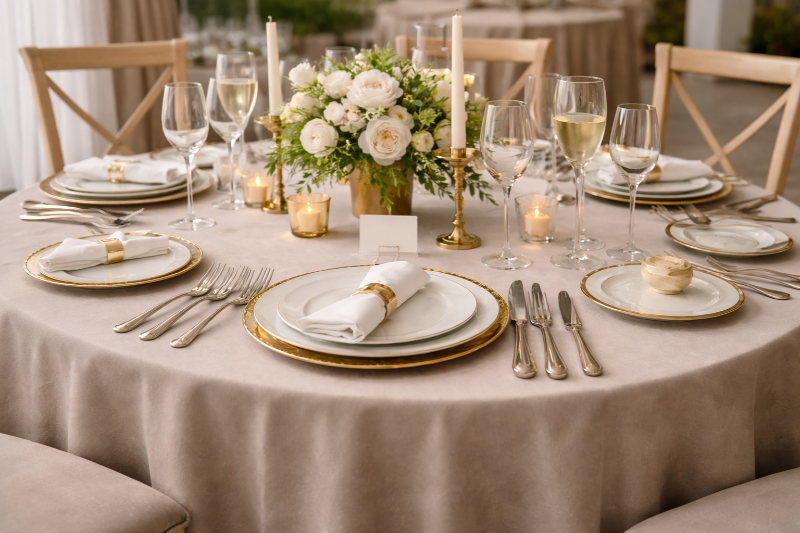
Elegant dining is more than serving exceptional food it is about creating an experience. Formal Table Settings remain essential in refined dining environments because they communicate respect, organization, and attention to detail. For event planners, hospitality professionals, wedding organizers, and home entertainers, the table is the first visual impression guests receive. Consequently, a properly arranged table sets expectations before the first course is served.
Moreover, formal arrangements provide structure and clarity. When guests immediately recognize where each utensil and glass belongs, they feel more comfortable and confident navigating multiple courses. This eliminates uncertainty and enhances the overall dining flow. Therefore, understanding Formal Table Settings is not simply about tradition it is about guest psychology, comfort, and service efficiency.
Culturally, table etiquette carries historical and social significance. From European fine dining customs to modern luxury events, structured place settings symbolize refinement and hospitality. However, contemporary hosts are blending tradition with innovation, ensuring that Formal Table Settings evolve while maintaining their timeless sophistication.
Understanding the Complete Structure of Formal Table Settings
A formal setting follows a precise layout designed for multi-course meals. Each element has a designated position, ensuring symmetry and seamless service progression.
1. Charger Plate Placement
The charger (also called a service plate) forms the foundation of the setting. It is placed directly in front of the chair, centered with the table edge.
-
Distance from table edge: 1 inch
-
Removed: before the main course is served (unless decorative only)
-
Purpose: anchors the design and protects linens
Charger plates enhance visual symmetry and elevate the perceived luxury of the table.
2. Dinner and Salad Plate Positioning
-
The dinner plate sits centered on top of the charger.
-
The salad plate may be placed atop the dinner plate if served first.
-
For plated service, plates may arrive course-by-course instead.
Spacing between place settings should be 24 inches per guest to maintain comfort.
3. Bread Plate Placement
The bread plate is positioned:
-
Upper left of the dinner plate
-
Above the forks
-
Butter knife placed horizontally across the bread plate
This placement prevents confusion between neighboring guests.
4. Napkin Folding Styles
Napkins add personality and structure. Placement options include:
-
On the charger plate (classic)
-
To the left of forks (traditional)
-
Inside a water glass (modern variation)
Popular folds:
-
Bishop’s Hat
-
Pocket Fold (for menu insert)
-
Classic Rectangle
-
Rose Fold (wedding settings)
However, overly complex folds may delay service. Elegance often lies in simplicity.
Cutlery Order and the Outside-In Rule
The most important principle: Utensils are used from the outside in.
-
Forks: placed to the left
-
Knives and spoons: placed to the right
-
Knife blades: face inward toward the plate
Standard Arrangement
Left side:
-
Salad fork (outermost)
-
Dinner fork
Right side:
-
Soup spoon (outermost)
-
Fish knife (if applicable)
-
Dinner knife
Dessert utensils:
-
Placed horizontally above the plate
-
Spoon facing left
-
Fork facing right
-
Symmetry and alignment are crucial. All utensil bottoms should align evenly.
Cutlery & Glassware Placement Guide
| Item | Position | Purpose | Usage Order |
|---|---|---|---|
| Salad Fork | Left, outermost | Salad course | First fork used |
| Dinner Fork | Left, inner | Main course | After salad |
| Soup Spoon | Right, outermost | Soup course | First spoon used |
| Dinner Knife | Right, inner | Main course cutting | After soup |
| Fish Knife | Right, between spoon & knife | Fish course | Before main course |
| Dessert Spoon | Above plate | Dessert | After main |
| Dessert Fork | Above plate | Dessert | After main |
| Water Glass | Top right, closest | Water service | Throughout meal |
| Red Wine Glass | Right of water | Red wine | With main |
| White Wine Glass | Slightly lower/right | White wine | With fish |
| Champagne Flute | Behind wine glasses | Toasting | As served |
For readers who want a deeper understanding of proper fork, knife, and spoon placement, our formal dining cutlery guide explains each piece in greater detail.
Glassware Alignment and Positioning
Glassware is positioned:
-
Top right corner of the setting
-
1 inch above the knife tip
-
Arranged in order of use
Standard arrangement:
-
Water goblet
-
Red wine glass
-
White wine glass
-
Champagne flute (if applicable)
However, avoid overcrowding. For smaller tables, reduce glassware accordingly.
Place Cards and Personalization
Place cards are essential for:
-
Weddings
-
Corporate dinners
-
Diplomatic events
Placement:
-
Centered above the charger
-
Or above dessert utensils
Therefore, they must be legible and aligned with the overall aesthetic.
Centerpiece Etiquette
Centerpieces enhance visual impact but must follow etiquette guidelines:
-
Height under 12 inches or above 24 inches
-
No obstruction of sightlines
-
No overpowering fragrance
Candles add warmth. However, lighting should remain soft and balanced.
Spacing and Symmetry Rules
Proper spacing ensures comfort:
-
24 inches per guest
-
2 inches between utensils
-
Glassware aligned uniformly
Consequently, guests enjoy freedom of movement without feeling crowded.
Table Linen Selection
Linen quality defines sophistication.
Recommended fabrics:
-
High-thread-count cotton
-
Linen blends
-
Damask
Color considerations:
-
White or ivory for traditional elegance
-
Neutral tones for modern luxury
-
Deep jewel tones for dramatic events
Tablecloth should drop 8–12 inches from table edge.
Lighting Considerations
Lighting transforms atmosphere.
-
Use warm white tones
-
Combine candles and soft overhead lighting
-
Avoid harsh LED glare
Moreover, lighting should complement centerpiece height and reflective surfaces.
Formal vs Semi-Formal vs Informal Comparison
| Setting Style | Number of Utensils | Glassware Count | Typical Occasions | Complexity Level |
|---|---|---|---|---|
| Formal | 6–8+ | 3–4 | Weddings, galas, state dinners | High |
| Semi-Formal | 4–6 | 2–3 | Receptions, upscale dinners | Medium |
| Informal | 3–4 | 1–2 | Casual dinners, home meals | Low |
Therefore, choosing the correct level depends on event tone and service style.
Practical Tips for Event Professionals
-
Set tables after chairs are placed for alignment accuracy.
-
Polish glassware before guests arrive.
-
Maintain consistent spacing across the entire room.
-
Conduct a visual check from guest eye-level.
-
Keep extra flatware discreetly accessible for staff.
Common Mistakes to Avoid
-
Overcrowding the table
-
Misaligned cutlery bottoms
-
Incorrect glassware sequence
-
Blocking guest views with tall centerpieces
-
Using wrinkled linens
However, minor imperfections can be corrected easily with proper rehearsal and attention to detail.
Modern Variations of Traditional Etiquette
Contemporary hospitality blends structure with creativity:
-
Colored chargers instead of silver
-
Minimalist flatware for luxury modern events
-
Textured napkins
-
Mixed-metal cutlery
-
Menu cards integrated into napkin folds
Moreover, sustainability trends are influencing tableware choices, including reusable linens and eco-friendly materials.
How Hospitality Trends Are Shaping Formal Table Settings?
Luxury hospitality now emphasizes personalization. Guests expect curated experiences rather than rigid traditions. Therefore, planners adapt Formal Table Settings to reflect brand identity, cultural themes, or seasonal aesthetics.
In contemporary homes, hosts simplify multi-course settings while maintaining structure. Boutique hotels incorporate artisanal tableware. Wedding planners mix classic chargers with modern glassware. Consequently, the future of Formal Table Settings lies in balancing heritage with innovation.
As experiential dining continues to grow, presentation becomes part of storytelling. The table is no longer just functional it is immersive.
FAQ
How many utensils are necessary in Formal Table Settings?
Typically 6–8 utensils for multi-course meals. However, fewer may be used depending on the menu.
What are proper spacing rules?
Allow 24 inches per guest, align utensils evenly, and position the charger 1 inch from the table edge.
What is the difference between American and European styles?
American style places the fork in the left hand and knife in the right, switching after cutting. European style keeps utensils in their original hands throughout the meal.
When should chargers be used?
Chargers are used at formal dinners, weddings, and galas. They remain until the main course and enhance visual presentation.