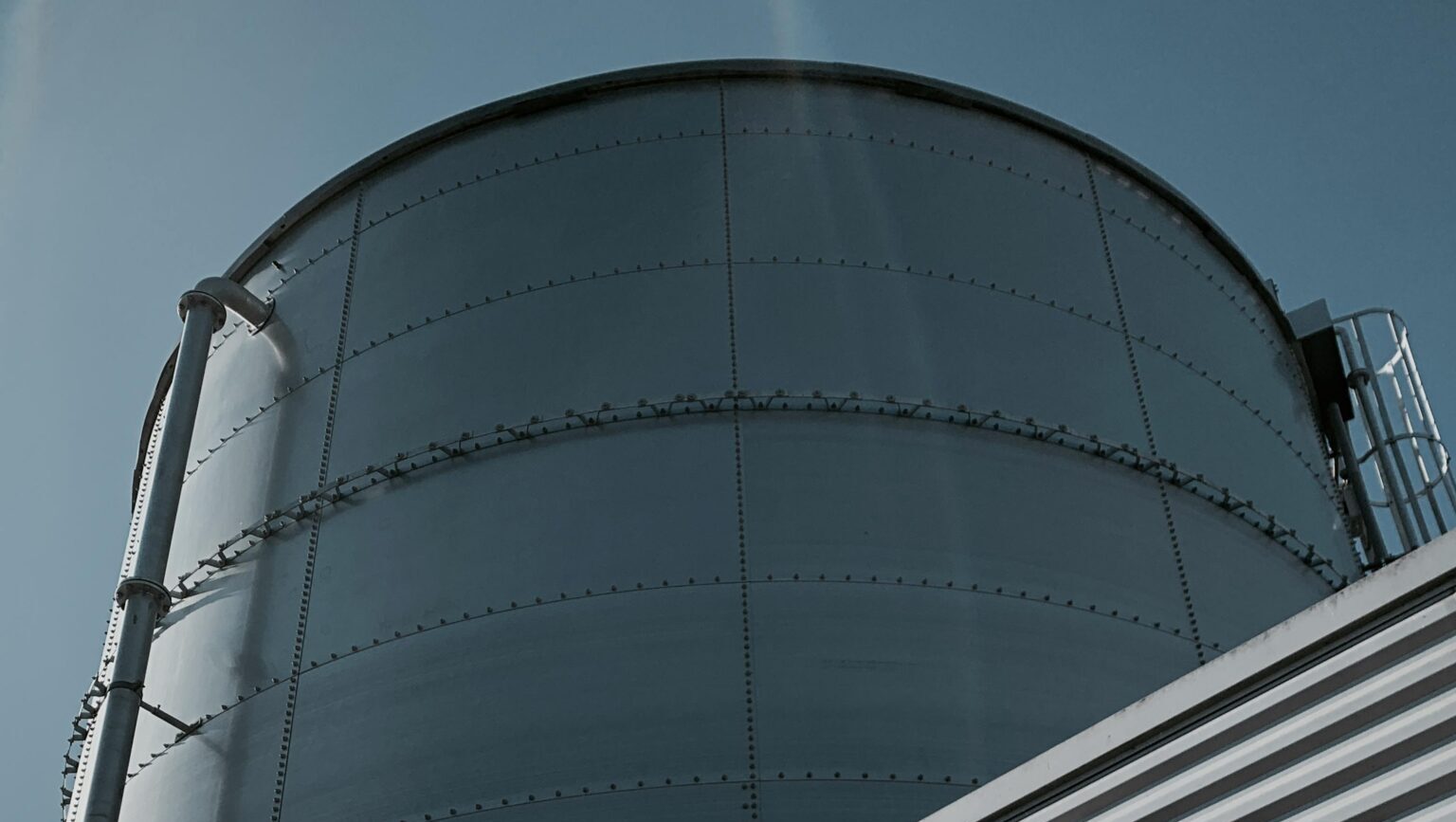
A bolted steel tank is a sealed vessel built from prefabricated steel panels that bolt together on site. You will see them used for potable water, wastewater, industrial liquids, and other stored products that need reliable containment. They look simple from the outside, yet the engineering and logistics behind them matter as much as the steel.
This guide explains the full lifecycle in plain terms. You will see what “panelised” really means, how engineers size and protect the tank, how the kit ships, how crews assemble it, and what ownership looks like after commissioning.
What a Bolted Steel Tank Is and Why Panelised Matters
A bolted steel tank arrives as factory-made components and becomes a finished tank at your location. “Panelised” means the shell is formed from individual steel plates that are manufactured and prepared in controlled conditions. Those plates align on a foundation and join with bolts, gaskets, and sealant to create a leak-resistant structure.
Panelised delivery changes project constraints. It supports faster deployment because fabrication and coating happen before the site build starts. Capacity can scale by adding courses or changing the diameter, within design limits. Shipping becomes more predictable, too, since the load breaks into manageable panels rather than a single welded vessel. Many owners start their research at tarscoboltedtank.com to see what a modern kit-based approach includes and how projects sequence in the field.
How Engineers Design Panelised Tanks
Design begins with inputs you care about day one and year twenty. Engineers define the stored product, operating temperature, and required capacity, then match those to the site environment. Wind and seismic loads drive shell thickness, bolt patterns, and anchorage. Corrosion risk shapes material choices, coating type, roof details, and venting.
Standards and verification support predictable performance. Many water projects reference AWWA D103 bolted steel tank guidance for design, construction, inspection, and testing expectations. That does not replace local codes, but it gives a common baseline. Coatings sit inside the design process, not at the end. A factory-coated bolted steel tank often uses controlled application methods to improve consistency. Options include fusion-bond powder systems and a glass-fused-to-steel (GFS) bolted tank finish, selected to match chemistry, abrasion, and service life targets.
How Tanks Are Manufactured and Packed for Shipping
At the factory, panels are cut, formed, and drilled so the field fit-up stays tight. Coatings are applied and cured under controlled conditions when the specification calls for factory finishing. Quality checks can include thickness verification, holiday testing for linings, and dimensional inspections that reduce surprises on site.
The shipment is organised as a “tank kit,” not a pile of steel. You typically receive bolted tank panels, hardware, gaskets, sealant, roof components, manways and nozzles, ladders and platforms, and the drawings that guide assembly order. The kit concept helps remote projects because it simplifies transport and staging. Panels ship efficiently, then crews assemble with smaller lifting equipment than many welded builds require. Clear packing lists and labelled pallets also shorten the start-up phase once trucks arrive.
On-Site Assembly From Foundation to Testing
Field work starts with the base, not the panels. Crews verify foundation dimensions, level tolerance, and anchor placement, then lay out the first ring. From there, assembly proceeds in a controlled pattern so the shell stays round and plumb. Seal integrity depends on the disciplined installation of the bolted tank gasket and sealant system and consistent bolt torque values.
A typical bolted tank installation follows a simple sequence:
- Verify the foundation, anchors, and embedded piping sleeves.
- Set the base ring and align the first shell ring.
- Assemble additional rings course by course with defined bolt patterns.
- Place gaskets and sealant as specified, then complete seam checks.
- Install the roof, vents, and access hardware, then fit appurtenances.
- Perform visual inspection and leak or water testing per the project spec.
Commissioning confirms readiness for service. Testing methods vary by stored product and project requirements, but the goal stays the same. Crews document inspections, torque checks, and test outcomes so the owner has a clear baseline for operations.
What Ownership Looks Like After Install
Service life depends on the environment, coating choice, and inspection discipline. Many tanks run for decades with routine checks and timely touch-ups. The first issues usually come from neglected details, not from the concept of panelised construction. Common problem areas include damaged coatings from impact, roof penetration leaks, clogged vents, and settlement that stresses joints.
A steady maintenance rhythm keeps the work manageable. Use the table below as a practical starting point, then adjust based on stored product and site conditions.
| Checkpoint | What to look for | Typical cadence |
| Exterior walk-around | New rust spots, coating chips, signs of impact | Monthly to quarterly |
| Seams and bolts | Loose hardware, staining near joints, and missing caps | Quarterly |
| Roof and penetrations | Leaks, degraded sealant, water pooling | Quarterly and after storms |
| Vents and overflows | Blockage, insect nests, damage, poor airflow | Quarterly |
| Ladders and platforms | Loose fasteners, corrosion, slip hazards | Semi-annually |
| Foundation and settlement | Cracks, uneven bearing, drift from level | Semi-annually to annually |
| Interior condition | Coating wear, corrosion, sediment, and liner condition | Annually or per process needs |
| Cleaning and disinfection | Build-up, biofilm risk, product residue | As required by the service |
Owners also decide who does what. In-house teams often handle routine checks and basic housekeeping. Specialist contractors can support deeper inspections, repairs, and coating work when risk or downtime matters. Some operators lean on firms like Tarsco Bolted Tanks for installation support or maintenance programmes when they want consistent QA and a clear lifecycle plan on larger assets.
A panelised tank works best when the whole chain stays aligned. Good inputs drive good design, good kits drive smoother builds, and good habits protect the system after handover. If you treat inspection as part of operations, the tank becomes a stable utility, not a recurring project.