Few leaders step into public service with the rare combination of surgical precision, intellectual curiosity, and a deeply personal reverence for life. In this exclusive conversation, I sat down with newly appointed FDA Commissioner Dr. Marty Makary to explore the experiences that shaped his worldview — from growing up between cultures in England, Egypt, and rural Pennsylvania, to spending decades in operating rooms at Johns Hopkins, to ultimately receiving the call to serve at the highest level of American health leadership.
Over fresh-pressed juice in his Florida home, Dr. Makary spoke candidly about questioning long-held medical assumptions, reforming food policy, accelerating drug approvals, reducing animal testing through AI innovation, and bridging the divide between natural and conventional medicine. He reflected on the near-miss moment before his birth that profoundly shaped his gratitude for life, the books that caught the attention of a U.S. President, and the faith and integrity that guide decisions impacting millions.
This is a conversation about prevention, purpose, and the future of health in America — through the lens of a physician who believes that how we live is just as important as how we treat disease.
Early Life & Global Perspective
Liana Werner-Gray: Your story didn’t begin in the United States. You were born in England, and grew up with strong ties to Egypt. Can you tell us about that experience and how it shaped your views on food, health, and medicine?
Dr. Makary: I was born in Liverpool, England. not during the Beatles, but after they were big. My family is originally from Egypt. I didn’t live there full-time, but I spent summers there and studied there briefly.
Growing up, I developed what’s known as a “third culture kid” mindset, where your ethnicity, where you were born, and where you grow up are all different. It gives you a sense of being a guest in society.
That perspective makes you hyper-observant. You compare cultures instinctively, how people eat, how families live, how they approach health. Third culture kids often take non-traditional paths. Elon Musk and Albert Einstein were both third culture kids. You are a third culture kid. About half of primary care physicians in the U.S. are third culture kids.
In medicine, that perspective pushed me toward research. I was always asking “why.” Why is puberty starting months earlier each generation? Why do some people have blackened lungs simply from living in cities? Why are those questions dismissed so quickly? That curiosity pulled me toward unexplored areas of medicine.
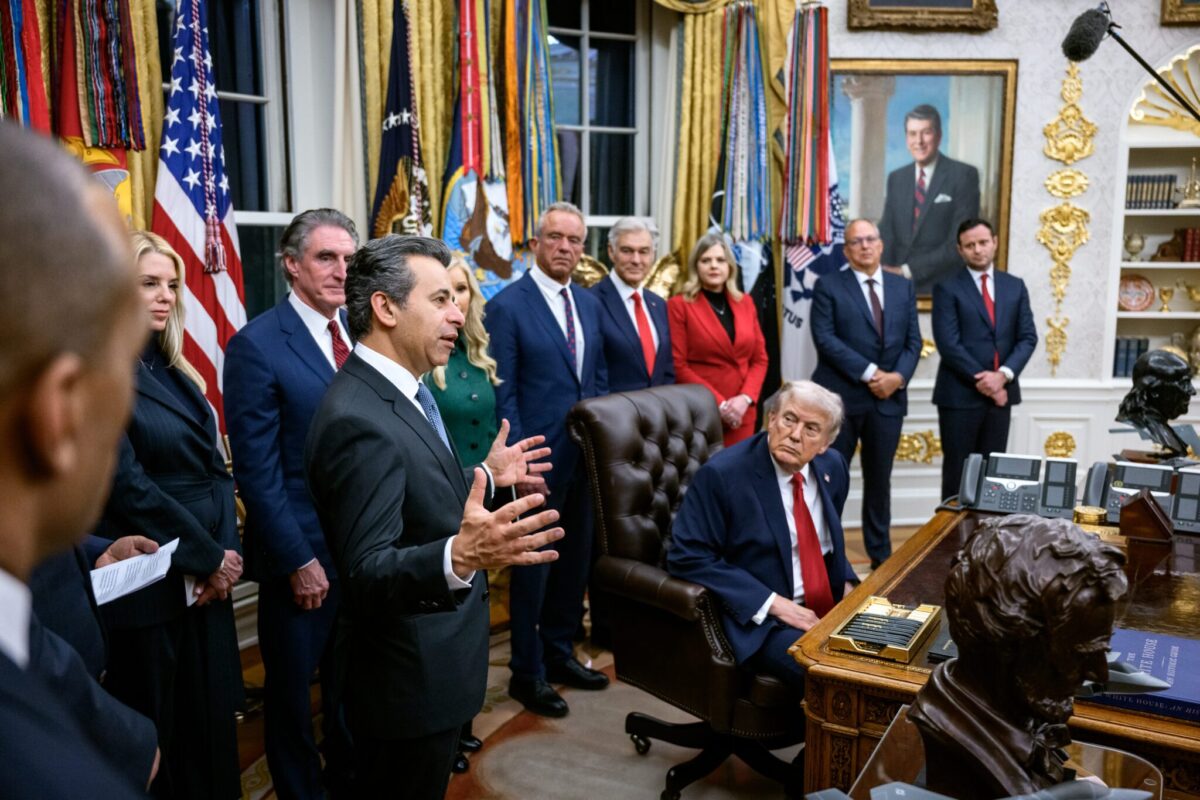

Questioning Medical Assumptions
Liana Werner-Gray: You’ve spoken often about questioning long-held assumptions in medicine. Can you expand on that?
Dr. Makary: There are many areas in medicine we do not explore deeply enough: food, mindset, community, spirituality. One study out of Harvard really challenged conventional thinking: lung cancer patients randomized to a close, supportive community lived longer than those receiving standard chemotherapy.
That kind of data forces us to rethink assumptions. It suggests there are vast domains of health we haven’t fully explored yet.
The Choice That Almost Changed Everything
As we spoke about purpose, service, and the weight of decisions in medicine, Dr. Makary paused and shared a deeply personal story, one that underscores his reverence for life and the gravity with which he approaches his role.
Dr. Makary: When my mother was pregnant with me, a woman approached her and said she had tested positive for rubella. Because she had previously been in contact with my mother, she wanted her to know. Rubella is known to cause birth defects.
Doctors in the UK consulted and advised my parents to bring her in for an abortion. My parents said no.
I only learned this later in life, and it made me even more profoundly grateful to be alive. It puts everything into perspective. One decision can change everything.
Liana Werner-Gray: That choice changed history. We wouldn’t be sitting here today. You wouldn’t be FDA Commissioner.
Dr. Makary: It really is humbling.
Coming to America & Public Service
Liana Werner-Gray: What brought you to America, and what drew you to medicine and public health here?
Dr. Makary: The opportunities in the United States are unmatched. My parents immigrated here for that reason. I grew up in a very small rural town in Pennsylvania, about 16,000 people, no mall, no movie theater.
Through hard work and incredible teachers, I graduated from great schools and later joined the faculty at Johns Hopkins. I’m deeply grateful to this country. Serving as FDA Commissioner feels like a way to give back.
Florida, Delray Beach & Lifestyle
Liana Werner-Gray: Out of all places, why Florida, and specifically Delray Beach?
Dr. Makary: We don’t live there full-time, but we love visiting. Delray Beach is relaxed yet sophisticated. It’s a great beach town with excellent food and live music, and we have family nearby.
It doesn’t feel transient. It feels like a real community.
Liana Werner-Gray: Studies even show that just seeing palm trees helps people relax, even in photos. What does a perfect Florida day look like for you?
Dr. Makary: Great restaurants, live music, walking the Ave, and connecting with local people. It truly feels like a community.
Liana Werner-Gray: Do you have a favorite restaurant in Delray?
Dr. Makary: It used to be Lionfish, but they recently closed. Now I’d say an Italian restaurant called L’Acqua. We also love Farmhouse, they do a great job sourcing their ingredients and serving healthy food.
You’ll be glad to know that Dr. Makary’s favorite local restaurants align with clean-eating values. I checked directly with the kitchens, and Gary Rack’s Farmhouse Kitchen confirmed they use olive oil for sautéing and beef tallow in their fryer, no seed oils.
Leadership, Faith & Values
Liana Werner-Gray: What core values guide you when making decisions that affect millions of people?
Dr. Makary: Integrity is essential. If you don’t care, the job is easy. If you truly care about public health, especially children, it’s incredibly challenging.
My faith is very important to me. I value my church community. I’m also keenly aware that life is transient. None of us will be here in 100 years. The question becomes: did we serve humanity or just ourselves?
Healthcare is uniquely unifying. Whether you’re a nurse, researcher, food producer, or physician, we’re all driven by compassion. That’s how the FDA should think about innovators, we all want safe, effective treatments.
One Year as FDA Commissioner: Top Achievements
Liana Werner-Gray: Looking back on your first year, what are your top three achievements?
Dr. Makary:
- Cutting red tape to unleash cures. We’ve created new pathways to approve drugs in weeks. We need the same urgency used in Operation Warp Speed to tackle cancer, neurodegenerative diseases, autoimmune conditions, and PTSD. My background in pancreatic cancer, one of the hardest cancers to treat, gave me a deep sense of urgency.
- Reforming food policy and the food pyramid. Updating outdated nutrition guidance is critical for prevention.
- Reducing animal testing and using AI. We’re embracing more humane, accurate research models.
Other major initiatives include advancing menopausal hormone replacement therapy, removing artificial food dyes, and modernizing FDA oversight across food, drugs, devices, and technology.
Career Journey & Preparation
Liana Werner-Gray: Your career spans surgery, research, food systems, and public health. How did it prepare you for this role?
Dr. Makary: You can’t train specifically to be FDA Commissioner. But my curiosity prepared me.
I spent 22 years at Johns Hopkins, over 30 years in operating rooms, and worked across nearly every medical discipline. I also served as Chief Medical Officer for a major grocery company, where I learned about food production, meat, dairy, poultry, sourcing.
At the time, people teased me for my broad interests. Looking back, all of it mattered.



Energy, Gratitude & Health
Liana Werner-Gray: Where do you get your energy?
Dr. Makary: Gratitude. I’m grateful for my wife, who fuels me with healthy food, for the opportunities I’ve had, and for life itself. When you reach the top of academic medicine, you begin asking: what has the greatest impact?
The Books That Put Him on the President’s Radar
Liana Werner-Gray: Few people can say their books changed the course of their life. Yours ultimately led to a call from the President. How did it all begin?
Dr. Makary: I started sharing stories from my experience as a student and resident. usually over dinner with friends. I’d be exhausted, but for as long as I could stay awake, I would tell these stories. A friend told me, “You should write them down.” They weren’t just stories for entertainment, they revealed deeper issues in the American healthcare system.
So I wrote the first book to get it all down, not expecting much, there are over 100,000 books published each year. But to my amazement, it gained grassroots momentum, became a New York Times bestseller, and was later turned into the TV show The Resident, which ran for four seasons on Fox. That book also included my work developing the surgical checklist, which was adopted widely, including by the World Health Organization.
After years of speaking about quality in healthcare, I realized another major issue we weren’t addressing enough: the price of healthcare, how high it is and how opaque it is. So I wrote a second book, The Price We Pay, focusing on price transparency and the role of middlemen like pharmacy benefit managers.
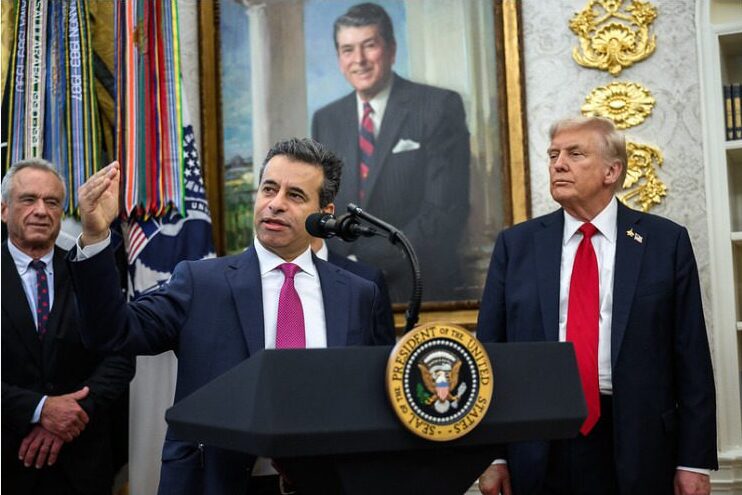
Someone at the White House read it, and during the first Trump administration I was invited in to talk about price transparency. The President and his team liked the idea, signed an executive order, and that helped kick off a broader effort around hospital price transparency and healthcare costs.
Those relationships carried forward. Shortly after election day, I got a call, and the President asked if I would consider serving as FDA Commissioner. I said yes right away. It’s an incredible opportunity.
Prevention, Natural Health & Open-Minded Medicine
Liana Werner-Gray: Where do you stand on prevention, natural health, and functional medicine?
Dr. Makary: There’s been an unfortunate standoff between natural and conventional medicine. We need open-mindedness. Absence of evidence is not evidence of absence.
We must listen to patients and parents. When families report improvements, like when removing artificial food dyes, that’s data. It deserves study, not dismissal.
I believe in prevention, functional approaches, and modern medicine. I’ve seen miracles from all of them.
Rapid-Fire Questions
Liana Werner-Gray: Favorite real foods?
Dr. Makary: Nuts, oats, coconut, eggs, and fresh cold-pressed juices.
Liana Werner-Gray: Coffee or tea?
Dr. Makary: Tea, usually chamomile.
Liana Werner-Gray: Must be the British roots. Early mornings or late nights?
Dr. Makary: Both.
Liana Werner-Gray: Broccoli or carrots?
Dr. Makary: Carrots, baked and soft.
Liana Werner-Gray: Steak or salmon?
Dr. Makary: Steak.
Liana Werner-Gray: Beach walk or city stroll?
Dr. Makary: Beach walk.
Liana Werner-Gray: If not medicine or public service?
Dr. Makary: I originally planned to be a missionary doctor.
Liana Werner-Gray: Favorite color?
Dr. Makary: Blue.
Liana Werner-Gray: Favorite day of the week?
Dr. Makary: Sunday.