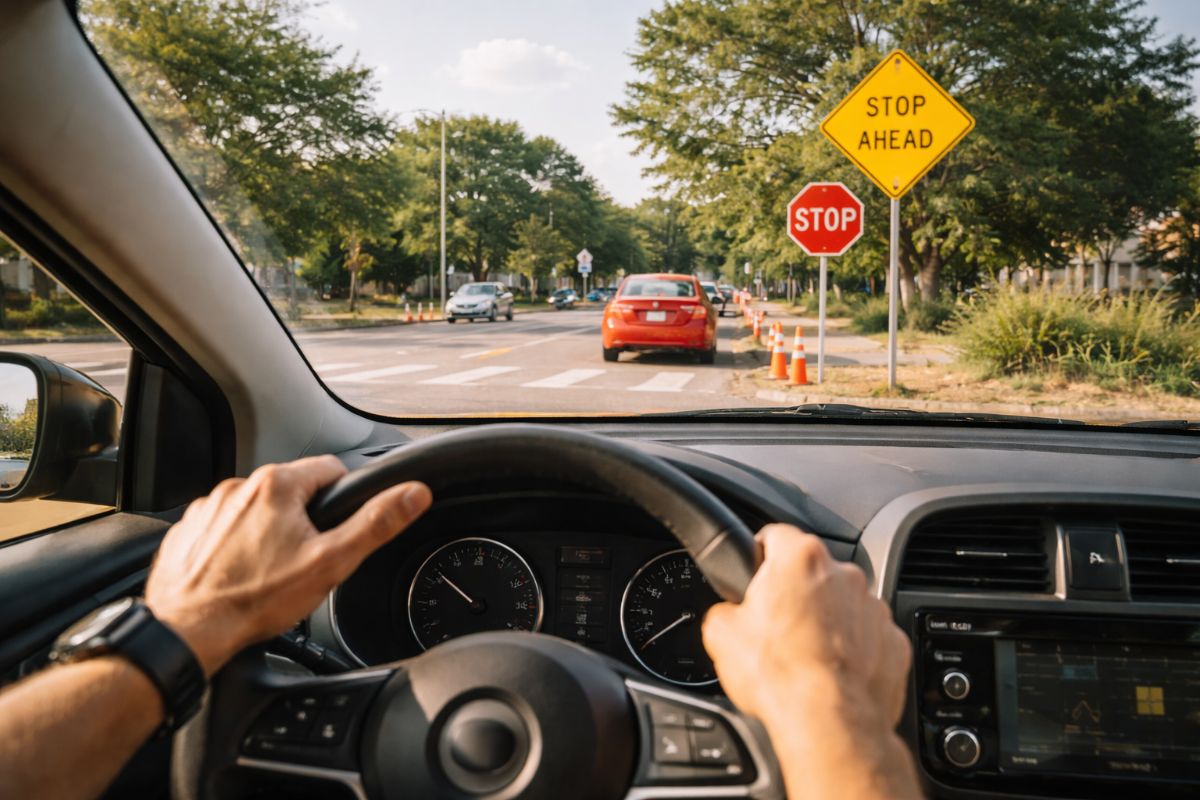
Every day, millions of commuters take to the roads assuming they will arrive safely. However, statistics from organizations like the World Health Organization consistently show that road traffic injuries remain one of the leading causes of death worldwide. The good news is that practical Road Safety Tips can dramatically reduce accident risks when applied consistently and consciously.
Whether you are a new driver learning the fundamentals, a seasoned commuter navigating rush-hour congestion, or a driving instructor shaping responsible motorists, understanding and applying effective Road Safety Tips can prevent collisions before they occur. Safe driving practices are not complicated but they do require awareness, discipline, and proactive thinking.
Moreover, accident prevention strategies go beyond simply obeying traffic laws. They involve defensive driving techniques, traffic awareness tips, and vehicle preparedness. Consequently, drivers who internalize these principles not only protect themselves but also safeguard passengers, pedestrians, and fellow motorists.
1. Master Defensive Driving Techniques
Defensive driving is the foundation of modern road safety. It involves anticipating potential hazards and reacting proactively rather than reactively.
Key Defensive Driving Principles
-
Stay alert at all times – Avoid distractions such as mobile phones or multitasking.
-
Scan the road ahead – Look 10–15 seconds forward to identify possible hazards.
-
Expect the unexpected – Assume other drivers may make mistakes.
-
Maintain emotional control – Avoid aggressive or impulsive responses.
Defensive driving techniques reduce reaction time and improve decision-making under pressure. Therefore, drivers who adopt these habits are less likely to be involved in sudden-impact accidents.
Driving instructors should emphasize situational awareness drills. Meanwhile, daily commuters can practice conscious scanning and mirror-check routines during every journey.
2. Manage Speed and Maintain Safe Distances
Speed management is one of the most critical Road Safety Tips. Excessive speed reduces reaction time and increases impact severity.
Why Speed Matters
-
Higher speeds mean longer stopping distances.
-
Even minor speed increases significantly raise crash fatality risks.
-
Weather and road conditions amplify speed-related dangers.
The 3-Second Rule
Maintain at least a three-second following distance in normal conditions. In rain, fog, or heavy traffic, extend it to 4–6 seconds. Consequently, you gain sufficient time to brake smoothly rather than abruptly.
Moreover, speed limits are maximum thresholds not targets. Adjust your speed based on:
-
Traffic density
-
Road construction zones
-
Pedestrian activity
-
Weather conditions
Safe driving practices require adapting—not just complying.
3. Recognize and Prepare for Common Road Hazards
Understanding hazards is central to accident prevention strategies.
Common Road Hazards and Prevention
| Hazard Type | Frequency | Risk Level | Prevention Tips |
|---|---|---|---|
| Distracted Drivers | Very High | High | Maintain distance, anticipate sudden stops |
| Poor Weather (Rain/Fog) | Seasonal/High | High | Reduce speed, use headlights properly |
| Road Construction Zones | Moderate | Medium | Follow signage, merge early |
| Pedestrian Crossings | High (Urban) | High | Slow down, scan sidewalks |
| Potholes & Debris | Moderate | Medium | Avoid sudden swerves, maintain tire health |
Drivers who proactively identify hazards significantly reduce collision probability. However, many accidents occur because drivers underestimate routine risks.
Traffic awareness tips include:
-
Checking local weather reports before travel
-
Monitoring peak traffic hours
-
Anticipating school zones and high pedestrian areas
Consequently, preparation transforms uncertainty into control.
4. Signal Clearly and Check Blind Spots
Proper signaling and blind spot awareness are essential components of effective Road Safety Tips.
Proper Signaling Practices
-
Signal at least 3–5 seconds before turning or changing lanes.
-
Avoid last-minute maneuvers.
-
Confirm mirror checks before acting.
However, mirrors alone are insufficient. Blind spots can conceal motorcycles, cyclists, or smaller vehicles.
Blind Spot Safety Strategy
-
Check rear-view mirror
-
Check side mirror
-
Physically glance over shoulder
-
Then change lanes
Moreover, this habit becomes automatic with repetition. Driving instructors should reinforce shoulder-check drills consistently.
Failure to signal properly is a leading cause of side-impact crashes. Therefore, combining signaling with blind spot checks is non-negotiable.
5. Seatbelts, Vehicle Maintenance & Road Awareness
Some of the simplest Road Safety Tips are the most overlooked.
Seatbelt Usage
Seatbelts reduce fatal injury risk by up to 50% in many crash scenarios. Organizations such as the National Highway Traffic Safety Administration consistently emphasize proper restraint use.
Best practices:
-
Ensure belts are snug across hips and chest.
-
Children must use appropriate car seats.
-
Rear-seat passengers must also buckle up.
Vehicle Maintenance Checklist
-
Brake inspection every 6 months
-
Tire pressure checks weekly
-
Headlights and indicators monthly
-
Windshield wipers before rainy seasons
Moreover, poorly maintained vehicles increase accident probability even if the driver behaves responsibly.
Awareness of Road Conditions
Road conditions change rapidly. Therefore:
-
Adjust speed on wet or icy roads.
-
Avoid cruise control in heavy rain.
-
Increase following distance at night.
Safe vs Risky Driver Behaviors
| Behavior Type | Examples | Consequences | Corrective Measures |
|---|---|---|---|
| Safe Behavior | Defensive scanning | Fewer sudden brakes | Practice hazard anticipation |
| Safe Behavior | Consistent signaling | Predictable traffic flow | Develop signaling routine |
| Risky Behavior | Tailgating | Rear-end collisions | Apply 3-second rule |
| Risky Behavior | Texting while driving | Severe crash risk | Use hands-free or stop vehicle |
| Risky Behavior | Speeding in rain | Loss of control | Reduce speed by 10–20% |
Consequently, small behavioral changes produce significant safety outcomes. Driving instructors should integrate corrective simulations into training modules.
The Future of Road Safety Beyond 2026
The evolution of automotive technology will significantly enhance traditional Road Safety Tips. Advanced driver-assistance systems (ADAS) are already reducing collision rates by detecting hazards faster than human reflexes.
Moreover, autonomous driving technology is progressing rapidly. Companies like Tesla and Waymo are developing systems that integrate artificial intelligence with real-time traffic analytics.
Connected vehicle technology will allow cars to communicate with each other and infrastructure. Consequently, vehicles can receive early warnings about traffic congestion, accidents, or hazardous road conditions.
However, even with automation, safe driving practices will remain essential. Drivers must understand system limitations and maintain oversight.
Therefore, the future of road safety will combine human awareness with intelligent systems creating safer roads for commuters, instructors, and advocates alike.
Conclusion
Effective Road Safety Tips are not optional they are essential. Defensive driving techniques, speed management, hazard awareness, proper signaling, seatbelt usage, and vehicle maintenance form the backbone of accident prevention strategies.
Moreover, small behavioral changes create substantial safety improvements. Consequently, consistent application of these principles can reduce injuries, save lives, and foster a culture of responsibility.
As technology advances beyond 2026, integrated safety systems and autonomous vehicles will further enhance road protection. However, the most powerful safety tool will always be an informed and attentive driver.
Frequently Asked Questions (FAQ)
1. What are the most important Road Safety Tips for new drivers?
Focus on defensive driving, maintaining safe distances, consistent signaling, and avoiding distractions.
2. Are seatbelts legally required?
In most countries, seatbelt use is mandatory for front-seat passengers and often rear-seat occupants. Always check local traffic regulations.
3. How can I prevent accidents during bad weather?
Reduce speed, increase following distance, use headlights properly, and avoid sudden steering inputs.
4. Do advanced driver-assistance systems (ADAS) improve safety?
Yes. Features like lane departure warning, automatic emergency braking, and adaptive cruise control enhance traffic awareness tips when used correctly.
5. Can technology replace safe driving practices?
No. Technology assists drivers, but human attention and judgment remain critical.