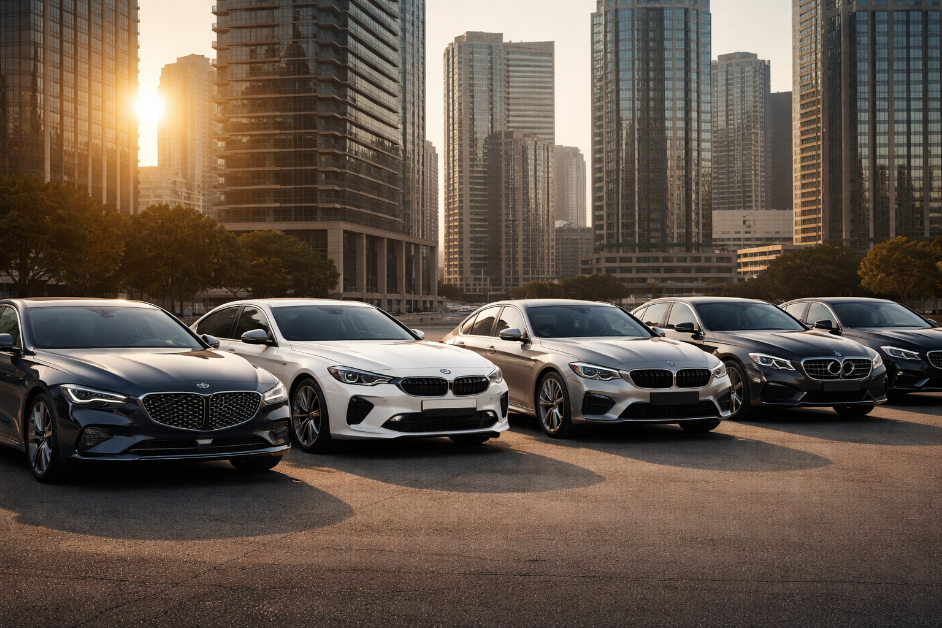
- Over the past decade, Korean luxury cars have rapidly evolved from niche contenders to formidable competitors in the global premium segment. Brands such as Genesis, Hyundai, and Kia have invested heavily in design, engineering, and technology, producing vehicles that rival long-established German automakers like BMW, Mercedes-Benz, Audi, and Porsche. What was once considered a value-oriented alternative has transformed into a serious option for luxury car buyers seeking performance, comfort, and cutting-edge innovation. Consequently, Korean luxury cars are no longer “upstarts” but viable contenders in head-to-head comparisons with their German premium rivals.
Genesis, in particular, has positioned itself at the forefront of this competition, showcasing sedans, SUVs, and performance models that combine refined styling, advanced infotainment, and competitive powertrains. Hyundai and Kia’s high-end offerings, such as the Hyundai Ioniq 7 (luxury EV SUV) and Kia K8 GT, also emphasize premium craftsmanship, comfort, and tech-forward features that appeal to discerning buyers. These Korean brands are leveraging value-driven pricing and exceptional warranties, which challenge traditional perceptions of German superiority in luxury vehicles.
Moreover, global automotive analysts note that Korean luxury cars are gaining traction not just in emerging markets but also in Europe and North America, where brand loyalty to German automakers has historically dominated. By balancing performance, design sophistication, and affordability, premium Korean vehicles are reshaping the expectations of luxury buyers. This shift is particularly evident in comparative evaluations of driving dynamics, interior refinement, and advanced driver-assistance systems, demonstrating how Korean manufacturers are closing the gap with German engineering excellence.
Performance and Powertrain Comparisons
One of the most compelling arguments for Korean luxury cars rivaling German automakers is performance. Genesis G80 and G90 sedans, for example, offer turbocharged engines and optional V6 powertrains that compete directly with BMW 5 Series, Mercedes-Benz E-Class, and Audi A6. Similarly, the Kia Stinger GT challenges the BMW 4 Series and Audi S5 with sporty handling, robust acceleration, and all-wheel-drive options.
Hyundai’s luxury SUVs, including the Palisade and the upcoming Ioniq 7 EV, emphasize smooth power delivery, high torque, and impressive range in electric variants, positioning them against the Mercedes-Benz GLE and Audi Q7. Korean engineering emphasizes a balanced approach, combining comfort-oriented suspension tuning with agile handling characteristics, making these vehicles both enjoyable daily drivers and credible competitors on winding roads.
Interior Luxury and Infotainment Technology
When comparing interiors, Korean luxury cars rival German automakers in materials, ergonomics, and technology. Genesis interiors, in particular, feature premium leather, real wood or aluminum trims, and spacious cabins designed for comfort and sophistication. Large digital displays, customizable ambient lighting, and state-of-the-art infotainment systems complete with navigation, smartphone integration, and voice recognition bring these vehicles on par with German offerings.
Kia and Hyundai luxury models also emphasize connectivity and intuitive interfaces. Advanced driver-assist features such as adaptive cruise control, lane-keeping assist, and automated parking are often standard or available across Korean models, whereas some German competitors require higher trims for equivalent features. Consequently, these vehicles provide an accessible technology-rich experience, making Korean premium vehicles attractive for buyers seeking modern convenience without a steep price premium.
Korean Luxury Cars vs German Premium Rivals – Key Specs
| Model | Engine / Powertrain | 0-60 mph | Starting Price | Key Luxury Features |
|---|---|---|---|---|
| Genesis G90 | 3.5L V6 / 375 hp | 5.1 sec | $78,000 | Leather, Nappa trim, 12.3″ infotainment, Advanced Safety Suite |
| BMW 7 Series | 3.0L I6 / 382 hp | 5.2 sec | $87,000 | Leather, Gesture Control, Adaptive Cruise, Premium Sound |
| Genesis G80 | 2.5L Turbo / 300 hp | 5.6 sec | $50,000 | Premium Leather, 14.5″ Display, Heads-Up Display, Driver Assist |
| Mercedes-Benz E-Class | 2.0L Turbo / 255 hp | 6.1 sec | $57,000 | MBUX, Premium Leather, Adaptive Suspension |
| Kia Stinger GT | 3.3L Twin-Turbo V6 / 368 hp | 4.7 sec | $46,000 | Sport Seats, Premium Audio, Navigation, Safety Suite |
| Audi S5 | 3.0L Turbo V6 / 349 hp | 4.4 sec | $53,000 | Virtual Cockpit, Leather, Quattro AWD, Driver Assistance |
Reliability, Warranty, and Ownership Costs
One of the strongest selling points for Korean luxury cars is their industry-leading warranty programs. Genesis, Hyundai, and Kia all offer extensive coverage, typically exceeding the warranties of German premium rivals. Standard warranties often include 10-year/100,000-mile powertrain protection and complimentary scheduled maintenance for multiple years. As a result, buyers experience lower long-term ownership costs, reduced repair anxiety, and higher perceived value.
German automakers, while offering premium quality, often have higher maintenance and repair costs. Luxury buyers increasingly recognize that Korean luxury cars combine reliability with high-end features, making them compelling alternatives in a segment historically dominated by BMW, Mercedes-Benz, and Audi.
Value Proposition Comparison
| Brand | Warranty | Standard Tech | After-Sales Support | Average Annual Ownership Cost |
|---|---|---|---|---|
| Genesis | 5 yr / 60k mi basic, 10 yr / 100k mi powertrain | Adaptive cruise, HUD, Lane Assist | Concierge service, loaner cars | $1,200 |
| Hyundai (Luxury Models) | 5 yr / 60k mi basic, 10 yr / 100k mi powertrain | Infotainment, Safety Suite, Wireless Charging | 24/7 support, nationwide service | $1,100 |
| Kia (Premium Vehicles) | 5 yr / 60k mi basic, 10 yr / 100k mi powertrain | Smart Cruise, Advanced Safety | Loaner program, roadside assistance | $1,150 |
| BMW | 4 yr / 50k mi basic, 6 yr / 70k mi powertrain | Navigation, Adaptive Cruise | Service centers, limited concierge | $2,200 |
| Mercedes-Benz | 4 yr / 50k mi basic, 6 yr / 70k mi powertrain | MBUX, Lane Assist | Dealer network, scheduled service | $2,300 |
| Audi | 4 yr / 50k mi basic, 6 yr / 70k mi powertrain | Virtual Cockpit, Safety Tech | Authorized centers | $2,100 |
Brand Perception and Market Trends
Despite their rapid advancements, Korean luxury cars are still in the process of overcoming traditional perceptions favoring German automakers. However, strong reviews from automotive journalists, high reliability scores, and customer satisfaction surveys are accelerating adoption. Genesis has successfully positioned itself as a design-forward, tech-savvy alternative, while Hyundai and Kia’s high-end offerings leverage affordability and modern innovation to appeal to younger, performance-oriented buyers.
Global market analysts note that Korean brands are no longer competing solely on price; instead, they emphasize a holistic luxury experience that rivals German engineering in terms of refinement, performance, and technological sophistication. This strategic positioning has helped them capture market share, particularly among consumers seeking value without compromising prestige or capability.
Conclusion: Reshaping Global Luxury Expectations
In 2026, Korean Luxury Cars Rivaling German Automakers are no longer merely affordable alternatives; they are redefining the global luxury automotive landscape. With competitive performance, sophisticated design, state-of-the-art technology, and unmatched warranty coverage, premium Korean vehicles are genuinely rivaling German premium cars. Consumers increasingly recognize that excellence in luxury no longer resides solely in Stuttgart, Munich, or Ingolstadt Seoul and Namyang now produce vehicles capable of challenging tradition, delivering value, and raising expectations across the global luxury market.
As a result, automotive enthusiasts, luxury buyers, and market analysts are paying closer attention to Korean Luxury Cars Rivaling German Automakers, acknowledging their strategic innovation and market impact. With continued investment in electrification, AI-driven features, and premium craftsmanship, Korean luxury cars are poised to remain serious contenders alongside German engineering for years to come.
Frequently Asked Questions (FAQs)
Are Korean luxury cars as reliable as German vehicles?
Yes. Korean brands like Genesis, Hyundai, and Kia consistently score high in reliability surveys, often outperforming German competitors, particularly in long-term durability and fewer unscheduled repairs.
How does resale value compare?
Traditionally, German vehicles hold higher resale value due to brand prestige. However, Korean luxury vehicles are improving resale metrics as brand recognition grows and demand rises.
Which Korean luxury car is best for a mid-range budget?
The Genesis G80 and Kia Stinger GT offer excellent performance, technology, and luxury features at competitive prices, making them top picks for mid-range buyers.
Are Korean luxury cars technologically advanced?
Absolutely. Korean models often feature cutting-edge infotainment, driver-assist systems, and digital interfaces comparable to or exceeding those in German premium rivals.
Do Korean cars offer better warranty coverage?
Yes. Warranties for Genesis, Hyundai, and Kia exceed typical German warranties, including longer powertrain coverage and complimentary maintenance programs.