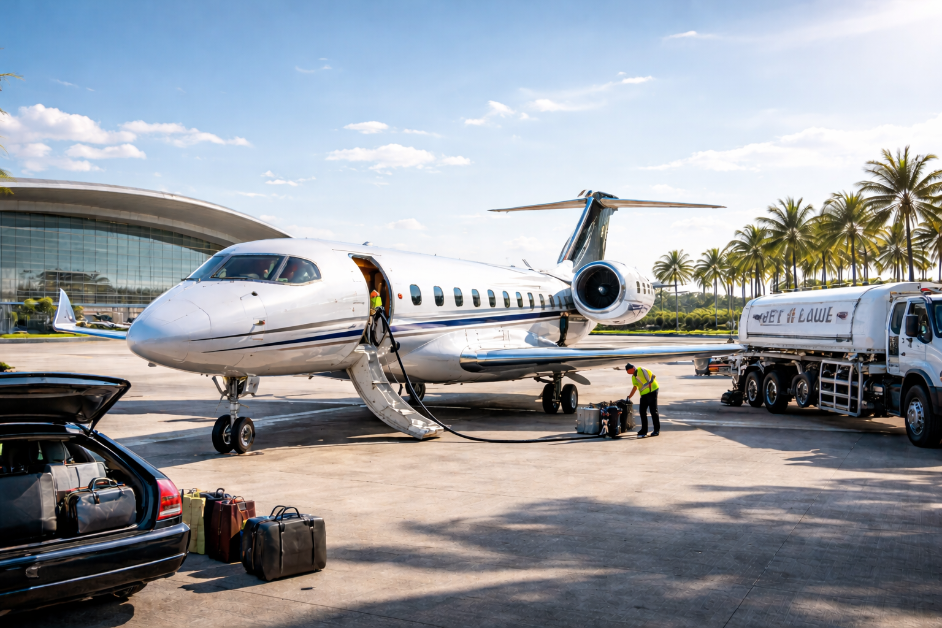
Private aviation has long been associated with prestige, efficiency, and ultimate travel freedom. However, for ultra-high-net-worth individuals and investors considering private aviation in 2026, one critical question remains: how much does it really cost to fly a private jet in 2026? The answer is far more complex than simply looking at the aircraft’s purchase price.
The true cost of flying private extends well beyond acquiring the jet itself. Operational expenses such as fuel, crew salaries, maintenance, insurance, and regulatory compliance add up quickly. Moreover, hidden costs like landing fees, hangar storage, and international taxes can significantly impact annual budgets, often surprising first-time buyers.
Additionally, private jet costs vary widely depending on usage patterns, aircraft category, ownership structure, and flight frequency. As a result, understanding the full financial picture is essential before committing capital. In this guide, we break down every major cost component, compare ownership models, and provide realistic 2026 estimates to help you make informed decisions about private aviation.
How Much Does It Really Cost to Fly a Private Jet in 2026?
When evaluating how much it really costs to fly a private jet in 2026, it’s important to think in terms of total cost of ownership (TCO) rather than upfront acquisition alone. A private jet is a complex, regulated asset that behaves more like a business operation than a luxury purchase.
Costs generally fall into four categories:
-
Fixed annual costs
-
Variable operating costs
-
Capital and depreciation costs
-
Regulatory, tax, and compliance expenses
Consequently, even owners who fly relatively few hours per year must absorb substantial fixed expenses, making utilization efficiency a key factor in cost optimization.
Aircraft Size and Model: The Primary Cost Driver
One of the most significant factors influencing how much it really costs to fly a private jet in 2026 is the size and category of the aircraft. Larger jets cost more to acquire, operate, and maintain, but they also offer greater range, cabin space, and comfort.
Key aircraft cost considerations include:
-
Engine type and count
-
Maximum range and fuel burn
-
Cabin configuration and amenities
-
Maintenance complexity
Moreover, newer models often have higher purchase prices but lower operating inefficiencies, while older aircraft may be cheaper upfront but more expensive over time.
Flight Hours and Utilization Rates
Flight hours directly impact variable costs such as fuel, engine wear, and maintenance cycles. However, paradoxically, flying more hours can sometimes reduce per-hour costs by spreading fixed expenses across greater utilization.
For example:
-
Flying 100 hours per year results in very high hourly costs
-
Flying 400+ hours per year significantly improves cost efficiency
As a result, ownership makes more financial sense for frequent flyers, while occasional users may benefit more from charter or fractional models.
Maintenance, Inspections, and Downtime Costs
Maintenance is one of the most underestimated components when calculating how much it really costs to fly a private jet in 2026. Private jets must follow strict manufacturer and regulatory maintenance schedules.
These include:
-
Routine inspections
-
Engine overhauls
-
Avionics upgrades
-
Unscheduled repairs
Moreover, downtime during maintenance can require backup charter flights, adding indirect costs. Consequently, many owners enroll in maintenance programs to stabilize annual expenses.
Crew, Training, and Staffing Expenses
Private jet crews are highly trained professionals, and their costs extend beyond salaries alone.
Typical crew-related expenses include:
-
Pilot and co-pilot salaries
-
Cabin crew compensation (for larger jets)
-
Simulator training and certifications
-
Travel and accommodation expenses
Additionally, crew costs increase for international operations due to regulatory and rest requirements. As a result, staffing can easily exceed six figures annually.
Fuel, Landing Fees, and Airport Charges
Fuel remains one of the largest variable expenses in private aviation. In 2026, fuel prices continue to fluctuate based on geopolitical and supply factors.
Other operational charges include:
-
Landing fees
-
Handling and parking fees
-
Hangar storage
-
De-icing and ground services
Moreover, premium airports in financial and leisure hubs charge significantly higher fees, directly affecting route economics.
Insurance, Taxes, and Regulatory Compliance
Insurance costs depend on aircraft value, usage, and operational regions. High-value jets operating internationally face higher premiums due to increased risk exposure.
Taxes and compliance costs may include:
-
Import/export duties
-
VAT or sales tax
-
Navigation and overflight fees
-
Regulatory filings and audits
Consequently, international operations can materially increase annual costs if not structured efficiently.
Ownership vs Charter vs Fractional: Cost Comparison
Choosing the right access model is critical when evaluating how much it really costs to fly a private jet in 2026. Each option offers different trade-offs in cost, flexibility, and convenience.
Cost Breakdown – Ownership vs Charter vs Fractional
| Cost Category | Full Ownership | Charter | Fractional Ownership |
|---|---|---|---|
| Purchase Price | $5M–$75M+ | None | $1M–$10M share |
| Annual Fixed Costs | High | None | Moderate |
| Hourly Operating Cost | Lower (high use) | Higher | Mid-range |
| Maintenance Responsibility | Owner | Operator | Shared |
| Flexibility | Highest | Medium | High |
| Capital Risk | High | None | Shared |
As a result, ownership suits frequent flyers, charter fits occasional users, and fractional ownership appeals to those seeking balance.
Private Jet Cost by Category in 2026
Understanding cost differences by jet category is essential when analyzing how much it really costs to fly a private jet in 2026.
Private Jet Categories and Estimated Costs (2026)
| Jet Category | Hourly Cost | Annual Cost (300 hrs) | Typical Range |
|---|---|---|---|
| Light Jet | $2,500–$4,500 | $1.8M–$2.5M | 1,500–2,000 nm |
| Midsize Jet | $5,000–$7,500 | $3M–$4.5M | 2,000–3,000 nm |
| Heavy Jet | $8,000–$12,000 | $5M–$7M | 4,000–5,000 nm |
| Ultra-Long-Range Jet | $12,000–$18,000+ | $7M–$10M+ | 6,000+ nm |
Moreover, ultra-long-range jets command premium pricing due to nonstop intercontinental capability and luxury configurations.
Hidden Costs Many Buyers Overlook
Even sophisticated investors often underestimate hidden expenses when calculating how much it really costs to fly a private jet in 2026.
Commonly overlooked costs include:
-
Aircraft management fees
-
Software and connectivity subscriptions
-
Cabin refurbishment
-
Regulatory changes and compliance updates
Consequently, contingency budgeting is essential to avoid unpleasant financial surprises.
Actionable Insights: Budgeting and Optimizing Private Jet Use in 2026
Understanding how much it really costs to fly a private jet in 2026 requires a strategic mindset. Rather than focusing solely on acquisition, successful owners evaluate lifetime costs, utilization efficiency, and long-term value.
Key takeaways:
-
Match jet size to actual mission needs
-
Compare ownership models honestly
-
Budget conservatively with contingency reserves
-
Leverage professional management and tax planning
-
Reassess usage annually to ensure cost alignment
As a result, private aviation can remain both financially rational and operationally efficient when approached with disciplined planning.
Conclusion
Flying private in 2026 offers unmatched flexibility, privacy, and time efficiency, but it comes at a significant and multifaceted cost. From aircraft acquisition and maintenance to crew, fuel, insurance, and regulatory compliance, the true expense goes far beyond the purchase price.
For ultra-high-net-worth individuals and investors, the decision ultimately hinges on usage patterns, strategic objectives, and long-term value rather than luxury alone. By fully understanding how much it really costs to fly a private jet in 2026, you can make informed choices that align financial discipline with elite travel expectations.
Frequently Asked Questions
Are there hidden fees beyond the advertised hourly rate?
Yes. Hourly rates often exclude fuel surcharges, landing fees, crew expenses, and overnight costs, which can materially increase total spend.
What are the best cost-saving strategies in private aviation?
Optimizing flight hours, choosing the right jet size, enrolling in maintenance programs, and using tax-efficient ownership structures can significantly reduce costs.
Is private jet ownership tax-deductible?
In some jurisdictions, business-related usage may qualify for depreciation or deductions. However, tax treatment varies widely and requires professional advice.
How does sustainability affect private jet costs in 2026?
Sustainable aviation fuel (SAF) often carries a premium, increasing operating costs. However, it may offer long-term regulatory and reputational benefits.
Is charter always cheaper than owning a jet?
Not necessarily. Charter is cheaper for low usage, but frequent flyers may find ownership more cost-effective over time.
Do newer jets cost less to operate?
Often yes. Newer models tend to be more fuel-efficient and require less unscheduled maintenance, although purchase prices are higher.