The Sound of Silence (and Then the Noise)
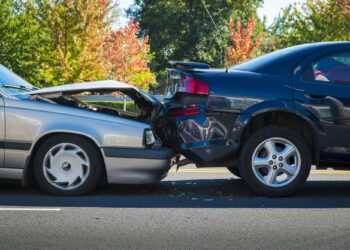
You know that sound? Not the honking. Chicago is full of honking. It’s the background noise of the city, like the rumble of the L train or the wind whipping off the lake. No, we’re talking about the other sound. The one that happens right after the screech. The crunch. It’s sickeningly loud and weirdly quiet at the same time. Metal folding on metal. Glass shattering. It’s the sound of your Tuesday morning plans disintegrating instantly.
One second, you are thinking about whether you left the coffee pot on or if the Bears are actually going to trade that quarterback. The next? You are staring at an airbag that smells like burnt chemicals. The world tilts.
The Kennedy Expressway doesn’t care. It just keeps moving. The Dan Ryan keeps flowing. You are now a rock in the river. A statistic. And let’s be honest, nobody thinks they are going to be the statistic. We all drive with this invincibility shield. We think we are good drivers. It’s the other guy, right? The guy texting in the BMW. The delivery truck was swerving through three lanes.
But physics doesn’t care about your driving record. Physics just cares about mass and velocity. And when those two things meet in a way they aren’t supposed to, the result is chaos. Pure, unadulterated chaos.
The Adrenaline Lie
Here is the thing about the human body. It is a liar. A really good one.
Right after impact, your brain floods your system with adrenaline. It’s evolutionary. It’s designed to help you run away from a saber-toothed tiger. But there are no tigers on Lake Shore Drive. Just angry commuters and a crumpled fender.
You step out of the car. You check your limbs. “I’m fine,” you say. You might even believe it. You are shaking, sure, but that’s just nerves, right? Wrong.
That shake is shock. That numbness in your neck? That’s your body putting a temporary patch on a problem that is going to scream at you tomorrow morning. Or in three days. Or next week.
You start exchanging info. Taking pictures with trembling hands. You just want to get out of there. You want to rewind the last five minutes and take surface streets. But you can’t. You are in it now. And this is the moment where most people make their first, massive mistake. They try to be nice. They try to be “chill.”
Don’t be chill. Be smart.
Who Is Actually in Your Corner?
The aftermath is a fog. Tow trucks appear like vultures. Police lights bounce off the gray pavement. It’s overwhelming. You have insurance, so you think you’re covered. You pay your premiums. You’re a good citizen.
Here is a cold bucket of water for you: The insurance company is a business. They have shareholders. They have quarterly targets. Their goal is not to make you whole; their goal is to close the file for the lowest possible number. They are very, very good at this.
They will call you. They will be polite. They will ask how you are feeling. It sounds like empathy. It isn’t. It’s a deposition without the court reporter. If you say, “I’m feeling okay,” that is going into a file. Six months later, when you need surgery for a herniated disc that finally gave out, they will pull up that recording. “See? They said they were okay.”
This is why the lone wolf approach is dangerous. You are an amateur stepping into the ring with heavyweights. You wouldn’t rewire your house without an electrician. Why would you navigate a complex liability claim without a map?
Sometimes, the smartest play is to hand the keys to someone else. Someone who knows the terrain. Finding a solid auto accident lawyer Chicago locals trust can be the difference between a settlement that barely covers your deductible and one that actually addresses the long-term fallout. They act as a buffer. A shield. They intercept the lowball offers and the aggressive questions, letting you focus on the only thing that matters: getting your body back to normal.
The Medical Maze
Speaking of bodies, let’s talk about the healthcare system in Cook County. It’s big. It’s busy. And it’s expensive.
You might skip the ambulance. “Too expensive,” you think. You drive yourself home. You put some ice on your shoulder. You take a couple of ibuprofen.
Big mistake. Huge.
In the eyes of the law (and the adjusters), if it isn’t documented, it didn’t happen. That gap in treatment? That three-day window where you tried to tough it out? That is gold for the defense. They will drive a truck through that gap. They will argue that you hurt yourself at the gym. Or moving furniture. Or literally doing anything other than getting hit by a two-ton vehicle.
Go to the doctor. Go to urgent care. Get the X-rays. Get the MRI. Even if you think it’s just a bruise. You need the paper trail. You need a medical professional to write down, in black and white, “Patient was involved in a motor vehicle collision.” That sentence is your armor.
And don’t ignore the head stuff. Concussions are sneaky. You might just feel foggy. Irritable. You might have trouble sleeping. That’s brain trauma, friend. It’s not something to “walk off.”
The Comparative Negligence Trap
Illinois has this thing called “modified comparative negligence.” It sounds like something from a law school exam, and it basically is. But it has real-world teeth.
Here is the breakdown: If you are more than 50% at fault, you get zero. Nothing. Nada.
If you are 20% at fault? Your payout gets cut by 20%.
So, let’s say you were speeding a little. Just five miles over. Or maybe you didn’t signal fast enough. The other side knows this rule. They will dig. They will claw. They will try to pin just enough percentage points on you to ruin your claim. They will analyze the skid marks. They will check the traffic cam footage.
It’s a game of inches. And if you don’t know the rules, you are going to lose. You need someone who can look at the same evidence and tell a different story. A story where you are the victim, not the villain.
The Financial Ripple Effect
We live in a city where the cost of living is… let’s call it “spirited.” Rent is up. Gas is up. A night out in the West Loop costs a kidney.
Now add a wrecked car to that. Add a $5,000 deductible. Add co-pays. Add lost wages because you can’t stand for eight hours a shift anymore.
It’s a tsunami.
Most people live within a certain margin of error. A car crash blows that margin to pieces. You start dipping into savings. You start putting things on credit cards. It’s a slippery slope.
When a settlement finally comes into the picture, it can look like a lottery win. A big check with lots of zeros. The temptation is to fix the car, pay off the immediate bills, and maybe take a vacation. Breath. Wait.
This money isn’t a bonus. It’s the replacement capital. It’s supposed to cover things you haven’t even paid for yet. Future medical bills. Future lost earnings. If you settle for a lump sum today, and your back gives out in ten years, you can’t go back for seconds. You signed the release. It’s done.
You have to think about this money differently. It’s about stewardship. It’s about making sure that one bad day on the highway doesn’t derail your family’s entire trajectory. Smart planning here is crucial. You might need to look into strategies for family office investing or simply better ways to structure your assets so that this influx of cash actually secures your future rather than just vanishing into the ether of daily expenses. It’s not just about getting paid; it’s about making sure that payment lasts as long as the injury does.
The Mental Toll is Real
Driving in Chicago is already an act of aggression. You have to be offensive to be defensive. You have to claim your lane.
After a crash? That confidence evaporates.
You get behind the wheel, and your palms sweat. You see a car merging, and you flinch. You avoid the highway. You take the long way home.
This is PTSD. We don’t like to use that word for “minor” things like car accidents, but it fits. It changes how you interact with the world. It steals your freedom.
And guess what? That is damage. That is something you can be compensated for. “Loss of enjoyment of life.” “Pain and suffering.” These aren’t just legal buzzwords. They are real things that real people feel every day.
But you have to articulate it. You have to explain it. And that is hard to do when you are trying to be “tough.”
The Long Game
So, what do you do? You are standing on the side of the road. The tow truck is hooking up your sedan. The cop is handing you a slip of paper.
You take a breath. You realize that this is just step one of a marathon.
You don’t rush. You don’t sign the first thing they shove in your face. You don’t trust the friendly voice on the phone from the insurance company.
You gather your team. You get your doctors. You get your legal counsel. You get your family on board.
You document everything. Every pill. Every sleepless night. Every missed day of work. You build a mountain of evidence so high that they can’t ignore it.
It’s not fair. You didn’t ask for this. You were just trying to get to work. But fairness isn’t a natural law. It’s something you have to fight for.
Chicago is a tough city. It builds tough people. You can handle the winters. You can handle the politics. You can handle the sports teams breaking your heart year after year.
You can handle this, too.
Just don’t try to handle it alone. Use the resources available to you. Be smart. Be patient. And eventually, you will get back in the driver’s seat, merge onto the Kennedy, and rejoin the flow. Maybe a little more cautious. Maybe a little wiser. But moving forward. Always moving forward. Because that is what we do here.