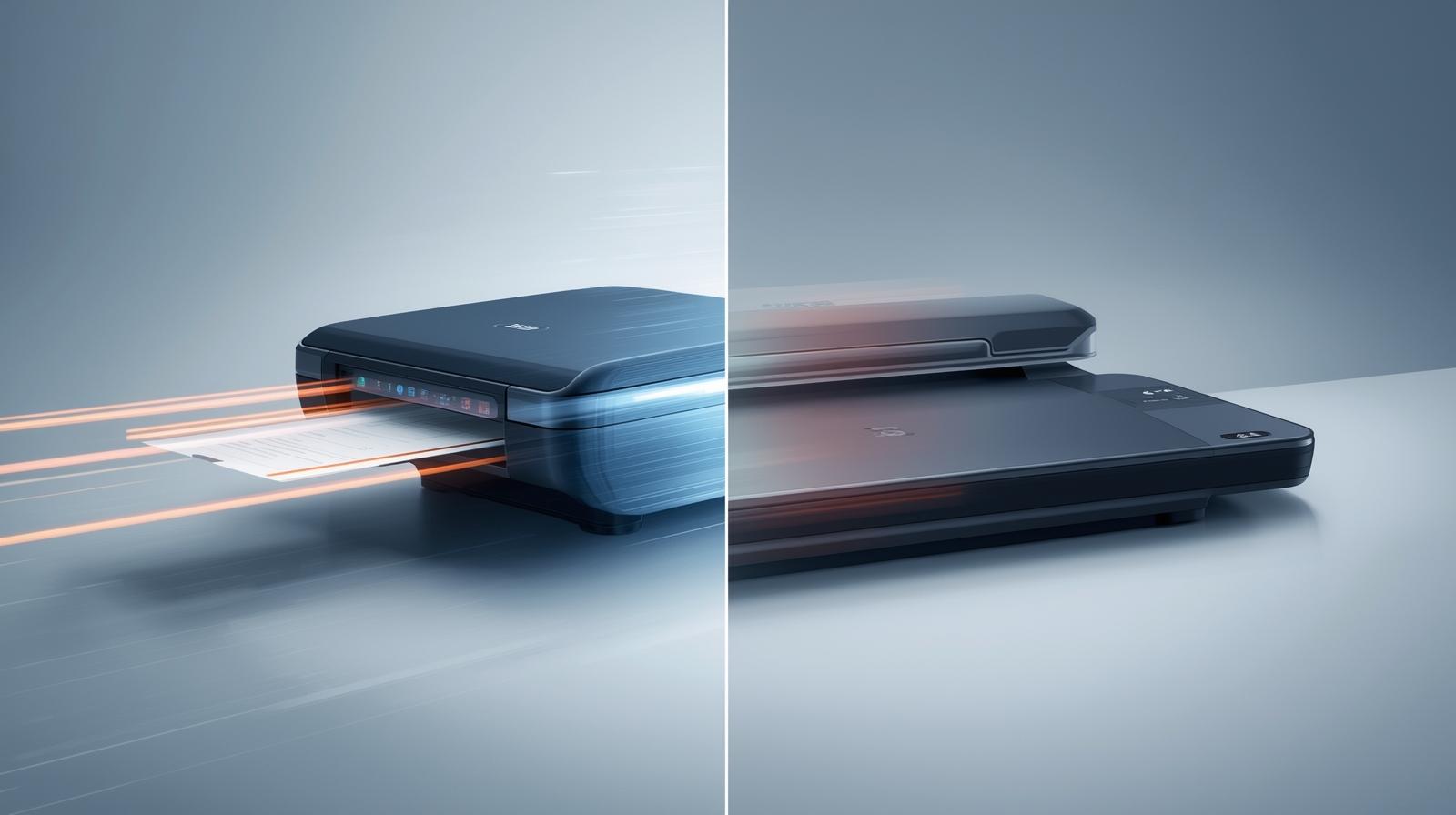
Choosing the right scanner can have a significant impact on productivity, accuracy, and overall workflow efficiency. While flatbed scanners have long been a familiar option for home offices and occasional use, high-speed scanners have become increasingly popular in business environments where time and volume matter. Understanding the differences between these two scanning solutions can help individuals and organizations invest in equipment that truly fits their needs rather than relying on outdated habits.
PFU America focuses on scanning solutions designed to support modern document workflows, where speed, automation, and reliability are critical. Comparing high-speed scanners and flatbed scanners side by side reveals why many professionals are moving away from manual, single-page scanning toward more advanced options.
Key Differences in Speed, Capacity, and Automation
The most obvious difference between flatbed scanners and high-speed scanners is how documents are processed. Flatbed scanners require users to place each document manually on a glass surface, close the lid, initiate the scan, and repeat the process for every page. While this method works for occasional scans or delicate originals, it becomes time-consuming and inefficient when dealing with large volumes.
High-speed scanners are built to handle stacks of documents quickly and consistently. Equipped with automatic document feeders, these scanners pull multiple pages through the system in one continuous process. This automation dramatically reduces hands-on time and allows users to scan dozens or even hundreds of pages in minutes rather than hours.
Capacity is another key distinction. Flatbed scanners are limited to one page at a time, which can create bottlenecks in busy environments. High-speed scanners, by contrast, are designed to process large batches without interruption, making them ideal for offices that handle invoices, contracts, forms, and archived records on a regular basis.
Automation also plays a major role in modern scanning workflows. High-speed scanners often include features such as automatic page size detection, duplex scanning, and intelligent image correction. These capabilities reduce the need for manual adjustments and rescanning, resulting in more consistent output and fewer errors. A high speed scanner automatic document feeder is specifically engineered to support these automated processes, making it a strong choice for environments where efficiency is a priority.
Interestingly, this focus on efficiency mirrors trends in other productivity tools. For example, computer users often compare keyboard components to optimize typing comfort and speed, such as understanding how a keycap profile influences ergonomics and workflow. In both cases, small design differences can have a large impact on daily performance.
When an ADF Scanner Is the Better Choice
An automatic document feeder (ADF) scanner is the better choice whenever scanning is a routine task rather than an occasional one. Businesses that digitize paperwork daily—such as accounting firms, healthcare offices, legal practices, and educational institutions—benefit significantly from the speed and reliability of ADF scanners.
ADF scanners excel in environments where documents arrive in bulk. Instead of tying up staff time with repetitive manual scanning, teams can load a stack of documents and let the scanner handle the rest. This frees employees to focus on higher-value tasks and reduces overall processing time.
Consistency is another advantage. Flatbed scanners rely heavily on user input, which can lead to variations in alignment, resolution, and file naming. ADF scanners standardize the process, producing uniform digital files that are easier to organize, search, and integrate into document management systems.
ADF scanners are also well-suited for hybrid and remote workflows. As more organizations move toward paper-light operations, the ability to quickly convert physical documents into digital files becomes essential. High-speed scanning supports faster collaboration, easier sharing, and improved compliance with record-keeping requirements.
The comparison between flatbed and high-speed scanners is similar to decisions people make with other tools they use daily. Just as users choose between different keyboard switches based on typing style and workload, selecting the right scanner depends on how frequently and intensively it will be used. Tools optimized for speed and endurance tend to deliver better long-term value in demanding environments.
Understanding Where Flatbed Scanners Still Make Sense
While high-speed scanners offer clear advantages for volume and automation, flatbed scanners still have a place in certain scenarios. They are often preferred for scanning books, fragile documents, or items that cannot be fed through rollers without risk of damage. For creative professionals working with artwork or specialty media, the controlled environment of a flatbed scanner can be beneficial.
However, relying solely on a flatbed scanner for everyday document processing can limit efficiency as needs grow. Many organizations start with flatbed scanners and later find themselves constrained by slow workflows and increasing backlogs. Recognizing when it’s time to upgrade is key to maintaining productivity.
Making the Right Scanning Investment
The choice between a high-speed scanner and a flatbed scanner ultimately comes down to volume, frequency, and workflow requirements. Flatbed scanners are suitable for occasional, specialized tasks, but they are not designed for sustained, high-volume use. High-speed scanners with automatic document feeders are built for modern environments where efficiency, consistency, and automation are essential.
Investing in the right scanning technology helps reduce manual effort, minimize errors, and support digital transformation initiatives. Over time, these benefits translate into cost savings, improved accuracy, and smoother collaboration across teams.
Choosing a Scanner That Supports Long-Term Productivity
High-speed scanners and flatbed scanners serve different purposes, but understanding their strengths and limitations makes it easier to choose wisely. For individuals and organizations that regularly handle paper documents, high-speed ADF scanners provide a clear advantage in speed, capacity, and workflow automation.
By aligning scanning technology with actual usage needs, users can eliminate bottlenecks and create more efficient document processes. Just as with other productivity tools, the right choice upfront leads to better performance, less frustration, and a workflow that scales with demand.