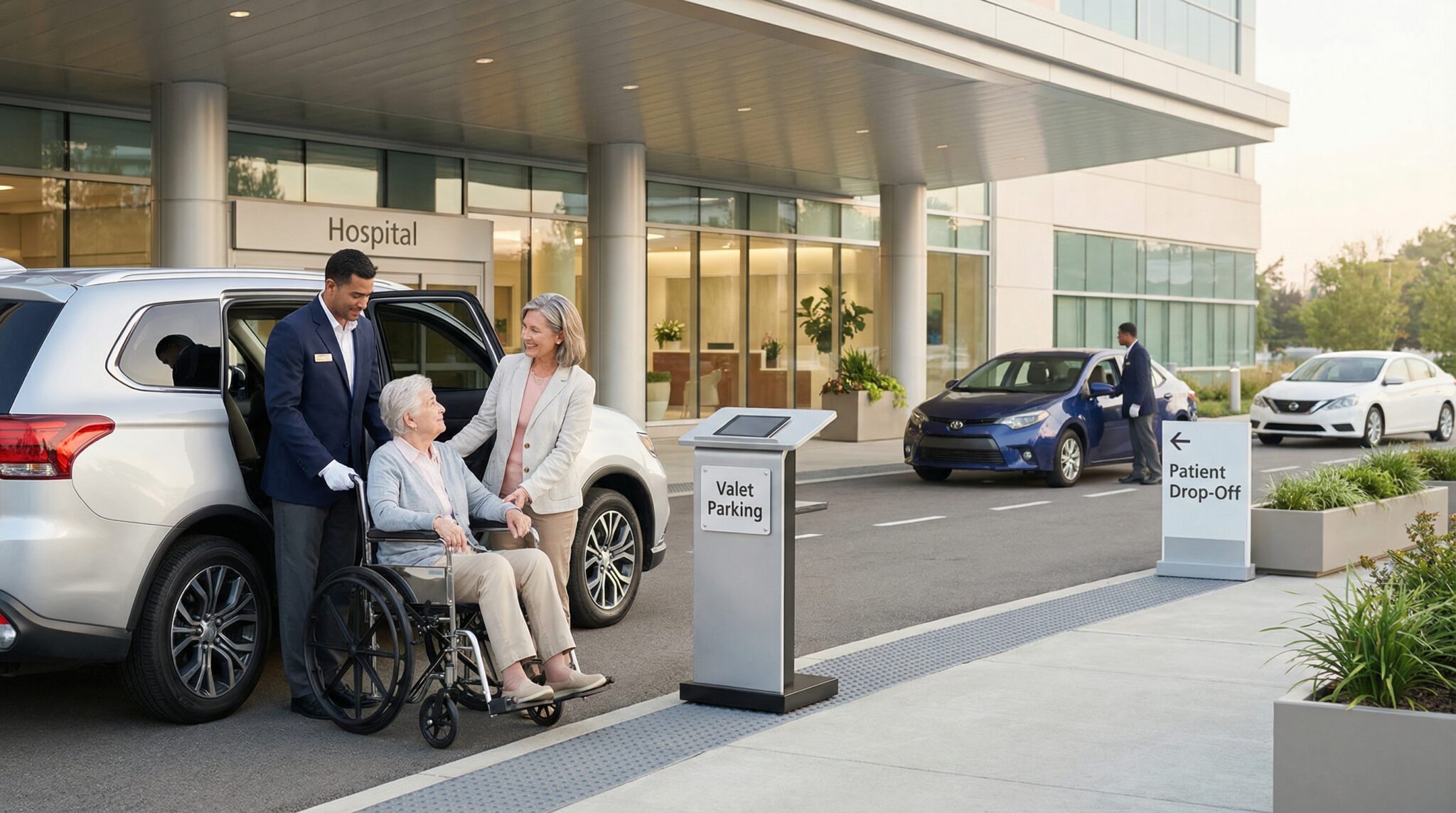
Parking is the first handshake your hospital offers. In a nationwide survey of adults over 65, 97 percent said rundown parking tarnished their opinion of a facility, ranking it second only to the lobby for first impressions. Accenture links superior patient experience to profit margins roughly 50 percent higher than peers—proof that a cracked curb quietly drains revenue.
To counter that risk, many leaders partner with valet teams that smooth traffic, calm nerves, and free clinicians to focus on care. This guide compares leading providers, highlights 2024–2025 trends, and arms you with RFP questions to find the ideal fit.
Latest trends in hospital parking management (2024–2025)
Labor shortages squeeze valet rosters
Finding, and keeping, skilled valets now ranks among a facility director’s biggest headaches. The post-pandemic job market lured many hospitality workers into gig driving and delivery apps where schedules feel flexible and tips arrive instantly.
To compete, valet partners have raised hourly wages, offered sign-on bonuses, and cross-trained staff to cover curbside and shuttle roles. These moves protect service levels but also push contract prices higher.
Why does this matter to you? Turnover slows lanes, extends wait times, and erodes the warm welcome patients expect. A stable roster is the first sign a vendor can deliver on every other promise we cover next.
Contactless tools reshape the curb
Digital convenience is now the baseline, not a bonus. Patients expect the tap-to-pay ease they enjoy at coffee shops, so hospitals are phasing out paper tickets and plastic claim checks.
Ticketless valet platforms use license-plate recognition, QR codes, and text messaging to check vehicles in, accept payments, and ping drivers when their car is rolling up—all without a physical hand-off. Summon’s contact-free system, for example, lets guests scan a code, store a digital ticket, and request their car from a phone link in seconds.
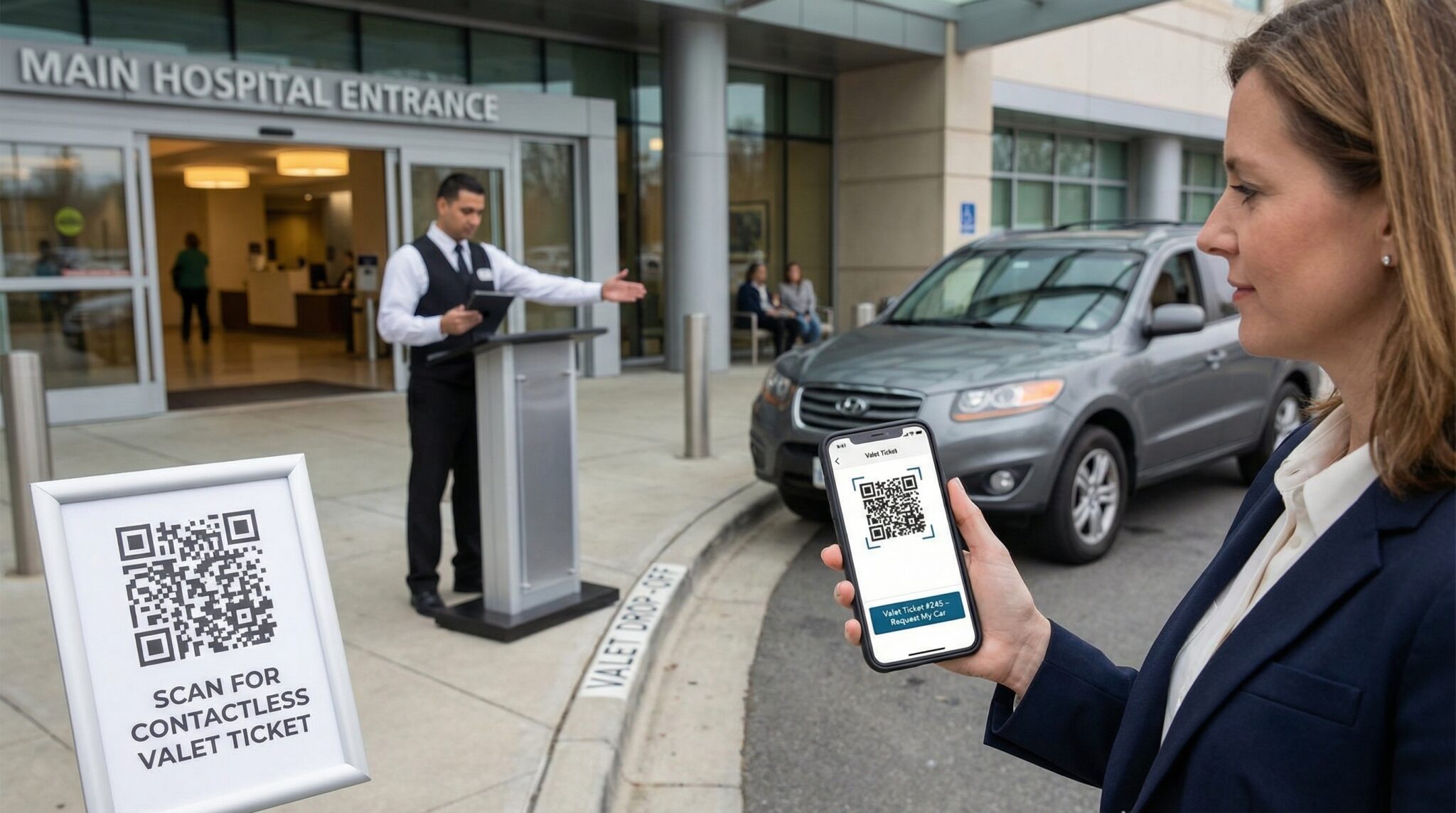
That experience does more than impress tech-savvy visitors. It trims lines, cuts retrieval time, and reduces germ sharing that became a deal-breaker during the pandemic. For operations teams, the software captures real-time demand data, so you can adjust staffing instead of guessing.
When you review vendors, ask to see live dashboards and text-ahead workflows. If the demo still relies on paper stubs, keep shopping.
Curb management gets an overhaul
Hospitals once treated the front drive like a passive drop-off zone. Today it acts more like an airport curb, packed with ride-share cars, delivery vans, and anxious families hunting for space. Municipal zoning changes add another wrinkle by capping on-site parking in favor of public transit.
Strong valet partners now deploy traffic marshals, cone lanes, and radio chatter to choreograph every vehicle. During morning clinic surges they stage wheelchairs near the curb so frail patients roll inside within seconds. When an ambulance light flashes, staff clear a path long before sirens reach the portico.
Regulatory details hide in plain sight. Fire codes require clear lanes, and ADA rules set exact dimensions for accessible drop-offs. A seasoned vendor builds those requirements into daily playbooks rather than treating them as afterthoughts.
Before you sign any contract, ask candidates to walk your campus and sketch a peak-hour curb-flow plan. The vendor who talks traffic loops, signage angles, and stroller zones is the one who understands that a calm curb sets the tone for a calm visit.
Sustainability moves from buzzword to bottom line
Green goals are no longer framed posters in the boardroom; they sit in the RFP. Cities such as Boston, Seattle, and Austin now require new hospital lots to be wired for electric-vehicle charging. Forward-thinking valet vendors respond with portable chargers, electric shuttle carts, and routing software that cuts idle time.
The upside reaches beyond carbon numbers. EV chargers attract philanthropic grants, and efficient traffic flow lowers fuel costs for patient-transport fleets. Some operators even offer carbon-offset dashboards you can fold into your sustainability report without hiring an analyst.
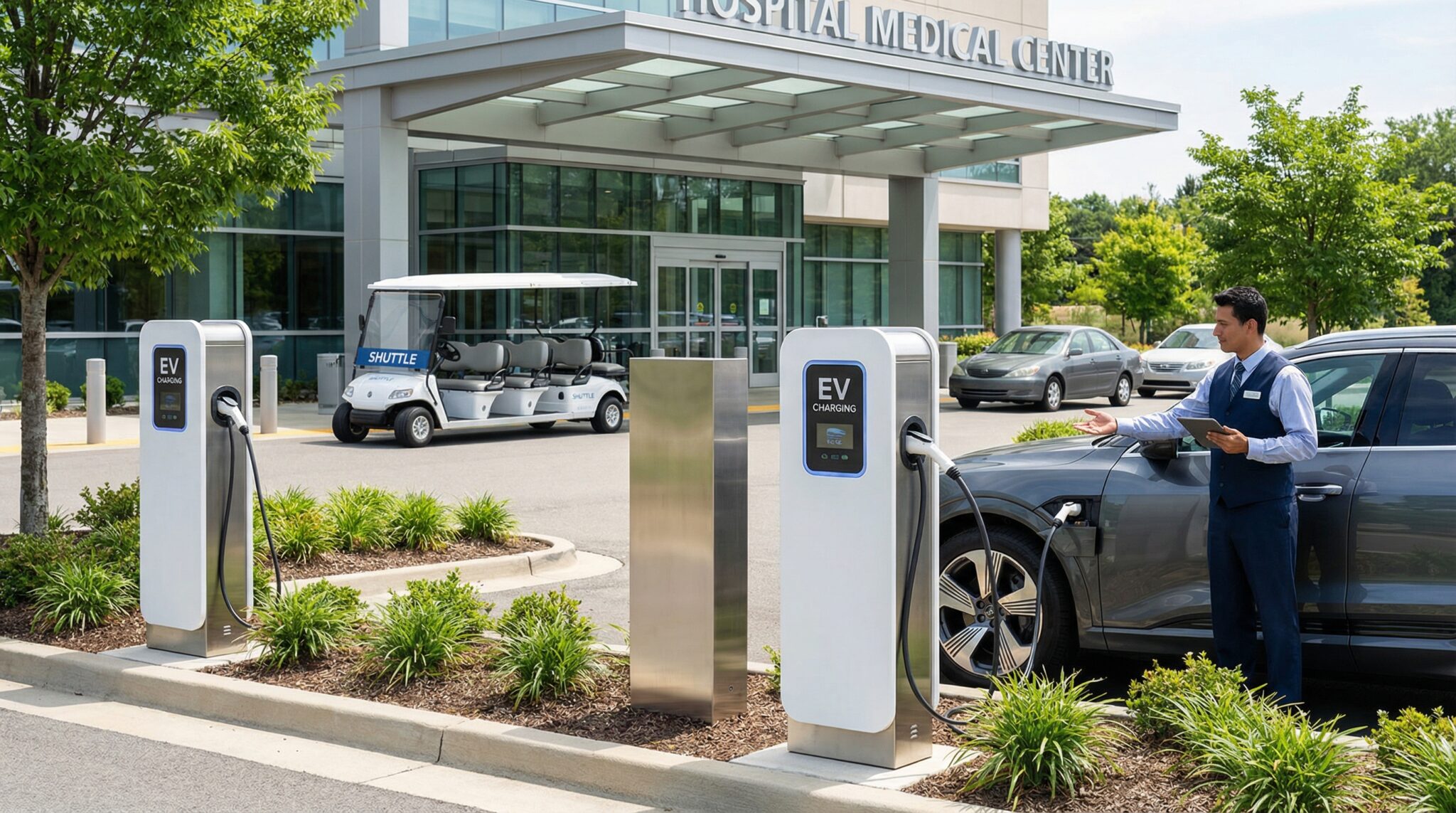
When we surveyed supply-chain leaders, the message was clear: if a vendor dismisses EV infrastructure as “a future project,” cross them off today. Patients notice charging stations gleaming by the entrance, and staff appreciate lower exhaust around the drop-off zone.
Ask prospective partners how many chargers they installed this year and how they track usage. Real data beats green marketing every time.
Safety playbooks evolve after the pandemic
During 2020 many hospitals paused valet altogether. When doors reopened, patients arrived with sanitizer in hand and infection concerns top of mind. Valet operators had to rewrite every standard operating procedure.
Today’s attendants wipe steering wheels, wear fresh gloves for every vehicle, and drop keys into ultraviolet cabinets between uses. Contactless payment tools remove cash handoffs, and staggered parking lanes prevent clusters at the podium. These habits are now muscle memory, not temporary theater.
Survey data backs the change: facilities that reinstated valet with clear safety protocols logged fewer parking complaints and shorter lobby lines than pre-COVID levels. Patients notice the disinfectant swipe and the ready wheelchair, then walk inside calmer and on time.
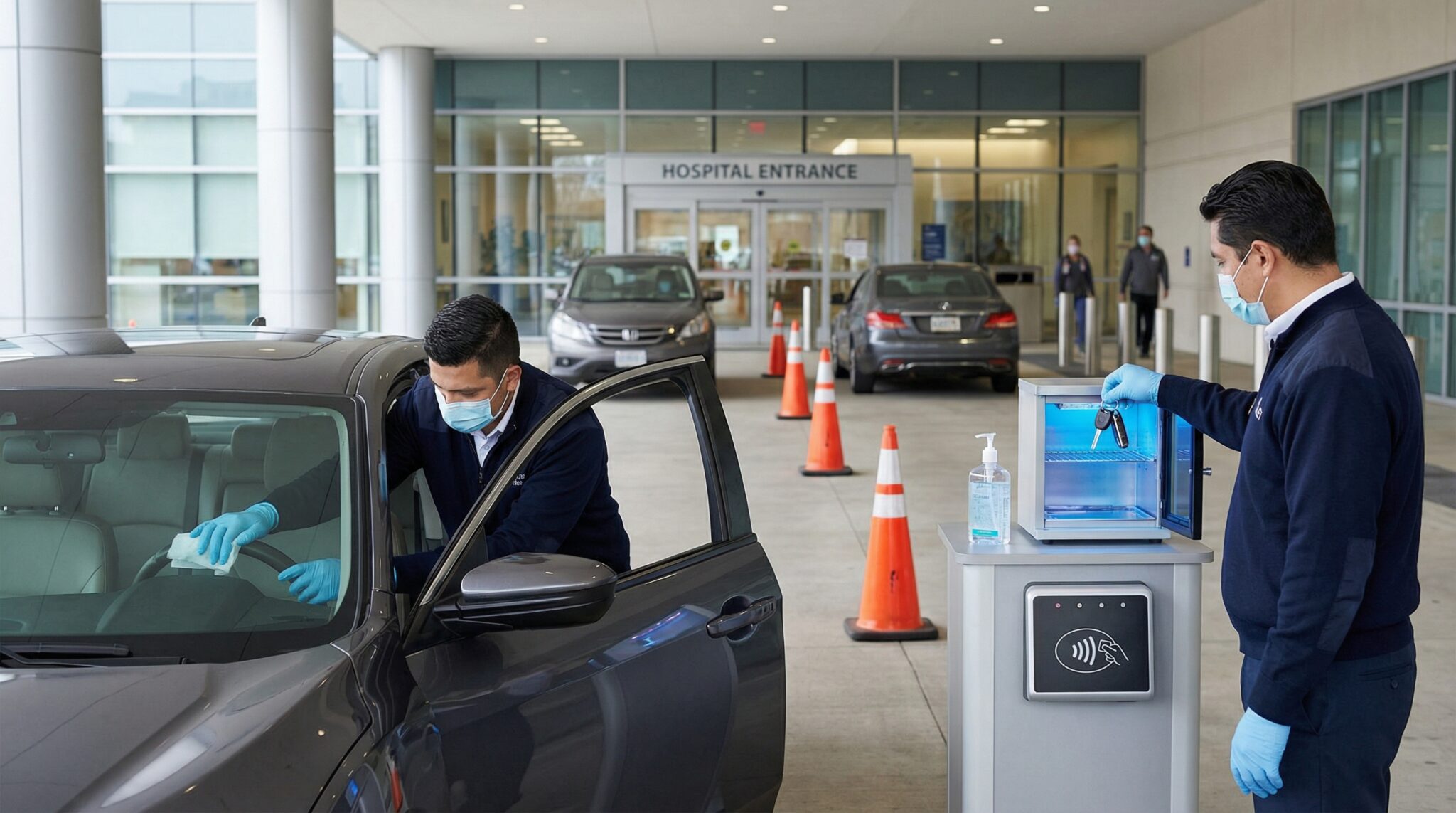
When you vet vendors, ask for their written sanitization checklist and audit schedule. A partner who can’t produce it in under a minute isn’t future-proof.
Parking data now feeds patient-experience dashboards
We once relied on clipboards and gut feel to judge curbside service. That era is over. Hospitals now plug valet wait times and satisfaction scores into the same dashboards that track HCAHPS and readmissions.
Why the shift? Administrators saw a pattern: when vehicle hand-off exceeds five minutes, registration desks run late, clinicians scramble, and Press Ganey comments turn frosty. Leading valet partners counter with real-time timers, daily KPI emails, and quarterly reviews that spotlight trends and fix root causes. FC Parking streams those KPIs to wall-mounted dashboards in facilities command centers, giving staff a live view of cars in queue, average drop-off times, and retrieval counts. Case studies from FC Parking’s hospital valet services show a 14 percent reduction in parking-program operating costs and an 11 percent lift in parking revenue once the program is implemented. The company’s aggregated hospital results show patient-satisfaction scores up 14 percent and parking revenue gains of 12-30 percent, alongside a 15 percent lift in employee satisfaction.

The best operators own those numbers. They publish targets such as “60-second drop-off, five-minute retrieval” and tie supervisor bonuses to performance. That transparency builds trust and gives you material when defending the parking budget at finance meetings.
During vendor selection, insist on sample scorecards and a live reporting portal. If a company can’t quantify its impact, it isn’t ready for your metrics-driven culture.
Key criteria for evaluating hospital valet partners
1. Proven healthcare experience and airtight compliance.
Parking any building is easy; parking a hospital means steering through HIPAA, Joint Commission audits, emergency codes, and guests who need more than a friendly wave. Look for vendors whose résumés read like a clinical directory: children’s hospitals, trauma centers, outpatient clinics, not ballrooms or mall garages.
Ask for case studies. How many ER bays do they handle today? What steps do they follow when a Code Blue locks down the entrance? Top vendors train every valet on patient privacy, wheelchair transfers, and infection-control basics before anyone slips behind a steering wheel.
Compliance isn’t negotiable. Require written policies for HIPAA, ADA, and OSHA, and verify annual refresher courses. The right partner lives these rules; they don’t recite them from a slide deck.
2. Service quality that lifts patient experience scores.
Your valet crew is often the first human contact patients meet. If that greeting feels rushed or indifferent, every department downstream pays for it with flustered arrivals and lower satisfaction scores.
Insist on seeing the vendor’s hiring rubric. Do they screen for empathy as closely as they check driving records? Standout teams recruit former hospitality pros, train them on cultural sensitivity, and grade every shift on smile counts and conversation cues, not just parked cars.
Top performers track real wait times at the curb and tie bonuses to targets under five minutes. They survey guests daily and feed results straight into your patient-experience dashboard, keeping the valet team aligned with the healing environment you work so hard to create.
3. Footprint and scalability that match your growth curve.
A single-campus community hospital and a five-state health system face very different parking challenges. Choose a valet partner who already operates at your desired scale today and five years from now.
National players bring deep labor pools and the ability to clone best practices across multiple campuses. Regional specialists may offer closer executive attention and on-site decision-makers who know the local labor market well. Neither option is wrong; the key is alignment with your expansion roadmap.
Drill into numbers. How many hospital sites does the vendor manage? How fast can they add fifteen attendants for a new cancer-center wing? Ask for examples of surge staffing during flu season or vaccine-clinic spikes. A provider that can’t show documented ramp-up plans will struggle when your census climbs.
4. Technology that trims friction, not just dazzles.
Patients care about speed and clarity. Technology is the lever. Leading valet partners blend license-plate recognition, SMS vehicle requests, and cashless payments into one intuitive flow so guests never juggle paper tickets or wait in line.
Gadget lists alone can distract. Focus on outcomes: How many minutes did their text-ahead feature shave from retrieval times at a peer hospital? Do their dashboards forecast demand so you can downshift staffing on a slow Friday? Practical gains beat shiny demos every time.
Ask vendors to walk you through a live system—from car arrival to departure—and share uptime statistics. A platform that crashes during a morning rush is worse than no platform at all.
5. Safety, training, and rock-solid liability coverage.
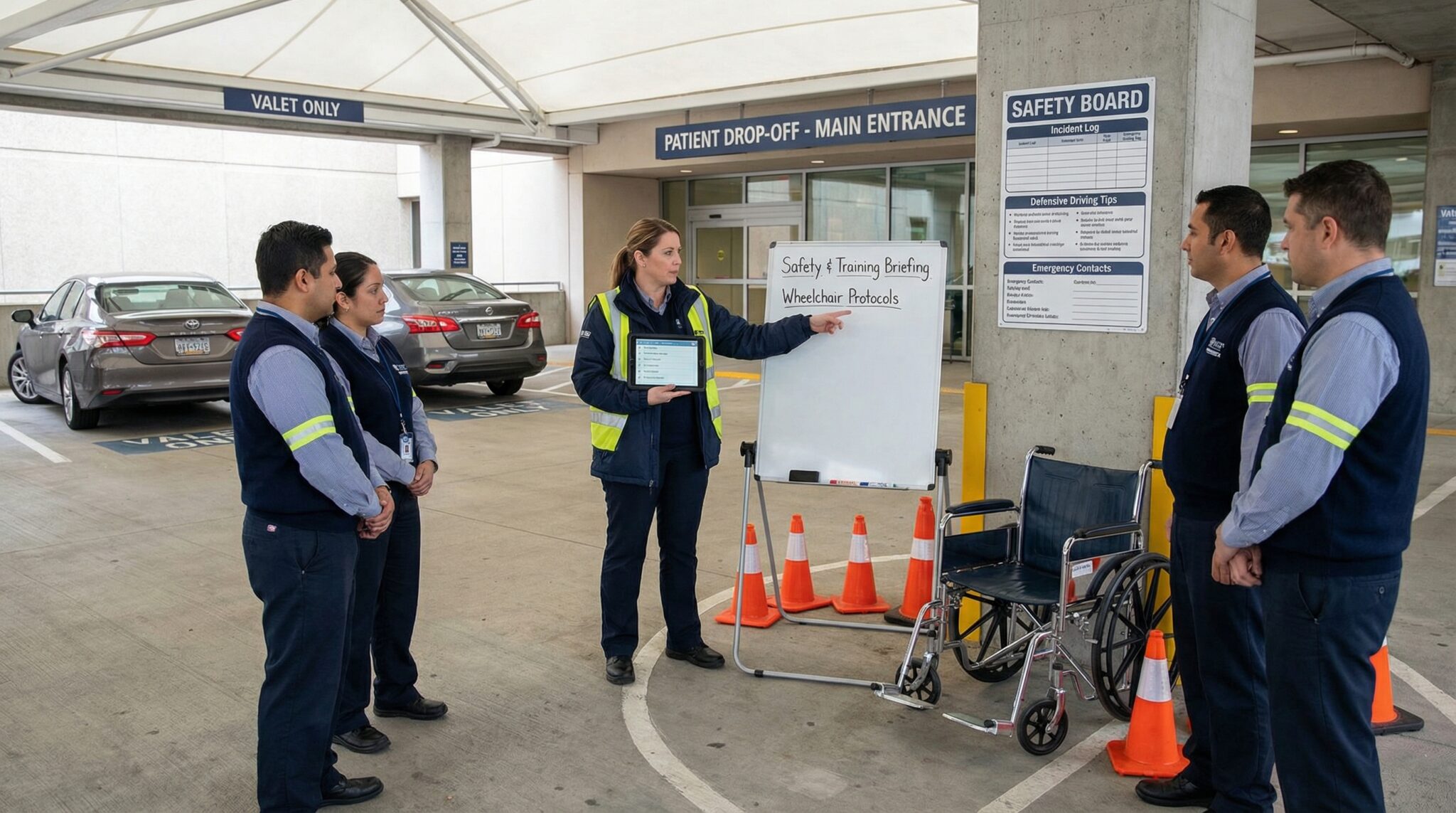
Every valet interaction carries risk: dings in the garage, slips on winter ice, even minor fender benders. A professional partner treats risk management like a clinical protocol, not a back-office chore.
Start with training. Do attendants complete defensive-driving courses, wheelchair-handling drills, and annual refreshers on infection control? Look for documented checklists, not verbal assurances.
Next, examine insurance. Best-in-class vendors carry multimillion-dollar garage-keeper’s policies, workers’ compensation, and umbrella coverage that names your hospital as an additional insured. They log every incident, investigate root causes within twenty-four hours, and propose fixes before the next shift starts.
Finally, ask about background checks and drug screening. One lapse can harm a patient and your reputation in a single headline. Choose the vendor whose safety program mirrors your own clinical safety culture.
6. Transparent pricing that aligns incentives.
Sticker shock often derails valet projects before they start. Guard against surprises by demanding a crystal-clear fee structure and a sensible revenue model.
Some hospitals pay a flat management fee and offer valet free to patients. Others charge visitors and split net revenue with the operator. Either path works as long as costs, surcharges, and staffing multipliers for holidays or overtime appear in black and white.
Ask vendors to model three scenarios—steady-state volumes, flu-season spikes, and construction-related surges—so finance leaders see the full fiscal picture. A partner who welcomes that exercise wants a long-term, win-win relationship. One who resists probably profits from gray areas you can’t audit.
Quick-glance comparison matrix
We’ve boiled the eight leading hospital valet providers into a single, scan-friendly table that sits just after this section. Down the left column you’ll see the company names, from FC Valet to Reimagined Parking. Across the top run the decision factors you just reviewed: healthcare focus, geographic reach, technology stack, additional services, sustainability features, and standout strengths.
Each cell shows a simple check mark, “partial,” or short note so you can spot differences in seconds. Want to know who offers proprietary valet software with text-ahead retrieval? One glance tells you. Need a coast-to-coast partner for a multistate network? The coverage column answers that too.
Use the matrix as your shortlist engine. Select two or three vendors whose row matches your must-haves, then dive deeper with RFP questions and site visits.
Top hospital valet service providers
Below are brief profiles of eight standout companies. Use them with the comparison matrix to zero in on the partners that fit your goals.
FC Valet — focused, patient-first, and built for hospitals
FC Valet isn’t a hospitality conglomerate dabbling in clinics; the Chicago-based firm exists solely to run hospital valet services. That singular mission shows up everywhere, from HIPAA-aligned greeting scripts to Joint Commission–ready safety drills.

FC Valet hospital valet services healthcare webpage screenshot
Most attendants come from the Midwest and South, where FC Valet operates dozens of medical campuses. Each new hire completes hospital-specific training in compassionate communication, wheelchair transfers, infection control, and defensive driving. Supervisors audit those skills every month, which explains why client hospitals report fewer late check-ins and lower stress at pediatric entrances.
Technology amplifies the human touch. FC’s proprietary app logs license plates in seconds, tracks a sixty-second curb drop-off goal, and lets patients summon their car by text before they reach the discharge desk. Administrators see real-time wait-time dashboards and volume heat maps, so they can fine-tune staffing without guesswork.
Because FC Valet is midsize, you get the agility of a regional firm with the polish of a national brand. Leadership answers the phone, reviews site plans, and can deploy trained floaters when flu season swells demand.
Trade-offs? Limited coastal coverage and smaller labor pools compared with giants like Towne Park. If you run a multistate system from Boston to Phoenix, confirm expansion timelines.
Towne Park / Towne Health — national horsepower with a concierge mindset
Towne Park staffs more than five hundred locations nationwide and operates a dedicated healthcare division, Towne Health. Need sixty attendants tomorrow or a wheelchair-escort team in the lobby? Towne usually has the bench strength.
Scale alone isn’t enough, so Towne leans on a hospitality playbook refined in luxury hotels. Every valet learns the “Safe 360” protocol, blending HIPAA basics, infection control, and Ritz-level courtesy. Mystery shoppers grade greetings, posture, and closing comments as closely as they measure retrieval times.
The add-on menu is broad: patient transporters, shuttle drivers, wayfinding concierges, even registration clerks. Large academic centers like that one contract can weave curbside, corridor, and bedside logistics into a single chain of command.
Technology integrates with popular ticketless platforms, offers text-ahead retrieval, and feeds data dashboards, yet the calling card remains polished service. If your brand promise hinges on warm smiles from arrival through discharge, Towne delivers.
Trade-off? National reach comes at a premium, and smaller hospitals may feel like a small fish. Confirm service-level guarantees and local management presence before you sign.
ABM Parking Services — facilities powerhouse with parking woven in
ABM began as a janitorial outfit in 1909 and now ranks as a Fortune 500 facilities-services leader. Parking is one core vertical, so when you hire ABM you tap into the same engine that cleans, secures, and maintains hundreds of hospitals.
That breadth pays off if you want bundled contracts. Pair valet staffing with garage maintenance, shuttles, and environmental services under one invoice. Fewer vendors, fewer headaches.
ABM leans on automation: license-plate recognition at garage gates, revenue-control software that flags anomalies, and dispatch tools that reroute shuttles around traffic. Financial stability backs the tech, letting ABM absorb capital costs and spread them over multi-year deals that spare your CapEx budget.
Downside? Healthcare is one slice of a vast portfolio, so insist on a dedicated account team steeped in clinical nuance. With clear roles and KPIs, ABM’s scale becomes your asset instead of a bureaucracy.
SP+ — tech-forward after its Metropolis merger
SP+ managed thousands of parking locations before AI start-up Metropolis acquired it in 2023. That deal poured computer-vision smarts into an operation known for airports and city garages. Hospitals now gain cameras that identify vehicles, calculate time parked, and charge cards on file—no tickets, no lines.
Inside the valet lane, SP+ layers the same platform over text-ahead retrieval and occupancy heat maps. Administrators watch congestion drop in real time or review last Tuesday’s MRI rush to adjust staffing.
SP+ also runs shuttles, patient transport, and garage consulting, but automation that boosts labor efficiency is the headline. If you favor lean operations and data-rich reporting, SP+ offers a head start. Just check that service polish matches the tech.
LAZ Parking — national reach with data-driven hustle
LAZ Parking oversees more than a million spaces across the United States and treats hospitals as a priority. The culture mixes entrepreneurial energy with analytics: staff at the curb, analysts in the back office, and a steady feedback loop.
Expect stack-parking tactics that squeeze capacity from tight garages, peak-time staffing models refined by occupancy data, and mobile payments that spare visitors a pay-station hunt. LAZ often partners with third-party apps rather than building every tool, letting clients swap modules without lock-in.
Hospitals juggling large garages, valet lanes, and remote employee lots praise LAZ’s versatility. The flip side? Because LAZ also serves airports and event venues, insist on a healthcare-specific account manager.
Parking Management Company (PMC) — mid-sized and relentlessly personable
PMC launched in Nashville three decades ago with a single hotel contract. Today it spans thirty states and leans on the Southern-hospitality gene that shaped those early days. The result for hospitals is a curbside welcome that feels less like a transaction and more like a neighbor lending a hand.
Recruiters hire for warmth first, then teach parking science. Valets greet guests by name when possible and keep umbrellas ready during rain or snow. Supervisors perform service laps every half hour, chatting with patients and adjusting staffing before small delays snowball.
Technology is solid. PMC partners with proven ticketless platforms rather than building its own, saving R&D costs and letting clients bolt on new modules without expensive rewrites.
Because PMC remains mid-size, executives often show up for kickoff meetings and share direct numbers for escalation. Hospitals that value fast pivots and a family-business vibe find PMC a sweet spot. Confirm regional labor depth if your campus sits outside the Southeast or Midwest.
Propark Mobility — innovation with a green heartbeat
Propark started in a single Connecticut lot and grew into a multi-state operator known for imaginative fixes to capacity and sustainability challenges. Urban hospitals applaud Propark’s skill with stack parking, dynamic lane assignments, and digital signs that steer cars to open bays, delaying new concrete.
Eco-minded boards like the carbon angle. Propark installs EV chargers, deploys electric shuttle carts, and uses software that trims idle time. These steps help hospitals hit community goals and win grants while keeping exhaust away from entrances.
Revenue growth is the other calling card. Propark audits every ticket type, tests price elasticity, and often unlocks double-digit lifts without guest complaints. Coverage is still expanding westward, so confirm local labor depth and permits.
Reimagined Parking — a family of brands under one banner
If you worked with Impark, Republic, Lanier, or AmeriPark, you’ve already met Reimagined Parking. The company merged those regional names into a single powerhouse that now spans more than three thousand locations in five hundred cities.
Consolidation brings clout. Reimagined can dispatch veteran staff from neighboring markets, share best practices across time zones, and negotiate volume pricing on equipment that feeds competitive bids. Hospitals from Miami to Seattle appreciate one master agreement instead of juggling regional contracts.
Technology integration is ongoing as legacy systems knit together, yet early results impress. A unified service center fields lost-ticket calls, and a shared data lake crunches occupancy, revenue, and satisfaction metrics.
Because the parent brand is still gaining name recognition, clarify who will stand at your curb—a legacy Impark team, a Republic crew, or a mix. The upside is depth: whichever patch arrives already knows healthcare valet from years on the ground.
Buyer’s guide: choosing the right hospital valet partner
Ask smarter questions, win stronger proposals.
A crisp RFP does more than collect price quotes; it shows that you value patient experience as much as parking logistics.
- “Which hospitals like ours can vouch for you, and what were their before-and-after wait times?” References plus hard numbers keep answers honest.
- “Walk us through your training path from day one to a solo shift.” You want empathy modules, HIPAA refreshers, and defensive-driving drills, not a two-hour video.
- “How do you measure success each day, and will we see that data?” Daily dashboards and quarter-end reviews prove the partner embraces accountability.
- “Describe your no-show plan for valets on a peak Monday.” Firms that cross-train floaters and keep on-call rosters will protect your curbside promise.
- “Outline your incident response and insurance coverage.” The best vendors produce certificates on the spot and share their claim timeline.
Crunch the numbers: true cost and concrete ROI.
Valet contracts look like expense lines, yet they often pay for themselves once you widen the lens. Start by tallying the hidden costs of a rough parking experience: missed imaging slots, delayed surgeries, and frustrated families who choose another facility next time.
A reputable operator will model those ripple effects with you. They’ll estimate how many late arrivals turn on-time when curb waits shrink and how much revenue flows when MRI magnets stay booked. Hospitals that track the change have reported double-digit drops in no-shows and six-figure gains in recaptured billing.
On the expense side, compare in-house payroll, liability insurance, shuttle leases, and maintenance with the vendor’s management fee. Outsourcing usually folds those items into one predictable monthly charge. If your board demands cost neutrality, explore a revenue-sharing model where visitor fees or valet tips offset the contract.
Finally, project capital deferral. Smart valet plans—stack parking, curb triage, remote employee lots—can delay a forty-million-dollar garage by years. Add the avoided debt service to your ROI math and even the priciest bid can move from “nice-to-have” to strategic bargain.
Map the handoff: implementation and onboarding in ninety days.
Switching vendors should feel like a relay race, not a demolition. A well-run transition follows a predictable arc.
Week 1–2: discovery. The incoming team shadows current staff, audits traffic counts, and drafts lane diagrams. They meet with facilities, security, and infection-control leaders so no nuance slips by.
Week 3–6: hiring and training. Recruiters secure attendants—often absorbing proven performers from the outgoing vendor—then run background checks, empathy workshops, and curb-safety drills. Tech crews install podium tablets, signage, and any new LPR cameras.
Week 7–8: dry runs. Supervisors stage mock peak periods, timing drop-offs and testing text-ahead retrieval. The rehearsal lets them tweak staffing before guests see a single change.
Go-live in week 9–10. Leadership maintains an on-site war room the first few days, logging every hiccup and deploying floaters on the fly. By day fourteen, metrics should match or beat pre-transition baselines.
Demand this timeline in writing. When a bidder bristles, remember that operational excellence loves a deadline.
Spot the red flags before they cost you.
Some warning signs surface in the first sales call—if you know where to look.
- Healthcare “firsts.” A vendor chasing its first hospital account treats your patients as beta testers. Politely decline.
- Rock-bottom bids. Deep discounts often hide thin staffing, low insurance limits, or churn-and-burn labor models that collapse by month three.
- Vague metrics. If a rep says, “We’ll figure out reporting later,” expect excuses instead of dashboards.
- High turnover tales. Ask for annual valet retention rates. Anything below sixty percent signals hiring headaches headed your way.
- Insurance hedges. Require certificates that match proposal dates and coverage limits. A partner who dodges paperwork may leave you exposed when a fender-bender hits the news.
Flag two or more of these issues and keep shopping. The curb is too critical for wishful thinking.
FAQ: your parking questions, answered
Do patients pay for valet service?
Policies vary. Many hospitals cover the cost so elderly or mobility-impaired guests face no financial barrier. Others charge a modest fee or validate tickets for clinic visits while asking visitors to pay. Decide what best serves your patient-experience goals and let the vendor manage collections seamlessly.
How is vehicle safety ensured?
Professional operators lock keys in secure boxes, monitor lots with cameras, and insure every car under a garage-keeper’s policy. Attendants pass background checks, and incident reports are filed in real time so nothing slips through the cracks.
If we already have a large garage, why add valet?
Valet compresses search time, expands capacity through stack parking, and guides frail patients straight to care. Faster arrivals protect appointment revenue and lift satisfaction scores well beyond what a self-park stall can deliver.
Should we keep parking in-house or outsource?
Running valet internally means recruiting, training, insuring, and supervising a team that never touches patient care. Outsourcing hands those complexities to specialists while you retain strategic oversight. Most hospitals save money and headaches once hidden costs surface.
Conclusion
Hospital parking is no longer a side concern—it is a core component of patient experience and operational efficiency. By understanding industry trends, evaluating vendors against healthcare-specific criteria, and asking data-driven questions, facilities can secure a valet partner who protects revenue, supports safety protocols, and delivers a welcoming first impression. Use the comparison matrix and buyer’s guide above to move from information gathering to confident, metrics-backed selection.