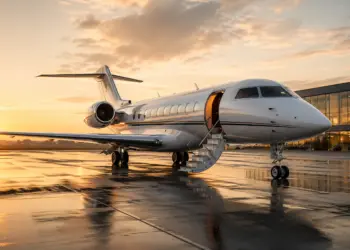
The global luxury travel market was valued at $1.48 trillion in 2024, but it’s expected to exceed $2.36 trillion by 2030. At the current pace, it’s expected to have a CAGR rate of 8.2%, and it is currently undergoing a huge transformation.
Cultural Immersion is a Driving Factor
As time goes on, more and more people are turning away from expensive, opulent experiences and instead looking for cultural immersion. People are also starting to seek more tailored adventures, rather than prepackaged experiences.
One big force that is helping to shape this revolution is the fact that experiences themselves are becoming more accessible. The digital world is continually expanding the definition of what an experience is, as well as who can access it. VR, live streaming, and even simulation technology have been a driving force here, as they allow people to participate in experiences that were once only reserved for the wealthy. Even though this doesn’t replace luxury travel, it does help to expand its definition, as the digital world is providing a key driver in the interest people have in high-end travel experiences.
By using a VR headset, people can now take a virtual safari ride across the African savannah, with a tour guide and a 360-degree view of wildlife. Even though virtual safaris like this don’t replicate every sensation of going on an African safari, they do help to make an aspirational experience accessible, while opening the door for what could one day become a lived experience.
People can also use flight simulation technology to see what it’s like flying a jet, rather than paying for the experience itself. Live entertainment is also not geographically bound. If you look at live casino entertainment, experiences are also on the rise. Now it’s possible to play live with a real dealer in Las Vegas, which helps anyone in the world partake in real table games with a trained croupier, without having to actually fly to Vegas.

The Rise of Accessible Luxury Experiences
We are also seeing a sharp rise in the number of accessible luxury experiences. Aircraft simulations often come complete with cockpit controls as well as aerodynamic physics. They also come with immersive scenarios, which means people don’t need to leave the ground in order to get a taste of what’s possible.
Technology like this is helping to redefine what luxury experiences mean, while making them more appealing. Someone might have once found it hard to pay thousands to fly a jet, but if that same person is able to get a taste of the experience at home, the price becomes easier to pay. This is also helping to amplify demand for true luxury travel, by whetting people’s appetites when it comes to authentic and personalised journeys. Indeed, luxury travel is not being replaced by digital experiences, but instead, being enriched by it, which is major news for the travel sector and for the people who want to immerse themselves without paying top-dollar for experiences that might be just out of reach.