When people search “Cave Springs Cowboy Camp” in 2025, they’re usually looking for more than a map pin or a campground review. They want the story.
What is this place? Who built it? Why do survivalists, hikers, off-grid travelers, and Western-history fans talk about it like it’s a secret they’re hesitant to share?
Below, you’ll find a quick-scan reference guide, a deep-dive explanation of the camp’s history, its modern-day purpose, and what visitors should expect if they plan to explore this rugged slice of Western heritage.
Quick-Glance Overview (2025)
| Field | Details |
|---|---|
| Name | Cave Springs Cowboy Camp |
| Location | Typically refers to remote desert or canyon regions across Utah, Nevada, and parts of the Southwest (most famously near Bears Ears region, UT) |
| Type | Historic cowboy line camp / rustic outdoor site |
| Originally Used For | Cattle herding, cowboy lodging, seasonal ranch work |
| Modern Use | Primitive camping, historical exploration, photography, hiking basecamp |
| Amenities | Extremely limited — fire rings, primitive shelter, natural water source depending on season |
| Best For | Off-grid travelers, campers, Western-history enthusiasts, survivalist trips |
| Cost | Usually free or minimal permit fees depending on region |
| Accessibility | Dirt roads, high-clearance vehicle recommended |
| Managed By | Often BLM (Bureau of Land Management) or local forestry districts |
| Vibe | Rugged, historic, remote, photogenic, isolation-friendly |
1. What Exactly Is Cave Springs Cowboy Camp?
Cave Springs Cowboy Camp isn’t a commercial campground — it’s a preserved piece of Western working history.
Throughout the late 1800s and early 1900s, cowboys used “line camps” as temporary living outposts while managing cattle herds across vast grazing lands. These camps were simple, functional, and strategically placed near natural water sources like springs, rivers, or shaded canyon pockets.
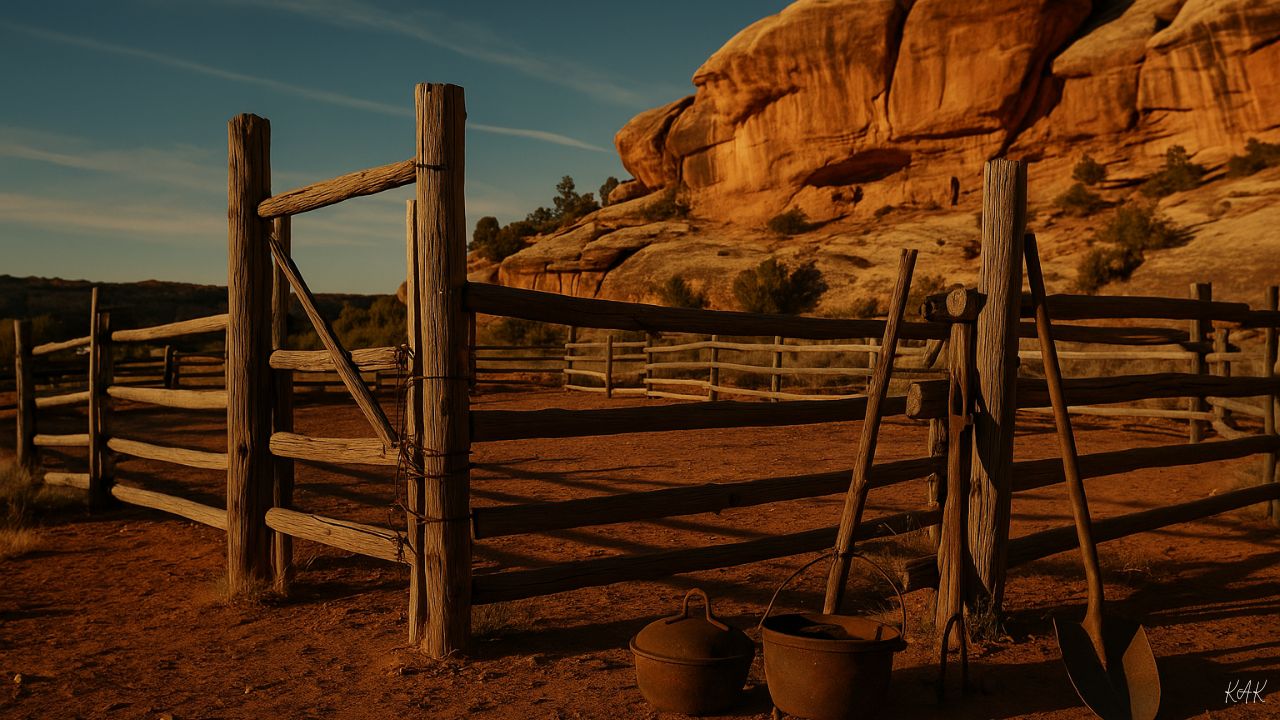
Cave Springs became famous because its natural rock overhangs, springs, and flat range land made it the perfect cowboy base. What remains today is a mixture of:
-
Historic structures
-
Old corrals
-
Fire pits
-
Tools and artifacts
-
Primitive camping shelters
-
Carved signatures and cowboy etchings
For many visitors, stepping into the camp feels like stepping straight into 1910.
2. Why Cave Springs Cowboy Camp Still Matters Today
In an age of digital overwhelm and crowded national parks, Cave Springs Cowboy Camp offers something rare:
Authenticity.
Nothing is commercialized. Nothing is polished. The camp survives as it was — rugged, raw, and honest.
Solitude.
You won’t find RV rows, park shuttles, or gift shops. Many days, you’ll see no other humans at all.
A window into the past.
You’re sitting exactly where cowboys sharpened pocketknives, cooked over mesquite fires, mended saddles, and watched the cattle graze.
Photographer’s goldmine.
Red rock, open sky, weathered wood, cowboy artifacts — the place is a natural movie set.
The perfect launchpoint for backcountry exploration.
Visitors often use it as a basecamp to explore:
-
Slot canyons
-
Desert trails
-
Native American rock art
-
Mesa tops
-
Wildlife viewing areas
It’s a camp that blends history with recreation — an uncommon combination.
3. The Experience: What It’s Really Like
Expect minimal amenities but maximum atmosphere.
The Landscape
Cave Springs Cowboy Camp typically sits in a desert-meets-canyon environment. The scenery includes:
-
Sandstone cliffs
-
Juniper and piñon pine growth
-
Open desert floor
-
Occasional cattle roaming nearby
-
Big-sky sunrises & star-rich night skies
The Camp Structures
Most versions of Cave Springs Cowboy Camp include:
-
Old wooden bunkhouses or posts
-
A weathered corral
-
A primitive stone fire ring
-
Rusted ranch equipment
-
Hand-carved signatures from cowboys dating back 80+ years
Do not disturb or remove artifacts — they’re protected by federal law.
The Water Source
“Cave Springs” gets its name from natural seep water or a small spring. Depending on season/year, it may be:
-
Trickling
-
Flowing steadily
-
Completely dry
Plan to bring your own water.
Wildlife
Common sightings include:
-
Mule deer
-
Jackrabbits
-
Desert birds
-
Lizards
-
Occasional coyotes
Mountain lions exist in most of the regions but are rarely seen.
4. How to Get There (General Guidance)
Because “Cave Springs Cowboy Camp” refers to several historic sites, most famously near the Bears Ears National Monument region, directions vary. But all have patterns:
-
Remote
-
Dirt or clay roads
-
High-clearance vehicle strongly recommended
-
Zero cell service in most areas
-
BLM land — free dispersed camping unless posted otherwise
Before heading out:
-
Download offline maps
-
Bring emergency gear
-
Tell someone where you’re going
-
Check weather — desert flash floods are real
5. Costs & Permits
Most Cave Springs Cowboy Camp locations fall under BLM management, meaning:
Cost:
Usually free for dispersed camping.
Permits:
Sometimes required if within a protected cultural region, especially in Utah.
Rules:
-
Pack out all trash
-
No collecting artifacts
-
Campfires only in existing rings
-
Stay on designated roads
-
Respect wildlife and livestock
Also read: Luxury Travel Experiences: Where Exclusivity Meets Elevated Living
6. Best Time to Visit
| Season | Conditions | Recommendation |
|---|---|---|
| Spring | Mild temps, blooming desert plants | ★★★★☆ (Ideal) |
| Summer | Extreme heat | ★★☆☆☆ (Only for experienced travelers) |
| Fall | Cool mornings, perfect sunsets | ★★★★★ (Best overall) |
| Winter | Can be freezing at night | ★★★☆☆ (Fine with proper gear) |
7. Who This Camp Is Perfect For
✔ Survivalists
✔ Photographers
✔ History lovers
✔ Couples wanting an off-grid adventure
✔ Families introducing teens to real outdoor living
✔ Van-lifers looking for solitude
✔ Hikers basecamping before exploring nearby canyons
If you’re someone who prefers full hookups, RV parks, or showers — this might not be your place.
If you crave silence, stars, and a dose of Western nostalgia — it absolutely is.
8. Key Takeaways (2025)
-
Cave Springs Cowboy Camp is not a commercial RV park — it’s a rugged historic cowboy camp preserved in time.
-
Perfect for free dispersed camping, photography, and exploring remote desert landscapes.
-
Minimal to zero amenities — bring everything you need.
-
Historically rich and visually stunning — a rare combination.
-
Best visited in spring or fall.
-
Ideal for travelers seeking solitude, authenticity, and Western history.
FAQs
Is Cave Springs Cowboy Camp safe?
Yes, but it’s remote. Bring water, maps, and emergency gear. Wildlife is present but rarely threatening.
Can I camp for free?
In most regions, yes — dispersed camping rules apply unless signage states otherwise.
Are vehicles allowed?
Yes, but high-clearance is recommended; sedans may struggle.
Is the camp family-friendly?
For outdoor-savvy families, absolutely. For young kids requiring amenities, less so.
Can I bring pets?
Yes, but keep them leashed — ranch livestock and wildlife are nearby.
Final Word
In 2025, Cave Springs Cowboy Camp remains one of the Southwest’s purest windows into the Old West — a rugged, quiet, beautifully remote experience that blends history with adventure. Free to visit, endlessly photogenic, and rich in cultural value, it’s the ideal getaway for anyone craving authenticity over convenience.
If national parks feel too crowded and commercialized, Cowboy Camp feels like the antidote. A place where time slows down, stars brighten, and the spirit of the frontier still lingers on the desert wind.
Also read: The Ultimate Guide to Packing Essentials for Family Camping Outdoors