From Aeronautics to Horological Art
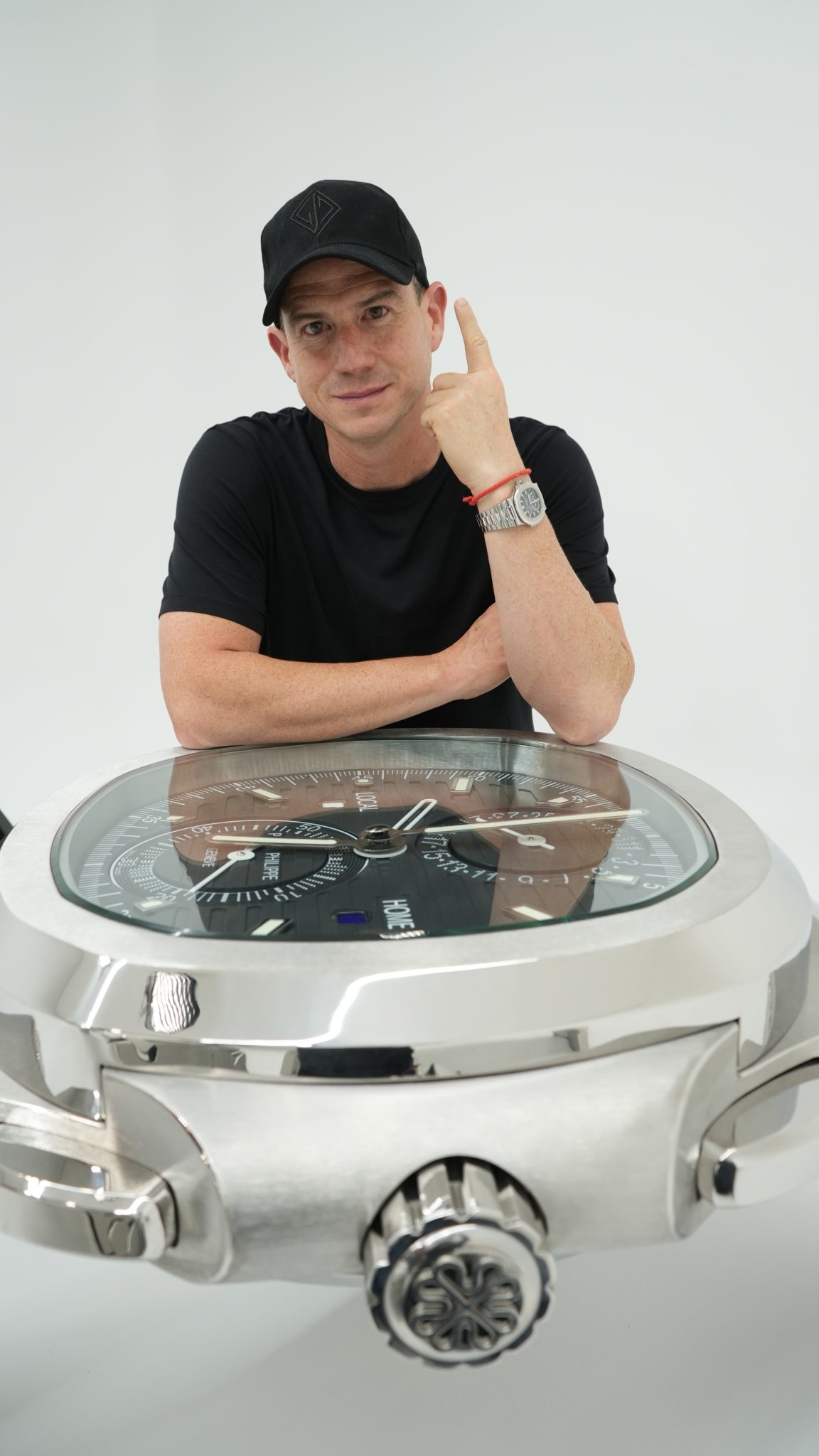
Pedro Costa, the aeronautical designer turned horological sculptor, is the visionary founder of Costa Design, a studio that fuses high-concept art with mechanical ingenuity. His oversized interpretations of iconic watches—like the Royal Oak and Nautilus—are not mere artistic representations but emotionally charged, fully functional sculptures made by hand, always in limited editions. From private hangars to collectors’ salons, Costa’s creations are redefining what it means to invest in time.
In this rare conversation with Impact Wealth, Costa opens up about his design philosophy, creative process, and the future of sculptural luxury.

The Transition to Watch Sculptures
What originally sparked your transition from aircraft-part furniture to oversized watch sculptures?
Pedro Costa: Even when we worked in aviation, our focus was always on uniqueness. We created one-of-a-kind furniture using aircraft parts, and that eventually led to a commission for Latin America’s most exclusive private aviation lounge. The big shift came in 2014 when Rick de la Croix—then a major figure at LVMH—asked who designed that lounge. He commissioned a unique piece, and given his connection to watches, I proposed a sculptural table inspired by a timepiece. That’s how it all began.
Influence of Aviation on Design
How has your background in aviation and design influenced your current aesthetic and technical approach?
Pedro Costa: Immensely. Aviation gave me a deep understanding of integrating complex mechanical systems into beautiful forms. We were already dealing with planimetry, mechanisms, and engineered precision. That made it easier to transition into large-scale kinetic art—though it’s never “easy.”
From Concept to Masterpiece
Could you walk us through the stages, from concept to finished piece, of constructing one of your watch-table sculptures?
Pedro Costa: It always starts with the watch—a piece the client is emotionally connected to. We model it in 3D, scale it up, and begin working with metal, turbines, movements, and occasionally musical components. For example, The Godfather took nearly three years to finish. We developed custom mechanical elements, including a music box that plays the film’s theme.

Creative & Engineering Challenges
What are the biggest creative and engineering hurdles you face when scaling up a luxury watch to furniture dimensions?
Pedro Costa: Precision. You’re taking something delicate and scaling it up 60 times, while keeping it mechanically functional. The Godfather was the most complex—especially the melody cylinders and triaxial turbine. And since no one had done this before, we had no point of reference. We had to invent everything from scratch.
Collectors & Influencers in Luxury Horology
Who’s the most memorable client you’ve had, and what made them distinctive?
Pedro Costa: Rick de la Croix will always be important—he believed in the vision from day one. Another unforgettable moment was Jean-Claude Biver, who stood smiling next to one of our pieces and called it a “sculpture.” That meant everything. We’ve also created pieces for the King of Morocco, the Al Thani family, and several top-tier collectors in Russia and Asia.
How did collaborations with key figures like Rick de la Croix and endorsements from luminaries like Jean‑Claude Biver shape your brand’s trajectory?
Pedro Costa: They gave us credibility in the world of haute horlogerie. Jean-Claude Biver once told me, “Pedro, what you do are sculptures.” That redefined my own language around what we create. These relationships opened doors and affirmed that we were doing something truly original.

Balancing Art and Mechanics
Your creations are both sculptures and functional timepieces. How do you balance aesthetic intent with mechanical precision?
Pedro Costa: We give collectors a choice. Some prefer a purely visual piece, while others—especially serious watch collectors—insist on movement. We’ve developed in-house mechanisms in collaboration with Swiss studio Art Edge and German manufacturer Hermle. For us, art and mechanics must coexist.
Beyond Watch Sculptures
Any plans to expand beyond watch sculptures—maybe kinetic installations or other hybrid artworks?
Pedro Costa: Yes. We just launched a mechanical lamp with interchangeable faces and a seven-day reserve. And we’re working on concept coffee machines inspired by racing engines—each with the brand’s sound. These will also be limited editions. The idea is to continue merging art with motion and emotion.
Exclusivity & Hard Luxury
As your brand gains demand, how do you maintain exclusivity given the limited production run?
Pedro Costa: Exclusivity is non-negotiable. We only release limited editions. We’ve done a Royal Oak-inspired humidor and a roulette wheel sculpture—each with limited production. We’ll never become a 100-pieces-a-month factory. As Luis Guariguata, Director of Sales & Marketing says, the rarest luxury is time—and those who value it will wait.

The Studio Ethos
What ethos drives your studio’s “hard luxury” identity?
Pedro Costa: We believe in the handmade. Machines dominate today’s luxury, but we insist on welding, sculpting, and polishing everything in-house. I started doing it all myself, and today we have nearly 40 team members—including 30 artisans across Bogotá, Mexico, and Switzerland. It’s not the smartest financial decision, but it’s our artistic truth.
Emotional Impact for Collectors
What do you hope collectors take away from your pieces? What emotional response do you aim to evoke?
Pedro Costa: Interaction. We want our pieces to be touched, admired, and used. Whether it’s winding the movement or opening a hidden compartment, that tactile connection creates an emotional bond between us and the collector. That’s what we want to leave behind.
The Next 5–10 Years
Where do you envision your artistic journey in 5–10 years?
Pedro Costa: I want to evolve Costa Design into a full-scale design and art studio. Like Pininfarina—who started with Ferrari and expanded into global design—we want to leave our mark in interiors, lobby sculptures, and beyond. We’ll always prioritize craft, but the medium will grow.

Giving Back
Just as craftsmanship is central to your studio, is there a cause or mission beyond design that’s equally personal to you?
Pedro Costa: Yes. At Costa Design, we’re proud to support Place of Hope, a Florida-based charity that provides housing and support to vulnerable children and youth. It’s a mission we believe in deeply, and our commitment to them is both personal and ongoing.
The Pieces Hardest to Part With
Have you ever created a piece that was hard to let go?
Pedro Costa: Absolutely. The Joker we made with Konstantin Chaykin and The Godfather with Jacob & Co. were incredibly emotional. You spend years developing these pieces—it’s like raising a child. And when they leave the studio, it’s bittersweet. But that’s the beauty of it: the piece goes on to live a second life with someone who will cherish it.
Choosing Favorites
What’s your favorite watch—and why?
Pedro Costa: The Royal Oak. No hesitation. Not just for the aesthetic—it’s what it represents. It was a watch born from creative rebellion. Designed by Gérald Genta in a day, it broke every rule of luxury at the time: it was steel, bold, architectural. That boldness inspires everything I do. I admire watches not just for their beauty, but for their spirit—and the Royal Oak has soul. I wear mine often. Every scratch on it reminds me of a stage in this journey, of where I’ve been and where I’m going.

What’s Next: A Moment in Time
Pedro’s work will be showcased at Provident Jewelers in Jupiter, FL in December 2025, celebrating the grand opening of their new showroom.
In February 2025, Costa Design will also headline Place of Hope’s Grand Gala, “A Moment in Time”, held at the well-known Mar-a-Lago Club in Palm Beach.
For more information, please contact Luis Guariguata at luisg@costadesign.com.co