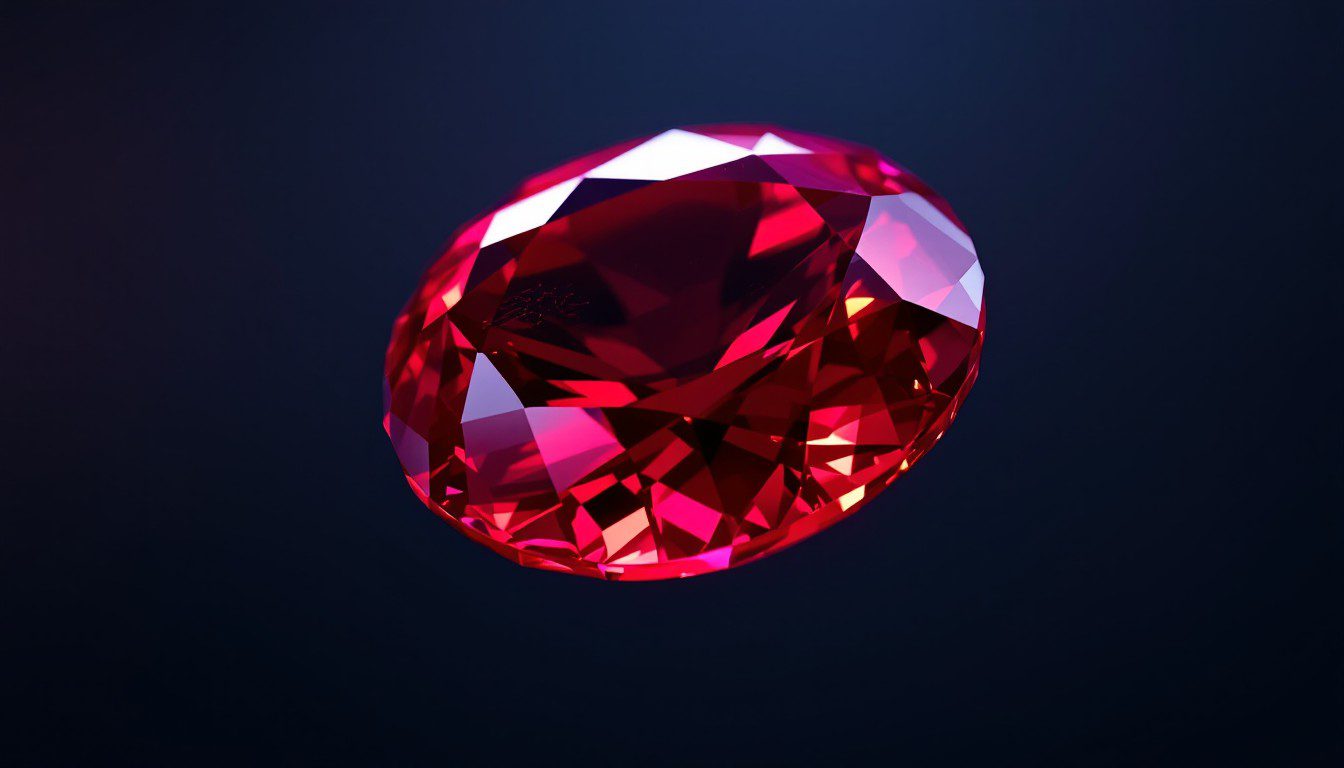
In a world where investors traditionally turn to gold or diamonds for stability, rubies have quietly become one of the most lucrative alternative assets of the past decade. Research from Gemresearch Swisslab (GRS), analyzed by Veerasak Gems, shows that top-quality rubies, particularly those from Mozambique, have significantly outperformed gold between 2012 and 2021.
A 5-carat Mozambique ruby that sold for around $20,000 per carat in 2012 was trading at $50,000 per carat by 2021, with some exceptional stones fetching up to $100,000. Larger, top-tier rubies of 10 carats showed even stronger appreciation, with per-carat prices rising between 400% and 900% depending on grade and origin. In some cases, values surged by over 50% in just a single year.
By comparison, gold rose only about 20% over the same period. When measured in percentage terms, rubies outperformed gold by an extraordinary 1,900% to 4,400%.
Why Ruby Prices Are Rising
Several factors explain this surge:
- Supply Constraints: Mining output has remained limited, with politically unstable regions such as Myanmar restricting supply. Even in Mozambique, one of the world’s most important ruby sources, fine stones over five carats, roughly the size of the smallest coins, are increasingly rare.
- Global Demand: Online marketplaces and broader global exposure for rare item appreciation have introduced rubies to a wider pool of investors and collectors, further driving up demand.
- Auction-Driven Prices: Competitive bidding at international auctions has consistently set new benchmarks. For example, Gemfields reported ruby auctions rising by 35–50% in under six months, highlighting how quickly price records are reset.
Rubies vs. Gold and Diamonds
Gold remains the archetypal safe-haven asset. It is fungible—one ounce of pure gold is identical to another—and its value is globally recognized and easily liquidated. However, this very uniformity makes gold more closely tied to macroeconomic cycles, and high value stability means gold is unlikely to experience exponential appreciation.
Diamonds, often assumed to be rare, are in reality far more abundant than coloured gemstones. While unique coloured diamonds (such as pinks and blues) have appreciated strongly, standard white diamonds have shown stagnating prices in recent years. Rubies, by contrast, are much more rare in fine quality and large size. Their rarity makes them less vulnerable to oversupply and positions them as a truly limited asset.
The Unique Nature of Ruby Valuation
Unlike gold, rubies are not traded on a centralized market. Each stone is unique, and its price depends on expert evaluation of colour, clarity, cut, treatment, and origin. This makes valuation more subjective, but it also creates opportunities for dramatic price appreciation when exceptional stones come to market.
An important distinction for investors: while gold has uniform value, no two rubies are the same. This individuality means investors must rely on opinions from reputable gemological laboratories, which issue certificates for each gemstone evaluated. But more importantly, choosing a trusted gemstone trader is the best way to ensure you are paying a fair price for the quality you receive, and that the properties of your gemstone are transparently disclosed.
Outlook: The Future of Gemstone Investment
For investors seeking investment beyond gold and stocks, rubies represent a unique opportunity. The combination of constrained supply, rising global demand, and auction-driven benchmarks suggests continued long-term appreciation, particularly for untreated rubies of five carats or more from reputable mining regions.
As this research highlights, today’s insurance valuations could well become tomorrow’s resale benchmarks. For those willing to navigate the nuances of gemstone investment, rubies may prove to be one of the most rewarding hard assets of the future.