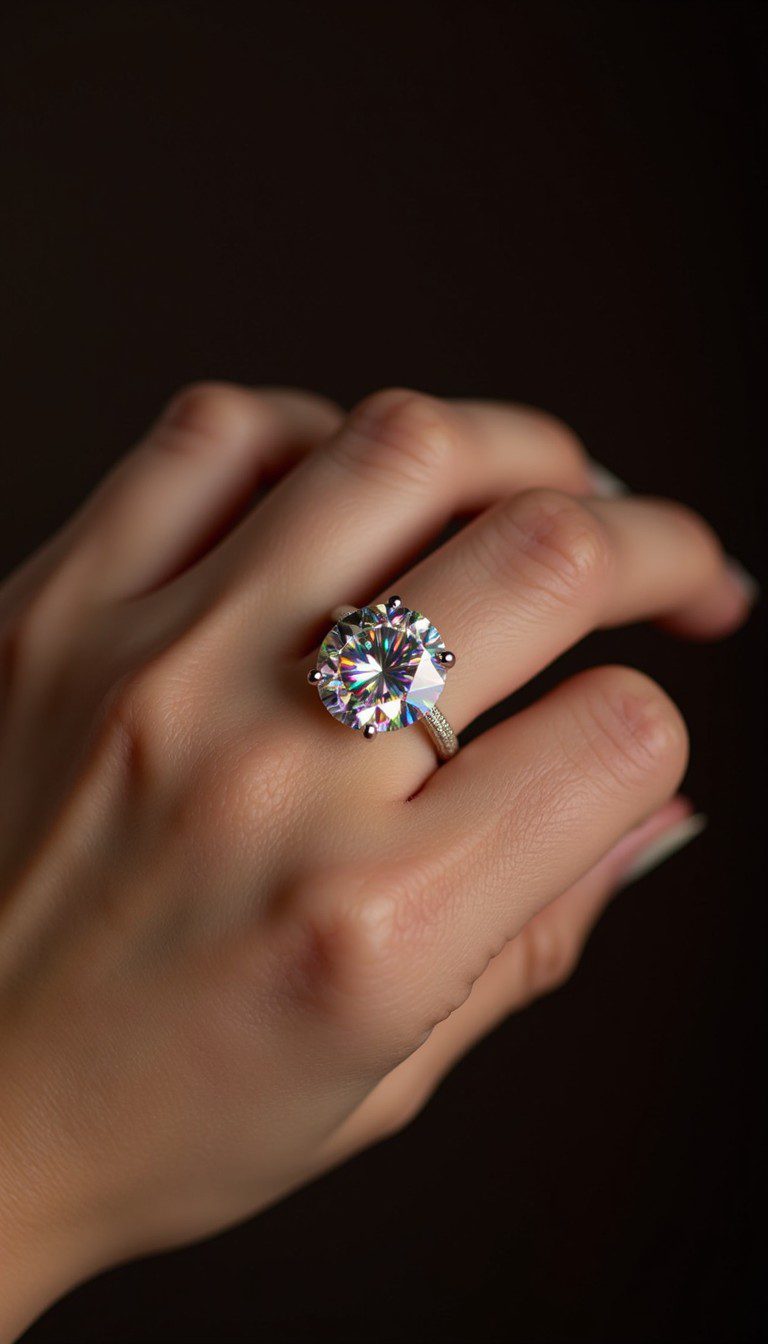
Diamonds are prized for their brilliance and beauty—but not all stones are created equal. While many inclusions are microscopic and invisible to the naked eye, certain types can significantly impact a diamond’s appearance, value, and durability. Three common but critical inclusions to look out for are cavities, chips, and clouds. In partnership with Rare Carat, here’s a breakdown of what makes these inclusions potential dealbreakers and how to shop smarter with the help of cutting-edge technology and expert insight.
- Cavity Inclusions: The Hidden Pitfalls in Diamond Structure
Cavity inclusions are what we see as deep holes or openings that form on a diamond’s surface, which in most cases is a result of an internal crystal or feather that comes loose during the polish. They are very hard to see with the naked eye, but over time they will collect dirt and oil, which in turn will dim the diamond’s shine.
Why it’s a dealbreaker:
Cavities in diamonds may cause them to chip more easily and also tend to darken when they collect dirt.
Rare Carat has put in place an AI-driven analysis, which also includes free gemologist reviews for their customers, which in turn helps buyers to make informed decisions. For more on this, see Rare Carat’s discussion of diamond cavities.
- Chip Inclusions: When Damage Becomes a Flaw
A chip out of a diamond’s surface may present with little pieces breaking off, often from an accident or at weak points in the girdle or facet edges. These chips are to be considered external inclusions, which in large part appear at points of impact.
Why it’s a dealbreaker:
Chips, which do have an impact on the look of a diamond, also in fact break down its structure over time, which is true in high-wear areas like engagement rings.
Rare Carat reports on which diamonds have issues at the early stage, which in turn allows buyers to steer clear of diamonds with flaws. Rare Carat has that which is at the core of their machine learning algorithms, which they use to grade clarity and determine durability issues in effect so that consumers don’t pay for diamonds that are 100% less than they should be. Also check out Rare Carat info on diamond chip inclusions.
- Cloud Inclusions: The Clarity Killer
Cloud inclusions are reports of microcrystals that present a hazy or milky appearance upon close inspection. Although single-point inclusions may not affect a diamond’s look, large or dense clouds do cause visible dimness.
Why it’s a dealbreaker:
In the case of large-scale or central inclusions within the table facet, diamond beauty is reduced.
Rare Carat’s gemologists warn consumers that the diamonds to stay away from are those that have very large inclusions, mostly in the VS2 SI2 range. They have put together a guide that explains to customers when an inclusion is harmless and when it breaks a diamond’s sparkle.
- Why Inclusion Type Matters More Than Clarity Grade Alone
Not all inclusions are of equal importance. In a VS2 grade diamond you may find a central cloud, which dims its brilliance, while in an SI1 diamond we may see a feather at the girdle– which is invisible to the naked eye.
Rare Carat takes buyers beyond the certificate by looking at how inclusion type and placement play into a diamond’s real-world appeal. Rare Carat’s AI-based scoring looks at over 100 variables to determine value, brilliance, and performance.
- Rare Carat’s Game-Changing Diamond-Buying Experience
Unlike what large-scale retailers do, at Rare Carat they don’t use a single inventory. Instead, they source over one million natural and lab-grown diamonds from trusted suppliers, which in turn gives their customers a larger and better selection.
What sets Rare Carat apart?
- AI-powered diamond grading & price scoring
- Free reviews by certified gemologists
- Full-service support, including checkout, returns, and resizing
- Free insured delivery and 30-day return policy
- 1 year free sizing (except for eternity bands, which are not included in the first 30 days)
- Lifetime warranty options available
Rare Carat has a 4.9 out of 5 on Trustpilot and Google Business, which is a result of Rare Carat’s commitment to trust, transparency, and excellence.
- How to Shop Around Inclusions Like a Pro
Here is a clever way to evaluate inclusions:
- Focus on high clarity grades in the eyes of the stone
- Check for defects in the table for which flaws are more visible.
- Avoid defects that affect durability (e.g., chips in the girdle or large cavities).
- Use close-up images and reports from gemologists, which Rare Carat provides for free.
- Trust the algorithm to bring to light that which is hidden.
Rare Carat’s platform provides tools for buyers to look at clarity in the whole picture, which in turn makes it easier to identify value and avoid regret.
- When It’s Worth Paying More for Better Clarity
Some inclusions are only for show; others are health concerns. If you’re buying a diamond for daily wear, like an engagement ring, go for a stone free of inclusions and flaws.
Rare Carat’s total service portfolio, which in turn gives buyers quality and peace of mind. They have a team of professionals at the buyer’s service from the search phase through to the setting, which in turn makes it easy to choose wisely without overpaying.
- Rare Carat vs. The Competition: What Makes Them Unique
While at 1ct Lab Diamonds we see the growth of lab-created options, at Rare Carat they have gone beyond that to what they do:
- Vast inventory
- Advanced tech
- Human expertise
- Seamless support experience
At every step from search to delivery of the purchase, Rare Carat’s luxury service sets a new bar in online diamond buying.
- Inclusive Education Equals Buyer Empowerment
In some cases of inclusions, which include cavities, chips, and clouds, it is that evaluation of a diamond’s clarity that is made—Rare Carat has put together extensive guides in their education center for each flaw type, which also include real-world examples.
When buyers are made aware, they steer clear of costly mistakes. That’s what Rare Carat has put forward—transparent information and learning tools at each step of the shopping journey.
- The Final Word: Clarity Should Never Be a Gamble
Diamonds that are picked should not be done so blindly. There are inclusions like cavities, chips, and clouds, which if left unchecked will decrease the stone’s beauty and durability. At Rare Carat the buyer is never alone.
Through Rare Carat’s advanced AI grading systems, in-depth expert analysis, and commitment to diamond education, Rare Carat presents that every sparkle is a result of science, skill, and support.